

Silicon Valley Technology Commentary & Archives · Est. 2006 3,045 Posts · 2006–2026
Showing posts from April 2010 (35 posts). Show all posts

April 30, 2010

April 30, 2010 · 1 MIN READ · BY LOUIS GRAY

Google Checkout Web Element Simplifies E-Commerce

Google Checkout Web Element Simplifies E-Commerce


In a simple Friday update, Google's Web Elements team rolled out a number of new options for Web site owners to integrate the company's tools in their content. Among the updates was a new offering for Google Checkout, which, when used in combination with Google Docs, presents a very easy way for people to create online stores - for everything from physical goods to eBooks and services, depending on what you offer.

While Google Checkout has not enjoyed the market awareness and penetration of its competition, PayPal, the new offering lets users create their own marketplace on their own Web site, instead of resorting to other common methods, such as Yahoo! Stores or the Amazon Marketplace.

To create a store, one needs to make a new spreadsheet in Google Docs, with corresponding SKUs for the products, enter a price, and the total number of products available. Other features, including graphics and varieties of products are optional.


Web Elements comes into play when you link this database to the new Checkout gadget. As you can see below, I made a quick one to offer eBooks, product reviews or even one-day consulting. Depending on the store, you could of course sell specific goods, and draw down from your inventory - including the option of presenting a standard price for shipping and handling.


Once the gadget is created, you can post it to your blog, add it as a sidebar for your Web site, or just grab the HTML and post it elsewhere. All told, it's a solid way for individuals and small businesses to get into simple E-commerce without too many headaches.

Of note, while the offerings and prices for my demo are clearly examples only, if you hit the buy button and send cash my way, I am sure we can figure out something. So go for it.

My Demo Google Checkout Gadget from Web Elements:

April 29, 2010

April 29, 2010 · 1 MIN READ · BY LOUIS GRAY

EdgeTheory Conversations: HP Plucks Palm, Shelves Slate

EdgeTheory Conversations: HP Plucks Palm, Shelves Slate

Wednesday's announcement that HP will purchase Palm, and its accompanying WebOS, for $1.2 billion, has a lot of people wondering just what the slow-moving Silicon Valley giant has planned, and where Palm's OS will fit in their world, currently dominated with Microsoft software. Can HP turn Palm into a market winner more than just a technology showcase? Chris Saad and I discussed that tonight in another EdgeTheory conversation, where we also hear about Chris' lost opportunity to pick up an HP Slate, meaning he just might need to get an Apple iPad.

Also - we discuss Apple's opportunity against Android and Chrome OS from Google, and if open software should possibly run on closed hardware - especially in light of Apple CEO Steve Jobs' recent comments on Flash.

This and all other EdgeTheory conversations can be found on the dedicated ET Conversations site.

Listen in below:

April 29, 2010 · 2 MIN READ · BY LOUIS GRAY

Facebook Starts Mandatory Profile Linkage to Public Pages

Facebook Starts Mandatory Profile Linkage to Public Pages

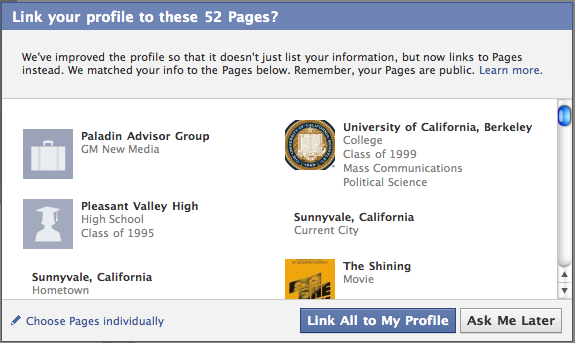
With the company's new "Like" feature launched and controversial Open Graph API introduced last week, Facebook looks to be further extending the visibility of the Pages within the network - asking users to connect their various interests to the numerous Pages within the site, instead of them simply being loose preferences that led to search results, only slightly helpful at finding people with similar interests. Upon logging into Facebook, and visiting your profile, you might be asked to automatically connect your profile to each of the corresponding Pages, and if none exist, you may be prompted to create a new Page so it does.

Meanwhile, by linking your profile to these Pages, these connections are Public, another big move for the network to get our data out in the open.

Some of the 52 Public Pages Facebook Wanted Me to Connect

My Likes And Interests Translate to Public Pages, Pre-Checked

In the "Info" tab of your profile, it may now say "The things you care about will now link to actual Pages". Facebook scans your profile, finding if those things you have entered as your Likes and Interests, including your favorite Music, Movies and TV Shows, have corresponding pages. Similarly, it will try and match you with Pages for your "Work and Education", matching you with your colleagues, alumni, and even fellow citizens of your hometown and current city.

The Fine Print: Uncheck to Opt Out, and All Pages are Public

The more data you have on your profile, the more Pages you are prompted to connect to. For me, I was asked to Link to 52 separate pages, and all were pre-checked, by default. Facebook asked me to "Uncheck any Page you don't want to link to". Ominously, if I said I don't want to link to any Pages, these sections on my profile will be empty.

After Linking to Dozens of Pages, My Profile Is Much Cleaner, but Public

With the company moving away from "Fans" of Pages, the standard to date, and to the new "Like" model, considered more lightweight, this move to make it easier, and practically mandatory, to connect to public Pages, should see member counts on Pages skyrocket, and the available real estate for partners and advertisers to further mine your public data even higher.

While I had liked my profile being Page-free, I have to admit the new linkage is much more visually appealing.

April 26, 2010

April 26, 2010 · 8 MIN READ · BY LOUIS GRAY

Like It or Hate It, Facebook Shoves Us Down Slippery Slope

Like It or Hate It, Facebook Shoves Us Down Slippery Slope

Last week, Facebook made some big announcements at the company's F8 conference, including a few aggressive moves to extend the company's presence to third party Web sites. The plan consisted largely to enable people to "like" content from around the Web, transmitting their downstream activity back to Facebook, and also - garnering an incredible amount of backlash from those opposed to the company's approach to automatically opt users in - they introduced the opportunity for partners to personalize your Web experience based on your profile. Facebook's introductions, as close as they are to exactly what I have been asking for over the last few years, are running contrary to what the company's large user base expected from the network, and the company's methods are presumably violating the public trust. While I do not have plans to delete my profile out of protest, as many have, I do not plan on acting as if any of my content placed on the site is done under the realm of being private. I expect my data, all of it, to be publicly searchable, shareable and indexable by the company and its partners, forever, and will act with that in mind.

In April of 2009, I practically begged for ad companies to "truly leverage our social profiles", specifically Facebook. At the time, I wrote:
" I think the real money is in Facebook offering to team up with all the major advertisers on the Web (Google/Doubleclick included) and letting said advertisers tap into our personal profiles, giving them a cut of the downstream revenue. Facebook has proven they know us, even as their ad team does not. Turn over the right data to ad people who do know what they're doing, and maybe I'll stop being annoyed by ads that have nothing to do with me."
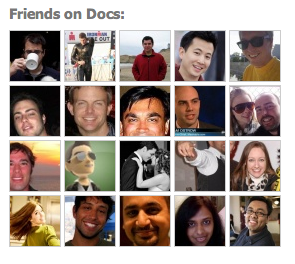
Last week, Facebook opened up my profile to a select few partners, including Pandora, Yelp and Docs.com, a Microsoft front for their Web Office plans. While the ads are still terrible on Facebook (and other sites), presumably these three starter sites are going to be customized just for me. Sure enough, logging into each presents a "personalized" experience, featuring avatars of friends with whom I am connected. In theory, my recommendations on Yelp get better, my musical recommendations from Pandora get better and Docs... well, I have no idea. But two out of three's not bad, right?

Docs.com Uses Facebook to Personalize My Experience

I can't get too riled up about Facebook trying to make the Web a better place through leveraging my social profile. To be honest, I want this.

I want these downstream sites to tap into my personal profile and use the data they find. And I also believe that I am acting in a way online that doesn't have any skeletons in the closet, if all the data becomes public some day. I have seen Facebook work to extend to a more "public" (not open) status, and expect all my content to go with it.

I also can't get too riled up about Facebook's making this move unilaterally, especially given my stance on Buzz, when I thought the company (Google) made some initial mistakes around privacy, but I stuck with it, waiting for them to get the formula right. To accept Google's issues, but throw Facebook to the wolves would accurately appear two-faced.

From what I have seen, the major concerns around Facebook's moves are two-fold. First, there is a concern that they made these "special agreements" with the three mentioned merchants, and that this might be the tip of the iceberg, as they gain more relationships, and extend the ability for these relationships to see more and more of your content. Second, there is a concern, one I believe to be accurate, that the overwhelming majority of Facebook users will not only not understand what has changed, but they also will not know how to opt out of the process. It is clear that getting out of the process requires many steps, many more than it took to get into the process, effectively zero.

The flareup of response around Facebook's move has spawned more feedback from the network's blog, which aims to quell some of the concerns. In a post today, prefaced by "answers to your questions", Facebook said "Our highest priority is to keep and build the trust of the more than 400 million people who use our service every month," adding "None of your information—your name or profile information, what you like, who your friends are, what they have liked, what they recommend—is shared with the sites you visit with a plugin." The company also pointed to a help center, which tries to explain what is shared with whom when. The response wasn't very reassuring, but was better than nothing.

I am reminded of the phrase "first do no harm", which is often incorrectly attributed to the Hippocratic Oath. If Facebook has changed the rules in the middle of the game, and is slowly exposing more customer information than before, after they had an assumption of privacy, then that is wrong. But the question is, has Facebook violated users' trust based on the letter of the law, or the intent of the law? It seems to me that there are those who feel no data from Facebook should ever be shared with third parties without your explicit permission. But there are others, no doubt some at Facebook, who think you should be able to share as much as possible, until reaching the point where somebody could get hurt. So we ask, "where is the harm?" The benefit of a customized music station the borrows from your friends' likes seems fairly innocuous, as does personalized restaurant reviews. But then, what next?

One prominent tech geek I talked to on Friday asked me if I would be comfortable knowing my insurance carrier had shared my medical history with a third party, without giving me the opportunity to decline - suggesting Facebook's moves were the same - as one "trusted" resource passed along personal private data I had not intended to be public. While I understood his point, I did not share the outrage, as I never assumed my data on Facebook would be safe. In contrast to Blippy, Mint.com and others (which I discussed yesterday), I never had an explicit relationship with Facebook whereby I would give them information that, if it leaked, would fall into violation of contract or even legal territory.

As the tumult continues to rage, I think we are in an odd position in the industry, where we are in serious need of independent third party leadership who has our own data protection and privacy in mind. Many of the biggest names in the open standards front or in the privacy game are now working hard at the very companies who have a vested interest in monetizing our data. It's both a great thing and a bad thing, but when a company like Facebook makes moves like they have, it seems like we don't have anyone trustworthy to stand up and say "This is wrong" if it is indeed wrong, and spell it out. That's why on Saturday I posted a quick note to Google Buzz asking the leaders of these companies to find a way to help users without taking potshots at each other. I posted that note on Buzz, rather than this blog, as it was a casual and personal note, and it reached the people I hoped it would. But it also led to some tremendous conversation in the comments about why we need independent voices that have impact, and right now, it might have to be the government's oversight that lays down the law.

We are already seeing U.S. Senators asking for a solution to problems like those posted by Facebook and other companies who have our personally identifiable data and look to be cavalier about sharing it. Charles Schumer is already pushing the FTC for guidelines. But the case, as with most cases involving the Web, innovation and changing culture, is not cut and dry. There is not a "good guy" and a "bad guy" in this case. Take for example, David Recordon's position when he wrote: "Why f8 was good for the open web". I believe David thinks what Facebook is doing the right thing, just as much as I think some prominent Googlers and other techies think that Facebook is doing absolutely the wrong thing. It's a measure of whether you think Facebook is on the path to violating your trust, or if they already have, and depending on your experience, upbringing or personal preference, your results may vary.

As far as I am concerned, Facebook is in a very difficult position in terms of being able to make change and do so without upsetting the apple cart. The company enticed nearly a half-billion users into sharing some of their most private activity into the network, and now the company needs to grow in new ways that will require this data to be mined and shared. The company probably doesn't feel like it has the luxury of asking a percentage of its users for permission to share their data, because they know very few will outright, without convincing. To do so automatically and asking them to work hard to get out of the situation is a much more lucrative and beneficial position for them in terms of revenue and growth. It's very similar to what Dare Obasanjo of Microsoft said when we were at SXSW this March, when he suggested that users and companies' goals were in conflict.

Facebook has such a strong position in the social Web that they can do practically anything and keep users. My family uses Facebook for their networking, photo sharing and commenting. Even if they are vaguely aware of changes, they aren't going to delete their Facebook accounts because Facebook started being aggressive with its partners. And they know this. Facebook has an opportunity now to leverage their social capital and grow to be more of the rest of the Web - even if their users would not have given them permission in advance. Whether you think we are approaching the point of no return, or if we already crossed it, that's the direction and you can't undo it. Just plan on your data online being public - all of it.
April 26, 2010 · 2 MIN READ · BY LOUIS GRAY

Twitter Absorbs Two More Ex-Googlers, Threadsy Web Dev

Twitter Absorbs Two More Ex-Googlers, Threadsy Web Dev

The advent of a new week regularly means the addition of new employees to Twitter, and as is common, the much-discussed ambitious microblogging powerhouse is draining the intellectual coffers of larger Valley titans. Today, the company welcomes three more to its team, two of whom call Google their last stop. One of the adds was most recently the lead product manager for "Watch and Discovery" at YouTube.

The three new hires include Jacob Thornton (@jacobthornton), Brian Larson (@balarson) and Shiva Rajaraman (@shivalr). Their hires bring the total number of people followed by Twitter's team list to 191, which we've been told includes contractors and other friends of the company.

Jacob Thornton (LinkedIn | Twitter) was most recently listed as a product designer for Threadsy, a unified social messaging startup that was a participant at TechCrunch50 in 2009. Jacob, a social media app designer, worked on the front-end for Threadsy, and his departure is likely the reason that Threadsy is looking to hire a front-end Web site and HTML ninja. (Given the job was posted 2 weeks ago and his start date is today, it seems more than coincidence)

In parallel, Jacob also is behind the project somelemonade, a visual reader for Twitter, Tumblr, Flickr, Picasa, YouTube and Vimeo. That side project recently crossed 500 users. He joins Twitter as a release engineer.

Obligatory First Day Tweetage from Jacob

Shiva Rajaraman (LinkedIn | Twitter) was the senior product manager at YouTube for Watch and Discovery, where he was in place since September 2006, a month prior to Google's $1.65 billion acquisition. Shiva joins Twitter as a product manager focused on monetization.

Brian Larson (Twitter | Google Profile) is most recently of Google. Prior to joining Google, Brian picked up a computer science master's degree from Stanford, and co-authored a paper on distributed recovery from attacks on peer to peer systems (see PDF) in 2002. He joins Twitter as a software engineer on the search team.

April 25, 2010

April 25, 2010 · 4 MIN READ · BY LOUIS GRAY

Why I Trust Blippy, Mint and Others With My Financial Data

Why I Trust Blippy, Mint and Others With My Financial Data

In an up and down week for the startup, Blippy gained a huge amount of unwanted attention on Thursday and Friday as it was discovered that four (and eventually five) of the company's users saw their credit card numbers exposed, in full, through creative Google searches (since removed). As somebody who has registered my credit card and debit card with Blippy, you might think my knee-jerk reaction would be to pull out my data, but it's not, and I am just as supportive of the creative site for sharing transactions as I ever have been. I will continue to encourage people who want to share this activity to use the site, and I am not any more shy about putting my data into their product than I was before. Similarly, I will continue tracking all my data on Mint.com and other sites, because these companies and others like them, have proven themselves to be trustworthy and innovative - delivering me real value.

I joined Blippy in January largely because as I have been participating in and advocating sites that tell people what we like for years, Blippy takes the next step and tells people what we actually purchase, going beyond the "like". I have watched Blippy expand its social capabilities, as you can follow friends, have conversations on transactions, and see groupings of similar behavior, seeing who is buying from specific vendors, or even finding out if other friends are buying the same things you are.

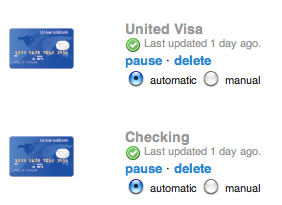
My Credit Cards Go to Blippy Automatically. Zero Concerns.

Unlike some users of the site, I opted to go "All in" with Blippy, sharing not just my soft accounts, like Zappos and iTunes, with the service, but all my purchases. That means you see the boring fillups at Chevron on my debit card, my cash withdrawals from the ATM, and yes, even my wife's Teletubbies DVD rentals on Netflix for my kids to watch. I did this because for much of what I do, I am living life in public. I believe in sharing as much as possible, partly demonstrating that there is little to hide. And while some of my transactions are boring, that's just who I am.

When it was reported this week, by VentureBeat, who, from my understanding, worked on the story for a few days before issuing their initial story, that some cards were exposed, it was quickly shown to have been a limited bug, related to early beta users using a specific card from a specific bank - and was completely out of the ordinary. Blippy quickly responded to the issue, and worked publicly with Google to solve the issue, keeping all of us informed, if we were nervous. (I wasn't)

Mashable's Typical Approach to News Reported by Others

Meanwhile, you saw the typical tech press pile-on from people who had done no original research, flocking to the story like youths at a soccer game chasing a ball, as blood in the water can be exciting. But VentureBeat calmly and professionally kept the story updated, while the Blippy blog did the same, open and with considerate remorse.

There is a huge difference between making a mistake and being untrustworthy - and for me, putting my card data in Blippy is not dissimilar to putting my credit card data into Mint.com, having Intuit find my W-2 data come tax time, or entering my credit card information over and over and over from e-commerce site to e-commerce site. In order for Blippy and Mint.com and these other businesses to succeed, they need to ensure the safety of users' private data, and practically without exception, they have done so. The companies' success will come through their amassing a high number of users, and being able to report trend data based on groups and demographics, not on individuals - and thus, it is in their best interest to keep your data safe and secure.

Google Makes Their Role In Fixing the Issue Clear

ReadWriteWeb chronicled some of Blippy's response to the slip-up today, when they said what to do when a PR disaster strikes your startup. Blippy did the right thing by all accounts, apologizing, making full disclosure, and reporting how the issue was being addressed. Meanwhile, Google's Matt Cutts took to Twitter to explain what that company had done to fix the issue also. That's transparency and a closed loop response.

If I had more options to share even more data with Blippy, I would do it, and getting my e-mailed updates from Mint.com is among the highlights of this data-driven geek's week. It benefits the Web at large to get more real data about our purchases and activities public, and Blippy is one of those making the process interesting. I trust them with my information, and won't be changing a thing. You can find all my data here: http://blippy.com/louisgray.
April 25, 2010 · 3 MIN READ · BY LOUIS GRAY

Steve Jobs: Apple's One Man Social Media Machine

Steve Jobs: Apple's One Man Social Media Machine

In a time when the company's core business has grown to record highs, with its iPhone business, flanked by Mac sales, iTunes store revenue, software and peripherals all contributing to Apple's strongest position of all time, the company has practically opted out of the trendy move most of its peers have embraced - social media. There are no official Apple blogs, and with the exception of its iTunes Music property, there is little to see from Apple on Twitter and Facebook.

This has not impacted the company negatively, as it gets plenty of press from the Mac faithful and increasingly curious mainstream media, but in the last few months, a surprising trend has emerged - as the company's cofounder and CEO, Steve Jobs, has taken on a much more active role in responding to customers one to one from his personal e-mail account, reducing the barriers needed for end users to engage with one of the most influential people in the world. In effect, Jobs' usually quick one-liner e-mails are providing the same results many have championed with social media - access to customers, rapid response times, and providing a human face to a business.

Steve's attention to detail, and most would argue, control, over Apple's efforts is legendary. While Apple's media events have recently seen an increased number of executives speaking on behalf of the company, it is still Steve who starts things off, wraps things up, and orchestrates the process in between. Rank and file Apple employees, like those who would manage the company's social media properties, if they were active, are not blessed with the option to speak on behalf of the company, and those who make even the most minor of mistakes are at risk for termination.

Thus, there is a vacuum for official Apple news between company press releases and events. As the company has gained a higher profile with its iPad introduction, regular iPhone upgrades, and constant introductions at the iTunes store, users and developers with questions are increasingly turning to ask Steve directly about company plans, policies or even to send off notes of frustration. And he's answering. Not all of them, no doubt, and not often with significant length, but one doesn't need 1,000 words from Steve when 10 or 50 will suffice. These nuggets seem to be a big shift from Cupertino, historically tight-lipped and non-responsive to rumors or other inquiries, and it will be very interesting to see if this move is a fad, which fades quickly, or if Steve can scale as it becomes more widely known that you can reach him by simply lobbing an e-mail.

While this one man social media experiment exists, you can see Steve responding:There are many more, but the pace is rapidly increasing, especially now that Jobs has his iPad at home. Maybe it's the environment he wanted to fire off one-line e-mails to customers, or just him getting more smooth as he ages, but it's become a highly effective press channel that doesn't need Mossberg and Goldman and others to interpret what he says as he can go directly to those who care - and I don't know of any similar high profile tech CEOs who are making themselves as accessible as Steve is in this way. Is Eric Schmidt responding to e-mail? Is Mark Zuckerberg? Ev Williams (@ev) occasionally posts replies on Twitter, but not to the types of questions Steve is fielding. I just hope Steve has found his comfort zone, and that this can be something that continues, so we don't see Apple as an impenetrable silo, but one that talks back, even if it's still through one unique individual.

April 23, 2010

April 23, 2010 · 2 MIN READ · BY LOUIS GRAY

A Fabulis Launch: Social Network Aims to Find "Gay Take"

A Fabulis Launch: Social Network Aims to Find "Gay Take"


After raising $625k in seed funding this January to pave the way for a unique social network targeting gay men and their friends, Jason Goldberg, formerly of Socialmedian and Jobster, opened the doors to his new site, Fabulis, today, appropriately, on his birthday. Looking to go beyond the skin-deep hookup-obsessed competition for gay male visitors, Jason and his team are hoping to forge a central place for this affluent demographic to "celebrate life" and provide a "gay take" on the world.

After knowing Jason primarily through the Web, phone and e-mail since early 2008, I finally met the man in person today, in Palo Alto, in the middle of what was surely an incredibly full schedule. Over lunch, we talked about how this launch, unlike those of Socialmedian and Jobster before it, is a very personal one for him. While I teased Jason that I was a little disappointed that I couldn't be as active a user for his new site as I was with his last one, the passion he has for the latest venture is real, and a for good reason.

As Jason and I discussed, finding good venues and products for gay men is more than finding gay-friendly businesses, but instead, finding ones with a good "gay vibe", ones that are trendy. The data all points to the opportunity being a very good one, with gay men earning more, on average, than their straight counterparts, being more likely to hold a college degree, going on vacation and generally traveling much more, while also displaying significant consumer loyalty. A review on sites like Yelp from midwestern grandmothers is much less relevant to the Fabulis target audience than one from their own background.

Jason by no means is on a plan to take out leading social networks, like Facebook. He recognizes that network's leading role, but thinks there is a very real opportunity to get the experience right for this important market - and their friends. He promised me the site would have value not just for gay men, but their friends. Of course, I am registered, which, according to the site, makes me Fabulis. You can check out Fabulis at http://www.fabulis.com.

For more on the launch, listen to the CinchCast Jason and I recorded from this afternoon. You can hear from his mouth directly the site's focus and goals. Wishing his new network the best of success.


April 22, 2010

April 22, 2010 · 5 MIN READ · BY LOUIS GRAY

The Buzz Bots Brouhaha and Other Empty Statistics

The Buzz Bots Brouhaha and Other Empty Statistics

On Tuesday, ReadWriteWeb and a number of other tech blogs (including Mashable) stirred themselves into a tizzy around a report from social media measurement firm PostRank, who reported that almost 90 percent of content in Google Buzz, the company's nascent social network, came from news feeds and other non-native sources. Their self-congratulatory conclusions, kicking dirt on the service which hasn't hardly had a chance to grasp for air following body blow after body blow after a stumble out of the gate around privacy, came with phrases saying Buzz had "fallen short of capturing the hearts and minds of the social web", and another, "Much of Buzz’s content may be hand-crafted — it just doesn’t originate on Buzz."

Oh dear! What a terrible thing! Prepare the wake! I would be honored to act as a pallbearer, if given the opportunity.

PostRank's data served only one purpose - to count the total number of entries from all individual services being aggregated by the downstream collection service (Buzz). It is no secret, and I don't think anybody has successfully ever argued against it, that every single network that has the potential to import Twitter entries can easily be dominated by updates from that service. It was true with FriendFeed. It is true with Ecademy. It can be true with Facebook, depending on who you follow, and there is also that potential with Buzz. Twitter entries are light, easy, and update often. Even the most avid bloggers post more entries to Twitter than they do on their own site - as they post their own blog entries in addition to other updates, so it is no surprise that many people see their own feeds dominated by their Twitter. Add in Google Reader shares, which are very well tied in with Buzz, and you can see how this so-called "automated" "bot" behavior can start to ratchet up the stat-o-meter.

But the data (and reporting) was an inch deep, and it very poorly associated the world of automated feeds with the world of automated non-human behavior on other social networks which is nefarious. (Twitter bots, for example)

Aggregation services are built to aggregate data from disparate networks. It's practically their core definition. However, many of them also offer the option to create net new content. Buzz lets you make very detailed blog-like posts if you like. It's a great engine for sharing pictures, or YouTube videos, or simply adding a link from a Web page, and adding your observations. These so-called native entries are what amassed the approximately 10% of all updates seen as non-bot behavior by the survey.

As I mentioned back in March, native entries to Buzz get the most engagement. Some people, such as DeWitt Clinton from Google, make fantastic high quality posts on Buzz, and can get dozens to hundreds of comments. So do native entries from highly-visible people like Robert Scoble, and very active supporters of the community, including svartling and Leo Laporte.

I recognize that the vast majority of my own updates on Buzz are feeds. I love feeds. RSS or Atom, whatever you like, I recognize they are great tools. I will not stop sharing my items from Google Reader on Buzz unless the community goes silent, or tells me to stop - but between my Reader shares and my native blog entries, my own 4 native Buzz entries represent a miniscule 2% of my last 185 Buzz updates (according to Buzz-Charts).

This doesn't mean I haven't supported the platform, and it doesn't mean people are not engaging. In fact, according to the Buzz-Charts site, the last 185 posts received 478 total comments, or between 2 and 3 replies for every single entry. Some got none, and others got much more. But every single share was originated by a human, and every single comment was a so-called native entry.

PostRank surveyed Buzz with the subtlety of a political pollster operating under payment by the Committee to Re-Elect the President. (CREEP) While it may be factual that many people imported their Twitter entries and other automated feeds to Buzz, the Buzz community knows to largely ignore those items, or to not follow those people who are using the service in a poor way.

Real Buzz Data That Shows Real Engagement By Source

Buzz-Charts shows a much different story. In their graph of actual replies (comments) on all entries in Buzz, they found that of 24,584 posts that gained comments, 13,520 of them were native Buzz entries, a full 55%, not the measly 10% created. In second place, Google Reader shares showed 3,978 entries with comments, or 16%. Add on Buzz Mobile's 1,572 active threads (6.4%) and those top three conversation starters represent more than three quarters of all active threads, more than 18,000 of the total 24,000.

In contrast, all those automated Twitter entries that PostRank said was 62% of Buzz? They only had 837 active threads, or just over 3% of active threads. That means more than 90% of all Twitter entries that hit Buzz are ignored. Given you can't really have conversations in Twitter in the same way you can Buzz, and the person's entries already seem disjointed, that's probably just fine.

So we now know the community can self-select and self-filter, and that Buzz users comment on native entries and Google Reader shares more than anything. But let's go back to what a "bot" is anyway.

According to Tweetmeme, that ReadWriteWeb story was retweeted 662 times on Twitter. Is that any different than making a share in Google Reader? Even if a human clicked that button, are those not 662 bot entries into Twitter? In addition, the main RWW feed (@rww) is dominated by entries from TwitterFeed. That very post about Google Buzz bots was fed by a bot to their Twitter account. So the underlying hint of "Buzz loses and Twitter wins" is dead on its face, if this is the measure.

Do I want Twitter updates in my Buzz? Not really. I can go to Twitter for that. Also, in March, I talked about the trend toward disaggregation and putting native data in native sites. There is a huge benefit of getting that right. I took Twitter out of my Buzz for a reason. But Reader shares obviously have a good role in the community, and they are part of my curation activity.

Want to get a real good idea of what is happening on Buzz, with real people? Spend some time with a statistical site that really knows Buzz at http://buzz-stats.appspot.com/. Run your own chart to see if you're as feed-crazy as me, or who the top 100 people are on Buzz for getting replies to their content. PostRank didn't do themselves a service with their shallow report, and neither did the guys who regurgitated their data, and then retweeted it, or let their bots do the dirty work for them.

April 20, 2010

April 20, 2010 · 1 MIN READ · BY LOUIS GRAY

Video: The Start of the Connected Decade: Now What?

Video: The Start of the Connected Decade: Now What?


This video was filmed with Ecademy Chairman Thomas Power and myself in February during a social media retreat in Silicon Valley. Expect more videos, prepared by YourBusinessChannel to trickle through. And no... I don't call myself a social media expert. They did. Enjoy!

You might remember Thomas from: Ecademy Chairman Says Limited Networks are "Flawed"
April 20, 2010 · 4 MIN READ · BY LOUIS GRAY

Google's Battle For Your ID Against Facebook Heating Up

Google's Battle For Your ID Against Facebook Heating Up


With the news last week that Blogger product manager Rick Klau was transitioning to a similar role leading the Google Profiles team, I have been doing some thinking around how Google could improve the utility of its Profile property, and the more I think about it, I really believe the Profile could be a major front in the company's battle with Facebook and other networks to act as the central hub for your online persona. Today, Google Profiles seem to be something of an afterthought, although their integration with Google Search and now Buzz in the last two years have raised their prominence. But given Google's mountain of data being amassed on you and your preferences, and the opportunity to build a new feature set, I see significant opportunity for them to get the content right and the deployment right. Strike early enough with our suggestions, and we just might actually have an impact on what they do as well...

At the end of 2007, in one of my more speculative posts, I asked, Will There be One Profile to Rule Them All?, highlighting three of the most prominent Web profile services at the time: Google, MyBlogLog and FriendFeed. Nearly 30 months later, MyBlogLog is practically dust, squished by its Yahoo! overlords, FriendFeed was similarly absorbed into Facebook, though the site continues to run, and Google hasn't changed all that much, to be honest, featuring the same collection of third party links that hint at who I am online.

At the time, I asked of the three services, "which one knows me best?" In the last 30 months, those three services didn't do much to answer that question, offering a minimum of personalization, and letting the content from third party sites tell the story. In their place, Facebook became the dominant player in the space, transitioning from a student-only site to one inviting all Web users to input information about themselves, their likes, preferences and connections. Now, the answer is obvious - Facebook is the dominant profile online, with others possibly answering LinkedIn, and a smaller percentage pointing to Twitter, assuming your one-line description, profile picture and tweets encompass the true you.

But Facebook's goal, thus far, has not been so much to encapsulate the entire you, built from content created on other sites. While you can pull in blog posts and bookmarks and third party activity, the majority of action is created from within what people call the walled garden, and unless you have connections with the individual, the data is not fully open and available. Google's approach, to have all profiles viewable, open, indexable and discoverable, opens up new opportunities to make the Google Profile the Web's reference guide for you as an individual.

Today, Google Profiles have six distinct sections:
  1. About Me: Includes a short biography, which you write yourself, which can include links or e-mail addresses. It also has a summary section for "Where I grew up", "Places I've lived", "Companies I've worked for" and "Schools I've attended". Not too much detail on positions held there, or years served... just the basics.
  2. Buzz: If you are populating Buzz, the content will be shown in a tab on your profile.
  3. Contact Info: You can make your e-mail, phone, birthday, and address visible to contacts and friends, or keep it private.
  4. Sidewiki: If you make entries in Sidewiki, they can be displayed on your profile.
  5. Photos: You can display photos from Flickr, Picasa or other services below your avatar.
  6. External links to social services: The same logo farm provided in many places, where you can customize what external sites you use.
Also included are some small random elements including "Something I still can't find on Google", "My superpower" and "Interests".

All told, it's a pretty casual approach, but not one that would have me returning often.

That said, the ingredients appear to be in place for Profiles to expand beyond their current role and possibly take a more direct assault on Facebook, LinkedIn and other personal hubs. In this scenario, a public site, built from Buzz entries from those you follow, take the place of Facebook's current newsfeed, and your profile becomes your Facebook Wall. Facebook Photos are replaced by Picasa photos, and the many connections you've found in Facebook are similar friend connections through Google, only in an asynchronous mode, not a synchronous one, a public one, and not a private one.

Does this mean that the experience of Facebook could be directly duplicated through some brilliant massaging of Profiles and the extraction of Buzz from Gmail into a more public, dedicated site? Of course not. For one, the work on Groups, Networks, Causes, and the many apps that have people coming back to Facebook, if for nothing else than doing battle on Lexulous, takes some work to replicate. Also, it can be assumed that one's social graph will vary from network to network, so those friends from high school might be your links on Facebook, but your colleagues might be linked to you through Google.

Google, seemingly caught flat-footed in the world of social for the last few years as Facebook and Twitter ran circles around them, is trying to win this game through following the Web's trends - toward open standards, public content and discoverability. Even if they don't get people to stop using Facebook, they can deliver an alternative that is a distributable URL that you can share with people to say "This is me" on the Web. I may use my blog for that, but for many, one's Google Profile truly could be the real "Me". They have an opportunity to compete and take visibility and share from these services by eliminating the holes in their lineup, and then innovating to go beyond what others are providing today.

The question is - are people interested, and does Google want to win this thing?
April 20, 2010 · 6 MIN READ · BY LOUIS GRAY

10 Suggestions for Redesigning the Google Profile

10 Suggestions for Redesigning the Google Profile

Have you looked at your Google profile lately? (Here's mine) Pretty boring, right? Just a white page with a bunch of blue links, like much of the rest of Google? You might not look at your Profile all that often, but with Profiles being discoverable in Google Search and made more central to your online activity with the introduction of Buzz, it's possible that this page could be a major hub for your personal presence on the Web. Given the recent addition of Rick Klau to the team, it's clear Google wants to get this product right. It's also a great opportunity to give Rick and his entourage a little helpful advice. So here's what I would do if I got the opportunity to design the ultimate Google Profile:

1. Unhook Buzz from GMail and Open a Dedicated Buzz Site

This one is screamingly obvious - and something I anticipate to be a near-certainty, unless the criticism of Buzz had Google reconsidering its focus, which I don't think it will. If Buzz and Profile are to be paired, there has to be a way to get to Buzz on its own domain, outside of my e-mail. This, I believe, would dramatically raise engagement and ease of access. As each Buzz user's entry and comments link back to their profile, this in turn raises the visibility of the Profile itself.

2. Enable the Option to Remove Buzz Without Killing Your Profile

A corollary to the above is that in order to completely opt out of Buzz and disable it completely is that you need to delete your Google Profile too. That's crazy. That's almost punitive judgment for somebody who doesn't see things the Google way. That Buzz and Profiles are connected in the same way that Facebook's News Feed and Facebook's Profiles are connected is one thing, but to require the deletion of one to unlink the other should be fixed immediately.

3. Add the Ability To Import One's LinkedIn Resume to Google Profiles

Today, Google Profiles asks you where you've previously worked, but it's scarcely an inch deep. I would want the option to import my LinkedIn profile, complete with titles, companies and summaries, and be able to display that in a tab called "My Career", "Work" or "Professional". Of course, for those who don't have existing LinkedIn resumes, the option would be to populate this tab from scratch, but have it display on Google.

While this would not immediately gain you the relationship and recommendation portion of LinkedIn, it could easily be a new place for your online resume.

4. Introduce an Ability to Customize the Google Profile With Templates

The look and feel of today's Google Profiles is extremely sterile. Like many other Google properties, the wisdom has been data over design, and users don't have much, if any, opportunity to tailor the content in the way they would like. Rick Klau, having just watched fellow PM Siobhan Quinn launch Blogger's new Template Designer, would do well to tap into that option, giving people more ownership of how they are presented online. In fact, Rick's quote: "How you express yourself online is a lot more than just a blog," from the interview we had on the day he announced the move, hints that he feels the same way.

I would want the option to change background colors, sidebar designs and reformat the page's elements - things that even Facebook gives you little opportunity to do - but others have done well.

5. Think Global, Act Mobile

All the trends are pointing toward increased Web consumption on our mobile devices, be they Android, iPhone or some other variety. Facebook's iPhone application has gained tremendous traction and is quite usable. Buzz was designed with mobile in mind. However, Google Profiles simply scrunch the text down in a small way for a smaller screen. It wouldn't hurt to have Profiles recognize mobile browsers and provide a superior mobile experience.

6. Highlight My Streams By Category - Like Status Updates!

Google Profiles do a good job of featuring links out to other third-party services where I participate. If I register dozens of social sites, and you know I have them, these disparate icons will litter the right side of my Profile. But like MyBlogLog and FriendFeed, the icons themselves don't tell a story. The story comes from the content being created at each of those sites. While some of my streams might be flowing through my Buzz tab, I should also be able to choose to share my Tweets, native FriendFeed updates or GChat status updates on my profile, as a lifestream, in a "Status Updates" tab in my profile, which would show the most recent shares at the top. Similarly, if you have multiple photo site accounts, you could pull in the latest updates from Flickr, Smugmug and Picasa in a tab called "Photos".

7. Raise the Visibility of Contact Information, and Remove the Tab

Today, my Google Profile says my name, my title, and features my latest status update at the top, generated through GMail's GChat feature - and even that status message is not visible to anyone who is not a connected "chat buddy". The contact information I have provided, including e-mail, phone, and address, optionally posted by me, is tucked behind a tab. If I have opted to make this information public, it should have higher visibility, and could easily take the spot where the bulky status message is today.

8. Reduce The Automatic Behavior and Placement of Photos

In today's Google Profile, your title and avatar are immediately underwritten with a strip of photos. It's a cool feature, to be sure, but their is no option to put them somewhere else, to resize them, to add any relevant information about photos, etc. If photos are not something I think should be a lead part of my experience, then I would want to minimize their focus, or even tuck them behind one of the tabs at my disposal. Today, these photos pull from Flickr, Picasa, or from other hand-entered photo streams, but they all look the same - disconnected and unrelated.

Facebook has become the king of photo uploads not just because of the network's relevance and reach, but also thanks to the option to leave comments on these photos, or to tag other people. Google Profiles do nothing but link out, making the photos vestigal. Unless Google wants us to upload photos directly to our Profiles, they should get lower visibility.

9. Sidewiki Doesn't Deserve the High Profile on My Profile

Sidewiki entries are one of the four tabs on my Profile today. I've made one Sidewiki entry, ever, and while it may have been a good one, it certainly doesn't rate equally with my "About" and "Contact" sections, yet it gets the same billing. That's silly. And for whatever reason, I cannot remove Sidewiki from my profile within my profile settings. It's impossible. If you're a huge Sidewiki fan, then sure, add it, but it shouldn't be there automatically.

10. Modular Permissions By Section

Google's default approach, and mine, is to make content visible to all, so that it is indexable and discoverable. If we have learned anything from the tumult around Buzz's entry to the marketplace, it is that one size does not fit all when it comes to public content vs. private content. But today, I don't even have the option to make my Gmail chat messages public if I wanted to, and others don't have the option to provide comments on their Google Reader shares to the public, but only invited friends. In reverse, if I chose to, I should be able to hide my photos from the public, or any other item, making that only visible to synchronous friends. If this can be managed in a simple way, it could go a long way to getting people comfortable in providing even more personal information to a company that already knows a lot about us.


Have you given a lot of thought to your Google Profile? I see this as a key weapon in Google's assualt on Facebook. More on that soon, of course. What else would you do to make this a better product?

April 19, 2010

April 19, 2010 · 1 MIN READ · BY LOUIS GRAY

With Chirp Complete, Twitter Opens Doors to 9 New Hires

With Chirp Complete, Twitter Opens Doors to 9 New Hires

Last week, at the company's first-ever developer conference, Chirp, Twitter reported the company's growth to 175 employees. Some of those 175 started today, and the company's official "team" list has expanded to encompass 188 total accounts, up nine week over week.

Joining today included a new partnership manager, formerly of Google, a new product manager for the Twitter platform, a Ruby on Rails developer, a former biz dev guy from CoolIris, a media-browser plug-in, a new front-end Web developer, a new mobile engineer, and a new member of the communications group who most recently represented Android for Google.

The expansion seems to see growth in all areas of the company, with adds on Web, mobile and platform, as well as on the back-end. The addition of Kelton Lynn, from CoolIris, seems interesting due to CoolIris' focus on photos, videos and plug-ins, which could hint at Twitter moving beyond simple text updates, and the addition of the pair from Google shows continued interest in employees making the move up Highway 101 from Mountain View to San Francisco, from the world of a massive public company to a more nimble startup.


As is now a practical rite of passage, many of the first day employees were more than happy to tweet from what is now being termed the ... "twoffice".


Starting this week: April Underwood @aunder, Brian Ellin @brianellin, Carolyn Penner @cpen, Mark Percival @markpercival, Kelton Lynn @keltonlynn, Ben Cherry @bcherry, Marcus Hanson @MarcusDHanson, Niels @niels and Kristin @kkanaar.

April 18, 2010

April 18, 2010 · 2 MIN READ · BY LOUIS GRAY

Google2Twitter Streams Restored After Week's Outage

Google2Twitter Streams Restored After Week's Outage

For those of you who follow the @lgstream Twitter account, fueled by my shares from Google Reader, in addition to Delicious bookmarks and blog posts, the flood slowed to a mere drip over the last week, as the service behind its automation was stopped cold, due in part to its own success. The Reader2Twitter application I first featured back in September, which saw an update in February to support Buzz entries to Twitter as well, exceeded its AppEngine quota and ground to a halt on the 12th, leaving its users high and dry in the meantime. With the newly-called Google2Twitter down for the count, all that hit my @lgstream account were the rare bookmarks and posts from here - making me look more self-centered than usual. As of tonight, however, the stream is back in full, having been reenabled.

When faced with the outage, Google2Twitter's author explained that the once-small application had outgrown its 1GB datastore, and required an upgrade to a paid version of Google's AppEngine. But paying from China, where he lives, is no easy feat. In the meantime, he suggested it could be open sourced at some point, and he was going to work out a way to get the project funded.

After six days of downtime, which stopped my stream, streams of my clients, and many others, the stream was unclogged tonight and data is flowing again. Interestingly enough, the author is hinting at bringing on yet another supported service, Blogger. In a quick tweet tonight, he wrote: "the web interface of Reader2Twitter has been restored. I am going to support blogger2twitter later." On the Blogger platform, this would be of benefit to me, although my routing through TwitterFeed already does a fine job.

I'll be checking in with the app's author to see if this is a one-time blip, and what measures will be taken to avoid problems in the future, but for now, I'm just glad it's back. To see my stream through Twitter, don't forget to be subscribed to @lgstream. I share the best of the tech Web so you don't have to read everything else. You can watch Google2Twitter at @gr2t.
April 18, 2010 · 5 MIN READ · BY LOUIS GRAY

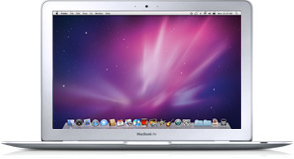
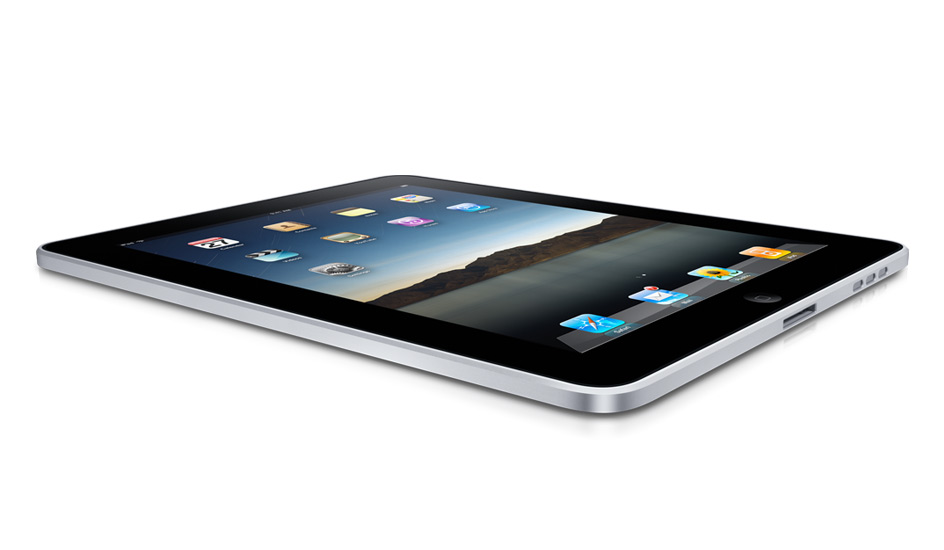
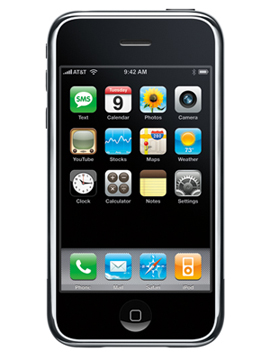
Apple iPad, MacBook Air and iPhone 3G. Pick Two.

Apple iPad, MacBook Air and iPhone 3G. Pick Two.

Two weeks ago, when the iPad finally became available for purchase, I picked up a pair for our home - one for me, the 64 GB WiFi version, and one for my wife and twins, the 16 GB WiFi version. Given Apple's tremendous track record in the last decade through the debut of the iPod and iPhone, the march of the iTunes Store, and yes, even the Apple TV, for our home anyway, I figured the iPad would find a good spot in our technology gadgetry usage model - despite my already having an embarrassment of riches from Cupertino, in the MacBook Air and iPhone 3G. And it does have a place, but it hasn't exactly been revolutionary. While I am not one of the handful of folks trying to make headlines by shipping theirs back to the store, I recognize the iPad for what it is, a nice machine, with some incredible features, but if forced to take only two of my three devices somewhere, it's the iPad that stays home.

The iPad does some things extremely well. That its battery life can stay above the 90% mark for a tremendous amount of time, even when watching movies through iTunes, immediately puts it well ahead of the juice-hungry MacBook Air and iPhone. While I am always watching the battery life on those two models, and don't want to stray too far from a power outlet, the iPad can go several hours without needing to get reconnected. The iPad's large screen and ability to run existing iPhone apps also is very fast and sharp, making using the same apps on the iPhone seem cramped and less than satisfying. I also really like the iBooks app, and have been doing a lot of reading on the iPad when I've put my other devices down. In addition, the iPad's keyboard is large enough that typing is practically second nature - unlike the iPhone, where I have to heavily rely on its autocorrection to pick up my typos.


But with all that said, giving it all sorts of kudos for being brilliantly designed and making my iPhone seem like a chew toy, I have to seemingly go out of my way to find time when it makes sense to put down one of the other two devices and use the iPad instead.

I always assumed the iPad would be a fantastic content consumption device. It is. It doesn't have much parallel for reading books and watching films through iTunes. Doing so now on the iPhone's dinky screen seems silly. Having my bookmarks synched through MobileMe to the iPad also makes it easy to go site by site and make sure I am caught up with the world. But when it comes to true Web browsing and true e-mailing, the MacBook Air still trumps the iPad in all sorts of ways. Not only can I type much faster for e-mail, do copy/paste in a non-convoluted way, and run multiple apps at once, but I don't have to avoid Web sites that run Flash, leaving holes in my browsing experience.

The lack of Flash, as non-consequential as you might think it would be, shows up in all sorts of places. Client Web sites don't load. Twittercounter.com won't display graphs. Videos and other elements show up as holes where content should be. At least I know that when I switch back over to the MacBook Air, I can get something resembling a full Web experience.

One of the best things about the iPad has been its lack of a keyboard. While that may seem crazy, it has made sharing the device with the twins dramatically easier. While Matthew and Sarah tend to prefer mashing the keyboard and banging on the keys when seeing anything on my laptop, the iPad eliminates that possibility, and they grok the touch-screen options immediately, having grown up in a home with iPhones and an iPod Touch. The iPad has reinvigorated our relationship with YouTube, as the twins click from video to video and see not just themselves, from our own home videos, but YouTube favorites, like "Charlie Bit Me" and "David After Dentist", just by tapping the screen.

Clearly we have found use for our iPads. Some of the applications available for the iPad, such as ESPN's ScoreCenter and eTrade's application, are very good, even if they are just repurposing content found on their Web site. The iBooks application is a game-changer and playing some game apps, like "9 innings" on a real screen is much more satisfying than on the iPhone. In fact, having the iPad around has probably impacted our iPhone usage much more so than it has my laptop usage. As I am not using the iPhone any more at home for browsing the Web, e-mail or application use, it hasn't been too uncommon for it to be the "forgotten" device, sitting somewhere in the other room until it springs to life when someone calls. But the MacBook Air is still the best device to read Google Reader quickly, and to write blog posts, use Office documents, or really do anything around creating content.

While you can write blog posts on the iPad, or you can write e-mail on the iPad, or you can take notes on the iPad, for the most part you can always do them better on the laptop, and by doing these tasks on the iPad, you are essentially doing battle with a force of will, attempting to get it accomplished because you can, not necessarily because you should.

With dozens upon hundreds of thousands of iPad reviews out there on the Web, you no doubt have seen other people's comments on just how Apple's newest device has impacted their workflow. I am glad we have ours in our home, but if you were expecting a revolution, this isn't it. It's a missing piece between two already-solid products, a nice to have, but not a must have. I eagerly await new applications that show up on the iPad to help it make that leap to a must-have device. Until then, I'll keep using the MacBook Air for most things, stick with the iPhone for actually making calls, and use the iPad as a comfortable consumption machine for when I don't want to be overwhelmingly efficient and productive.

April 16, 2010

April 16, 2010 · 4 MIN READ · BY LOUIS GRAY

It's Time for A Digital Used Book Store on the iPad

It's Time for A Digital Used Book Store on the iPad

While many of us may be wrestling with defining the role Apple's new iPad will play in our digital ecosystem, in a world of smartphones, fully-powered laptops, netbooks and single-use devices (like Kindles), there's no question it is a very good platform for reading, especially due to the availability of the iBooks application and the many titles available on Apple's iTunes Store.

On Thursday, April 8th, at the iPhone OS 4 event, Apple announced more than 600,000 iBook titles were purchased following the iPad's debut, and it's likely that number is now approaching or has just passed 1 million. But unlike music files, which are often listened to over and over again, books are rarely read more than once, and, at least in the offline world, there has always been a side business of selling and purchasing used books, or passing older titles to family members. In the digital world, however, this is not an option at all, and it's high time this changed.

My mother and I share an interest in Stephen King books. I can't say who was addicted to the world's best horror writer first, she or me, but it has practically become second nature to pass along our books when completed. But she has "early adopter syndrome" when it comes to his work, while I tend to wait until the paperback version arrives. If she doesn't wait, as was the case with King's recent Under the Dome, weighing in at more than 1,200 pages, the massive tome can find its way into my bookshelf, where it sits and taunts me with the width of two complete local Yellow Pages. Just imagine trying to cram that particular book as reading material on the plane, and even the price, $33, seems to be out of control. But Apple offers the same book, in digital edition, for half the price, $16, for the iPad.

The Four Books in My iBooks Library, to Start

But, as with all of Apple's digital purchases through iTunes, there is no option to share beyond just me. I can send the iBook or iTunes album as a gift for its full price, or I can send money or gift cards, but it's just not the same. If I am done with an iBook, I should be able to designate a recipient and send it to them, relinquishing my own rights to the iBook, and enabling Apple to charge the recipient a reduced price for their acquiring a "used" book. After all, I am just going to delete the iBook anyway, or let it continue to sit, unused, gathering digital dust on my hard drive, once I am done.

Apple's much-discussed Digital Rights Management (DRM) could be used to ensure that when I pass along the iBook, that it is erased from my machine, exactly as they do with rented iTunes movies that have crossed the imposed 30-day limit for viewing. And the receiver of said used iBook would always have the option to refuse the gift, declining without giving Apple another dime.

Is there risk to this proposal? Of course. There's always the potential that user groups could be made online for digital cheapskates to beg for used versions of iBooks instead of paying full price. But these are the same people who likely purchase used books from Amazon, or might be willing to pay a few dollars instead of getting the book free offline.

Apple has already had to do battle with countless record company executives, book and magazine publishers, and film studios to bring their content into the iTunes Store. After a slow start, the iTunes Store can be counted on to find practically any artist or title - with some exceptions, of course. The media industry's position, thus far, has been less innovative, and more in favor of preserving their old ways, hoping that Apple's iPad and iTunes ecosystem can help drive them premium prices. But premium prices don't work for all, and the way we have been consuming and sharing media for decades offline should be replicated here. I don't want to fill up my bookshelf with these monstrous books just to get the opportunity to hand them off down the road. I want to use what I think is the most versatile platform for reading books (and doing much more), but still have the option to share the content forward when I am done.

So, Apple... you just might have the best hardware device for books today. You have the most discussed and possibly most successful digital devices on the market today. You have an incredible number of titles available through iTunes. It's time to open up new opportunities for revenue for you and your partners, and give greater flexibility to your customers. I would absolutely be more than pleased to share with my friends some of the books I have been reading, once I am done. Find a way for me to do so.

Editor's Note: Jeremy Toeman of LIVEdigitally had a similar idea last year, related to the Kindle: Where’s the Kindle Used eBook Store?
April 16, 2010 · 3 MIN READ · BY LOUIS GRAY

Ads? Check. @Anywhere? Check. Chirp? Check.

Ads? Check. @Anywhere? Check. Chirp? Check.

In November, when Twitter COO Dick Costolo (@dickc) promised ads that we would "love" were on their way to the popular status update service, I promised to embrace the move, assuming the content was relevant. Now that Twitter's "Sponsored Tweet" model has been revealed, and promotional updates can be seen in various search results, we're seeing the tip of what should become a consistent and growing revenue stream for the much discussed San Francisco start-up.

The news of the Sponsored Tweets platform came in a week of delivery for the company, who held its first developers conference on Wednesday and Thursday, talking to the somewhat shaken community, explaining their direction and plans to make more opportunities for them to tap into the company's massive real-time ecosystem. The week also saw them begin the roll-out of their @Anywhere platform, bringing elements of Twitter to the rest of the Web, this Web site included. (For example, mouseover @louisgray or @rsarver and see what happens.)

The most interesting news out of Chirp came from two things: the promise of a new API that delivered live content streaming (See @jesse: Twitter Announces Live Social Graph Streams) as well as the delivery of a new option for developers, dubbed annotations. (See @scobleizer: Developers: how will we all get along with Twitter’s annotation feature?) The combination of these two pieces means not that Twitter will be reducing the need for developers' products, but giving them more access to more data more quickly, with the option to extend information well beyond their famous 140 character limit.

For some, the metadata around Twitter's data will always be more interesting than the short updates themselves. We can know, for instance, when you said something, the location from which you said it, what client you were using, and whether it was in reply to someone else to continue a conversation. Those are things we have taken for granted - the basics. With annotations, we can now go well beyond. Additionally, the elimination of latency and polling should let aggressive clients like TweetDeck and Seesmic get even more robust, as they can focus on adding more features, not on band-aids to work around what have been slow elements in Twitter's infrastructure.

You Can Get to a Sponsored Tweet If You Look Hard Enough

Despite my not having attended Chirp, I saw the onslaught of updates from those participating and attending through their various streams. Their viewpoint of the service having just completed the event looks much stronger than it did going in, when the news of official mobile clients from Twitter threatened to drive down developer morale. Hopefully this means future releases that are even more innovative which I can get to review here.

As for those ads? Right now, they are incredibly hard to find. Twitter is starting slow, letting big brands be the testbed before opening up to the world, as AdWords has. You can find a Starbucks ad when you search for coffee, for example, but for the most part, you won't see a Sponsored Tweet unless you try hard. Over time, I expect this will change, even as Twitter moves to make them more pervasive in search results and in third party clients. So not only am I fine with how they're being run so far, but their impact is small - except to show that Twitter is serious about revenue, just like we always hoped they eventually would be.

After the announcement of the ad platform, I got an e-mail from one reader, who said, "Still waiting for your post on Twitters Biz Model." When I pointed to my November post, asking "... that was in November of 2009. Do I need a new one?", he responded: "Ha! Touche. I forgot that you're one of the few who actually write presciently."

I can't say it's a level of prescience. It's just common sense. And Twitter, despite its challenges, is progressing on the right path. In a few years, you just might look back and say, "Remember when?"

Disclosures: I am an unpaid advisor to MyLikes, a company which also allows Twitter users to post sponsored Tweets in their stream. I also advise SocialToo, which would benefit from the new API options, and is @Jesse's company.

April 15, 2010

April 15, 2010 · 1 MIN READ · BY LOUIS GRAY

Twazzup Opens Up Twitter Web Client, Launches Insights

Twazzup Opens Up Twitter Web Client, Launches Insights

Three months after being prematurely unveiled in early beta, Twazzup's Twitter feature-rich Web client, now called a "reader", has opened up to the public, at http://reader.twazzup.com/. The Reader goes beyond Twitter's standard interface, highlighting those you engage with most often, displaying rich media and showing live sentiment analysis and a tag cloud for every page you visit, including specific individuals or search terms. Despite its many different options, Reader loads quickly and brings more sense to your stream, helping to break out photos, video and links.

In addition, Twazzup is debuting a new product called "Insights". Based on data sourced from Twitter's firehose, Insights aims to offer real-time reports and alerts, edging into the crowded social media influence and measurement space. The reports show activity by day or by hour including the number of participants, unique links, original tweets and retweets.

Twazzup Results for "American Idol"

The third leg to their three-legged stool is there focus on "real-time news", born out of their original Twazzup service, which stepped beyond Twitter search, and launched just over a year ago today, on April 13, 2009. Their real-time news service displays search results alongside live pictures, influencers, hashtags and news items. (See "Ash Cloud" or "American Idol" for examples)

The tie-in between search, the stream and measurement makes the trifecta very interesting. Twazzup certainly seems to be unafraid to compete directly with Twitter on their turf, and they are making a compelling case through differentiation.

Twazzup can be found on Twitter at @twazzup and is headed by Cyril Moutran @mocy.

April 13, 2010

April 13, 2010 · 2 MIN READ · BY LOUIS GRAY

Advisory News: MyLikes Announces Funding, Advisory Board

Advisory News: MyLikes Announces Funding, Advisory Board


Today, MyLikes, formerly Likaholix, announced they have raised more than $600,000 in funding from former Googlers, and the addition of a few names to their advisory board, myself included. As you know, I've been watching Likaholix (and now MyLikes) since their launch in March of 2009, and outside of the blog, I have had numerous conversations, by phone, e-mail and in person, with co-founder Bindu Reddy on the company's progress, morphing from a social recommendation engine, to one focused on word of mouth advertising for the Web. It will be a fun challenge to have a helping hand in the company's move to the next stage.

As I have said many times here, I am not a fan of unfocused advertising or low-quality ads and for the most part, I am not a fan of advertising for advertising's sake. But I am a big fan of relevancy, and leveraging one's social graph to discover what people are not just liking, but recommending, and actually buying. Those are reasons I have been working with my6sense on relevancy, and what attracted me to sites like FriendFeed and Likaholix in the first place - as well as Blippy, where I am a happy oversharer of my actual purchasing history.

MyLikes Lets Me Select Available Advertisers And See Potential Revenue

MyLikes' attraction to me is the platform's ability to have people act as influencers in their community, promoting items and services that make the most sense for them, to their friends, and getting rewarded for spreading the word. It's something I do informally all the time as I praise some products and ignore others, and while I may not be the perfect target for this kind of affiliate model, others are finding the approach to be significantly improved, in terms of click-through rates and payouts, than standard keyword advertising.

Creating an Ad in MyLikes for Google Apps

The Ad, via MyLikes, Posted to Twitter

Ads on influencers' blogs or tweets or other social activity, which are hand-selected by the individual, carry much more weight than those selected by a generic ad network. And as Twitter has made a lot of noise around their own approach to revenue, enabling big companies to promote their services in the tweet stream, MyLikes lets the users benefit from similarly promoting exactly what they like and signing their name to it - extending beyond Twitter, but to blogs and other sites as well.

Given my history of not embracing off-topic advertising, I am looking forward to working with MyLikes to drive quality through the system. You can be sure I will be one of their more interactive advisors, and they will hear from me often.

DISCLOSURES: I am an unpaid advisor to MyLikes. I hold a small equity stake in the company. In addition, my6sense is a client of Paladin Advisors Group, where I am Managing Editor of New Media. My comments on the company's product are always independent, and do not pass their way in advance.

April 12, 2010

April 12, 2010 · 2 MIN READ · BY LOUIS GRAY

Google's Blogger PM Rick Klau Moves to Google Profiles

Google's Blogger PM Rick Klau Moves to Google Profiles

Prior to their integration with Google Buzz, individual Google Profiles have not had a high level of visibility, falling fairly low on the social ecosystem ladder when contrasted with more siloed services, including Twitter and Facebook. Yet, as Google looks to further integrate social elements into their platform, it appears that Profiles will play an ever-greater role in how both individuals and companies represent themselves online. Today, Profiles snagged a notable convert, adding Rick Klau, a product manager for Google's Blogger platform, to the team.

Klau, who joined the Blogger team in 2008 following Google's acquisition of FeedBurner the previous year, has largely been the service's public face - playing a visible role in the company's feature roll-outs around Blogger's 10th anniversary, which took place in late 2009, and more recently, tackling the challenge of migrating a large installed base of users off FTP-hosted blogs - which proved to be taxing, even for a company with the resources of Google. Klau served as one of now three Blogger product managers, accompanied by Siobhan Quinn, a 7-year Google veteran, and Chang Kim, based in Seoul, Korea, who joined the team after Google acquired his company, TNC, in September of 2008.


In a conversation I had with Rick this afternoon, day one of his time on the Profiles team, he said the move was the result of a "confluence of need and opportunity". Assuming increased importance for Profiles over time, this role may mean direct impact on a swelling number of Google users, not just those who blog, and appears to be another step in Google's march to becoming a more social company.

"With the Buzz launch, and an increased focus of getting social right, this was a huge opportunity where we weren't doing as much as we could," Rick said.

Rick said that even prior to the Buzz integration with Profiles, the product gained more prominence thanks to Google Profiles results being displayed in core Google search results. This makes the content on your own profile increasingly more important, whether Buzz succeeds or falls flat. And similar to the work on Blogger, he saw an opportunity to let users be more creative in terms of how they were represented, but in a new place.

"How you express yourself online is a lot more than just a blog," Rick said. "We want to give people an option for how they are presented in that context."

To spread more light on the transition, and what this means for Google's properties, both Blogger and Profiles, I interviewed Rick this afternoon using CinchCast. He was gracious enough to participate, and the conversation is embedded below.


You can find all my CinchCast recordings, including this one, at http://www.cinchcast.com/louisgray. Also, Rick has now posted on the news on his blog: New role - Google Profiles

April 11, 2010

April 11, 2010 · 6 MIN READ · BY LOUIS GRAY

You Asked Twitter to Grow Up. They Have. And You're Mad?

You Asked Twitter to Grow Up. They Have. And You're Mad?

The Friday night surprise of Twitter having acquired Tweetie from Atebits, and adding its creator, Loren Brichter, to the company's swelling mobile team, on the back of Twitter's also announcing their first mobile client for BlackBerry, not only was big news on its own, but it has set off waves in the world of Twitter application developers and users, some of whom are seeing the move as something akin to a betrayal or an anti-competitive move, which puts the owners of the platform in conflict with those expanding it. While I am sympathetic to some of their positions, having seen competitive clients find the world in which they live a lot more difficult, the step is a brilliant one, which is an important stepping stone in terms of moving Twitter forward as a business. For years, as users and coders, we begged for Twitter to graduate from the lean startup mode, with questionable quality and uptime, to one focused on delivering an exceptional product. Now, they are executing, and the next 12 months will undoubtedly be defining in terms of how the company potentially transitions from an cash-burning endeavor to a revenue-generating technology giant.

First and foremost, the most telling bit from Twitter's post on the acquisition of Tweetie came in the first paragraph, when the company explained that people searching Apple's iTunes App store for a Twitter client would not find an official application, but instead a host of them, which was confusing and offputting. While we early adopters have enjoyed the array of Twitter clients, from TweetDeck and Seesmic to Tweetie, Brizzly and many others, it is easy to see how the mainstream audience could be lost before even starting. After all, Facebook and LinkedIn have official applications for the iPhone, from the company themselves, and Twitter didn't - a major hole in their offering. This admission by Twitter to said hole, and solving it on two platforms in one day, is a big move, and one that further cements their brand leadership, instead of sharing that brand with another client or another service.

The acquisition of Tweetie instead of other applications is sharp for more reasons than one. Note that TweetDeck and Seesmic and Brizzly, as well as many other applications serving Twitter, have been drawn to support multiple services in addition to Twitter, most often Facebook. Twitter buying Tweetie, which had remained Twitter-centric, avoids the headaches of peeling away Facebook or Identica or other services' updates, and keeping the application dedicated. Also, despite my personal relationships with many different Twitter client developers, I have always found myself coming back to Tweetie, both on the iPhone and on the Mac. In October, after thinking aloud about Twitter (Web), Tweetie, TweetDeck, Seesmic and Brizzly, I came to the conclusion that Tweetie was closest to the ever-elusive perfect Twitter client. Not only did it offer a top-quality feature set, but it did so with an unmatched interface and innovative integration with practically all leading-edge options, like location, photo integration and lists. So Twitter is not just buying a solution, but they are buying the best one. That Atebits was practically a sole proprietorship, not burdened with millions of dollars of VC funding, as Seesmic and TweetDeck are, made the purchase an even easier move.

If you wrap all that into one statement, Twitter arguably purchased the best client for the best price with the best dedicated feature set, keeping their service at the center of the universe, not competing for attention from other social streams. In one fell swoop, Twitter went from being a zero on the iPhone and Mac client space to the leader, and we can expect iPad comes soon.

But enough about that. People are still throwing up their hands about Twitter's move, saying it makes developers less likely to work on their platform. That platform owners sometimes innovate in ways that go head to head with their own ecosystem is not new. (See: Charles Hudson: Three Reminders About Platform Businesses) Microsoft has made a living from it. Apple does it all the time. And now Twitter is maturing and doing the same. This isn't because they are evil, or hate developers at all. What they need to do is extend their product and extend their brand and start to do a better job of owning the user experience. To date, the Web site has not seen as much growth as the client ecosystem, meaning much of Twitter's onboarding and initial user experience has been owned by third party apps who are not as loyal to the platform, all too happy to offer options to gain data from Facebook and Linkedin, for example.

Much of the discussion in the last week has centered around Twitter developers plugging holes in the company's product. No doubt for the most part that has been true. For example, SocialToo, Jesse Stay's company, where I am an advisor, in early March, enabled phishing protection in all direct messages for all users. (I wrote about it) That was announced on Monday, March 8th, after significant development. But the very next day, on Tuesday, March 9th, Twitter announced that they too were stepping up their anti-phishing attacks in direct messages. The assumption could be that Twitter was cutting Jesse off at the knees, but in reality, they were working to protect their own customers and doing the right thing. Jesse wrote a little about that tonight in a post titled "Twitter, Two Years Later and Nothing Has Changed", and he knows, as I do, that it will take more than plugging holes in Twitter's product to develop a successful business.

While Twitter's move removed a competitive lead from SocialToo in this specific case, it was no cause for alarm or fury, any more than it should be for dedicated Twitter clients who will be building alternatives to Twitter's own products now. If they are looking to attract users, they will need to continue finding ways to offer differentiated user experiences, and innovating where Twitter may be behind. Keep in mind that it was Twitter's users who came up with hashtags, replies and retweets, and clients like TweetDeck who debuted columns and multi-account support. Buying Tweetie doesn't mean that Twitter overnight is going to be innovating at that level.

In December, following a presentation by Ryan Sarver, Twitter's director of platform, at LeWeb, I said that "Twitter's Maturation Continues As They Embrace Developers". While this week's news may not feel like an embrace, it is absolutely sign of maturation. The company is now stopping those holes, and securing the infrastructure. We also have already seen hints of a new revamped Web interface that should take the user experience up another level again. The company continues to hire new people practically every week, almost all of them notable - and bringing with them solid resumes from Valley giants.

This rich pedigree of people and a growing user base that is showing record site activity every month, along with the company's planned @Anywhere platform, pending advertising model, and expansion through business development and word of mouth around the world is setting Twitter up for market leadership approachable by only a small handful of Silicon Valley titans. It's what we all have been asking for them to do as we begged for site stability, greater user discovery, improved tools and reduced latency. There will be some bumps along the way, as the developer community sees churn, and some products eventually are made obsolete. But Twitter can't reduce its own potential in the name of being the friendly nice guy. They need to think about their own business and driving the greatest possible experience for the greatest number of people, in a profitable way. This weekend's moves, and updates we can expect from Chirp this week will push them further along the path.

DISCLOSURE: I am an unpaid advisor to SocialToo. I hold a small equity stake in the company.
April 11, 2010 · 5 MIN READ · BY LOUIS GRAY

Spokeo's E-mail and People Search Sees Skyrocket

Spokeo's E-mail and People Search Sees Skyrocket

Nearly a year after the company's shift away from aggregation into a full-fledged social mining tool and personal details engine, Spokeo has seen traffic and awareness dramatically spike in the last 30 days, following the release of Spokeo 4.0, which expanded the company's digital identities search to include name search, phone search, e-mail search and friends search. As people find their own listings in Spokeo, and are routinely surprised to learn how much data the site has on them - some of which they may not have known was public - word is spreading, leaving the small team "dazed" and "overwhelmed" at the traffic spike, which has made the site among the top 1,000 visited by U.S. Internet surfers, and has frequently seen the term "spokeo" among the top 100 search terms in Google in the last few weeks.

Spokeo, an eight-person strong team based in Pasadena, California, first gained my attention in the fall of 2007 as one of the very first to aggregate data from multiple social networks, with RSS feeds to boot, all in one place. But in the face of strong competition, as well as a general distaste with the world of Web 2.0, the company switched gears a year later, leading to the service they have become now, an occasionally controversial database with tons of personal data - much of it right, and some of it wrong.


In March, Spokeo quietly introduced version 4.0. Only two weeks later, as word of the new service spread virally, the company had to reiterate their promise to keep information private, after what had to be an assault from skeptical Web visitors. They explained how they were aggregating public information, and decried the often-used but not often described approach many have taken, called "privacy by obscurity".

Much of my Spokeo Profile is Correct, and Some Is Wrong

In a blog post on March 18th, they said:
"Many people believe in a concept called "privacy by obscurity", which argues that public information is private if you don’t know how to find it. This concept is flawed, however, because the fact you, yourself don’t know how to find such information does not mean that other people are equally clueless. What Spokeo does is something that many marketing and investigative firms have done for years and years, so this information has been available for quite some time, just without your knowledge!"
In the post, they committed to becoming "the best people search engine ever", and to continue making adjustments based on user feedback.

In my own tests of Spokeo, it absolutely proves solid in terms of discovering people, relationships, online profiles, and even locations, phone numbers and e-mails, if available. It correctly found my wife's maiden name, her place of residence and her brother and mother. It also correctly stated her age and zodiac sign. For me, Spokeo listed an old address, including apartment number, where I lived a decade ago, but otherwise, gained the data from Facebook and other sites to complete a fairly accurate profile. It also works extremely well for tracking down ex-girlfriends' current residences, marital status, and even their families. I'll just ask you to trust me, instead of providing you links on those...

So if you were in the people discovery business officially, or the stalking business informally, Spokeo absolutely has value. While the service had been kicking around for a year in its newest focus, it took version 4.0 to bring a tipping point. Seeing the spike in traffic for search terms related to Spokeo in my own blog traffic, and my younger sister bringing up the service on Facebook, I reached out to co-founder Harrison Tang to get an update. He confirmed tremendous growth and infrastructure expansion to take on the new load.

"I am not sure if our business is booming, but our traffic has definitely shot up in the past month," Harrison wrote me in an e-mail. "It's a pretty crazy experience, especially for a young 8-people team. We are overwhelmed by the response, and honestly, for the first 10 days after this traffic surge happened, we were just sitting there and looked dazed. We've now gathered ourselves, and we are trying our best to tackle each problem one-by-one."

Quantcast Shows Spokeo Spike Amid 4.0's Release

Regardless of what traffic stats engine you prefer, the data shows Spokeo jumping up and to the right. Alexa showed Spokeo outside the top 20,000 Web sites in mid-February, spiking to 746th overall in the United States as of yesterday. Meanwhile, even before the spike, Compete.com showed Spokeo at more than 600,000 unique visitors in February, up from about 100,000 the year before - and Quantcast data shows about 1.2 million visitors over the same period, tripling from January's numbers.

Alexa Also Shows Jump in Spokeo Traffic

The spikes have made the site unresponsive at times (See: Traffic Surge and Spokeo - the 60th Most Popular Search on Google from the Spokeo blog), and the company reported being inundated with e-mails and phone calls about the service late last month. They seem to be fending off all the inquiries from people excited and alarmed about just how much data is available online. (See also: The Truths vs. Myths about Spokeo)

"We (are) taking our time to add in new features to improve the site usability," Harrison said. "The first week was uneventful, and then all of the sudden, our traffic shot up to today's level. The only reason why we couldn't get more traffic is because we limit the number of connections to our servers to make sure they don't crash."

Having first reached the public eye in 2006, Spokeo is a little long in the tooth in terms of how some Web technologies are viewed. But they have shown the ability to adapt their business model to walk away from failure and find something that clearly has gotten incredible attention. They may not be the Valley darling that you see written about with regularity, but they look like they are on the verge of crossing the chasm. They even have a business model. Advanced searches and data discovery are available for monthly or annual fees. The 12-month account I purchased last June is still in effect, so I am looking into you guys.

What do you think I will find? Check it out at http://www.spokeo.com.

April 8, 2010

April 8, 2010 · 2 MIN READ · BY LOUIS GRAY

Google Buzz Team Tweaks Tweet Imports, Hints at Filtering

Google Buzz Team Tweaks Tweet Imports, Hints at Filtering

As Google Buzz users discover their own approach to using the service, and being selective as to which programs they pull into the site, many have been dissatisfied with the way Buzz has handled Twitter. Unlike other aggregation services, including Cliqset and FriendFeed, Buzz's imported tweets are not imported in real-time, and can seem very disjointed - made worse by their being imported in clumps. Today, one Googler explained they were going to solve the clumping issue in what was termed a public experiment, making things "less awful" in the interim before more capabilities are released, including filtering of imports by source - a popular option seen on sites like FriendFeed and Facebook.

Why Buzz does not pull in tweets in real time is extremely curious, given Google's much-publicized relationship with Twitter, their focus of late on recency in search, and of course, Buzz's centering around standards, such as PubSubHubbub, a big player in the real-time world. That Twitter does not support PubSubHubbub is obviously one contributor, but other services have managed to find a way to get Twitter updates with practically zero delay, through leveraging Twitter's APIs. The result is a truly unsatisfactory experience, contributing to many people removing Twitter as a service feeding Buzz.

The way Buzz polls Twitter for updates now can mean older updates get pulled in as new along with more recent items. To date all "new" updates were added concurrently, but now they will be redistributed using the timestamp of the tweet from Twitter, in effect shuffling those updates throughout the network. This will make Buzz's mysterious "unread" counts even less relevant, and should be seen as a band-aid.

Updates from Twitter Now Shuffle In By Their Official Timestamp


Josh Wills, an engineer on the Buzz team, explained:
"Personally, I really like Twitter, and I want better integration between Twitter and Buzz. My hope is that this is a temporary change until we work out a way to play nicely together that is beneficial to everyone."
Josh went on to say that the changes were intended to "make things less awful" while things get "worked out" to make the tweets appear in real-time. Whether that's a business development decision or an engineering one, to make things "play nicely together" was not explained, but he added that he believed "real-time twitter updates don't make sense w/o the highly-anticipated source filtering."

The ability to hide sources, such as Twitter, from one's feed in Buzz will be as important as it has become to hide services in FriendFeed, or to stop seeing Farmville updates in Facebook, should you not be interested. While Buzz has been fairly close-lipped in terms of talking about future features, Josh's comment referring to the filtering shows it's on their radar, and no doubt coming, rather than being speculated about endlessly by hopeful users.

Older Tweets that do enter Buzz can of course be made more prominent if they gain conversation, and therefore, get bumped to the top of your feed - but from what I've seen, most engagement comes on native items on the network.
April 8, 2010 · 8 MIN READ · BY LOUIS GRAY

Phones, 'Pads and Platform Plethora Pain

Phones, 'Pads and Platform Plethora Pain


Fifteen years ago, James Gosling and others at Sun helped promote a new programming language, Java, which aggressively promised to allow developers to "write once" and have their programs "run anywhere." At the time, Java aimed to solve the problem of programs being available for one operating system, but not others - most commonly seen with deployment on Microsoft Windows, the gorilla in the market, but not for less-popular platforms, including Apple's Macintosh, Linux, and yes, to a lesser extent, Solaris. More than a decade later, despite incredible progress in the world of standards, and the accompanying growth of the World Wide Web, intended to be computer agnostic, the world of platforms has gotten even more confusing, not less so, forcing customers and developers alike to make irrevocable choices to align themselves with potential winners. Additionally, thanks to splintering of application platforms and sources, customers are being asked to purchase identical products from single manufacturers for different devices, and the more powerful our mobile devices, phones and tablets get, the more this problem looks to only get worse.

Desktop Operating Systems Stable as Chrome OS Looms

For the most part, desktop operating systems have not changed much in the last 10 years. Mac OS X was made available from Apple in 2001, and became the standard since 2002, replacing Mac OS 9. In parallel, Microsoft Windows has seen regular upgrades, as has Linux (and all its flavors). No major competitor has emerged to unseat the big three - although Google's Chrome OS might make things interesting soon.

But Gadgets, App Stores and Platforms Are Proliferating

Where innovation has remarkably changed the world of development lies in two areas - first, mobile and gadgets, and second, the rise of the Web and communities as platforms themselves. While in the early 2000s, we would talk about deploying applications for Macintosh, Windows, or Linux, you now have to also consider writing applications for iPhone, Android, BlackBerry, Windows Mobile, Palm Pre, the iPad, or even if you are coding for Facebook or Twitter. While some code may be reused from platform to platform, development and deployment can be siloed, with different feature sets based on one's computer choice, or different launch dates. And in competitive markets, you can often see one application gain traction for two platforms and its main competition take the others, in an unofficial divide and conquer strategy.

For those of us who remember the huge struggles in the Apple platform in the mid-90s, at times it seemed like we should be thanking our lucky stars for gaining the privilege of installing some second-rate port of a Windows application on our systems. That they even thought enough of us to throw us a bone was to be lauded. In other cases, the Macintosh version would ship months or years later, or we would get one version, only to see three issued consecutively for Windows while we held on to our creaky software.

While things have improved for us Mac folks, just imagine the incredible challenge facing a third-rate bit player on the mobile platform, like Palm's Web OS, trying to get traction and ask developers for their attention - which will likely come only after everything else is solved on all the bigger venues. And the issue of choosing where to code and deploy is only going to get more difficult with Google's Chrome OS looming in the wings.

For the most part, customers are choosing a single operating system and a single mobile platform for their use. They might be Windows people and iPhone users. They might be Mac people who like Palm Pres. They might love Linux and the Google Nexus One. And once users choose a platform of choice, they are almost certainly locking themselves into what's available for them on that specific platform, as titles appear on other devices but don't cross the border.

Buy Into an App Store Ecosystem and You Own That Choice

The reason that Apple trots out the vast number of applications available for iPhone in the iTunes App Store is obvious - showing their momentum, and also giving customers more and more reasons to choose them ahead of lagging platforms. Google's Android platform, which gained nearly 10,000 applications last month alone, is also trying to be relevant through its array of apps. The Motorola Droid radio commercial I heard on my drive home tonight speaks repeatedly about multi-tasking, but also about how many of its apps don't run on those other "so-called smart phones", a not so subtle dig at Apple. If there is a killer app on Android, iPhone users can't get to it, and there are many apps on the iPhone platform that don't run on the Droid. God forbid a customer change their mind and port their number to a new platform - as they would be throwing away not just their call history, but their application library, and would need to start again.

The iPad's arrival into the hands of consumers on Saturday has further exacerbated this issue. While many developers are no doubt excited about a new machine with a robust feature set and near-guaranteed commercial success, they are being asked to develop again for a new platform, update it, and cultivate a relationship with the community there. The race is on for the earliest applications, who think they can pick up a $5 or $10 price point after seeing 99 cents rule the world on the iPhone.

Buy It for the iPhone and iPad? No Discount for You!

And while the iPad's new applications are admittedly nice, don't think you get any kind of shortcut for being an existing iPhone owner. If you've already bought in to Apple's ecosystem approach, and downloaded your fair share of applications, you get the opportunity to do so again, and not with any kind of discount. For example, I purchased the MLB.com At Bat 2010 application for $14.99 for iPhone. Now that I have the iPad, MLB has a dedicated application for that platform, and yes, it's another $14.99. It didn't ask if I had an existing license, and it didn't offer a discount. Meanwhile, even with free applications, we see confusion. The new TweetDeck iPad application, if downloaded, sits alongside the TweetDeck iPhone application, giving you two TweetDecks on your iPad, one big and one small.

TweetDeck's example is an interesting one as well. Having launched with a cross-platform AIR application, TweetDeck worked with Macintosh and Windows on day one. In the ensuing 18 months, Iain and his team have developed dedicated applications for iPhone and iPad. Meanwhile, Seesmic developed a desktop version of their client for Mac and Windows, as well as a dedicated Web site, an Android version, and a dedicated Windows client, called Look. But Seesmic still hasn't publicly made it to the iPhone, let alone the iPad. Even if the pair are not dividing up the market, their inability to easily be on every platform with high quality shows the risks and stress of operating in today's environment.

iPhone Apps in iPad = Classic Under OS X, and Web Site Tweaking Is Nuts

As for those iPhone apps that so seamlessly transitioned their way to your iPad? Yes, they work, and yes, it's cool to zoom in at 2x the effect, but their cruddy resolution makes me feel like I'm booting up OS 9 in Classic mode under Mac OS X again. Running iPhone apps on the iPad is a mixed experience indeed.

Meanwhile, this whole tumult around Apple's iPad not supporting Flash, and Apple launching an array of "iPad Ready" Web sites that look great on their tablet is completely insane. Steve Jobs was once famously quoted (I believe it was in Fortune around the time of the first-gen iPod) that mobile Web site users didn't want a watered-down Web experience, but instead, a full Web experience. He was right. I've already lamented the fact that my iPad's Safari User Agent is interpreted as a mobile device and not a full-fledged computer. I appreciate sites like Brizzly and Gmail that have adapted to make their sites look great on iPad, but they are solving a problem that simply should not exist. If you have to change your Web site to fit a new device, maybe it's the device and the platform who has the problem, and not you. Just like we shouldn't celebrate a site for making a version that works only with Microsoft's Internet Explorer browser, we shouldn't do the same to laud the extra work required to make domains look great on iPad.

As users, we are in a very interesting turning point in the evolution of operating systems and platforms. The Web's ubiquity and the growth of mobile devices as robust computers in their own right means tremendous potential for new application development. We now can get high quality Web and software experiences on our mobile phones, tablets, laptops and desktops - and the success stories of some developers who have struck it rich developing for the iTunes Store and others is giving code jockeys even more reason to compete for our attention. But even as we get more and more choices of vendors, mobile phones, and application stores, it seems we are actually losing control in terms of getting a unified experience and application access across all. The world of platforms as we know it is splintering, and we are funding it. We are choosing to buy not just more devices, but also paying for the applications in new places.

I may not be a Web developer, but I swear some of the best must lament the time when the hardest decision when deploying was whether or not to test your site and Web apps in Netscape Navigator Gold or not - as they now need to choose to code for the desktop, the Web or the mobile platforms, and then choose their favorites on each, and an order in which to release. It's getting crazy out there. Better in terms of quality and reach, of course, but crazy nonetheless.

April 7, 2010

April 7, 2010 · 1 MIN READ · BY LOUIS GRAY

Plinky's ~30,000 Users Left to Talk Amongst Themselves

Plinky's ~30,000 Users Left to Talk Amongst Themselves

With the Thing Labs team focused almost completely on Brizzly for the last several months, the company's ability to give attention to both their intriguing social media client and the product that preceded it, Plinky, the pushy prompt site, looks to have run out. In an e-mail to all registered users, the team said this week's prompt, one of more than 400 published to date, would be the last. While the site will remain active for the near term, it won't be seeing much attention going forward.

When Plinky launched back in January of 2009, the concept was to inspire average social media users and bloggers to create new content "and look good doing it", as CEO Jason Shellen said. But the site didn't gain significant traction. Despite enticing a robust 28,712 registrations (as of 1 a.m. on April 7th), Plinky could not sustain traffic from their launch, fading to less than 10,000 visitors a month in the US, according to Compete.com.

Luckily for Thing Labs, Brizzly is a much different story, having sustained 100,000+ visitors each month for the last half-year, and recently adding a new iPhone application, at the beginning of March.

Plinky will be left open, for now, and the Thing Labs team didn't sound like they were trying to sweep the site under the rug with their note to users today, saying:
"We put a lot of work into it, and we think it's a great site. At the same time, we feel we have much more to offer with Brizzly than we ever could have with Plinky."
You can see the company's official announcement on their blog, titled "An important announcement".
April 7, 2010 · 1 MIN READ · BY LOUIS GRAY

EdgeTheory: Is iPad Mania Fully Justified?

EdgeTheory: Is iPad Mania Fully Justified?

EdgeTheory Conversation 7 is about the big news of the last week – Apple’s latest digital device, the iPad. While millions of words and thousands of articles have already been written about the iPad, there’s always more to find, especially as the product spends more time in the hands of early adopters. This week, Chris Saad and I talk about whether the closed nature of the iPad (when contrasted with open standard solutions) is something we should be avoiding, and where the iPad fits in a world of laptops and the iPhone.

Are users getting screwed by needing to buy multiple versions of applications with the iPad’s debut? And should it be a mobile device, or a fully functional computer? We talk about this and much more in another EdgeTheory Conversation.

This and all other EdgeTheory conversations can be found on the dedicated ET Conversations site.

Listen in below:

April 6, 2010

April 6, 2010 · 1 MIN READ · BY LOUIS GRAY

Ping.fm Taps Superfeedr to Broadcast Realtime RSS Feeds

Ping.fm Taps Superfeedr to Broadcast Realtime RSS Feeds

While the mass broadcast of status updates across multiple networks is something done best in moderation, the opportunity to distribute one's RSS feeds, from a blog or any other source, to potential viewers, no matter where they are, is core to the nature of the technology itself. Today, Ping.fm, the Seesmic-owned utility that allows for multi-network pollination, announced a new feature that gives RSS feeds the same flexibility as traditional status updates.

The solution is powered by Superfeedr, the real-time cloud based feed parser and publisher who I have long been bullish on thanks to their support and promotion of Pubsubhubbub, a protocol behind real-time data transmission from network to network.

With Superfeedr having already proven capable of acting as the back-end for real-time RSS distribution across the Web, Ping.fm's turning to Julien Genestoux and team makes logical sense, rather than trying to reinvent the process. Now Ping.fm is much more than a massive broadcaster of status updates, but a vehicle for RSS too.

See the official announcement here: Ping.fm Provides RSS Support

April 5, 2010

April 5, 2010 · 3 MIN READ · BY LOUIS GRAY

The iPad Is Not Really a Computer, But I Wish It Were

The iPad Is Not Really a Computer, But I Wish It Were

On Saturday many of my friends and peers stood in line for hours to be among the first to get Apple's newest digital device - the iPad. Some even stayed overnight in the rain. I didn't. I waited all the way until the afternoon to pick up not just one - but two - iPads, one for me, and one ostensibly for my wife and the twins to share. The entire process took about 20 minutes and I didn't have to pull an all-nighter on the sidewalk.

While I know you don't want to read the thousandth iPad review, I will be dribbling out some initial thoughts about the device over the next few weeks as I get to using it more and finding what I like and dislike about Apple's latest device.

As a MacBook Air owner and an iPhone 3G owner, the overlap for when I would use one device or another seemed high. Did the iPad even have a place for me between those two devices? Could the iPad do anything that the others couldn't, or enable me to be more productive? After battling those questions in my head, I knew the right thing to do was answer them outright by getting an iPad of my own. And the major thing I am thinking about in the first 48 hours of iPad ownership is that maybe I was looking for just a little bit more computer and a little bit less of a mobile device.

What do I mean by that?

Having used the iPhone for some time (and the iPod Touch before it), I am very familiar with the app-based ecosystem. I have gotten used to single-tasking and not multitasking, even if it is an annoyance. And yes, I have even gotten used to visiting Web sites that are optimized for the iPhone.

So getting the iPad and seeing the familiar app icons, with many of the same limitations, was not a surprise. It was comforting, but still limiting. But when I fired up Safari and ran into Web site after Web site interpreting that the iPad was a mobile device and showing me the iPhone version and not the "normal" version, it became clearer to me that this was not what I wanted.

A device the size of the iPad, with a screen as clear as the iPad, deserves fully capable Web sites. Even if I am using the iPad for content consumption and casual computing, I want to get a fair shake and the fully-functional site, not a dumbed down one for limited computers. For starters, the Twitter Web site defaulted to the mobile interface, and Google Reader did the same. Viewing Google Reader in the full display was practically unusable, sending me to reach for the MacBook Air to power through.

Meanwhile, we have the issue of apps you would expect on a computer, but don't expect on a mobile phone. Bloomberg stated that Microsoft would not be making Office for the iPad. This made me think two things - first, that this would limit functionality and force me away from the iPad more, and second, that this could open an opportunity for a competitor to get it right. Whether Apple's iWork suite is the answer or whether Google's cloud-based office is a strong enough alternative is to be decided. And yes, of course there's no equivalent for Adobe Photoshop in a world that moves beyond the desktop.

There are things the iPad does very well, and we'll get to those soon. It's fast. It plays all my iPhone apps quickly and in a much better display. Its battery life is the best I have ever seen. But I don't think I got it to act like a super big iPhone. Maybe I was looking for a MacBook Air Lite.
April 5, 2010 · 1 MIN READ · BY LOUIS GRAY

Mergelab Cofounder, Jobster, iLike Vet to Join Google

Mergelab Cofounder, Jobster, iLike Vet to Join Google

One of the small aggregation startups that debuted in 2008, but failed to catch on with users, despite a feature-rich and clean interface, was Mergelab, forged by a host of former Jobster executives, including the company's former CTO, Phillip Bogle, and Alan Steele, the company's vice president of engineering. The story of Mergelab was incredibly brief, launching in early beta in March and closing down only two months after, in May. The site could have been a notable competitor to FriendFeed and others, but never really had a chance.

The company's co-founders have gone their separate ways since closing down Mergelab. Steele is now director of content and search at WhitePages, after brief stops at other Web companies, while Bogle spent two years at iLike as an application architect. With MySpace having acquired iLike in late 2009, it looks like it was time for Bogle to set sail to a new venue, and today he announced he will be joining Google.

His initial work at Google is a mystery, even to him, according to his blog. He will be working out of the Kirkland office, and said he wants to be working on "something that faces end users, that it should help me learn how to take advantage of Google’s infrastructure, and that it should be important to Google’s revenue." Sounds broad to me.

So count another innovative engineer in the startup space joining the big guys. It'd be wonderful to see Mergelab functionality enter Buzz, but I don't anticipate that happening given Bogle's not joining the Gmail team. Maybe they'll at least give him a call and trade ideas. I would.

April 4, 2010

April 4, 2010 · 2 MIN READ · BY LOUIS GRAY

Google Buzz to Users: Do You Know What You're Doing?

Google Buzz to Users: Do You Know What You're Doing?

In the company's continued efforts to reduce the impact rising from the initial confusion around Google Buzz controls and transparency following the social network's initial launch in early February, which saw many claiming privacy breaches or unsavory connections related to the initial autofollow feature, Google will ask all Buzz users to reconfirm their settings tomorrow when they enter Buzz. This move, albeit a minor one, is likely another requirement to get the network's house in order after taking numerous body blows in the press - which have helped to sully Buzz's reputation and cloud its success to date.

The settings, which are already available in the Buzz section of Gmail settings, as highlighted in mid-February, ask you to confirm:
  1. Who you are following
  2. Those who are following you
  3. If the connections can be displayed
  4. How many sites you have connected to Buzz
The changes come amid the resurfacing of stories around undesired visibility of connections, labeled as "privacy flaws", and the news that congressional representatives are asking the FTC to investigate Buzz for allegedly exposing private information from Gmail to outsiders.

All the bad news, which hasn't seemed to ebb in the two months since the service debuted, has often unfortunately overshadowed the very capabilities of that network and its activity - and has made it hard for Google, a company with assumed tremendous resources, to compete more directly with Facebook and other social sites. In a note from Google's PR team tonight, they promise the setting confirmation screens will roll out gradually to users throughout the day, and a post summarizing the move will likely appear Monday afternoon. They also promise more updates in the future through a number of Google channels including their own Buzz (of course), and on their YouTube account.

In my opinion, many of the problems have arisen from standard Gmail users who had Buzz enabled, but either ignored the network or were unfamiliar with it. The promise is to show this screen upon entering Buzz, but I believe it would be even more transparent and effective to show this announcement to all Gmail users - regardless of their Buzz history. That's a big step indeed, but one that could go beyond the series of small steps the Buzz team has had to make to step away from the brink. I have sent an e-mail to their PR team to ask if that is planned.

I know who I am connected to and what I am sharing. You can find me on Buzz here: http://www.google.com/profiles/louisgray.
April 4, 2010 · 8 MIN READ · BY LOUIS GRAY

Should Boring Married People Check In On Location Apps?

Should Boring Married People Check In On Location Apps?

I've been watching the buildup around location and check-ins with some level of interest over the last year or so, mixed with some thinly veiled skepticism. While my tendency at times has been to mock the entire practice of reporting one's location from stop to stop, gaining real-time updates on friends' locations, and competing for virtual badges intended to improve one's self-worth, I've for the most part kept quiet about the whole thing - lest I find myself forced to eat my words as I doubled back and used something I might have sworn I would never do.

For the most part, the excitement around Foursquare, Gowalla and other similar applications has centered on two elements - the fun, social side that spikes when a group of mostly single friends participates in something like an informal barcrawl in an urban center, such as San Francisco, or the potential for businesses to gain information about their most-frequent customers, returning with favors such as coupons or specials for loyal guests. The expectation is that with time, Foursquare and Gowalla (and their competitors) will gain so many users battling for badges and other privileges that this mass data will become actionable and useful. And for whatever reason, users will continue broadcasting their location, manually or automatically, largely due to game theory and sheer competitiveness.


My Scintillating Foursquare History and a New Mayorship!


For me, as I've watched this phenomenon, expecting to be dragged into it kicking and screaming, fingernails digging a rut in the ground, I've always wondered if this is the front of a battle that doesn't have a place for otherwise socially active people like me who happen to be married, don't drink, have kids, and generally don't do much exciting enough to check in at constantly. In February of 2009, speaking about Brightkite, I said I wasn't using these apps because I was simply too boring, not because of any privacy risk. At the time I joked about checking in to home, church or lunch, or even at a micro-level, checking in from the couch, the fridge, or the kids' room. And after some testing of Foursquare in the last month, that's not too far off from the truth.

As I've used Foursquare exclusively in the last few weeks, the discussion will largely be framed by my experience there, and your own experience with other apps may differ.

How pervasive is Foursquare?

If you read some headlines, you would think it was a phenomenon sweeping the nation, starting with the urban centers, and flowing outward. The company reported it was rapidly advancing toward a million unique users, having grown six figures alone at the recent South by Southwest conference, which I attended in Austin, Texas. But even here in the San Francisco Bay Area, I've routinely found businesses that are unlisted in the service, or have had close to zero activity, a year into the app's existence. I've added restaurants, department stores and office buildings. I even found myself named mayor of a grocery store in upscale Woodside, California after only two visits there in a three-day period.


Other Foursquare Users Run the Apple Store and Apple Campus


If the assumption is that Foursquare is growing and being used all over the place, it seemingly hasn't gotten all the way down the peninsula. If San Francisco venues are hard to claim and become Mayor for, it's pretty much a breeze around Woodside, Sunnyvale, Milpitas and Cupertino. And in practically every case where I checked in, I was the only person at that venue, with the exception being the Valley Fair Apple Store Saturday afternoon on iPad launch day.

I can only imagine that as you move further inland toward less populated areas, you could easily be the only person using the app, effectively doing battle with yourself alone.

How accurate is Foursquare?

I have read a lot of notes talking about how easy it is to cheat on Foursquare - as people used Web tools to check in across the country, or even scripts to make themselves atop the charts for notable venues worldwide. And if Foursquare were to accurately show where people were, you would see a lot more mundane or even seedy updates. It's a wonder people never check in at strip clubs, laundromats, or adult bookstores. The truth is that many people no doubt sanitize their checkins to present a good face of who they are to their contemporaries.

Meanwhile, checking in to places where you actually haven't set foot is very simple. Foursquare does a very good job guessing your location, and if there are venues in the area, you can pull down and select from the list where you want to check in. This works even if you're driving (so long as the CHP doesn't see you). So, for kicks, I've checked in at places like Hitachi Data Systems or Palm Computing without even slowing down at an intersection. And if you have a frequent route to and from the office, it's possible you can check in enough times at a place on the way to get Mayorship. I've already checked in at the Executive Briefing Center at Apple headquarters in Cupertino twice. I wonder if I keep turning on De Anza from South 280 if I can gain Mayorship without even being invited...


Only 7 Check-ins From 5 People Made Me The Mayor After 2.


Similarly, my home location, called "LG Land", where I am mayor (Duh), shows one other guy has checked in, who I know has never set foot in my home. It could be he was going quickly and thought it read "Golf Land", for the miniature golf course down the street, but there's no way for me to log into Foursquare and negate his checkin, just like Apple can't kick me out of the records of their EBC.

Also, there are many places where it makes sense not to check in at all - such as friends' residences. We took our kids Easter Egg hunting this afternoon at a couple's home. Rather than add them as a new venue, it made more sense to check in at the park next door to give an idea of where we were, without being 100 percent accurate. Better than nothing?

How Interesting Is Foursquare?

Taking into account the above notes on accuracy and the opportunity for cheating, my experience with Foursquare has been much as I had anticipated. I am unsurprisingly mayor not only of my home, but also of Paladin Advisors Group (a new venue) and client offices in the South Bay. I secured mayorship of Robert's in Woodside after two visits, and have checked in multiple times at church, Safeway, gas stations and some parks in the area.


My Foursquare Buds Are Just As Boring As Me


My feed, just like my actual travel history, is therefore pretty uninspiring. That's a major reason I set up a parallel Twitter account (@lgloco) for Foursquare, rather than muddy my regular feed with those updates. I've tried to avoid self-mockery with the mundane nature of my updates, but instead to give it a fair shake, checking in where I really am, no matter the critical need to broadcast it.

But I'm not the only one. To be honest, the vast majority of your updates aren't that brilliant either - with stops at Ikea, Best Buy and the barber shop being among those I've seen friends update in the last day or so. So where then is the appeal of instant knowledge? I can get why you might want to know if a business is "trending" in an area, or if you guys are at a hot club and I'm not, but may want to join you. But if you're getting your hair cut, I'm not suddenly going to show up and ask for a trim and I'm not going to try and get a bulk rate on make-it-yourself bunk beds at Ikea.

Trust me, there are times where I've thought of Foursquare having real utility. When delayed at the Denver airport on the way to SXSW last month, I wondered if others I knew were in the same airport stuck with me. And I scanned the list of seven folks at the Apple Store Saturday to see if there was anybody I knew. Of course, there wasn't. But these are rare exceptions.

If you want to announce you're at a party with three friends, you can just as easily put a note on Twitter with the user names of your three buds as checking in simultaneously. And keep in mind as a boring married guy with kids, I'd be more likely to check in with my twin toddlers at home than any place else.

So Is It Me Or Is It The App?

Despite the above, I'm not resentful of Foursquare and have found some of the mechanisms fairly entertaining. If I don't take myself too seriously, checking in at a Shell station or a Taco Bell or a client site isn't too much trouble and you know I'm always smirking when I do it. And being a numbers and charts guy, I do like scrolling through my stats on Foursquare to see the day I check in the most and averages. Any time you can take activity and turn it into stats or trends, you've got my attention.


Note More than Half My Checkins Are At New Places


But I am not gaining a ton from the real social aspects of the app. I watch Brian Remmel and Brian Solis go to and from FutureWorks. I watch Denton Gentry and his family check in off the grid presumably around the East Bay. I see random Googlers frequent their favorite restaurants. For the most part, they're as boring as me.

I'm not putting on a curmudgeon's crown and dismissing the app or the trend. It seems to be taking hold, at least for the digerati, and I've wholly embraced similar publicly revealing sites, including Blippy and all the various social networks. I am enjoying being as boring as humanly possible and telling you all about it - because it's more accurate than any facade I could give you. After all, we couldn't be nearly as productive online if we were away from the computer all the time. If I really were out there checking in to bar after bar overnight, it'd be a different story, and a different person outright.

Now, if you don't mind, I need to check in at home. If you think that's interesting, you can find me on Foursquare at http://foursquare.com/user/lgloco. The "loco" is intentional.

April 2, 2010

April 2, 2010 · 3 MIN READ · BY LOUIS GRAY

FriendFeed's Fade From the View of Downstream Traffic

FriendFeed's Fade From the View of Downstream Traffic

At the risk of offputting the remaining active members of a once-vibrant community of which I still consider myself part, or annoying the sharp developers who created a great site, and may have big plans at Facebook, any debate over whether FriendFeed as a network had stemmed its decrease in use, or if its population had simply shifted, should have been snuffed long ago. I still use the site every day, and find it best in class for many activities, but the numbers tell a story better than I could through conjecture alone. The network's slow fade shows it driving less than 10 percent of the activity to my blog it once did during its heyday. While TechCrunch's MG Siegler (a one time FriendFeed regular himself) noted the site can still be credited for a share of visitors earlier this week, the downstream effects of a stalling network with an uncertain future are stark.

FriendFeed, at its apex of visibility in early 2008 and 2009, was often criticized for its consolidation of comments and a perceived lack of downstream visitors, who opted to talk about content on the network rather than on the originating blog. But, for me, an active member who had found real value and promoted the site, the service always gave back a lot more than I took from it. In rapid time, FriendFeed was driving more traffic back to my blog than any other Web site, with the exception of Google.

FriendFeed Referrals to the Blog Are Decimated

I've never been a high-traffic blog, and disseminating my content all over the Web on different networks, without pushing ads, means I don't obsess over page views. But according to Google Analytics, in July of 2008, nearly 5,400 visitors came to the site by way of FriendFeed.com, a significant chunk. I could routinely count on FriendFeed to drive about 5,000 visitors a month, every month, for the better part of a year, as Google Analytics shows that as late as March of 2009, that number was exceeded. Only direct visitors and Google searches drove more.

But in the middle of last year, as people started to discontinue using the platform, and especially following the company's sale to Facebook, activity on the site started to fade, as did its downstream impact. This isn't to say you can't spark a good conversation there or find great people. They still exist. But the situation changed from a community driven to talk about technology to a much more casual (and social) atmosphere.

The Decline of Visits (Every 3 Months) From FriendFeed

Referrals here from FriendFeed dropped below 2,000 by June of 2009, fell below 1,000 by fall of 2009, and just barely passed 500 last month, not even entering the top ten referrals overall, eclipsed not just by sites like Twitter and Facebook, but also StumbleUpon and the different flavors of FeedBurner.

Reasons for the downturn are multiple, to be honest.

It's not just the obvious question of the site's total population decreasing. Depending on which stats engine you use, you can see the traffic at the site actually recently took an uptick, and whatever US audience they lost, international visitors picked up the slack. But for every lost active user and sharer compounds the issue - as fewer opportunities are there to be shared and to be seen. Also, the discontinuation of "10 people to follow" lists that Mike Fruchter and I were putting up on a monthly basis certainly hasn't helped. But more dramatically, the site's makeup changed. Activity within the site definitely overtook the activity outside the site, and what used to be a site that drove people somewhere else in many cases has fostered a community that keeps themselves on the site instead.

As a user who has watched the site closely for the better part of two and a half years, and conceptually knows activity has slowed as items go ignored that once would or spark numbers well below they used to, the clearest measure is the complete elimination of downstream traffic. You can't get there from here, because there's no there there. But my numbers show it wasn't always this way. When it seemed others gave up on the site, and the developers went quiet, so too did its downstream effects. For those people looking to be on the "cutting edge" or needing page views over casual conversation, they've largely known this for a long time and have had to go somewhere else.
April 2, 2010 · 4 MIN READ · BY LOUIS GRAY

Web Services or Apps? The Desktop Metaphor Is Collapsing.

Web Services or Apps? The Desktop Metaphor Is Collapsing.


You can't click a link these days without bumping into news on Apple's new iPad. Some lunatics are already in line at Apple Stores across the country, waiting overnight to be among the first to buy the new device. My e-mail in box is swelling with new announcements of applications that are debuting for the iPad, and Apple released a list of Web sites yesterday that leverage HTML 5 (instead of Flash), making them "iPad Ready". Practically all forecasts expect the iPad to a big success on par with the iPhone and iPod, not a dud, like the ill-fated G4 Cube.

After years of tablet rumors, which initiated well before the iPhone, Apple opted to deliver an iPad that didn't run a slimmed down version of Mac OS X (i.e. Mac OS X Lite) as many had anticipated, but instead, opted to go the route of the iPhone, without a Finder/Desktop mentality, led by Apps accessible from the iTunes Store, with an integrated Web browser, Safari. While we have grown used to mobile devices that download and deploy apps - be they from Apple, the Android Marketplace or for Palm's WebOS, these apps were not designed for a full-size computer, and Apple effectively turned its back on a 25 year history of nested folders.

The debut of the iPad comes at a time when Apple's most notable assumed competition may not be Microsoft, who is by far the market leader in folder and desktop-based systems (and the core software to run atop said machines), but instead, Google. Google in the last few years has emerged to not just be a dominant player in its search engine market, but has risen to be a major player in the mobile phone industry - taking Apple's iPhone head-on - but also the operating system world. Its announcements for a Chrome OS, with the Chrome Web browser at its core, make it a very serious alternative, one that is designed not for a world of apps, but instead, one of Web services and data in the cloud.

The strain between the two companies, now well documented, is seeping into the way the company's employees perceive one another (and their products).

For example, upon reading the news that Boing Boing's Cory Doctorow recommended against buying an iPad, Google's Adam Lasnik shared the piece on Google Reader, adding: "the future is Open, and thank goodness for that". The inference, of course, is that Apple's closed ecosystem, contrasted with Google's belief that they are promoting open standards, is not where the world is headed.

One Googler's Opinion on the Future

In November of last year, I said Google's Chrome OS was not about deploying today, but preparing for a future with Web-centric world, where Web sites trumped applications, and standards like those promoted from the Buzz team allowed for a rich experience free of client software. Google's Chrome OS, unlike the operating systems of today, from Windows, Macintosh, Linux and others, lacks a desktop, or its equivalent. You can't exit out of the browser to see the hard drive, and it's like being at a permanent Web terminal. Applications run in the browser and crash in the browser - without any need to know if that's on Drive C or Drive D, in My Documents, My Settings or My Photos.

Meanwhile, in Redmond, Windows 7 has come and nullified many of the bad feelings about Vista. It's a pretty good operating system, all things considered. But it's not moving the ball forward in the way that the iPad/iPhone/iApps approach is, or in the way that Google's Chrome OS hopes to do. Apple and Google are betting, in no small part, that users will adapt to a new construct of how they interact with appliances. Apple's move seems to be more about manual input and self-contained applications, while Google is maintaining the keyboard approach, but doing away with the decades-old desktop and file folder structure.

Regardless of the over the top headlines asking if Microsoft can "survive in an iPad world", change takes time. While Apple was once seen as an outsider to a big market when they first launched the iPhone, and Google doesn't yet have penetration with Chrome OS, Apple now has significant mindshare and is seen as the one to beat in the innovation scale, but they haven't snuffed out Windows. Meanwhile, we haven't heard what Apple has in mind for Mac OS X Eleven. Will it merge the iPhone OS with Mac OS X, or will the dual operating systems evolve in parallel? I wouldn't be too surprised if Apple found a way to move us forward with the iPad and apps-based computing being the direction, with desktops falling away to the annals of history, but if they went this route, it is going to be a long haul indeed.
April 2, 2010 · 2 MIN READ · BY LOUIS GRAY

Nurph Brings Chat Conversations from Site to Site

Nurph Brings Chat Conversations from Site to Site


The concept of browsing the Web with friends is an often-discussed target rarely implemented well - usually requiring heavy browser plugins and Web meeting software or a centralized Web site. We saw Browzmi in 2008, an interesting service that didn't gain tremendous traction, but was a good proofpoint and testing ground. Today, we have a new entrant, Nurph, which lets you take the conversation with friends and move it around, complete with a new URL shortener to drive engagement from network to network. The service is now open in public beta.

Starting with Nurph (at http://nur.ph) is very simple. Go to their Web site and drop in a URL that you want to discuss. That could be anything from CNN or Apple's iPad page to any article or photo stream you find online. The customized URL (extended from nur.ph) delivers a chat window in the bottom right corner of the site, with your Nurph avatar.

A conversation on Nurph about our FTC Disclosure Icons

If more than one friend is on the URL, their avatar is displayed, just like many other chat rooms. You can chat in the floating window - entering an @username to refer to the individual, or a URL to take the conversation somewhere else with its own Nurph.

A Nurph Conversation on Apple's iPad Site

A Nurph Chat On a Slow Day for CNN


In our testing of it, switching URLs was seamless. Clicking a shared link would whisk you away from the existing chatroom and your friends would need to follow you along to keep the conversation going. This was a small hassle in terms of waiting for them to catch up, but there's no sense in keeping a discussion in one place and people in another.

In a Nurph chat I had with some of the company's first users, including Neil, one of the the cofounders, we talked about the popular FTC disclosure icons from this blog in December, debated a slow news day at CNN and chatted about whether we had purchased iPads yet. Practically the only site where we ran into trouble with the Nurph window was when playing QuickTime videos, but for static pages, the Nurph just became part of the experience. Should be a fun way to get family and friends on a single page, breaking chat out of the social networks and into everywhere else.

Check out Nurph at http://nur.ph.

April 1, 2010

April 1, 2010 · 1 MIN READ · BY LOUIS GRAY

Want to See Twitter @Anywhere In Action? Boil an Egg.

Want to See Twitter @Anywhere In Action? Boil an Egg.

Introduced during Ev Williams' keynote at the SXSW interactive event last month, Twitter's @Anywhere platform promises to extend the ability to see following status and Twitter user information on third party Web sites. The idea, which will go live on many top-tier sites upon its release, is to bring Twitter activity well beyond Twitter.com. While the service hasn't gone live yet, you can test it yourself, if you can't wait, at an odd domain: http://eggboiling.com/.

The domain, which titles itself as an "@Anywhere test site", asks you to connect to Twitter and shows your following status for @Ev, @Biz and @Jack, Twitter's three cofounders. You can also view a hovercard for @wendyverse, Wendy Hepworth, no doubt part of the family of Isaac Hepworth (@isaach) who joined the company via Google.


Connecting Via Twitter @Anywhere

Showing Following Status with Ev, Biz and Jack, as Well as A Hovercard

It's not a fancy site, but it works. The raw code gives a hint at what is to come as Twitter extends @Anywhere and you see this information flow through the rest of the Web. Test it out yourself here: http://eggboiling.com/