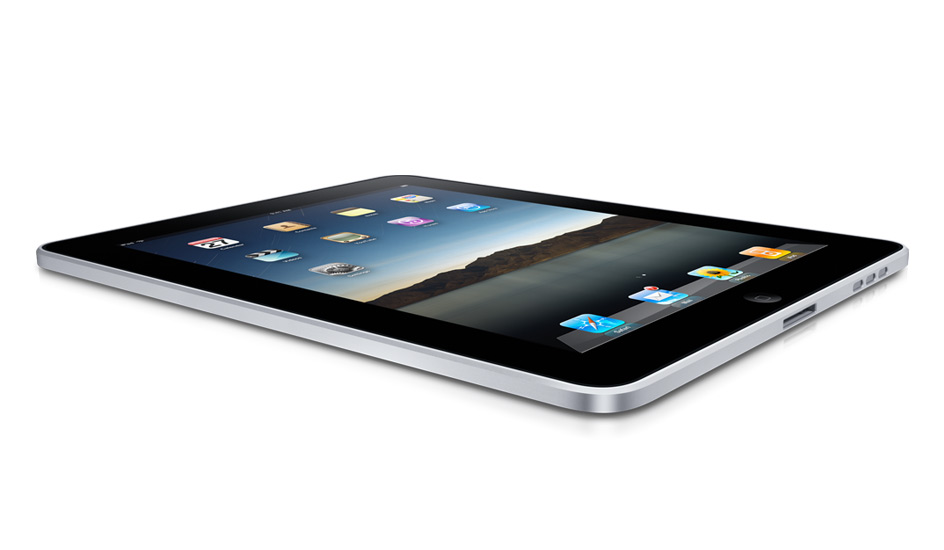
You can't click a link these days without bumping into news on Apple's new iPad. Some lunatics are already in line at Apple Stores across the country, waiting overnight to be among the first to buy the new device. My e-mail in box is swelling with new announcements of applications that are debuting for the iPad, and Apple released a list of Web sites yesterday that leverage HTML 5 (instead of Flash), making them "iPad Ready". Practically all forecasts expect the iPad to be a big success on par with the iPhone and iPod, not a dud, like the ill-fated G4 Cube.
After years of tablet rumors, which initiated well before the iPhone, Apple opted to deliver an iPad that didn't run a slimmed down version of Mac OS X (i.e. Mac OS X Lite) as many had anticipated, but instead, opted to go the route of the iPhone, without a Finder/Desktop mentality, led by Apps accessible from the iTunes Store, with an integrated Web browser, Safari. While we have grown used to mobile devices that download and deploy apps - be they from Apple, the Android Marketplace or for Palm's WebOS, these apps were not designed for a full-size computer, and Apple effectively turned its back on a 25 year history of nested folders.
The debut of the iPad comes at a time when Apple's most notable assumed competition may not be Microsoft, who is by far the market leader in folder and desktop-based systems (and the core software to run atop said machines), but instead, Google. Google in the last few years has emerged to not just be a dominant player in its search engine market, but has risen to be a major player in the mobile phone industry - taking Apple's iPhone head-on - but also the operating system world. Its announcements for a Chrome OS, with the Chrome Web browser at its core, make it a very serious alternative, one that is designed not for a world of apps, but instead, one of Web services and data in the cloud.
The strain between the two companies, now well documented, is seeping into the way the company's employees perceive one another (and their products).
For example, upon reading the news that Boing Boing's Cory Doctorow recommended against buying an iPad, Google's Adam Lasnik shared the piece on Google Reader, adding: "the future is Open, and thank goodness for that". The inference, of course, is that Apple's closed ecosystem, contrasted with Google's belief that they are promoting open standards, is not where the world is headed.

One Googler's Opinion on the Future
In November of last year, I said Google's Chrome OS was not about deploying today, but preparing for a future with a Web-centric world, where Web sites trumped applications, and standards like those promoted from the Buzz team allowed for a rich experience free of client software. Google's Chrome OS, unlike the operating systems of today, from Windows, Macintosh, Linux and others, lacks a desktop, or its equivalent. You can't exit out of the browser to see the hard drive, and it's like being at a permanent Web terminal. Applications run in the browser and crash in the browser - without any need to know if that's on Drive C or Drive D, in My Documents, My Settings or My Photos.
Meanwhile, in Redmond, Windows 7 has come and nullified many of the bad feelings about Vista. It's a pretty good operating system, all things considered. But it's not moving the ball forward in the way that the iPad/iPhone/iApps approach is, or in the way that Google's Chrome OS hopes to do. Apple and Google are betting, in no small part, that users will adapt to a new construct of how they interact with appliances. Apple's move seems to be more about manual input and self-contained applications, while Google is maintaining the keyboard approach, but doing away with the decades-old desktop and file folder structure.
Regardless of the over the top headlines asking if Microsoft can "survive in an iPad world", change takes time. While Apple was once seen as an outsider to a big market when they first launched the iPhone, and Google doesn't yet have penetration with Chrome OS, Apple now has significant mindshare and is seen as the one to beat in the innovation scale, but they haven't snuffed out Windows. Meanwhile, we haven't heard what Apple has in mind for Mac OS X Eleven. Will it merge the iPhone OS with Mac OS X, or will the dual operating systems evolve in parallel? I wouldn't be too surprised if Apple found a way to move us forward with the iPad and apps-based computing being the direction, with desktops falling away to the annals of history, but if they went this route, it is going to be a long haul indeed.
6 Comments
Louis, Very balanced view of where things are going. I think you are right on target. The trend towards cloud based apps that run in the browser is pretty clear. However, it will be a long time before most client based applications go away. Some may never go away. And that is OK.
There is not one approach or technology that is best for all workloads. The cost/benefit needs to be justified for each application. Low cost, continuous technology updates, no server costs, are compelling advantages for cloud based apps, but sometimes other concerns overshadow the advantages.
Most of the tech press goes for the sensational headlines and frames the new thing as killing the old. The reality is always more complicated and takes longer to implement. I admire your balanced approach to writing.
Don Dodge
Don, thanks for your wonderful comments. Appreciate your viewpoint a great deal, especially as you have been an integral participant at two of the three companies in this discussion.
I think you are right in terms of there needing to be more than one approach. Just as Google, for instance, could opt for a browser-centric netbook and app-centric Android platform, Apple could continue an app-centric iPad/iPhone platform and the desktop model with OS X.
As for sensational headlines vs. being balanced, I did use the word "collapsing" here, which is unusual for me. :) I appreciate your noticing my goal to be fair and accurate.
I am going to argue semantics here. If anything, the rise of the iPhone and other smartphones as well as the iPad have revitalized "desktop" computing. I am using desktop loosely as these mobile applications are definitely not cloud based applications like GMail. The difference is not the application as much as the desktop has changed, and the application deployment model changed. I am not saying that we are returning to desktops, but we are seeing an evolution of computing and applications that benefits a lot of people.
That is semantics, but I get where you are coming from. The iPhone and other smartphones leverage host-based data as opposed to cloud-based data. I get that, but the metaphor of desktops, folders and files is changing.
Google are open when they aren't first place, or can't make money off of it. Their search engine is completely closed. Convenient.
I see two key reasons why the desktop metaphor isn't going to disappear any time soon:
1. Different horses for different courses, i.e. the UI versatility in a local app will continue to be leveraged for the purpose of improving the user's experience and optimizing it within the specific application context. The standardized HTML-based browser capabilities will continue to be hard-pressed to keep up.
2. The integrity, speed, predictability and level of control associated with locally-running apps (even using some cloud-based services) will continue to be a deciding factor against a totally cloud-based environment for several years to come. In my opinion this will be the case at least with mission-critical applications requiring complex integration of multiple granular services to complete a single business operation.
Nevertheless, it will certainly be interesting to continue tracking Apple and Google in their quest to replace the desktop metaphor, which may just be down to how patient they're willing to be in seeing this type of dramatic result come out of their investments.