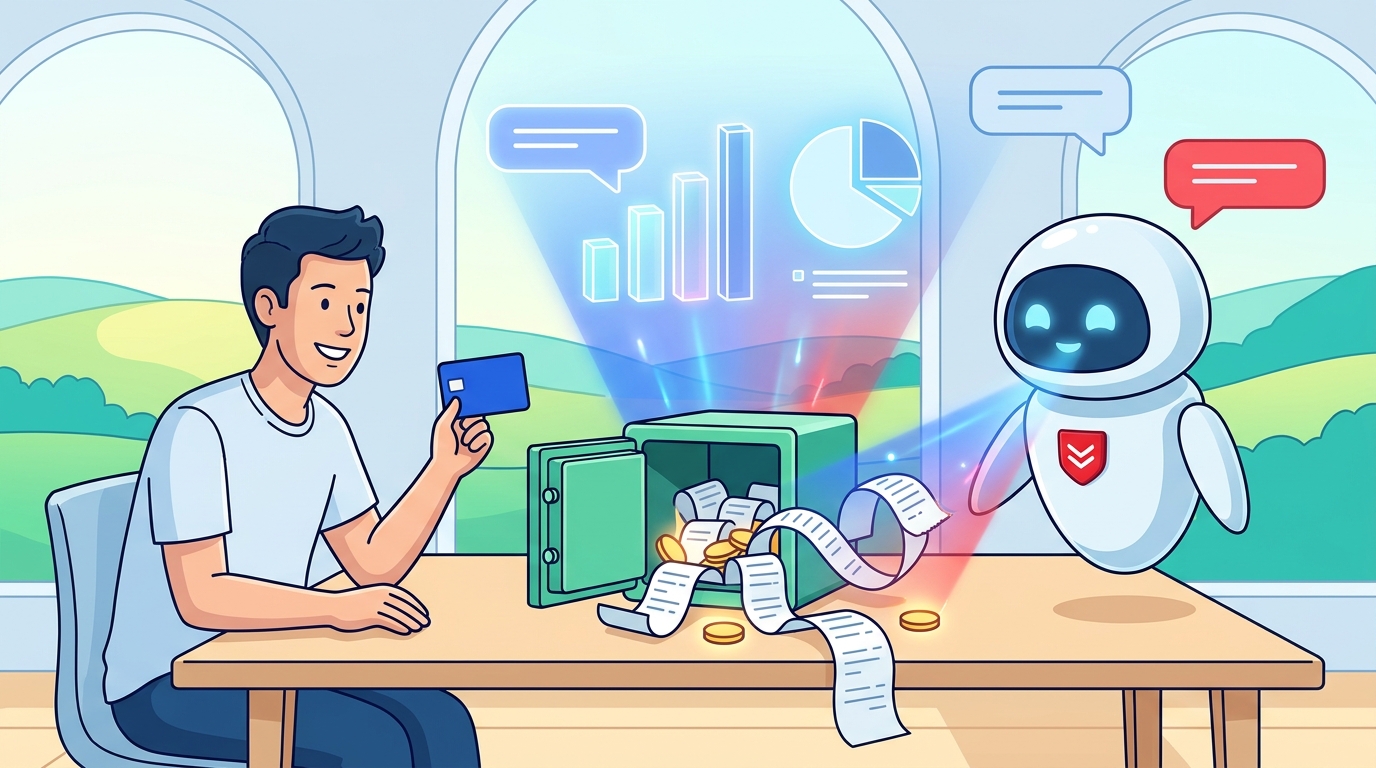
The world of finance will evolve. The LLMs are happy to help. [Image via Gemini]
Later, in 2010, I defended trusting Mint and Blippy with my financial data because a unified ledger beat flying blind across ten separate logins. My early adoption of Mint and Blippy even led to CNN coverage about the "end of privacy," using me as a test case for someone who lived out loud online, even sharing otherwise mundane transactions.
Fast forward 15+ years, and large language models genuinely solve the formatting headaches that tripped up those early Web 2.0 dashboards. Letting Claude (or any other LLM, really) reason across messy Plaid feeds in plain English -- spotting quiet subscription creep, comparing grocery bills across quarters, or separating a one-off tax transfer from monthly burn -- is a much cleaner interface than clicking through static pie charts.
I've even built my own one-person financial app in Antigravity, which scoops up my bank account balances, daily stock swings, and reminders for mortgage and car payments. I can click this Progressive Web App I built for myself and see exactly where I am on the +/- for the day, and see if it's even worth getting out of bed. That we can code up ideas and turn them into reality for practically any task is a brand new world.
But finance earned its conservative reputation. What happens when we trade direct accounting for probabilistic interpretation? If Mint mislabeled a charge in 2008, the bad data sat right there in the table for you to fix.
If a chatbot summarizes six months of bank feeds, a skipped recurring fee or a fuzzed category total may hind behind confident, reassuring prose, and assure the end user all is well, only for the IRS to potentially disagree later. Your transaction ledger is the ultimate truth about where you go, what you value, and what you can afford. Once frontier AI labs hold your live spending graph alongside your daily prompts, the chatbot becomes the stickiest lock-in in consumer tech. Read-only access is step one, but how soon will you ask your LLM to ask you which mutual funds to choose, trade on your behalf or even tell you what time is the right time to sell your house?