Showing posts from May 2010 (36 posts). Show all posts

May 31, 2010

Four Squared Signs You Are a Foursquare Addict

Four Squared Signs You Are a Foursquare Addict

For the last two months, I've been openly discussing my experimentation with Foursquare, logging my location at all sorts of places throughout my travels, and - gasp - even discussing the fact I cheat, while noting others may not be cheating, but they sure are leaving a lot of stops out. While my conversation with product manager Siobhan Quinn helped to provide some relevance to this whole process, I am still playing along.

While I am enjoying myself with my nonsense checkin stream, there are some surefire ways to tell people are taking location apps far too seriously. Here are 16 ways (Four squared, get it?) that I know you've got a problem. If I missed any, please do let me know.

  1. You know exactly how far away you have to be from a venue before you can check in, and also know how many different venues you can check into without leaving your house.
  2. If your phone is out of batteries, you return home to charge it instead of doing errands because you want to check in to those places once you go.
  3. You take the same routes to and from work so you can check in at various offices along the way, hoping to obtain mayorships without actually getting out of your car.
  4. You heavily consider or discuss with friends the benefits of going to a place where you are already mayor to boost your stats against going somewhere new to increase the number of venues.
  5. You set up or check in at venues for locations without buildings, such as "Highway 101" or actual people.
  6. You not only know what a "Super Swarm" is, but you can name every single one that has occurred.
  7. The Foursquare icon is in both your iPhone and iPad dock.
  8. If you not only achieved the Overshare badge with 10 checkins in 12 hours, but you wonder why the bar was set so low.
  9. You opened a gym membership and started working out just to get the Gym Rat badge. (Or complain when you don't get it)
  10. You recognize locals in your area who are Mayors of multiple places, and aggressively start searching Google to learn their weaknesses.
  11. If you actively have scouted all the nearby parks and are visiting them one by one, just to score the Babysitter badge.
  12. You wonder why you can't "Check in" that somebody called you on the phone, or that you accomplished basic tasks at the office.
  13. You refuse to meet with people unless they agree to check in at Foursquare with you.
  14. You get annoyed when you go to friends' homes that don't have Foursquare venues.
  15. You actively debate the merits of Foursquare over Gowalla and Brightkite to anyone who will listen.
  16. You set your alarm for after 3 a.m. on a weekday just to roll over and grab your phone to check in and grab the School Night badge.
If you don't mind seeing my silliness, and want to show me you are a Foursquare addict, check-in here: http://foursquare.com/user/lgloco. The "loco" stands for crazy.

May 29, 2010

In Today's World of Mobile Choices, Look to the Core

In Today's World of Mobile Choices, Look to the Core


Since gaining the HTC EVO at Google I/O last week, I have been using it exclusively, as promised, leaving my iPhone 3G aside in an effort to remove the Apple fanboy shackles and find what it is I may be missing or gaining by making a choice of one platform versus another. While others are already comparing the EVO device to the iPhone, I am going to save that post for early next week. But while I am thinking about phones and mobile devices in general, I think it makes sense to first consider how each major mobile platform provider is approaching their device. Find the core to each platform, and you will have a better guide as to what is the right choice for you.

The world of smartphones is one of the most dynamic markets today, one full of change, and innovation. Application developers and most of the top technology companies are looking to mobile for considerable growth, both in software and hardware revenue. As the phones become more capable in terms of processing power, network capability and memory, many activities traditionally aimed at the personal computer, or television, are finding their way to your handset. It's not enough to have a dumbed-down Internet for dumbed-down devices. Consumers are expecting the same Web experience on the go as they do when in front of their home or work PC, and they are expecting applications to behave in the same way as they do on the desktop. Armed with this knowledge, Microsoft, BlackBerry, Google, Apple, Palm (HP) and others are each taking their own direction, and you can see what they have tried to accomplish resulting in why market segments are gravitating one way or another, and whether they can gain share.

BlackBerry and iPhone have to contend with Android now

For example, let's take a look at three major platforms: BlackBerry, Apple and Google.

BlackBerry, at its core, is an amazing e-mail device. It is targeting those people who send and receive hundreds of e-mails a day. The common target customer for the platform is a business executive on the go, be they a Wall Street trader or a field sales rep. BlackBerry handsets are well known for their extremely capable QWERTY keyboards, while they are less known for their applications or Web experience. Customers who need a phone that does e-mail extremely well love their BlackBerries, and BlackBerry, even with its newest array of devices has not been able to shake its legacy of being a messaging device. You aren't likely to see people talk about BlackBerry as an amazing gaming platform, or one built to browse the Web in a more capable way.

For Apple, the core of their approach to the smartphone market is in iTunes, the App Store and their ties to digital media. The iPhone is practically an extension to their incredibly successful iPod line. The product is managed through iTunes, synchronizes music, videos and photos through iTunes, and the iTunes App Store (an extension to the existing iTunes Music Store) is where all new functionality arrives. The iPhone changed the game for smartphones in terms of eliminating the QWERTY keyboard and becoming touch centric, but it isn't known for being the best in the world at e-mail, like BlackBerry is, and the company's App Store approach makes iTunes both a conduit and a bottleneck for applications - as they need to go through tacit approval from Cupertino before gaining the green light. If you are a customer looking for an application-centric phone, or you want a superior phone built for music you own, or to show movies you rent from iTunes, iPhone is the best.

For Google's Android line, their core is the Internet and Search, just like the company's fleet of Web applications tend to focus on data in the cloud and superior integrated search. While the Android Marketplace is a parallel of Apple's iTunes Store, its core applications assume always-on Internet access, and proudly feature not just simple hooks to Google Search, but also voice-activated search. Its Navigation application taps into the cloud, and the company's newest features, proudly highlighted at Google I/O, are about enhancing the way the Internet can be leveraged to transfer data through the air to downstream Android devices. There is no equivalent desktop application to iTunes for Android, and the focus of the device is on delivering a high-quality Web experience and accessing apps that tap into the cloud.

Of note, the much-discussed tiff between Apple and Google presents a more direct conundrum for Apple iPhone users than it does for Android users. iPhone users still leverage Google Apps, such as Google Maps, Earth and search Google on Safari. But on Android, Apple is practically invisible. Strike that - it is invisible. So if the two had a messy divorce, only iPhone users would be negatively impacted.

So for those three players, what makes the best mobile choice for you depends on how you actually use the phone. Keep in mind that for none of these players is their core focus to actually give you a better phone experience. Even a "feature phone" can get that right without too much work.

But what about Palm? What about Microsoft? What is their core?

I believe part of the reason Palm failed with its WebOS approach is because they didn't have an easy answer for what they did better than anybody else. Their messaging around the Palm Pre was that it was "fully featured", offering both the beauty of an iPhone and the QWERTY keyboard of a Blackberry. But it didn't do either thing better than anybody else, and there was no compelling reason to choose Palm.

Microsoft's new Windows 7 Phone Series similarly makes me question their core. To date, Microsoft's core has been in Enterprise and Office. They have dominated the business OS market, the office suite market and have had significant roles in a wide array of downstream services, from e-mail to peripherals, and yes, entertainment devices with the XBox. If Microsoft can make a compelling case that their Windows 7 Phone Series is the best business phone that integrates Outlook better than BlackBerry, hooks into companies' Active Directory and synchronizes Office documents better than any other device, then I think that's their core. (See: PC World: Microsoft Windows Phone 7 Should Rule Business Smartphones) But even PC World says Microsoft sees smartphones "through the eyes of the desktop". The desktop business OS has been their core, and it's come too late. Even their usual fans at PC World say "Windows Phone 7 will face a formidable challenge just to establish relevance."

The world of mobile smartphones is not the same old war we saw with the desktop. It is one about Web connectivity access to rich media, and being social. I believe there is room for perhaps one more player who can make "social" the center of their phone. Maybe Google gets there. Maybe Apple gets there first. Or maybe one of the players like Twitter or Facebook can find a way to launch a line of phones or a phone OS that is all about social, at the core.

Until that happens, I think you really have four choices - BlackBerry, Apple, Google or a mistake. Know who you are and what's important to you, and the platform choice will become clear.

May 27, 2010

Podcast: On Paladin, Clients, Blogging and Influence

Podcast: On Paladin, Clients, Blogging and Influence

Despite the blog having my name in the URL, I try not to make the blog all about me. Instead, it's more fun to highlight new developments in tech, entrepreneurs and my perceptions of trends and innovation. Today, Jennifer Lindsay of Blog Talk Radio took a half hour to talk with me about the development of louisgray.com, clients I serve as Managing Director of New Media at Paladin Advisors Group, and what it takes to be an early adopter. Jennifer also took time to ask a little bit about my background, my focus in college, and my Superman vs. Clark Kent approach of focusing on enterprise companies all day and talking consumer at night. I hope you find the discussion valuable.

Jennifer posted the discussion on her site here, and I have embedded it below. You can find Jennifer on Twitter at @jennifered.


Google Buzz Adds Ability to Reshare Items in the Stream

Google Buzz Adds Ability to Reshare Items in the Stream

When you find interesting content in your social streams, it's very common for you to want to share that content to your own social graph - letting more people be exposed to what you found interesting. This need to reshare has led to Twitter's integrated Retweet functionality, and the ability to reshare items on FriendFeed and Facebook. Today, Google Buzz joins the resharing party, letting users of the nascent social network share content from any Buzz user to their own followers, while still providing attribution to the original source. The feature enhancement is said to be among the most popular user requests, and meets the team's objective of adding a new feature a week to Buzz.

Now, Buzz users, myself included, will have four options to spread the love for any individual item. You can still comment on the item and like it, or send it via e-mail, but a new "Reshare" button is included.

The new Reshare feature in Buzz

Unlike Twitter's new Retweet functionality, which does not allow for any modification on forwarding updates, Buzz opted for a "two-click" process, where you can click reshare, add a comment to say why you found the content interesting ,and then hit post to add it to your stream. And yes, the Google team thought ahead, so if a bunch of your friends reshare the same content, similar posts will be collapsed, so you only see each item once. Similarly, downstream reshares of reshares give attribution to the first poster.

A Reshared item in Buzz With Attribution to the Original

The official blog post introducing the feature talks about how resharing the post "forks" the conversation, essentially setting up two places in two different social graphs, to discuss the same content. This distributed comments debate has been fodder for much of its own discussion for a few years, but looks to finally be closing down, especially with the rollout of public comments on Google Reader announced just this Monday.

The downstream benefit of the Reshare feature will depend on the diversity of one's network, and if you cross multiple sharing circles. If your network is closed, it will simply add noise, but if you have a network of connections that extends beyond a small group, the feature could increase eyeballs to interesting content from all sources.

You can reshare anything I post to http://www.google.com/profiles/louisgray.

May 26, 2010

Podcast: On Foursquare, Check-ins & Facebook Privacy

Podcast: On Foursquare, Check-ins & Facebook Privacy

Following up on yesterday's discussion with new Foursquare product manager Siobhan Quinn, North Carolina blogger Wayne Sutton (@waynesutton) and I took time this afternoon to talk about how we see businesses benefiting from location-based services, and Google's role in the market. Additionally, we took a few minutes to talk about Facebook's announced changes to their approach to privacy, updated today in an event chaired by CEO Mark Zuckerberg.

In short, I said that I while I have always considered my content on Facebook public and open, the company's changes have negatively impacted users and were made worse through their poor rollout and a lack of clear communication. You can hear our comments in full in the below embedded podcast, and catch Wayne's blog here.

SocialWayne.com Podcast #11 - All about Location with @LouisGray by waynesutton

MyLikes CEO Says User Plugs Don't Cross Twitter Ad Rules

MyLikes CEO Says User Plugs Don't Cross Twitter Ad Rules


Increasingly, some of the new rules issued from popular Web platforms, including Facebook and Twitter, are raising more questions than answers, with words so carefully interwoven as to be interpreted any which way. The call for clarity from Facebook around privacy and from Twitter around what is permitted in users' streams from developers and programs alike seems to be unending - and it seems at times that the companies are being obtuse so they can be selective on how they choose to endorse the rules down the line. Monday's announcement from Twitter on blocking "injected paid tweets" on any service that leverages the Twitter API had a lot of people asking what this meant for services who derive revenue from posting content to the service. MyLikes, a company I advise for, was one that received questions. I spoke with CEO Bindu Reddy (@bindureddy) that night to gain her take and get some of the answers myself.

As best as I am able to understand it, Twitter is continuing to try and improve the user experience on their service, which at times has been less than fantastic. On the back of their efforts to weed out spammers, reduce the artificially-inflated visibility of hand-selected celebrities, reduce negatively-intended automation, improving uptime, and expanding a familiar presence to onboard new users, Monday's announcement looks like they want to improve the clarity of sponsored content on the network, while also protecting their own revenue stream.

The relevant line in question from Twitter COO Dick Costolo, says: "aside from Promoted Tweets, we will not allow any third party to inject paid tweets into a timeline on any service that leverages the Twitter API." This line particularly focuses on the use of API for automation, and also the phrase "paid tweet", which is open for interpretation. What is promising in the piece is that Costolo says the company does not seek to control the content on the service, and that companies are open to sell ads, build vertical apps and analytics, and that the company does not always need to participate in revenue generated from their service. It sounds to me that Twitter is planning ahead for future battles with nefarious networks that are not in users' best interest, much more so than they are seeking to slow legitimate companies that have been built around their ecosystem.

As I mentioned when I first announced my affiliation with MyLikes, I am attracted to the company's model because the ads posted to Twitter, blogs and other networks are done by hand, by the users themselves, with the user creating the message. There is no automation on the user's behalf that they have not created themselves, and all the activity is above board.

In talking with Bindu, she agreed this sets the company apart from Twitter's foes. Also - a MyLikes generated tweet is as much of a personal endorsement as it is an ad, leaving this activity free and clear. In fact, while Costolo's post was somewhat confusing, we both agreed Twitter's move was one that continued their path toward maturation.

Update: You can also see Twitter API Lead Ryan Sarver (@ryansarver)'s comments on the situation here.

To hear more of Bindu's thoughts, check out the Cinchcast I recorded below:


DISCLOSURE: I am an unpaid advisor to MyLikes. I hold a small equity stake in the company. My comments on the company's product are always independent, and do not pass their way in advance.

May 25, 2010

Siobhan Quinn Exits Blogger, Checks In at Foursquare

Siobhan Quinn Exits Blogger, Checks In at Foursquare

After seven years at Google, including the last two and a half as a product manager on the company's Blogger platform, Siobhan Quinn handed in her badge yesterday, and will start on June 7th as the first product manager at the fast-growing, location obsessed, Foursquare, in New York City, joining head of product Alex Rainert. Siobhan is the second of Blogger's three product managers to have recently made a move, following Rick Klau's move to manage Google Profiles last month. I talked with Siobhan today to find out her thoughts on Foursquare's potential, and how the company can transition from one beloved by "Silicon Valley nerds" to a more mainstream audience, delivering real value.

Siobhan initially joined Google in 2003 as part of the Google Accounts team before Accounts had launched, predating even the launch of GMail (in April of '04). She says she worked on the front-end to Accounts, the sign-in system, and new account flow, helping to connect accounts to many of Google's other properties, including Adwords, personalized search, Google Checkout and, of course, Blogger. But she admitted she hasn't written code in a few years, and has been working to push Blogger from its relatively slower pace of updates to one that has seen increased activity, including the recent launch of the Blogger Template Designer and last week's launch of new Webfonts, with a corresponding API.

"That's why I am excited to leave now," she said. "I made an impact on Blogger, and I've been at Google for 7 years. It is time to do something much different."

How different? Siobhan is leaving a company of 20,000 employees to one of just a hair over 20. Foursquare has gained a lion's share of attention in the tech blogosphere for its checkin application, but in reality, the team remains extremely small. And while many of us have blended our interest in Foursquare with a mixture of curiosity and skepticism, she makes a compelling case for the future of the product - as the platform morphs from one focused on badges and gaming to one more centered on reviews and tips from your social graph.

Siobhan postulates that Foursquare tips can become a lot more useful as more people use the service, and start to fill in the system's data, even with what I've always thought were the mundane check-ins as gas stations, fast food restaurants, office buildings, or parks.

"We can make tips a lot more useful," she said. "For example, if you are looking for a dentist in your town, and people in your social graph have reviewed a dentist near you and checked in three times this year, that's powerful for me. That's the dentist I would want to go to. Combining checkins and reviews and your social graph would be a powerful demand generation tool."

For many Foursquare users, the fun in using the application has come from gaining mayorships and accumulation of brightly colored badges. As I joked maybe Foursquare would be moving to offer vice mayorships, deputy mayorships and other titles, she agreed that "there need to be more opportunities for users to win", adding "the mayor should be able to set some laws. Maybe the mayor can design the drink special."

Beyond the recommendation and tip aspect from connected friends within the Foursquare social graph, businesses have many opportunities to leverage checkin activity that hasn't yet been tapped, she said. While Starbucks gained good visibility for offering $1 off Frappuccinos for the store's mayors nationwide, their efforts are the exception and not the rule today.

"If you're at Wendy's and you get three other people to check in with you, maybe you get a free meal," Siobhan suggested. "And then, maybe that makes the restaurant trend and become the hotspot to be. For users who are not in the geeky, trendy, Silicon Valley area, and are offered incentives to add reviews and checkins, they could be included to do that."

Her last role at Blogger centered around many people bringing their offline lives online, and sharing their stories. But Foursquare has the power to impact offline behavior, as friends seek out friends and experiment with new venues - practically a 180 degree turn.

"Foursquare is making people explore a little more and step outside their comfort zone," she said. "I like any product that makes people's lives more meaningful offline. It encourages you to explore and try new things away from your computer."

Siobhan doesn't have much time between now and her first day at Foursquare HQ - giving her just over a week to pack, sell her car and furniture, and head to New York with her dog in tow. Siobhan (according to her Foursquare profile) is mayor of ME Cabo in Cabo San Lucas, but hasn't claimed any Bay Area properties. Maybe New York will bring her more luck. Until she starts logging checkins on the East Coast, you can find her on Twitter at @siobhanquinn.

Meanwhile, Blogger remains in the hands of Chang Kim, who joined the team after Google acquired his company, TNC, in September of 2008.

May 24, 2010

Google Reader Enables Public Comments on Shared Items

Google Reader Enables Public Comments on Shared Items

One of the best benefits of sifting through hundreds of new RSS items each day in Google Reader and selecting the best ones to share has been the ensuing conversations that have developed as a result. It used to be that these conversations were limited to networks like Socialmedian and FriendFeed, but they later took place within Google Reader itself, for all friends I had hand approved, and later, in Google Buzz, assuming I had given people permission. Now, the Reader team has removed the hassle of picking who was enabled to comment or not - making shares have the option to be public to the world for conversation. This highly anticipated move is a big reason I have continued to be so bullish about sharing Reader items and participating where they land on Buzz.

If you have not already seen the prompt, the next time you enter Google Reader, you will see the option to "Keep my shared items public" or to "Make my shared items protected". Hit "Save" to keep comments public, or choose to keep the shares open to only contacts in your friend list.

You Can Now Make Your Shared Items Public to All

This move is incredibly simple, when contrasted to the labyrinth of privacy settings required at Facebook to determine where your content is being displayed, and it protects those who have previously opted to make their Reader shares private, as explained in the company's blog post announcing the changes this afternoon.

My Shared Reader Items Are Visible to All

The ability for the world to comment on Google Reader shares should be a big boost to Buzz, as even more places are open for discussion. As mentioned in April, statistics show Reader shares as the 2nd-highest source for conversations on the network. This should bring that percentage up a great deal.

Want to see my shared items? You can find them here, or we can get connected on Buzz.

Hey iPhone, Forward All My Calls (To Android)

Hey iPhone, Forward All My Calls (To Android)

This morning, when I left for work, I also left my iPhone at home. Blasphemy, I know. But in the interest of giving Android a fair shake, which I have never done before, I have told my iPhone to forward all my calls, and intend to use the HTC Evo 4G (powered by Sprint) that I received from Google I/O last week, exclusively, for the entire week. Since gaining the device on Thursday, my iPhone use has already dropped down to a mere minimum, as much for testing as anything else, and I am finding where Android's latest offering matches up, and the cases where Apple clearly still has an edge. While it makes sense to leave anything resembling final decision making until after the conclusion of WWDC next month, I want to end May as an informed citizen who has equally consumed the Kool-Aid from the two warring camps - not as an uninformed bigot who will throw down whenever anyone questions his undying allegiance.

Deciding which direction to go as a consumer, one with significant history on one side (Apple), will depend on a few things:
  1. Will making a switch eliminate any problems I have with the current platform?
  2. Will making a switch gain me features I am missing on my current platform?
  3. Will making a switch introduce new problems?
  4. Will making a switch remove my access to things I am used to?
Clearly, new features and removed problems would be fantastic - while dealing with new headaches and lacking functionality would be less than ideal. I expect to find all of the above, and the frequency and severity of 1 through 4 will aid toward my long-term decision.

First things first, going a week on Sprint's network instead of AT&T's, should make it clear how the two differ, after nearly two years of my battling dropped calls and flaky 3G connections.

Secondly, I will need to find out which applications that I use on a daily basis on my iPhone have equivalents on the Android platform, and which do not. For those that do have equivalents, I will need to find if additional costs are needed to make them available.

While all the industry buzz is around Android Froyo (2.2) and the iPhone 4, planned for June debut, or so we think, I am admittedly a little behind already in both cases. The HTC EVO, while much respected on the hardware side, is running Android 2.1, and I am going to have to compare it with my iPhone 3G, at least until version 4 shows up. This means that Apple doesn't get a perfect position from me - as I am not contrasting it with a 3GS, and its camcorder, improved speed, etc., but I'll try to be realistic.

Forgoing a more thorough review, best saved for later, making the transition from iPhone to Android seems pretty simple. I set up my Apple mail account on the phone, as well as GMail. I configured the native Twitter client, as well as Google Buzz. The embedded Web browser is quite good, and streaming my personalized Last.fm radio station hasn't had me missing iTunes. The addition of an 8 megapixel camera and a video camera to the phone are also solid pluses for the EVO. On the flip side, I have managed to crash a number of apps, and their error messages haven't been too user friendly. Meanwhile, it turns out the rather simple act of taking a screenshot on Android is best reserved for someone with a computer science degree, not nearly as simple as on iPhone.

For the most part, I have found the applications I use on the iPhone to be available on the Android Marketplace. I don't have Cinchcast for simplified podcasts, and I couldn't find Redfin for real estate, but with those exceptions, practically everything is there. I have heard people say that some of the applications on the Android platform are not as well done as those for the iPhone, and I understand where they are coming from. There's a mix of Windows/Linux feel to some apps, while iPhone feels more like Apple, but I am trading form for function where it makes sense.

Having a phone that multitasks is a wonderful thing, and I haven't dropped a call yet. But I'll see how I feel about this particular platform by the end of the week. Let me know if you have any particular questions about the hardware or software you want me to test, and I'll do my best to give it a run.

Disclosure: I received the HTC EVO free as part of my attending Google I/O. Similarly, I gained my iPhone 3G from Socialmedian back in 2008. I guess that makes me cheap.

May 23, 2010

Video: The Gradual Demise of Social Media Marketing

Video: The Gradual Demise of Social Media Marketing

Nearly two years after I said those calling themselves social media experts are going to be as antiquated as those who once called themselves Webmasters, I continue to see confusion at corporate levels on how to engage in social media, and how to make this new world fit as part of their overall strategy. As I have seen in my work with Paladin Advisors Group, there remains a gulf between traditional firms doing traditional things and those who are grasping the new opportunities in social media, devising a strategy and doing the right things at the right times in the right places.

In a quick video, a companion to that from April (The Start of the Connected Decade: Now What?), I once again team up with Ecademy chairman Thomas Power and talk about how I think social media is going to become more integrated in traditional marketing, and that the mystery will fade away. Thomas also expresses a valid point - that those making the most money are often the most disconnected from their customers. He says that should change - and soon.

May 20, 2010

TweetDeck Aims to Be Client for All Streams In All Places

TweetDeck Aims to Be Client for All Streams In All Places

I touched briefly on TweetDeck's promised integration of the Google Buzz API yesterday evening, but did not gain the opportunity to try Iain Dodsworth's latest client until today. Luckily for me, I also ran into Iain at Google I/O this afternoon, and in stopping to congratulate him on his firm's raising $3 million in funding for a B round to fuel continued expansion, we talked about TweetDeck's future and got a sneak peek at some unreleased versions looking to hit computer and mobile screens soon.

The latest TweetDeck, available from their site, not only incorporates Buzz updates, but also Foursquare - much like its online cousin, Seesmic, had announced earlier this week. The additions mean that, should you choose to do so, you can view updates from Twitter, Facebook, LinkedIn, Buzz, Foursquare, and MySpace all from within TweetDeck's signature columned interface. TweetDeck was also featured running in full HTML 5 in the Chrome Web browser during Wednesday's keynote, and I saw it running again, on Iain's demo Mac today. In addition, Iain showed a sleek Android client of TweetDeck that's bound to hit very soon.

Adding Buzz and Foursquare to My TweetDeck

One of my main suggestions/complaints about Buzz in its 100 day life is that it is so closely tied to GMail. Even if I use GMail as a secondary account, I have always done so via IMAP, and read my GMail updates in Apple Mail. As a result, getting to Buzz requires a separate login to GMail.com, and then clicking the Buzz tab. It has always felt the same as using a product in emulation or virtualization mode, and native is always better. But getting the Buzz stream in TweetDeck is surprisingly clean - and is a solid alternative that doesn't force me to go through GMail.com first. From there, I can post directly to Buzz (but not with rich media yet), I can see others' streams, and add likes or comments right from within TweetDeck.

Hiding Foursquare from Other Columns! Yes!

I am also extremely partial to the option to add Foursquare as a separate column in TweetDeck while simultaneously hiding Foursquare updates in the "All Friends" column. Great move.

While many Twitter developers were shaking in their boots over the company's acquisition of Tweetie and development of Twitter for Android, Iain said he had no such fears. TweetDeck is focused on the high end of the market, he said, one that does not fear complexity, but is instead looking for a rich and heavily featured social media experience.

Buzz Activity Front And Center In TweetDeck

With TweetDeck's multi-column interface becoming instantly recognizable, more and more services are no doubt jockeying for position. As we were at Google I/O, we only partially joked about a Google-centric TweetDeck (GoogleDeck?) that would pull in Buzz, Google Wave, and Latitude, in lieu of Foursquare.

Iain reported that TweetDeck has swelled to 15 employees in the nearly two years since the product debuted in mid 2008, adding that even if TweetDeck were revenue-free, the $3 million raised today would last the team about two years, all expenses included. But TweetDeck has already found revenue streams, part of why the VCs are interested in getting a deeper position. Getting on more screens in more places with more content will no doubt make the product the feature-rich alternative to standard Twitter, and seeing Buzz in the client is already pushing more activity back to that network - making the move a win for both parties.

Do iPhone Users Face a Draconian Future?

Do iPhone Users Face a Draconian Future?


At the end of 2009, fed up with AT&T's ridiculous lack of quality, and knowing the iPhone's current platform was long in the tooth, rumors of Google's new uber-phone were making the rounds, leading me to say you would have to be insane to get a new iPhone now. Even as rumors of the new iPhone 4 are making their way around the Web, through early exposures and leaks, I continue to think something dramatic and amazing has to come out of Apple HQ to change that opinion - and after sucking down the Google Kool-Aid all morning at Google I/O today, I really wonder if they can do it. Part of me says they can't and that it's time to stop investing in this platform - even if I know it's going to take some time for my wallet to catch up.

Any resistance I may have had to the Android mobile platform, which has always been more of curiosity than lust (See: It Just Might Be the Droid You Are Looking For from November 2009), was pretty much eroded today as Google landed body blow after body blow against Apple in terms of displaying speed, support for more platforms and media, portability of applications, and ease of synching between devices and libraries.

The noise around who has the most apps or the most users has really become background now, and we need to look at what device can help us get our work and entertainment done in the best way for the best price. Google was bound to have the lead in terms of the numbers of devices available, and the carriers supported, but today's extremely convincing demos showed how the speed of innovation at Apple seems to really be lagging - and the decisions at Cupertino, tying to AT&T's ridiculous mediocrity, and sparring over Flash, are distracting from the ultimate goal.

Vic Gundotra, vice president of engineering at Google, said it was "critically important" to create a free open source mobile OS with innovation at every layer of the stack. "Otherwise, we would face a draconian future controlled by one man and one device - a future we don't want," he added.

That one man? Steve Jobs. The one device? The iPhone. Duh.

Gundotra's demonstrations of the raw numbers of applications and user growth were less important to me than they were for the target developers community. Suffice it to say it was "enough" and "a lot". But Google's massive array of engineering talent looks like they are doing two things - eliminating the holes Android may have had in comparison to the iPhone platform (such as app updating and music library portability) and leaping forward with tethering, portable hotspot functionality, and superior deployment of JavaScript, Flash and HTML 5.

"We're not only committed to having the world's fastest browser, but the world's most comprehensive browser," Gundotra said. "It turns out that on the Internet, people use Flash. Open means you are inclusive, not exclusive and open means innovation."

Open means a lot of things to a lot of people, so I won't get into that. For many, Flash is a perfect example of what's not open. But what keeps going through my head is that unless Flash really has a hugely negative impact on my experience, stop getting in my way and give me my content - period. Google isn't playing games of censorship in determining what media types I can get on my device. They just want it to work better, and faster.

Gundotra demoed how you can now browse the Android marketplace on your PC or Mac and can download applications and music directly to your phone, over the air, without iTunes getting in the way. "We discovered something really cool. It's called the Internet," he joked.

Similarly, the ability to map your non-DRM music, via iTunes, for example, to the Android device and make it available, is a huge step forward for a potential iPhone switcher - powered by Google's acquisition of Simplify Media. It seems everywhere Apple used to have a lead, with the exception of UI and integration with its other devices, Google has wiped those out and is moving beyond conventional thinking. Barring something dramatic out of the WorldWide Developer's Conference next month from Apple, I think we just might be done buying iPhones.**

** I reserve the right to give all my money to Steve directly whenever I want and may change my mind later.

While Apple Slept On Their Hobby, Google Executed

While Apple Slept On Their Hobby, Google Executed


After noting Apple practically being a zero in terms of mentions in yesterday's keynote at Google I/O, today saw the gloves come off as Google came out swinging against its competitor - and it had to be noted, even from this longtime Mac customer - that many of the punches landed, again and again. Most damning? Google actually took TV seriously - instead of teasing customers with a streamlined device, like the Apple TV, which looked great, and functioned well, but was often dismissed as not being a central focus. The result, despite the occasional bumps in the morning's demo, is the latest and most credible offering yet that could unify the worlds of Web and television in one place - on the biggest screen in the house. (See the official Google TV site)

Back in 2007, I had high hopes for the Apple TV. I openly questioned those naysayers on the device, celebrated its small feature updates, such as adding YouTube support, and postulated how it could compete and defeat other businesses, such as Netflix. But it seemed Apple had other ideas for the device - pretty much ignoring it, even as the company saw tremendous focus in other places - first with the iPhone, and now with the iPad.

Yes, the Apple TV still works. Yes, it can still show photos and YouTube and my music and pull down films from iTunes. But it's a siloed dinosaur.

Google made its antiquity especially clear today, as instead of using Apple's divide and conquer mentality, with Apple TV being completely separate from your TV, the company promises to bring the Web to the TV, complete with a search box that finds content, no matter where the source. The reason this has a much better chance to succeed than Apple TV ever could? Commitment. Commitment from the company's leadership, from partners, and to the word they keep smacking us with - openness.


Rishi Chandra, product manager for Google TV, says the company's new offering is about "taking the best of what TV has to offer today and what the Web has to offer today and give a seamless experience", which should result in the ability to find playable content - no matter where it is and bring it to the big screen.

Built following a history of unsuccessful challengers, such as Web TV, Google's massive potential comes from several points - including the immediate leverage of the Android platform, including the application marketplace and command from any Android mobile device, the full-fledged Google Chrome browser, the obvious support of YouTube, and alliances with Adobe for Flash and teaming with leading industry partners like Sony, Logitech, Best Buy and Intel to make the entire ecosystem do its thing.

As an Apple user, and as a TiVo customer, I have grown used to those two companies playing a significant role in my TV entertainment experience. Those two companies are exceptional when it comes to getting user experience right and making things feel smooth. Google hasn't managed to replicate that feeling of seamless integration yet, but their ability to display bookmarks on TV, to download apps from a PC and have them hit the TV, and manage the TV from multiple devices at once all look like they are getting so many features into this thing that there is really no way somebody like Apple can compete, even if they were to buckle down and try for real this time.

Google and its partners promised that the first television sets, set top boxes and input devices will all start hitting shelves by Fall of this year - in time for the holiday shopping season. It will remain to be seen how customers take to a new platform with devices coming from different sources, but it looks like it is Google that is "Thinking Different" about the TV and trying to open it up as a platform for its many developers to leverage - all while Cupertino pretends its Apple TV doesn't exist. As an Apple TV owner, I am disappointed in the lack of attention paid to this product, and think often my loyalty may have been taken for granted. But Google is executing so well in so many areas, it is obvious we have an alternative, one that, if the UI is excellent, could change the game.

Best Buy CEO Bryan Dunn, speaking with Google CEO Eric Schmidt, referred to the new Google TV platform as "not just a new aisle but a new category". Rishi Chandra echoed his comments saying, "Our goal is to have the same impact on the TV experience as the smart phone did with the mobile experience."

The TV looks like it finally may get smart. I just want to know why Cupertino played dumb for so long.

May 19, 2010

Google Buzz API Debuts, Fueling Potential Network Growth

Google Buzz API Debuts, Fueling Potential Network Growth

Google Buzz celebrated its 100th day of public existence at Google I/O Wednesday with the introduction of its much-awaited API, and the immediate adoption of that API from some interesting showcase partners, including Seesmic, TweetDeck and SocialWok. In the last three months of Buzz's availability, I've discussed how Google had aimed to avoid offering proprietary standards for developers to point their applications to, choosing instead to work with open tools including OAuth, AtomPub, Activity Streams, Pubsubhubbub, RSS and WebFinger. On Google I/O's first day, the company showed the first fruits of that labor, giving the fledgling network the opportunity to tap into the same developer community that other services, including Twitter, Facebook and LinkedIn, have enjoyed.

Chris Chabot (@chabotc), a developer advocate for Google, explained the role of Buzz at Google Wednesday, saying that "The Web is better when it is social," chronicling the rise of social activity to the point where having a social profile online is as common as having a mobile phone. "The Web is becoming a social place. It is moving from a static place to one about people sharing experiences, playing, working and talking together," he said.

Initial Partners Using the Google Buzz API

But as Google's social team has chronicled several times, including Chris Messina's talk on Activity Streams at SXSW this Spring, many of the different destinations on the social Web speak different languages. Rather than inventing a new language, Google wanted to utilize existing standards to avoid such headaches, and make Buzz part of the Web's infrastructure, "not a special destination."

In April, after one particularly nutty report was issued on Buzz's aggregation statistics, we proved the majority of Buzz's active content originates on that network. The new Buzz API makes it easier for third party clients, such as Seesmic and TweetDeck to push comments, likes, rich media and other updates to the network, but also to consume content from Buzz in users' favorite application. This seemingly minor move - one already seen by Facebook and LinkedIn, puts Buzz on par with those historically larger networks, and ahead of scrappy startups like FriendFeed, which never gained such prominence.

Google Buzz Displayed In Seesmic (Next to Foursquare)

Marco Kaiser (@marco) of Seesmic, who demonstrated his company's application pulling and pushing data from Buzz, said Seesmic wants "to support as many services as possible to as many products as possible", and as of today, all of their products, including the Web version, Desktop and Android clients, let you add Buzz as an account and see Buzz content alongside Twitter and other updates. This caps a busy week for Seesmic, following their Monday addition of Foursquare and other updates.

While Twitter has had an off and on relationship with its own development community, the ease of developers creating applications and Web services has led to much of the service's growth. Buzz, assuming expanded adoption of their API by other partners, could receive the same kind of boost that so far has been lacking in the service - seemingly siloed despite so many promises to connect with the outside world.


In addition to the announcements by Seesmic and other partners, Google introduced a testbed for developers to try out the API, which you can find at http://www.buzz-demos.com/. The test site lets you display your stream, add, edit and delete content, follow and unfollow others. It surely won't be all that long until many of the automation tools that have existed in Twitter's ecosystem make their way to Buzz.

As someone who long begged for services like FriendFeed to be supported by major clients like TweetDeck and Seesmic, but didn't see it happen, the rapid adoption and seeming ease of the Buzz API is a huge endorsement for the future of the network. It could have something to do with Google's name being attached, or the ease of the standards, but the potential is there nonetheless.

Google's official post on the new Buzz API is here: Introducing the Google Buzz API. You can find me on Buzz here: http://www.google.com/profiles/louisgray.

Former FriendFeeder Kevin Fox Exits Facebook Henhouse

Former FriendFeeder Kevin Fox Exits Facebook Henhouse

Only a little over two years ago, I covered well-respected Web user interface designer Kevin Fox's leaving Google for the then-startup FriendFeed. That's practically ancient in the world of the real-time Web, as since then, the company essentially rose and fell, before being absorbed into Facebook last summer. For the most part, the site was left on but ignored, as the team, now at Facebook, spread out and took on new challenges. Now comes word that Fox has determined nine months at Facebook was enough, so he is bidding "farewell".

Kevin's leaving Facebook marks three known defections from the social networking giant since the talent buy was announced, including Gary Burd's October 2009 exit and Ben Darnell, who joined Brizzly a month following.

Kevin did not indicate any specific incident as a contribution to his leaving, calling his work with Facebook's "world-class designers, PMs and engineers" a privilege. He says instead that it's "time for the next adventure", hinting he will take vacation and go into private practice.

He said as much to me earlier this week, saying, "I'm really excited to do my own thing after a summer vacation. No jumping from one ship to another."

Previous to Facebook and FriendFeed, Kevin led the design of GMail 1.0, Google Calendar 1.0 and Google Reader 2.0, after he had also spent time at Yahoo! at the end of the Web 1.0 era.

At Google I/O, Apple Is Invisible and Ignored

At Google I/O, Apple Is Invisible and Ignored

Speaking in the shadows of Steve Jobs keynotes past, the first day of Google I/O seemed to work around the elephant in the room of Apple and Google's recent conflicts and ongoing battles in mobile, advertising and the OS. Apple, of course, was not a speaker at the conference, is not participating in any of the breakout sessions, and it seemed as if Google's spokespeople went out of their way to work around Apple's positions on app stores, standards, and most notoriously, Flash. The war between Apple and Google has been heating up over the last year, and as of January, the two companies were said to consider the other as primary enemies, even as Google has made it easier for traditional Mac fans to seek out an alternative. But today, not only did the speakers not bring up Apple, or note their lack of inclusion in some standards, but practically every Mac laptop that was used saw the familiar glowing Apple covered with a Google sticker of some sort.

While the morning's keynote did not slam Apple or its products, as some light teasing was reserved exclusively for Microsoft's Internet Explorer, consistently highlighted as a non-modern browser, it was clear that the speakers wanted to promote open standards wherever possible, gave significant stage time to Kevin Lynch, CTO of Adobe, the purveyors of the much-aligned Flash, and it wasn't until 10:40, 100 minutes into a near two-hour keynote that you even saw an Apple product - the iPad, which was used to display a lengthy demo of Google Web Toolkit, integrated with VMware's SpringSource.

Additionally, as Daring Fireball noticed, the ambitious WebM Project, based on the VP8 video codec, was shown as being supported by practically every major browser and application vendor - with Apple being a clear exception.

Without presenting themselves as the anti-Apple, Google's call for openness, its drive for support of Adobe Flash, its demonstration of Android-based phones in all cases, masking of Apple logos whenever possible, and its seeming lack of awareness of walking in the same halls as Macworlds past, seemed to drive home that the team from Mountain View has a very different objective than does the team from Cupertino. In light of the fact that many seemed to think that the iPad would be the savior of media, it's eye-opening that Sports Illustrated spent so much time this morning championing the Web and Google's Chrome offering. Google looks like they're moving beyond Apple's control and is finding a way to deliver the same experience, on their terms, no matter what Steve Jobs says.

Chrome Web Store Fills In Questions on Chrome OS

Chrome Web Store Fills In Questions on Chrome OS

Following Google's introduction of the Web-centric Chrome Operating System, my biggest questions around the project have largely been divided into two pieces - the first being the expectation of pervasive high speed Internet and the second being the availability of high quality Web applications that could replace the desktop environment. And while the first issue's answer depends largely on your location, the second issue is showing serious signs of being filled with this morning's introduction of the Chrome Web Store. At Google I/O today, the tease of the upcoming Web store brought serious intrigue and as one of the major highlights in what was an extensive and comprehensive near two hour keynote. And avoiding all hyperbole, as best as I am able, I came away so impressed with the potential of the Web store that it had me rethinking how the introduction could radically change the paradigms of how we obtain applications today and how we interact with our operating systems, desktop apps and online commerce.

As Sundar Pichai, vice president of product management at Google, explained, customers have long struggled to find Web applications - lacking ratings and reviews. In the world of mobile phones, this has largely been solved with fantastic examples of Apple's iTunes Store and the Android Marketplace, but for Web Apps, there has not been a centralized source to obtain these apps, run these apps and - should the option be available - pay for these applications.

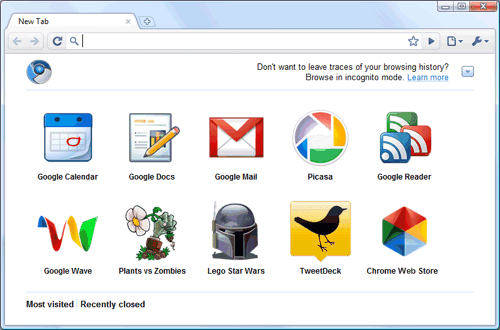
Some Web Apps In the Chrome Web Store

Pichai said the problem pointed in two directions - first in users struggling to find the apps, and second, the developers finding ways to be discovered. Additionally, users' tendency has always been to think Web applications should be free of cost, forcing most developers to go the advertising route to make revenue. The Chrome Web Store intends to shake that up. One major benefit of shaking up the way users find Web apps, developers promote Web apps and Web apps make revenue? Centralizing a source for applications for Google Chrome - not just as a browser, but .

In April, I wondered about how developers were going to have to work in a world with so many different platforms vying for their attention. Developers are having to decide not just between the major operating systems, but also between the different mobile operating systems, like iPhone and Android - with WebOS from Palm also facing an uncertain future in its new home at HP. One alternative, and one that Google certainly hopes will become the future of app development, is to leverage Web standards and code for the browser.

While the Web's origin was around static documents, it is obviously becoming a platform for rich and social applications. New capabilities, many of which leverage the much discussed HTML 5, enable Web application developers to create high quality rich experience applications that run within the browser, not on the desktop.

"The future of the Web is HTML 5," Pichai said, adding that the 70 million Chrome users who use the browser, contrasted with 30 million last year at this time, would have access to the new Web store in their browser every time they started up. And this future demonstrated a number of full-featured applications, not scaled-down options or dumbed down options we've grown used to in a Web browser experience, but the real thing - and sometimes even more.

Today's demonstration from Sports Illustrated's Editor, Terry McDonnell, of the company offering a full magazine experience - plus interactive, updated, scores and rich media, looked like the first real alternative to the print edition I would possibly be interested in paying for - oddly, the same thing people said about apps on the iPad when Apple's tablet launched. And yet, at times, I was thinking that this kind of a Web store could potentially even have more of an impact on the future of Web development than a single tablet could - creating the opportunity for Web applications to make money in the same way that Apple's iTunes Store has, and start to help customers realize the value of high quality apps, based on leading technology standards, that could drive incremental revenue.

If Web services and Web app developers find a Web store - for profit - compelling, this could potentially drive the same kind of gold rush to Chrome's Web Store as we have seen to iPhone and iPod Touch and iPad in the last few years, helping to further promote Google's Chrome browser, and of course, the planned operating system. The more apps available for the operating system, pushing data stored to the cloud, the fewer holes and questions there are around Chrome's future.

This announcement was more than flashy cover photos on Sports Illustrated (which were cool) or seeing a Lego version of Star Wars played in the browser (doubly geeky). This was about redefining the approach to online commerce for Web apps and redefining what we can expect from quality apps deployed in the browser, further paving the way for users to commit to Chrome. It's early, but as McDonnel said, we are "at the beginning of a storm of innovation." While skeptics may see this introduction as yet another hook into Chrome from Google, or offered only to a subset of users on the Web today, it's forging a new approach the other players aren't promoting, and one that benefits both users and developers.

May 17, 2010

Overheard: Qwotebook Goes Live for Notable Quotables

Overheard: Qwotebook Goes Live for Notable Quotables

Following the site's March debut, Qwotebook has been racking up an archive of interesting quotes - from history and from the present - as the site's earliest users stored interesting quotes from friends, from public figures, and random strangers who may have said something remembering. Tonight, and you can quote me on it, the site opens up to all, without needing an invite code - letting you start posting quotes, and their context, and follow friends' quotes.

Paul Buchheit @paultoo on Mocking Unintelligent Political Complainers

In the last six weeks, Qwotebook has been working behind the scenes to integrate with the big players in the world of social networking, first by implementing Twitter's @Anywhere, so you can connect directly to folks quoted from Twitter, and with tonight's roll-out, the ability to log in with Facebook connect, and post "liked" quotes (or Qwotes) to your wall.

Adam Ostrow @adamostrow on Obama's Potential Agenda

The concept is simple, but the collection of interesting "nuggets of knowledge", as the team put it, have, so far, been without a home - despite us having archives for things like videos, photos, people and articles all over the Web. And as the team promised in a blog post tonight: "Join us, because what you see today on Qwotebook isn’t anywhere close to what you’re going to see next week, next month, or next year. You can Qwote us on that."

Start your own Qwotebook at http://www.qwotebook.com. You can find me at http://qwotebook.com/louisgray.

Seesmic Integrates Foursquare Updates In Web Client

Seesmic Integrates Foursquare Updates In Web Client

Regardless of your feelings on the utility of location apps, or their value in comparison to other updates in your social streams, a lot of people are using products like Foursquare and Gowalla to announce their location and learn what places are trending. With the availability of Foursquare's API, third party applications, including Seesmic, are giving the product prime real estate, letting you keep tabs on your friends' comings and goings without peeking at the dedicated app on your smartphone.

As Twitter has recently taken aggressive moves that clash with some parts of the developer community, thanks to their acquisition of Tweetie, and creation of an official Android client, third party clients are trying to find a way to drive differentiation, opening up their doors to data beyond Twitter. Some, like TweetDeck, have opened up to LinkedIn. Brizzly serves as a Facebook client, as do many others. Now, Seesmic, at least on its Web version, is adding Foursquare. In theory, the more services offered, the less the reliance on Twitter, despite its dominant position.

You can see Foursquare updates alongside Twitter In Seesmic Web.

If you have a Seesmic account, and a Foursquare account, connecting the two is very simple. Go to the Seesmic Web interface (at http://seesmic.com/web/), log in as you, and then click your settings, in the top right corner. You can "Add a new account" for Foursquare, as well as Ping.fm, if you prefer, and the service will connect, using OAuth, to ensure it's actually you.

Foursquare is listed as one of your accounts In Seemic Web's preferences.

Once completed, Foursquare can be displayed as a single column in your Seesmic Web.

With Foursquare having great visibility, integration of the service into products like Seesmic seems like a foregone conclusion - and I have already talked to other Twitter clients who are going to do the same shortly, but Seesmic Web looks like it was first to the game. If Foursquare is important to you, set your location to Seesmic Web and become mayor of your Web browser.

Lazyfeed Gets Social, Interactive, With Real-time Remix

Lazyfeed Gets Social, Interactive, With Real-time Remix

Lazyfeed's July 2009 debut was arguably one of the most interesting new services to hit the information consumption market in the last few years. Built upon the belief the people wanted to follow topics, rather than feeds, and get updates in real time, the product offers a unique, and lazy, way to see streams of info on topics you like flow into your field of view, while prompting you to find more related sources and topics. Today, after months of incubation, Lazyfeed launched a new interface that brings the product out of the world of solitary RSS feed reading, and into the world of social.

True to the product's origins, Lazyfeed still lets you discover new articles, in real time, based on keywords you select. But you can now group those keywords into something called a "Channel", and you can make those channel mixes public. Connect with other friends using the service, and now you have a community building around those terms which you follow - sharing you interests with other connections in your social graph.

The New Lazyfeed With Channels, Followers, Posts and More

For example, I created new channels on Google, Apple and techno music. In time, I could build out my Lazyfeed to include updates for traditional media, sports, blogging and social media, or practically any topic. If it gets blogged, Lazyfeed will find it.


Creating the Google Channel With Keywords

Two of My Channels and Updates By Keyword 

With the added social elements of Lazyfeed, I can now see what topics my friends are following, and what specific posts have caught their eye - and now, every user has a public profile page. For example, mine is http://www.lazyfeed.com/user/louisgray. Is this yet another place to follow the same people? Maybe. But it's a new category of content sharing that hasn't been made possible before - with the possible exception of Google Reader sharing.

Posting from Lazyfeed to Facebook Is Simple

From within any Channel, I can now make new "posts" in response to articles that I have found particularly interesting. These posts, with my comments, will be shared with my new Lazyfeed network. This way, we can discuss topics we both find of note, and can make the once passive approach of real-time feed consumption one that you are now doing with your peers. Additionally, you can send these posts to Twitter or Facebook to alert others to your activity on Lazyfeed.

Lazyfeed has come a long way since its initial debut nearly a year ago. Now that you don't feel you're doing this in a solo environment, it's likely the community elements will spur major interaction and traffic. Find me here: http://www.lazyfeed.com/user/louisgray

iPhone Apps on iPad Smack of Mac OS 9 on OS X

iPhone Apps on iPad Smack of Mac OS 9 on OS X

Although it was almost a decade ago, the slow and painful migration from Apple's "Classic" Mac OS 9 to the sleeker Mac OS X sure feels more recent. To take the plunge and buy Mac OS X in its earliest days (and yes, I was running its Public Beta for $29) was to take a leap of faith - one embedded in promise more than immediate benefits. You couldn't play DVDs or Print in practically all cases. Most applications were missing - and to get to your old environment, you had to boot up your now antiquated desktop in emulation mode, or "Classic".

The feeling of running these old apps, and holdovers like PhotoShop and Quark Express, was gritty, slow, and subject to the occasional bomb error. Over time, one booted into Mac OS 9's Classic mode less and less and then one day, never again, as it faded to black. If you're an iPad user, and you've booted up some of your old iPhone apps that haven't been remastered for the larger screen and swifter graphics and processor, you're likely feeling some of the same emotions as we did a decade ago.

While the iPad's support of previously-compiled iPhone apps made amazing sense, to populate the device with hundreds of thousands of applications on day one of its launch, I am finding myself avoiding or deleting as many iPhone apps from the iPad as I can, if they are not necessary - and no, we ca't print on the iPad now any more than we could run DVD's in the first runs of Mac OS X. In comparison to applications built with the iPad in mind, the "supersized" iPhone apps, for the most part, suffer in look and feel and bring back that same understanding that emulation is never as good as the real thing.

It may seem ever more complicated as a developer to rebuild and rewrite code for the newest of Apple's devices, in addition to the myriad of alternatives, including Google's Android platform, the various flavors of Windows, and Mac OS X itself, but with a swelling population of iPad users who appear willing to pay standard to premium prices for dedicated applications, one can safely assume that if one developer doesn't meet customer's needs, they will seek out and install an alternative. And those who are slow to the iPad, resting on the laurels of their iPhone apps' prowess, will no doubt be the losers.

This isn't to say that all iPad-targeted applications are amazing. Some of the earliest are just repackaging of content from Web sites (see eTrade and ESPN), but the best (like MLB's At Bat application and Apple's iBooks) are comparable to full desktop environments and fit perfectly in the iPad's hardware frame. But that's no doubt because we are in the early days of iPad development. While some are saying you have to wait and see what the breakout application will be for this new platform, the opportunity awaits those who get the environment right.

In addition to deleting iPhone-optimized apps I probably wasn't using much anyway, I find myself cruising the Apple iTunes Store, waiting for amazing iPad Apps to debut which I can download in their place. For the most part, I'm not yet finding them. I've been amused by the Doodle Buddy application, which lets my kids finger paint on the device. I have enjoyed using the iPad as a racing car, and think Apple's native apps are pretty solid. But we are clearly in a transition time where the current offerings are light, as we wait for the library of apps for iPad to grow, and possibly, those that only are compiled for iPhone may decrease.

Given my array of choices in terms of how I can get my data and my apps, from the laptop to the iPad and the iPhone, I am not planning to suffer emulation and go-betweens and longer than I have to. In the same vein as Apple refusing ported Flash apps on their platform, I too want to enjoy applications designed for the device I am taking in, and not somebody's quick and dirty recompile. We went through the strain of Mac OS 9 to Mac OS X, and I hope Apple has proven themselves enough by this time that the call to arms for more native apps will occur much more quickly.

May 16, 2010

InfoSmack Podcast: Blogging On the Corporate Watch

InfoSmack Podcast: Blogging On the Corporate Watch

Rejoining the InfoSmack podcast on Friday after my January debut, I had the opportunity to talk about a serious issue that many independent bloggers are finding, as their content occasionally may run afoul of their corporate management. Alongside Greg Knieriemen of Chi Corporation, behind the popular StorageMonkeys blog, he and I spoke with Greg Ferro of Ethereal Mind and Stevie Chambers, a Cisco employee who had recently seen his blogging future threatened after one controversial post caught the eye of analyst firm Gartner.

The discussion, which is a lot better in terms of content than sound quality, reviewed whether disclaimers on a personal blog are enough to cover an employee's back in times of conflict, or whether they should assume they are always speaking on behalf of a company, even if they are not an approved spokesperson.

At the end of the podcast, Greg also challenges me in a new segment he called "10 Big Questions", where he asks, among other things, whether Apple will ever accept Flash, and to name something I don't like about Robert Scoble. You'll have to listen to the end to find out just what I said. The full content is below, and in its original form here: Infosmack Podcast Episode 50 - Cisco, Gartner and Bloggers.


Guzzle Revamps Personal Aggregator, Adds iPhone App

Guzzle Revamps Personal Aggregator, Adds iPhone App

The world of news personalization powered by RSS has been very interesting over the last year or so, with innovation coming from companies such as Lazyfeed, my6sense, Feedly and tweaks to Google Reader, including its "Magic" feature. One personalized aggregator, called Guzzle (which I first covered in July of 2009) has gotten less visibility, but the company is hoping to change that with two major updates - including the refresh of its news aggregator, and the introduction of an iPhone app - to let you get news on topics you have selected while on the go.

Guzzle Highlights News By Topic You Select, Displayed As You Wish

How you get news in today's world of streams varies by site. RSS readers primarily ask you to bring your own feeds. Social networks let you follow people. Some sites, like Regator, show you news from select sources by topic. Lazyfeed and Guzzle show you updates by topics you have picked, and the pages are regularly updated. But Lazyfeed doesn't yet have a mobile application, and Guzzle does. True to form, it quickly captured top stories on the topics I'm most interested in, and lets me view them one by one in the browser.

Guzzle's back-end has been completely rewritten from its 2009 launch, and is now powered by PubSubHubbub, thanks to support from Superfeedr. Every time a monitored feed publishes a new article, it is parsed by topic and assigned to the categories you may be viewing. This is similar to the work the late Socialmedian pioneered in 2008, but Guzzle has a portal-like interface to see the updates, reminiscent of My Alltop.


Guzzle's iPhone App Sorts By Topic

Interesting features of the new Guzzle? The product keeps track of every article published, and you can search its archives. You can also display news in an expanded mode, like Feedly, with large images (on the desktop version anyway).


Viewing Stories On Guzzle's iPhone App

While the desktop version of Guzzle is free, the iPhone application is $1.99. (get it here) If you don't mind parting with two bucks, Guzzle on the iPhone is a quick way to get caught up on the topics you're monitoring while mobile - and is an alternative to the personal prioritization of my6sense or the editorial sifting performed by Regator.

Guzzle also is transparent in terms of the sources that power its database. You can see them all here or can suggest new ones that haven't made the list.

Disclosure: my6sense is a client of Paladin Advisors Group, where I am Managing Editor of New Media. My comments on the company's product are always independent, and do not pass their way in advance.

May 14, 2010

It's Time to Stand for Something Better (Again)

It's Time to Stand for Something Better (Again)

If you're anything like me, then you take in a lot of information. You might be reading a ton of RSS feeds or watching the streams from Twitter, Google Buzz and other social networks. You might be creating a lot of content on your own - be it on your own blog, or through various social media outposts. You might consider yourself a podcaster or a photographer or a video blogger. But no matter your venue, or tool of choice, you're no doubt seeing a lot of duplication of content or low-quality content, as the metrics by which we are all measured are driving for quantity instead of quality.

In March of 2009, I said we should aim to stand for something and become someone. I believe we should not be sacrificing our own personal ideals and our own internal moral compasses in a never-ending battle for position, for status, for scoops, or for access. I believe we should treat those we interact with online with respect and an adherence to high standards in the way that we would like to be treated - and I don't think we are doing enough as content consumers and producers to do a great job.

What we are seeing as we see stories echoed and echoed ad infinitum without additional content or insight is a naive battle of blind ignorance, as many sites pretend the others don't exist. What we are seeing when sites are pushing the boundaries of the law to get access to a pre-release gadget is outside of acceptable norms. What we are seeing when reporters are copying the full text of press releases or recapping blog posts from tech companies is not what we were called to do.

One of the reasons you haven't seen as many posts per day here of late is because I am setting up fairly strict guidelines for what makes it on the site. I still cover some of my favorite services and companies here with regularity, plus the new challengers, on top of my own analysis of big news and my own personal experiences with technology and trends. But I am trying not to be the 20th site to re-report news someone else broke, or to beat your brains into mush with the 15th update about the same service in a limited time frame.

Being a blogger or a connected social media user means you have a voice, and it's up to you how you want to use it. You can build things up or you can tear things down. You can have a sense of trust of people and companies, or you can be a cynic. You can start rumors and hope companies scramble to verify or discredit your comments, or you can ask them in advance to see if your story is right.

Lately, I have had some concerns about the ways some of my favorite Web services are being managed by the companies that run them. I've heard people moved off projects that I thought needed more work, and I've seen tools I use every day get an assumed lower priority. But rather than go public with the rumors and put those companies in a defensive position, I instead gave them a call and asked them to provide guidance or a roadmap to let us know what they have planned. As a blogger, I may miss the sensational headline and some scoopage, but it makes more sense to get the answers and provide respect to the people and companies that create the tools we like.

The recent Facebook kerfuffle has been especially trying for a few reasons - first, we genuinely believe they misled users and violated their trust in the name of commerce, and second, we can see people maligning all the employees who work at Facebook for lacking morality - when I know a lot of good people there who want to stand for something better. Yesterday, I posited on Quora that if Facebook were really on the way to becoming "evil", that these sharp, morally sound, people would leave. That we haven't seen them leave, to me, is a good sign. As tempting as the almighty dollar is, people have a guidance for what is right and what is wrong, and there are those who would vote with their feet and head for the door if things got out of hand.

In that event, Facebook needed to do a much better job in communicating to its users, and they failed. Also, those screaming bloody murder about the changes failed.

I was called naive for my belief that people would choose right over wrong and quality over quantity. But I know enough good people to know it's possible. I know enough engineers who care about their code and their users to create solid products that bring benefits. Two years ago, I told you what my Web and Blogging expectations are and told you what I believe. That core has not changed - even as things get faster, and competition increases. There is more to life than pageviews - and as a known curator who shares the best of what I read online, I have actively unsubscribed from sources that rely on such behavior, regardless of their purpose.

So while I may stray now and again, pointing to official blogs on underreported company sites, and I may be tempted to wade into the big discussions of the day, you won't see the tried and true tricks you find elsewhere. You won't find syndicated pieces that started somewhere else. You won't find 10-page slideshows with ads everywhere. You won't find copy and pasted press releases in full, and you won't find arguments for controversy's sake. Keep me honest, and let's all work to keep each other honest. It's a lot more fun when we engage in a trusted way with our peers, readers and entrepreneurs.

May 12, 2010

Do You Really Care About the iPhone 4? I Don't.

Do You Really Care About the iPhone 4? I Don't.

Amidst all the debate around Gizmodo's revelations around Apple's next generation iPhone and the methods by which they obtained access to the device, little was said about whether the device itself warranted the attention that was received. It seemed more people were excited in the idea of a scoop, and the fact that Apple probably didn't want us to be seeing the iPhone before it was ready to ship, than they were about the features themselves.

In addition, the debate around what is next for the iPhone is as much about the potential to gain new carrier relationships than anything that can be developed on the hardware side. What has happened, in a few short years since the phone's 2007 debut, is that the iPhone has become a mature device - one that isn't going to dramatically take our breath away and demand an instant upgrade with each iteration. Even as an iPhone owner who may consider upgrading when the time comes, there is no breathlessness around said scoopage, and I won't seriously be interested in the device unless it's available for sale.

One of the big benefits of Apple's resurgence is that the company's products are commonplace and pervasive. While it doesn't seem all that long ago that one had to go out of their way to buy a Macintosh or find fellow Mac users, the iPhone platform is seen as the market leader, and has gained its own fair share of challengers looking to chip away at its feature lead and customer share. Android, led by Google's focused efforts and those of its partners is gaining share, and the functionality differentiation between the two devices is decreasing.

While one should not assume that Apple is standing still, and they clearly demonstrated their intent to extend their lead with the April introductions of iPhone OS 4, the iPhone hardware and functionality itself has reached the maturity level once seen with the company's iPod line. With each iteration, we knew we could expect a smaller form factor, improved menu items, and more hard disk space. With the iPhone, we can again expect an improved form factor, potential speed improvements and more hard disk space. That brings the window of speculation to the origin of the CPU and the potential for a front-facing camera.

Hold me back.

For the most part, Apple has shaken off its position of challenger, and its product lines have become rather predictable. Just as we don't get too excited about incremental megahertz upgrades on the company's laptop and desktop lines, or wait in line overnight for monitors that have improved pixel counts or screen margins, the iPhone line has achieved a position where whatever is best now is great and whatever is better tomorrow will be just fine too.

At the end of 2009, I said you would have to be insane to buy a new iPhone now because of three things: 1) AT&T, 2) Android and 3) Apple. I still believe AT&T is a major roadblock in anybody getting excited about the current, or next generation, iPhones. I believe we have seen Android is a serious challenger and one to be considered, especially if you are not married to the iTunes store. And now, we have a better idea as to the schedule of the next device, which will probably arrive at the end of the summer.

In the five months since that post, the roadmap and phone family from Android has become a lot more clear. If you like the Nexus One, it is available, as are the latest updates to the Droid. If you are an Android fan, that platform is seeing more innovation today, updating more quickly and with more options. If you are an iPhone fan, you probably have seen enough from Android to make a good decision as to what's next for you. If you think AT&T is the devil, you haven't gotten enough data to say whether you will have an alternative from Apple and any amount of cameras, or lacking screws, or flash memory on the next iPhone isn't going to change your mind.

Last year, I told you I learned to stop chasing Apple rumors. Not only are most of them not true, but the ones that are true are typically mundane. You want a great rumor? Find out what the next iPads look like, as that platform will change pretty quickly. Discover a new product line that hasn't yet been introduced. Find out if Apple will ever get serious about the Apple TV. But the lure of the next generation iPhone isn't even enough to make us blink any more. We know they update on a pretty regular cycle and they'll just make it strong enough to make it appealing.

Echo's Reactions Platform Hits It Big With Old Media

Echo's Reactions Platform Hits It Big With Old Media

When JS-Kit first announced their Echo platform, declaring the death of comments, many thought it to be hyperbole. But as we have seen with a metamorphosis of the way people react to content around the Web, sharing it downstream with followers on Facebook, Twitter, Google Buzz and many other outposts, blog comments no longer hold the lofty role they once did, and it has become increasingly important to discover reactions - wherever they are. Since that announcement almost a year ago, JS-Kit rebranded as Echo, and has been promoting their premium reaction platform to more than just blogs - but old media titans. Today, the company announced a wide array of publishers who have chosen Echo to capture their real-time reaction stream.

Included in the morning's announcement were names such as The Washington Post, Newsweek, Time, Forbes, and Sports Illustrated. In a quick e-mail announcement the company said they were "extremely excited and gratified to be working with these high profile and influential brands, helping each of them create real-time conversations on their sites."

In parallel, the company also relaunched its Web site, now at http://aboutecho.com/.

Unlike its Web 2.0 cousin, Disqus, Echo is not focused on offering a free comment platform for bloggers, and has been creating a robust system that starts at $99 a year. For its part, Disqus announced the acquisition of Harvard Business Review as a customer today. Also, recently, Intense Debate, the quietest of the three offerings, was selected by TechCrunch as the tech blog's comments engine.

Echo's announcement can also be found on their Web site: Echo partners with Washington Post, Time, Forbes and others

May 11, 2010

Spokeo Yanks Street Address Searches Over Privacy

Spokeo Yanks Street Address Searches Over Privacy

As the debate over Facebook's recent moves around privacy (or lack thereof) continues to rage, one social search engine that has always lived on the edge of the rules is backing off a bit in one specific way that it lets people discover you based on your real world data. Spokeo, which I have been watching since 2007 and which has seen tremendous growth of late (which I highlighted last month), said today in a quick blog post that they are removing the ability to search within its database by street address.

One can easily see why the company's users found this particular feature a little unsettling, even if Spokeo is tapping into public records for all the data they have in store. Want to know more about your neighbor, or want to find the social network data of everyone on your street? Spokeo just made it a little harder.

With Spokeo's traffic continuing to boom, reaching more than a million unique visitors in March alone, according to Compete.com, awareness of the site is increasing. I even got a question about Spokeo today at the office - and as is typical, the question was one of unsettled concern, which won't be put at ease much with today's minor tweak.

Following last month's article, Harrison Tang, co-founder of Spokeo, sent me a note saying the company is "committed to build the best people search engine there is," adding, "We truly believe that the definition of a 'new technology' means breaking the norm. We understand that some people will love it, and others will not. All we can do is to try the best we can to accommodate everyone's needs, while remembering that we are on a mission to do something different."

Spokeo certainly is different. While Facebook is changing the way it approaches user data and is trending toward public, Spokeo has never been apologetic about its approach. If you are interested in removing your data from Spokeo, you can start on their privacy page - but as they state, "Spokeo does not originate data or publish user-generated content" and that data is already out there somewhere else.

May 10, 2010

Edge Theory Conversations: Location's Impact & Cheating

Edge Theory Conversations: Location's Impact & Cheating

With the world of location based services, including Foursquare and Gowalla, getting a lot of discussion of late, especially as news comes that Facebook will soon check in with its own offering, Louis Gray and Chris Saad discuss the purpose today's services serve, and how we both leverage Foursquare - the current app of choice.

Are these services here to stay, and should they be used to show all of one's comings and goings, or just major points of interest? Chris argues Foursquare should be used in a social way, while Louis is enjoying checking in from the mundane places in life. Meanwhile, we debate the true nature of "cheating", and whether it is acceptable or not.

Much of this discussion stems my recent post: Are You Filtering Checkins to Enhance Your Image?

Referenced in addition to Foursquare, Gowalla and Facebook are Twitter, Stalqer and The Cadmus. Chris is an advisor to Stalqer.

This and all other EdgeTheory conversations can be found on the dedicated ET Conversations site.

Listen to the full recording below:

May 8, 2010

Why I am Using Google Buzz as An Alternative to Facebook

Why I am Using Google Buzz as An Alternative to Facebook

The Internet is a big place, and there are a lot of opportunities for me to find places to spend time. But I am increasingly spending my time in Google Buzz. Google Buzz made sense to me from the first day it was launched, and it continues to improve. This is not a surprise to those of you who have been using the service in the last few months, but I thought I would explain why I am choosing to devote more of my social networking activity there, and why I think it is critical that the product succeed.

I often hear people call me a "power user" of Buzz, if there is such a thing. I've been called an active power user of other great products, including Google Reader and FriendFeed for a few years now, so I can't fight the label. What this does mean is that I get an opportunity to engage with a greater number of people than most, and I get more feedback on data that I share than most. But I hope this also means that I am working to make the experience I help provide in Buzz a better one, not just for me, but for all those people who are impacted by my activity there - whether you are reading the shared content provided, whether you run into my comments from various others, or even if you are a content provider who has seen visitors to your site come from Buzz thanks to my recommendations.

As social networkers, solicitations for our attention and time from various networks are constant. Various friends of ours may participate in one network, and some in others. Some Web services may make it easy to provide short updates, and other platforms make it easy to share longer thoughts. Some Web services are dedicated to specific use cases for rich media - be it videos, photos or audio. Each of us has to choose where we spend our time - and whether we think that our actions are being seen by the right people at the right time in the right context. We also need to think about whether our participating in a specific place is an endorsement of the platform, the community or the company providing the service.

For me, it is important that a social network where I want to spend time:
  1. Doesn't try to limit what I can share, in terms of content type or length.
  2. Makes the content that I share open and discoverable by anyone.
  3. Has a community of similar people interested in similar things.
  4. Has an intelligent community willing to discuss new ideas and technology.
  5. Is led by a sharp team committed to improving the platform.
Given the above, I am also separating what I see as "tools" and "communities".

For example: I think Twitter is a fantastic tool, and it is one of the best tools for sending short updates as a broadcast medium to share links and to communicate with others, in public. But it is not a community where I want to spend a lot of time. Its very limits in terms of characters, and the inability to share rich media in line are severe limitations. I believe Twitter is much like a dial tone for short-message social networking, and is as necessary as an e-mail address, but it is not a platform where I want to spend a lot of time.

Similarly, Facebook is a necessary evil. The vast network is not a place where I want to spend a lot of time. It is, however, a place where my family and other close friends choose to operate, so I can quickly glance at their activity there and be updated. But my visits there are brief and superficial, as I do not participate in their viral gaming platform, and do not rally around events, causes, and fan pages.

In 2008 especially, and through the first half of 2009, I thought that answer was FriendFeed. FriendFeed offered a major alternative to limited social networking. The ability to grab all my updates in one place, and follow my friends' updates in the same network, was a game changer. It was the first to get aggregation right, add smart filters, intelligent search, lists, real-time and much more. The community on FriendFeed, was fantastic, and many good people still use it. But momentum on the site dragged, and the sale to Facebook pretty much confirmed what many thought - that it would never achieve its potential. Still a fantastic site with great features, it's practically been abandoned by its core development team and left to coast.

Google Buzz offers the same potential FriendFeed once had, but is driven by a company that appears committed to making it succeed. There are regular updates to Buzz. I have seen some of the sharpest engineers on Google working to make this a success, and the community regularly has interesting discussions on a wide variety of topics. Rather than take potshots at the Buzz team for missing features I once enjoyed at FriendFeed, I trust they know of the current product gaps, and are pushing them through a rigorous development cycle.

Meanwhile, the other major players in this space aren't going the way I want. Twitter is becoming a more robust and extensible platform, but they seem married to their limitations in terms of content. Facebook has added many FriendFeed-like features, but they have also acted in a way that makes me uncomfortable in terms of changing the rules of privacy in the middle of the game, while also locking away other pieces of content that should, in my mind, be public. In my position as somebody who manages Facebook pages for multiple clients, I could never delete my account (and leave them rudderless), but simply expect that all my data there will be discoverable and public and searchable, despite their promises to the contrary.

The world of social networking is not a zero-sum game. For Buzz to succeed does not mean that either of the other networks have to fail. In fact, it doesn't even mean that Buzz has to be the biggest network on the planet. But it does mean that it should have the potential to be the best. I need a powerful aggregation tool that watches my activity on Google Reader and native blogs, but also offers the option to share photos and videos in a public way. Buzz does that. I need a powerful tool that lets me find friends' updates from around the Web and engage with them in a central location. Buzz does that.

Many people have voiced concern about Google being a large company that has an incredible amount of our data already, or is a platform for many of the applications and Web services we use every day. While this is true, the tremendous amount of openness I have seen from the company and its employees on this network and on others is something unparalleled by any of its competitors. These employees, many of whom I consider acquaintances and friends now, share the same ideals I do - working to expand open standards and keep us in control of our data.

I do not want a world where the only social networks available are Facebook and Twitter. I don't trust Microsoft or Yahoo! to do a good enough job to provide a real alternative, and I don't think Apple wants to. LinkedIn won't transform overnight, and Plaxo is not a candidate. Cisco and other companies aren't even close. So Google provides us the only real alternative to these two networks, and looks to be on the right path, talking openly about privacy, data security, and openness.

I am committed to using the best tools for the job. I am not paid by any of the companies I mentioned, and don't expect to be. I am increasingly using Buzz instead of FriendFeed, and have not been attracted to use Facebook more in the ensuing months. Yes, I have many ideas for Buzz to improve, and I have shared with them some of those ideas. But even as they continue to slave away at their code and make the product place better and better, I will keep sharing and discussing solid content there. You can find me at http://www.google.com/profiles/louisgray.

May 6, 2010

Scout Labs Acquired By Lithium to Combine Social, CRM

Scout Labs Acquired By Lithium to Combine Social, CRM

Social media measurement and tracking firm Scout Labs is set to be acquired by Lithium, a provider of social CRM and community solutions. The deal, first mentioned by Mike Arrington on TechCrunch, is confirmed and will be announced officially on Tuesday of next week. I spoke with the company's vice president of product, Margaret Francis (@margaretfrancis), tonight, and she said the companies will be working together to combine Scout Labs' social monitoring capabilities with Lithium's more community-oriented tools. In addition, the combined company, which will have approximately 140 employees, will be better resourced to serve larger customers - something Scout Labs has been straining to do with its small team.

While terms of the deal were not disclosed, TechCrunch's estimated range of $20-$25 million was said to be in the ballpark, and Francis termed the buy as "pretty much the biggest deal that has happened in the social media space," adding "as a multiple on revenue, this is pretty great." She added that Scout Labs had spoken with other potential acquirers in the first quarter of 2010, and some were taken aback at the company's relatively high valuation when compared to their revenue. "Some of their jaws dropped to the floor," she said.

As I mentioned last night, when discussing SocialPing, Scout Labs is one of a small list of enterprise quality providers of social media measurement, in the same breath as Alterian and Radian6. But the company had just short of 20 employees, and the product, while very robust, did not have enough resources behind it to serve larger customers. While Lithium, started by former Gamers.com co-founder Lyle Fong, had a smaller customer base than Scout Labs, they were better positioned for big clients, including HP and Barnes & Noble - which led to them being a lot more profitable than Scout Labs as well.

Scout Labs' offerings served to give a solid picture in aggregate of what people say about your brand, "but it is a lot cooler to tie it to your Web data and your CRM," Francis said.

The price tag for Scout Labs is nice, but not one that looks to see the company's employees taking extended vacations any time soon - and it doesn't sound like they want to, if today's call was any indication.

"Every employee is sticking around for this, and we are highly incentivized to do so," Francis said. "They knew they needed us, and it feels like that."

While there are other players, like Radian6 and Alterian, in this space, Scout Labs believes that marketers are extremely underserved in terms of applications and true business intelligence. One wrinkle that could help going forward for the new company, which will be housed in a new office on Market Street in San Francisco, is that Lithium shares a common board member with Twitter, in Peter Fenton of Benchmark Capital. This could potentially help the company gain access to the valuable Twitter stream in full for data mining.

"We have been negotiating with Twitter for access to data for some time," Francis said. "We want what Google has, and we are pretty happy about the board relationships with Twitter."

More details should be made available this upcoming Tuesday. Until then, you can find Scout Labs at http://scoutlabs.com/ and Lithium at http://www.lithium.com/.

LDS Church Set to Expand Mormon.org With User Profiles

LDS Church Set to Expand Mormon.org With User Profiles

One Example Mormon.org Profile

The LDS (or Mormon) church and its nearly 14 million members worldwide, including myself and my family, has been among the most active and forward-thinking religions in terms of utilizing technology and the World Wide Web to share information about their beliefs, materials and news. The church's twice-annual worldwide meetings are streamed live on the Web and played on a dedicated cable channel, and church materials, including scriptures and religious magazines, are indexed and searchable - and its dedication to genealogy and family history is legendary. Now, the church is taking an even greater step into social networking, by opening up its Mormon.org Web property for church members to post their own user profiles, including links to personal social sites, including Facebook, Twitter and blogs.

The church's growth now extends to members in approximately 176 countries worldwide, and the majority of "Mormons" are now outside of the United States. This has no doubt been a contributing element to the church's planned relaunch of Mormon.org and the inclusion of member profiles, that should highlight members "diverse backgrounds and experiences", as the site says in a quick description, which says the new features will launch this summer in English, with other languages following soon after.

My In-Progress Mormon.org Profile

The new profiles, which can be created today by registered LDS members, highlight personal backgrounds and encourage users to share their religious foundation - including answering frequently asked questions about the often mis-understood religion and the option to share personal stories about why they are members of the church. And once posted, the profiles look to link to other similar members, and can be searchable by a number of criteria, including gender, age and location.

Some of the Frequently Asked Questions About the Church

While the profiles themselves look much like Facebook and other social networks, and contain links to third party social sites, including Twitter, Facebook and personal blogs, the new Mormon.org doesn't look like a new social network. It doesn't appear to have a race for friend connections, or a public wall for status updates - but it does present a new platform for personal stories and testimonies.

The site's introduction says they have a goal for 1,000 Mormon profiles by the end of May, 2010. It's a very interesting move for a church that has relied so much on its members to help spread the word and help to evangelize its message, and taps into people's willingness to increasingly share their lives online.

SocialPing Elegantly Monitors Brands and Terms on Twitter

SocialPing Elegantly Monitors Brands and Terms on Twitter

There are a ton of social media monitoring tools out there, from the enterprise class tools, including Radian 6, Alterian and Scoutlabs to consumer-focused apps, including one I'd long relied on, TweetBeep, which would send me alerts by e-mail when keywords flowed through Twitter. But TweetBeep first became unreliable, and then practically disappeared, as e-mails from the service unexpectedly came to a stop about six weeks ago. In its place, I've turned to a newer product, in beta, called SocialPing, which sends me daily summaries of tracked terms, graphs them over time, and can even alert me in near real-time if I request it.

SocialPing bills itself as "serious Twitter monitoring, for serious people and serious companies", and it does a very good job, providing both real-time reports or nightly summaries by e-mail that populate my in box around midnight.

One Nightly E-mail from SocialPing

If you have gained access to SocialPing, you can start by telling the service what keywords to follow. This is done through tags. Tell it to watch for specific term or phrase, and whether you want to be notified instantly by e-mail, in a daily digest, or by Twitter DM or SMS. The product promises to soon track keywords on a destination URL, to track links to a specific Web site, or even tracking a specific URL. Essentially, if it's in text and it's on Twitter, SocialPing can find it.

A SocialPing Graph of Twitter Activity for One Tracked Term

Once you're set with a keyword or several, the data will begin to populate your dashboard. The dashboard shows the number of tweets that matched your keyword in the last 24 hours, and how many potential followers they may have reached. You can see spikes and lows corresponding with the time of those tweets, and can dive deep into the graph to see what the specific tweets said.

SocialPing Tracks Tweets vs. Retweets

Since turning on SocialPing on April 1st, the product has kept all historical data, meaning I now have 5 weeks worth of graphs to see if words I am tracking are rising or falling, and can see if the mentions are primarily new tweets or retweets, and if that percentage is changing over time.

SocialPing also summarizes the activity to show the top users who have mentioned your keyword, sorted by follower count or by the total number of mentions. These reports are consistent both on the Web site and in the nightly e-mails.

With TweetBeep fading away for me, SocialPing has more than picked up the slack. It may not run deep queries or gauge sentiment analysis, as enterprise class systems do, but it is very solid. I recommend getting into their private beta and setting up a few queries yourself if you think that would be useful. Unsurprisingly, you can track them down at http://www.socialping.com or at @socialping on Twitter. No sign of the company focusing on additional networks any time soon, and it's unclear when they'll open for business from all, so get in early if you want access.

May 5, 2010

Are You Filtering Your Checkins To Enhance Your Image?

Are You Filtering Your Checkins To Enhance Your Image?

A month or so ago, I told you how I'd finally jumped on the location check-in train, and mockingly asked if boring married people (like me) should be checking in on services like Foursquare and Gowalla. In the time since that post, I continue to be married, continue to be boring, and yes, I continue to check in. I believe that if one is truly going to commit themselves to a tool like this, they should do so in full. But from what I have seen, it looks like many people edit their comings and goings, in an effort to obscure the mundane, or possibly to make their average lives appear exemplary. And by going against the grain, I am becoming the unequalled Mayor of Mediocre.

As anticipated when I started my smirk-laden quest to prove the utility (or lack thereof) of location apps, I quickly gained mayorship of client offices up and down the Peninsula, and even in the East Bay. I picked up a crown at a supermarket in Woodside with only two stops and never looked back, and at one point, I achieved every man's dream - becoming mayor of a Burger King and Wendy's simultaneously. My mother must be so proud.

Yay me! Told You I Was Boring.

Because I decided I would use Foursquare to accurately show just where I go and what I do, I've racked up plenty of stops at the neighborhood Safeway, and even recently became the mayor of my kids' pediatrician's office (again after only two stops). Given the combination of relatively low use of such apps in the South Bay, and my own antisocial behavior, the overlap with other friend's activity has been inconsistent at best - and the lack of a challenge in overtaking these mundane places was due to what I believe is self-censoring on the part of many users, who don't really want to broadcast to the world what it is they are doing.

While I may have no hesitation in reporting I am at 7-Eleven, or pumping gas, or shopping for groceries, or asking the docs to look into my son's fever, and check in from the Drive Thru at McDonald's, many of those I am connected to are keeping their own check-in history to be more hipster friendly. One still sees the Friday night flurry as the singles chase each other from bar to bar, the self-important announcements of major travel from state to state, check-ins at "happening" venues and events, or at more classy restaurants than the grease pits I'm owning.

This sounds like fun. But is it representative?

But what's missing are the rest of the small updates. Post offices. Dry cleaners. Car rentals. Clothing stores. It looks like it's a lot more hip to check into an Apple Store than a Ross or a Mervyn's, or a Starbucks instead of a Jack in the Box.

Everyone Else's Life? More exciting?

The self-censorship and muting of life's reality adds cloak of dissonance to the entire process. While it's true I am still playing with checking in at random Apple buildings in Cupertino in an attempt to draw out Steve Jobs' henchmen, and thus have my own issues with "telling the truth", I wonder what those who are holding back on their check-ins are trying to hide. Do you think you're going to bore your friends with who you really are?

Good news for us. But it could have been bad.

One more thing - sharing your real life can have real life benefits. This week, when at Lucile Packard Children's Hospital for a 20-week ultrasound on our Fall addition to the family, I got an e-mail from a friend who had very real concern that maybe one of our kids had taken a turn for the worse. (See his writeup: Privacy vs Voyeurism) The world of virtual check-ins turned into a real one. If you become real, and share who you really are, you can get real-world connections with real people who really care, so stop hiding and stop filtering.

May 3, 2010

Twitter Plans Embedding of Tweets on 3rd Party Sites

Twitter Plans Embedding of Tweets on 3rd Party Sites

In a short note on the less-visible Twitter Media site, Twitter praised ReadWriteWeb's Marshall Kirkpatrick's (@marshallk) use of highlighting tweets as quotes to provide context, and said that these can be seen as providing perfect integrity for quotes, something missing in the world of redirects, spin and the proverbial misquotes. While it's no surprise that Twitter likes people highlighting Twitter, they suggest an alternative to the copy/paste approach to getting a tweet from their site to yours, and they promise it is coming tomorrow.

They say: "the truth, of course, is that a pasted-in image of a tweet is a bit of a hack. We have an alternative to propose; it’s coming tomorrow."

The art of copying and pasting tweets into stories is fairly commonplace. Silicon Valley gossip site Valleywag practically does it every day. (See: Overheard: Facebook's CEO Hates Privacy from Thursday) With Twitter becoming the source for more information, an official solution, assuming it is customizable and elegant, like the company's existing widgets, will be welcome.

@robinsloan posts from @twittermedia about getting quotes right.

Of course, copying and pasting one's tweet and saving it as an image (as I did above) puts the power in the publisher's hands, and doesn't rely on a third party site, like Twitter, to host the content. It also keeps the tweet intact should it be deleted later by the source. Looking forward to what gets introduced tomorrow.

Regator Revamp Adds Blog Trends, Monitoring, More

Regator Revamp Adds Blog Trends, Monitoring, More

In the last few years, much of the Web's focus has trended toward social networks and microblogging, and away from more traditional blogging. Twitter and Facebook are on the tips of most people's tongues, even when those sites often serve as much to link to news and blogs elsewhere, in addition to the much-lauded status updates. Regator, the blog search engine which debuted in mid 2008, and introduced a solid iPhone app one year later, is poised to revamp its service while keeping blog content front and center. The result, in preview now, is a solid data mine for content, trends and topics. In theory, the site could outright replace Web 1.0 engines like Technorati, and it looks to be significantly more useful - no matter your focus of interest.

Regator still presents itself as surfacing the world's best blog posts from the world's best blogs. Not all make it in the highly selective network, but there are many quality sources that do in practically every subject, from Academics and Arts to Politics, Religion and Tech.

Regator's new preview steps up its blog coverage by showing trending topics, as Technorati never got quite right and Twitter and Google News have for their own properties. From global trends (such as Times Square and the Gulf of Mexico) to topical trends (such as Steve Jobs and the iPad 3G), Regator quickly updates you at a glance on what the blog world is talking about.

As the site does now, you can still see popular and new stories by topic, as well as those with audio or video. But you can take a step further with two new sections, including trends and monitoring.

How is iPhone Trending in Blogs? Regator Knows.

With Regator's deep archive of blog topics, you can compare up to three keywords, and see how they are spiking over time. Not unsurprisingly, Gizmodo spiked well beyond Engadget around their iPhone 4 coverage, and Apple dwarfs almost anybody else during Steve Jobs keynotes. You can see first day launches of products like Google Buzz, and the ensuing fade of coverage, or you can see consistent updates on more broad terms, such as "laptop", which only shows dips every weekend.

Monitoring some Interesting Topics In Regator

Should one-time visits to the site not be enough, you can tap into Regator's blog monitor to follow keywords and send you updates on these keywords - much like Google News alerts and TweetBeep.

You Can See Which Blogs Mention Specific Topics Most

Regator may have started out as a way for the community to help find the best of the Web through up arrows and down arrows, but its upcoming revamp, which you can gain access through via invites, looks solid enough to be the highest quality blog search available, with deep trendspotting. I will keep using Icerocket search for finding all mentions from all blogs, but Regator has trimmed the fat and returned with the best.

Just go to http://preview.regator.com with the invite code: "louisgraysentme" and check it out for yourself.

May 1, 2010

Thoughts On AT&T (What Steve Jobs Should Have Written)

Thoughts On AT&T (What Steve Jobs Should Have Written)

Inspired by: Thoughts on Flash

Apple has a long relationship with AT&T. In fact, we share 1984 as a rebirth of sorts for both companies - us with the introduction of the Macintosh, and them with their government-forced breakup into eight companies, thanks to intervention by the U.S. Department of Justice. By 1986, we saw AT&T rise to the #3 position in computer sales, while we held the #2 spot, behind IBM. In the early 1990s, we asked AT&T to design Hobbit, a high-speed low-power chip for our Newton project. While we later chose ARM for the Newton, we respected AT&T's efforts. I could keep going, but just trust me when I say the two companies have long worked closely together to pioneer the world of telecommunications and computing and there have been many good times. More recently, in 2007, Apple chose Cingular as our exclusive provider of cellular phone service for the iPhone. We chose Cingular because it was the best, and the most popular. After this time, Cingular purchased AT&T Wireless, and became the new AT&T. Our old friend, back again. Today, the two companies - Apple and AT&T - still work together to serve customers cellular phone service and 3G mobile Internet access - but beyond that there are few joint interests.

I wanted to jot down some of our thoughts on AT&T's wireless service so that customers and critics may better understand why we should soon be moving away from exclusivity with AT&T on our iPhones and iPads in the United States. AT&T has characterized our relationship as strong, and heavily leans on revenue they have received from Apple iPhone customers to show the company's strength - but in reality, this relationship is falling apart based on technology issues. AT&T claims that they have the strongest 3G wireless offering in the country, and that almost all Americans have access to their network, but in fact the opposite is true. Let me explain.

First, there's "The Best 3G Experience"

AT&T says they have the "best" 3G experience. This is true, assuming you live in one of the few places in the United States that has access to 3G. The reason it is the best? Because they have access to the iPhone and the iPad. It's not the network that makes the 3G experience so good. It's our applications and our hardware. While AT&T says their 3G network is widely available, that does not mean you can get access to it - even in major metropolitan areas, such as San Francisco and New York. By almost any definition, AT&T's "best" is a level of mediocre so horrid we would never allow it to have an Apple brand associated with it.

Apple has many products we also call the "best". Our laptops are the best in the world. Mac OS X is the best operating system in the world. Our digital devices are best in class. They are practically works of art that belong in a museum, and you would leave your significant other to have one. Apple defines what is best because we are the best. We have set the standard in every market.

Second, there's "The Nation's Fastest 3G Network"

AT&T has repeatedly said their network offers the fastest 3G experience - and their commercials highlight benchmarks that show quicker download speeds than Verizon. What they don't say is that this only happens in 3 out of the top 100 metropolitan areas in the country, and when you are actually sitting within 40 feet of an AT&T access point, provided nobody else is using the network at the same time you are. With the iPad and iPhone presenting perhaps the best content discovery and viewing experience ever, you will be frequently challenged to find a place where you can consider AT&T's 3G network "fast".

This is evidenced by the recent news that the 3G experience on our new 3G iPad is crippled, stuck at an embarrassing 64 Kbps when streaming video on AT&T's network. The only way this is the fastest is when it comes to how quickly our customers are giving up trying and hitting stop, only to wait until they don't need to rely on this slow 3G network, and can tap into trusted WiFi. There are more videos, songs and game titles available for iPhone and iPad than for any other platform in the world, but AT&T's "fast" 3G network isn't fast enough.

Third, there's "Talk and Surf at the Same Time"

AT&T recently highlighted the network's ability to talk and surf the Web at the same time on a single device. We know first hand that AT&T can make this claim only because they drop so many calls automatically, customers are still looking up the data on the Web before they realize the conversation has been interrupted. AT&T's fine print shows you can surf the Web and talk at the iPhone at the same time, so long as you are only talking with yourself. We don't want to reduce the reliability and high customer satisfaction of our iPhones and iPads by sticking with AT&T.

In addition, AT&T has promised network upgrades every year that would withstand the high demand from our customers. We have routinely asked AT&T to deliver the ability to tether iPhones to laptops or iPads, or any mobile device, to provide Internet access, for a few years now. We have never seen it. AT&T publicly said that tethering would ship in late 2009, then the first half of 2010, and now they say the second half of 2010. We think it will eventually ship, but we're glad we didn't hold our breath. Who knows what level of mediocrity they would ask us to accept?

Fourth, there's HTC and BlackBerry and Nokia.

To achieve a long partnership when working in mobile, companies need to be working together as one. But despite our exclusive agreement with AT&T for them to be the sole wireless carrier for our devices, they never returned the favor, offering to sell only Apple mobile devices - despite the fact ours are the best. Many of AT&T's alternative partners, including HTC and Nokia, are actually in the middle of deep, intricate lawsuits with us, and we cannot abide with a "partner" who makes deals with these other companies behind our back.

Although AT&T claims to be offering a wide family of devices with a family of mobile operating systems, at Apple, we recognize that it is support of all these other devices which is slowing their network down, and reducing accessibility for the only customers who really matter - Apple customers, who have proven themselves as valuable and more intelligent customers because of their computing device choices.

When carriers open up their networks to competitive products that are infringing on our patents, which we will defend tirelessly, we cannot trust that those clients are not reverse-engineering our hardware and software by intercepting our wireless signals. We cannot risk the security and trust of our customers by spending another day sharing the spectrum with cheap knockoffs such as these.

Fifth, there's Sex.

Apple is sexy. I famously once asked a job applicant at Apple, "Are you a virgin?" Some of these AT&T drones, and their entire business, have absolutely no sex appeal. There is nothing sexy about telephone wires, counting minutes and pixelated video. Apple's revolutionary multi-touch interface and hardware doesn't need to be made impotent by being tied to such a soulless and emotionless corporation who cannot deliver in the boardroom, let alone the bedroom.

Even if AT&T were to redesign their sterile Death Star-like logo to be hot pink and they started every commercial with electronic house music, it would not solve the problem that their access is terrible, their leadership is poor and they are pulling us down like an oil slick takes down a seagull.

Sixth, the most important reason.

Besides the fact that AT&T does not offer fast 3G access practically anywhere in the country, constantly drops standard voice calls in every place in the country, cannot handle our current demand from its elite Apple customer base, and cannot be expected to upgrade their network or deliver basic features, such as MMS or phone tethering, on a schedule that is even close to its competition, and that they lack loyalty and sex appeal, there is a more important reason we do not want to move forward with the AT&T relationship with iPhones and iPads. We have discussed the many downsides of this AT&T contract, and how it has crippled our revolutionary devices, but AT&T wants you as consumers to pay more for the privilege of getting screwed.

We know from painful experience that bad customer service does not always return an inexpensive price. After all, look at Microsoft Office or Adobe Creative Suite for two examples of hugely expensive products that stink. AT&T must have gone to the same school of price gouging and marketing to come up with their strategy to charge Apple customers, because many of you are paying triple digits each month just to get your phone to see two or maybe three bars a few hours every day.

This becomes even worse if AT&T tricks you into purchasing an unlimited data plan for your iPad or your iPhone. You are paying upwards of $30 a month for data alone, only to find you can't download hardly anything over AT&T's network, because you can never get to it. Again, we cannot accept an outcome where our customers are blocked from using our innovative devices because their downstream Web services and applications are inaccessible on the network.

Our motivation is simple - we want to provide the most advanced and innovative platform for our customers, and we want them to pay a fair price for high quality. At Apple, we aren't shy about asking customers to pay the most if they are getting the best, and we will always deliver the best the world has ever seen. We want to continually enhance our offerings so everyone wins. AT&T is standing in our way and yours, and we want to delight you in the way we know we can.

Conclusions.

AT&T was created in the 19th century for a time of operator switch boards and later, rotary phones. Wireless is a successful business for AT&T and we can understand if they don't understand this new world of 3G, high speed data and next generation mobile devices. This new era is all about instant access and real connections - calls that complete, downloads that actually happen, and openness for the best hardware platform in the world - all areas where AT&T falls short.

The avalanche of wireless carriers begging to be associated with Apple's mobile devices demonstrates that AT&T is no longer necessary for Apple's iPad and iPhone to move forward. The millions of phones we have in consumers' pockets around the world show that our ecosystem is thriving, despite having AT&T as a boat anchor in our home country.

New standards for download speeds, connectivity and real-time application response will win on mobile devices like the iPad and iPhone. Perhaps AT&T should focus more on creating access points and any connectivity at all, rather than criticizing Verizon and other mature carriers for delivering good products. Apple is going to leave the past behind. You just wait.

May, 2010