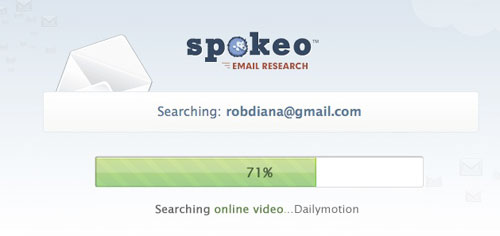
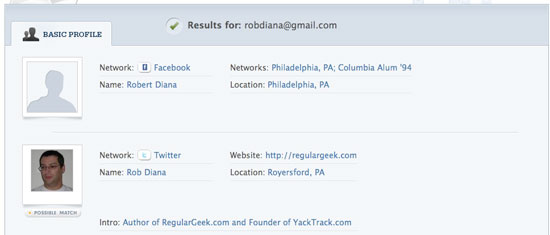
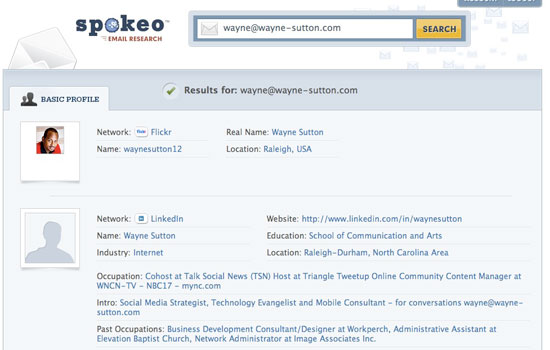
 In the tug of war between privacy and personalization, there can sometimes be a visceral reaction to learning that a company to whom you may not have explicitly granted permission to learn details about you actually has that information - even if it's public. One doesn't need to look any further than the much-maligned Spokeo, who in becoming a next-generation people search engine, practically has to defend its business with every other blog post, even as traffic continues to balloon. Now, news that Google is offering a Chrome extension to opt out of advertisers' tracking services has put the issue of personalization and "Do Not Track" back on the front page. Unfortunately, many people are likely to download it, thinking the result will ensure greater privacy, when in actuality all it does is ensure off-target ads with a crappy experience.
In my view, almost all advertising online is very poor. There are two reasons I find most advertising bad. The first is that it is interruptive, and the second is that it is irrelevant.
1. Interruptive ads quite simply get in the way and can prevent you from seeing what it is you want to see, when you want to see it. I despise pre-load pages on news sites and pre-roll before videos, thinking, for example, that watching breaking news on CNN should not be preceded with ads for prescription drugs, or that I want to see a full-screen ad for a network switch provider when trying to read Network Computing. Almost without exception, I don't.
2. Irrelevant ads are all those who fill up your screen with offers you would never accept, products you would never buy, and sheer randomness. The click-throughs for all the non-targeted messages that surround and cram their way into your content have got to be pretty poor. That's why many studies have said an extremely small minority of users are the ones clicking on all those stupid ads. The rest of us have simply turned on ad blindness.
This isn't to say advertising is dead and ineffective. It's not. Great commercials and campaigns are memorable and can stop us in our tracks - be it Apple commercials that are dissected and analyzed fifty ways, or notices from your favorite band that their latest album has gone on sale. The issue is that most of the time, advertisers know very little about you, aside from the content of the page you are currently viewing, and even when demographic data is out there, it's either inaccessible, or only allowed to be used in aggregate.
For the most part, this aggregate data does not accurately reflect you as an individual. Facebook and other social profiles potentially have a wealth of data about you on their networks, but it is not yet being fully utilized at the ad level to bring targeted messages to you, and this has to change. What I am looking for, instead of more head-in-the-sand responses to information gathering is to work with advertisers and give them as much of a headstart in getting to know me as they possibly can. I want my social profiles to be leveraged everywhere, and I beg, plead for somebody to get personalization right when it comes to ads.
By opting out of ad tracking models, all we are guaranteeing is that advertisers will be randomly posting their offers in a hope that you're the one in a million customer they are looking for. But the true win becomes when they can deliver for you a personalized message at the right time in the right context for you as an individual. We should not be running from this type of innovation, but instead embracing it.
For almost two years now, I've been asking ad companies to leverage my social profiles online. I am tired of getting singles ads, or mortgage ads or used car ads or any type of ads that don't match me as an individual. I've complained about low-quality offensive ads on sites just out to make a buck, embraced Twitter advertisements, assuming relevancy, and did the reverse for the poor Facebook ad experience. So whether you're like CNN.com and want to make me the poster child for the seeming end of privacy or not, my stance on this has been consistent for some time. I would be more than eager to put more data into the system to make it a better system, including all the ads everywhere I go.
So instead of embracing these ad blockers and cookie strippers, let's find a way to make the quality of the ads more personal, more relevant, and simply better overall. Please.
 As the debate over


 In what's a complete 180 from their initial free model open to all who grabbed beta invites,
 Back in March, I bumped into rumors of
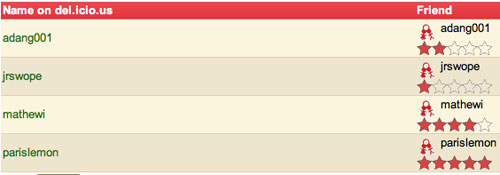
 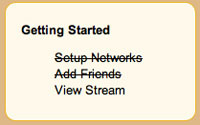 Getting started with FriendBinder is relatively easy. The first step is to register which social networks you currently use, by entering your ID. Options supported at beta launch include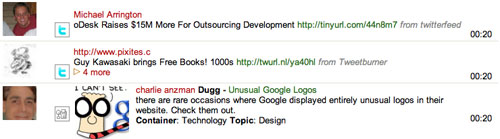
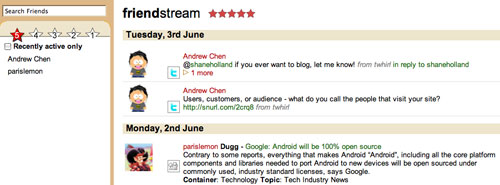
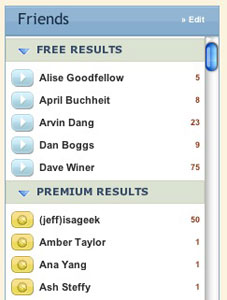
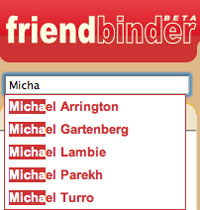 FriendBinder does exactly what it promised to do - give one place to find all updates from friends. But that opens up more questions. Then what? The Web already has quite a few sites that serve to aggregate all friends' activities, and the ones that are gaining traction are those (read: FriendFeed) which enable a follow-on action. FriendBinder data streams are siloed, such that I won't ever interact with another FriendBinder user. I can't respond via Twitter from within the site. I can't add comments to Facebook or Flickr photos within the site. I can't post directly to the site, and wouldn't need to, considering nobody else will see it.
 Not every social aggregator is on the path to riches or fame and fortune. Even the best designed, thoroughly coordinated sites can find the push to grow a user base and generate community difficult, especially as the number of similar sites spirals ever higher, driving a need for differentiation and specialization.
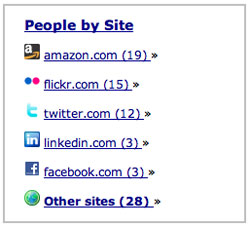 Unlike other sites which operate with you as the anchor, asking you to set up the many Web services you use and then share your profile with friends,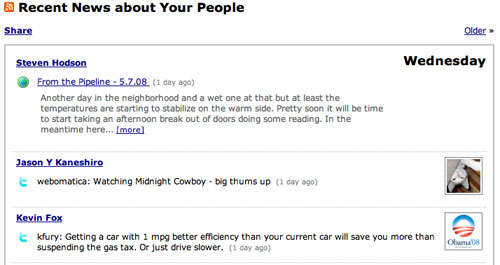
 Yesterday, it could be said that FriendFeed "tipped",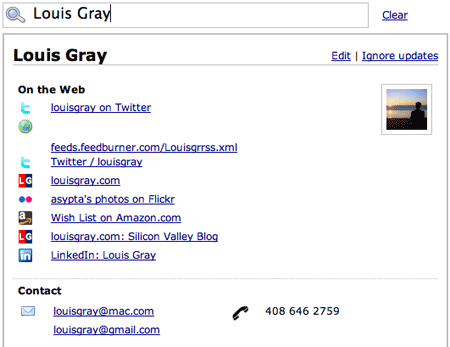
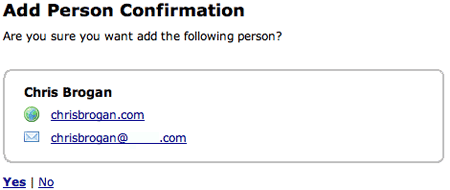

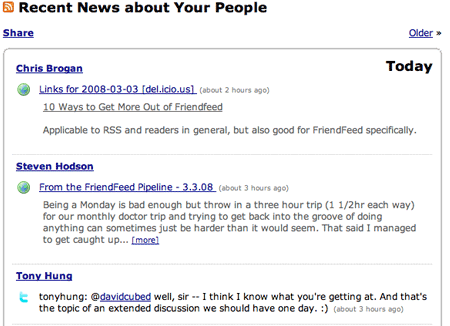
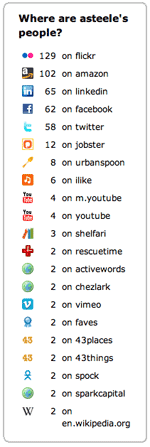 First, as best displayed on co-founder
 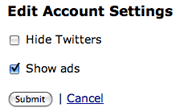 Fourth, you can choose how your feed is displayed, choosing to block Twitters from day one, or even to opt in to showing Google AdSense. But it's a little hard to figure out why one would opt in to Google ads, as they are disabled by default, unless you felt maybe you were doing Mergelab a favor in return for the service.
 If 2007 was all about
 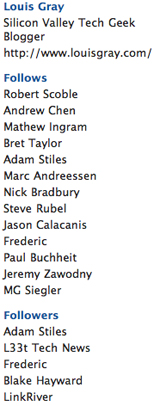 Seeded with a number of high profile "who's who" members of the blogosphere, from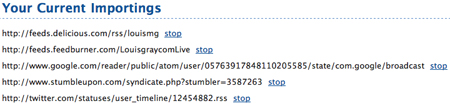
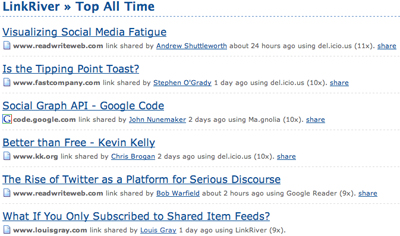
 Recently, Google's gained a lot of good feeling in the blogosphere for
 Sometimes, you can go weeks without news, and then seemingly, there's this spike of activity, when the industry snaps out of its temporary slumber and gets coding.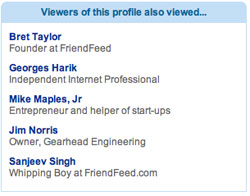
 Shared Reader