 In an up and down week for the startup, Blippy gained a huge amount of unwanted attention on Thursday and Friday as it was discovered that four (and eventually five) of the company's users saw their credit card numbers exposed, in full, through creative Google searches (since removed). As somebody who has registered my credit card and debit card with Blippy, you might think my knee-jerk reaction would be to pull out my data, but it's not, and I am just as supportive of the creative site for sharing transactions as I ever have been. I will continue to encourage people who want to share this activity to use the site, and I am not any more shy about putting my data into their product than I was before. Similarly, I will continue tracking all my data on Mint.com and other sites, because these companies and others like them, have proven themselves to be trustworthy and innovative - delivering me real value.
I joined Blippy in January largely because as I have been participating in and advocating sites that tell people what we like for years, Blippy takes the next step and tells people what we actually purchase, going beyond the "like". I have watched Blippy expand its social capabilities, as you can follow friends, have conversations on transactions, and see groupings of similar behavior, seeing who is buying from specific vendors, or even finding out if other friends are buying the same things you are.
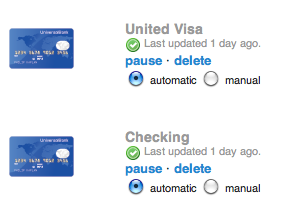
My Credit Cards Go to Blippy Automatically. Zero Concerns.
Unlike some users of the site, I opted to go "All in" with Blippy, sharing not just my soft accounts, like Zappos and iTunes, with the service, but all my purchases. That means you see the boring fillups at Chevron on my debit card, my cash withdrawals from the ATM, and yes, even my wife's Teletubbies DVD rentals on Netflix for my kids to watch. I did this because for much of what I do, I am living life in public. I believe in sharing as much as possible, partly demonstrating that there is little to hide. And while some of my transactions are boring, that's just who I am.
When it was reported this week, by VentureBeat, who, from my understanding, worked on the story for a few days before issuing their initial story, that some cards were exposed, it was quickly shown to have been a limited bug, related to early beta users using a specific card from a specific bank - and was completely out of the ordinary. Blippy quickly responded to the issue, and worked publicly with Google to solve the issue, keeping all of us informed, if we were nervous. (I wasn't)

Mashable's Typical Approach to News Reported by Others
Meanwhile, you saw the typical tech press pile-on from people who had done no original research, flocking to the story like youths at a soccer game chasing a ball, as blood in the water can be exciting. But VentureBeat calmly and professionally kept the story updated, while the Blippy blog did the same, open and with considerate remorse.
There is a huge difference between making a mistake and being untrustworthy - and for me, putting my card data in Blippy is not dissimilar to putting my credit card data into Mint.com, having Intuit find my W-2 data come tax time, or entering my credit card information over and over and over from e-commerce site to e-commerce site. In order for Blippy and Mint.com and these other businesses to succeed, they need to ensure the safety of users' private data, and practically without exception, they have done so. The companies' success will come through their amassing a high number of users, and being able to report trend data based on groups and demographics, not on individuals - and thus, it is in their best interest to keep your data safe and secure.

Google Makes Their Role In Fixing the Issue Clear
ReadWriteWeb chronicled some of Blippy's response to the slip-up today, when they said what to do when a PR disaster strikes your startup. Blippy did the right thing by all accounts, apologizing, making full disclosure, and reporting how the issue was being addressed. Meanwhile, Google's Matt Cutts took to Twitter to explain what that company had done to fix the issue also. That's transparency and a closed loop response.
If I had more options to share even more data with Blippy, I would do it, and getting my e-mailed updates from Mint.com is among the highlights of this data-driven geek's week. It benefits the Web at large to get more real data about our purchases and activities public, and Blippy is one of those making the process interesting. I trust them with my information, and won't be changing a thing. You can find all my data here: http://blippy.com/louisgray.
16 Comments
The response in this is definitely comforting. I am curious what their storage policy is on credit card data and if they are in compliance with federal guidelines. Most developers aren't aware of this - there is an entire list of things you have to do to be in compliance (ask @dacort - he knows all about it), including encrypting the card numbers in a certain way, never showing the full credit card number to the user, etc. That said, developers all make mistakes and this type of stuff is bound to happen, regardless of compliance. This is why a trusted relationship with a trustworthy website is essential.
Hey Louis,
Thanks for this perspective. I definitely agree with you that some publications adopted an unbalanced 'blood-in-the-water' posture on the news this week and took it quite far, particularly considering that a very small number of accounts were affected.
That said, I just re-read your post and am not sure that I found a satisfying answer to the question implied by its title. It seems to me that the nearest you came to explaining why you trust blippy and others with your financial data is because you endeavor to live your life in public, and that blippy has a commercial interest in preserving the privacy of its users.
Obviously, in this case, blippy failed to preserve the privacy of all of its users. Given that, I'd be curious to better understand why you remain confident in their ability to preserve that privacy for all users in the future? What is it about blippy that gives you such confidence? Why doesn't this mistake make them less trustworthy?
I think that with a lot of web services, from Twitter to Foursquare to Blippy, a major challenge facing their widespread adoption is explaining the WHY to potential users. So I can share a 140 character message with people - but why? So I can share my location with others - but why? So I can share my purchasing behavior with my friends - but why am I doing it?
In my opinion, it is only after the benefit of such sharing is made clear to users that these services will be able to realize their potential. In some cases, I don't think that the services have a compelling answer to the question of why, and I expect that those services will find themselves facing a very challenging road to user adoption.
Hi Louis,
You really never told us why you trust Blippy, Mint and the like as you stated in the title. Is it "...because these companies and others like them, have proven themselves to be trustworthy and innovative..." or "...because for much of what I do, I am living life in public." or because "In order for Blippy and Mint.com and these other businesses to succeed, they need to ensure the safety of users' private data, and practically without exception, they have done so."? If so, those reasons don't really speak to why you trust these guys, they just speak to why you use them.
Regards
I think the big problem with this situation is the fact you have to give away your credit card number at all. This is classic password anti-pattern behaviour. We need OAuth for financial and purchase data. Then all that your are sharing is data without the important ID, in thiscase a credit card number. The solutions exist they just don't exist in the world of payments.
@Aden - great point. I think that services which ask for credit card numbers, passwords and so on today are primarily doing so not because they have nefarious plans with your personal data but because they either came along before oauth or just haven't gotten around to implementing it yet. The oauth-type delegation model is clearly the way things need to go.
Great point.
I can't buy that there is no difference between giving your information to Mint, Zappo's or Bank of America and giving your information to Blippy, although I appreciate that this position jibes with your role as an advocate for Web apps and social media. I personally see a huge difference between giving your credit card information to Zappo's - a direct merchant and Mint - a personal financial tracking system, or Bank of America - a repository of funds, and Blippy, a social media site with no intrinsic value other than showing off your purchases to others. I cannot see a value in risking credit card information needlessly. While I get a direct relationship and clear value in providing my financial information to Mint or Zappo's, I get no direct benefit to outweight the risk with providing that information to Blippy. Blippy also is a relatively unestablished site compared to companies like BoA, Zappo's, Amazon and Mint (backed by Intuit). Is it worth it to put it out there just for social sharing? Not for me. - I see no reason to risk my credit for such a casual use. I appreciate it is in Blippy's interests to keep your data secure, but why go there? I guess that is why there is chocolate and vanilla.
@Martha - I won't debate the point about value vs. risk because that answer is purely subjective and up to the individual. But I do agree that providers like Bank of America are fully and completely based on establishing trust - right from the core - and as a result of federal regulations probably are well thought and well executed around security. This certainly doesn't mean BoA can't have breaches, but given that their core business is financial vs. Blippy's core business which is social, I'd assume BoA would be thinking more about security. This doesn't imply that I'd use Blippy or not.
Absolutely Robert. There is a personal balancing act in my initial response. But I also see a great deal more security baked into established sites than in Blippy and great risks in casual data sharing. And that is factual, not personal bias. Give them credit for trying to fix it, but I am not convinced its fixed.
Really digging into Mashable right there, that doesn't happen often.
I know it doesn't bother you, but it does bother me that this happened at all. To be honest, it never should have happened. But, it doesn't bother me enough to not trust them, they did take the necessary (and public) steps to fix the problem, which is what really matters.
It doesn't really matter though at least for me, I had no intentions before, and I have no intentions now, to sign up for Blippy. It's not that I have a problem with sharing my purchases, it is just that it is so damn... boring. lol.
I have to disagree on the Blippy front.
Based on this blog post (http://blog.blippy.com/2010... direct from Blippy:
"Many months ago when we were first building Blippy, some raw (not cleaned up, but typically harmless) data could be viewed in the HTML source of a Blippy web page. The average user would see nothing, but a determined person could see “raw” line items. Still, this was mostly harmless — stuff like store numbers and such. And it was all removed and fixed quickly, months ago."
The fact that it occurred to Blippy at some point... "we should probably sterilize this data"... and the fact that they say "typically harmless", means that they saw data that wasn't harmless.
As a web developer the fact that the raw data was EVER sent to the client to even be viewable in the DOM (via view source) is a big no no. I find it hard to have complete trust in a company who would ever do that, especially when we're talking about my financial data.
A company has one chance to get it right with financial data.
@Nate - "A company has one chance to get it right with financial data."
That seems extreme and I wonder if you truly practice this, e.g. if your financial institution screws up and has a breach, do you leave them?
*ALL* financial institutions have had some information security breach of some sort - some small and some large. And if they haven't been publicized it doesn't mean they haven't happened.
In reality, depending on the severity of the breach and on whether a particular customer is directly impacted, customers probably stay with the company. Otherwise you'd be hopping around from provider to provider which isn't realistic.
What's more important than making no mistakes is strong policies, good intent, good execution and probably most importantly, the post-incident response, including both (transparent) communications as well as steps to prevent it from happening again.
I think you missed my point.
From another Blippy blog post, "http://blog.blippy.com/2010..."
"due to a technical oversight on our part"
"we incorrectly considered raw data fairly harmless"
"we overlooked the fact that Blippy could have been crawled by Google during the period of the exposure."
"we quickly patched the issue and took extra precautions to never ever expose raw transaction data again."
I expect companies (financial institutions included) to hold a baseline of common sense when dealing with sensitive data. It's one thing to have a security breach, stolen laptop, hacked database, etc... It's a completely different thing to actively publish people's information directly to the internet without a filter. Especially in a world where data is cached for eternity.
The fact that the raw data was ever sent from the server to the general public without being filtered is a HUGE oversight. They only discovered the issue with the raw data after users complained about their confirmation numbers and name showing up in the raw data.
"... we were informed that raw transaction data sometimes contains airline confirmation numbers, which in combination with a user’s last name could be used to check someone into a flight."
I don't use Blippy's service, but you better believe if I was a user... I would have deleted my account straight away.
You are not too bright. Hopefully you know more than this guy: http://bit.ly/9ZaG12
Blippy puts personal information on the web that people have no control over. You don't get it. Buy a domain on GoDaddy with an account linked to Blippy and see what happens. Poof, your home address and telephone number are one click away.
http://blippynews.wordpress...
Since you deleted my last comment, perhaps this one might be more to your liking.
I think you will find both your comments are still here. I don't delete, no matter how silly the source.