Ever since I switched from a
Blackberry mobile phone to Apple's iPhone, I've never looked back. In fact, at this point,
following a full year's use, I am more likely a bigger proponent of the iPhone than I am of the Macintosh itself - something I never thought I would say. While I've gone on record saying that
which operating system you use is not as relevant as it once was, I have yet to be impressed by any real iPhone competitor, including the Android-powered models from T-Mobile, or the Palm Pre. For me, I still hold to my comments back in December, when I said there are
two phones in this world: those that are iPhones and those that are not.
But that doesn't make the iPhone perfect. As with any other product, it has its holes - some of which seem to be oversights on the part of Apple. Spurred forward by
fellow blogger Tamar Weinberg's comments today on one of her own pet peeves, I thought I would discuss my thoughts.
1) Application Sorting Is Practically Non-Existent
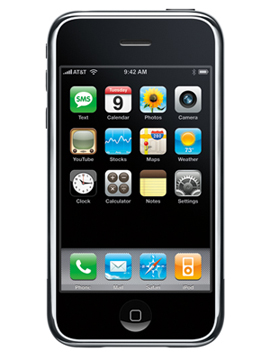
I am hardly breaking new ground here, but as somebody who downloads a lot of iPhone applications, I am well into my 7th page of 16 icons, in addition to the core four applications stored in the iPhone's faux dock. To find the latest adds, I have to finger-swipe six times until I find the right one. Even worse, I often find I don't recognize an app's icon, and will have to go back and forth until it is found. It would be significantly better if I could have some kind of categorization and navigation, almost like Windows' Start menu or the Apple Menu to navigate to games, social networking, etc., or even do something simple like sorting all applications alphabetically.
And for those who say this situation is alleviated with the introduction of search on iPhone OS 3.0, it's hardly the answer. For example, I tried to search for Sirius or XM on my iPhone and found nothing, despite
having the Sirius/XM Radio application. Why did this happen? Because the app is named "Online"... I kid you not.
2) Multi-Tasking: Where Art Thou?
One of the bigger selling points for the Palm Pre is its ability to multi-task. Just like I can swipe my finger right to left to flip pages in the Safari Web browser, why couldn't I also do the same to flip between open applications on the iPhone? On the Mac (or any computer) it's assumed that you would have a Web browser an e-mail client, and an office application open practically at all times. But with the iPhone, I have to exit out of the app, go to the home screen and launch something new each time. That's silly.
3) There's No Way to Set Preferences On App Music
The crux of Tamar's complaints today... While some applications let you still listen to the music you are hearing on the iPod when you open them up, the vast majority do not, deciding that whatever music background they have provided, or whatever sound effects they have embedded in their game or other application have precedence. It would be great to set up a way to either mute all background music on all applications from the preferences app, or have them all prompt you upon loading. The worst thing is when you're grooving to a great iTunes track and have it fade down to pick up some ditty on a miniature golf app. (
Hat tip to Tamar)
4) Rented Films Still Hog Space After They Expire
When I flew to and from Philadelphia to visit Drew Olanoff, I "overpacked" on rented films from iTunes, grabbing three. I managed to watch two, and still have one left to make time for. But while that one film takes just over 1 gigabyte of space, and I can no longer see the expired rentals (having passed the 24 hour period), I saw even this morning that they were taking 4 gigabytes in total of my available data. I had to go to iTunes and manually manage the films, deleting them myself instead of them just going poof and releasing the space for other music or data.
5) The 3G Toggle Switch Is Buried
Everybody knows that 3G is faster than Edge. But it can suck down battery power like nothing else. As such, I often find myself toggling back and forth between 3G and Edge. But to do so is a dumb process. I have to go to the Settings application, select "General", then "Network", and then choose whether or not to enable 3G.
In contrast, "Airplane Mode" sits atop the Settings app, with a simple on/off switch. Why not put 3G in the same space, or let me toggle it in hardware, like I can with the volume or the on/off power switch? I know I move between 3G and Edge a lot more than I ever find myself switching in and out of Airplane Mode.
6) You Can Only Configure One Exchange Account
Need to manage more than one Exchange account? Well, sorry, you're out of luck. Pick one. While we should in theory be grateful that Apple gave us the option to check our work mail on the go, there are a number of scenarios that can see people needing access to more than one Exchange account. For example, if you are a consultant, and you have access to the Exchange server on your company network, but also for the client address you've been given, you can't run both Exchange accounts on the iPhone - period. It won't even let you try.
7) You Can't Customize Alert Sounds
Apple wants so much control over the way your iPhone looks and sounds, they don't even let you choose what your "New Mail" or "Calendar Alert" sounds are. They are either on, or they are off, period. While I don't expect the iPhone to get to the fun heady times of the mid-1990s, when we could customize our Macs to run all number of soundsets, one would think there would be some alternative ways to hear your alerts.
8) Phone Calls Can Interrupt Applications Altogether
We've all seen how cool it can be if you're listening to music and a call comes in. The music fades down, the call takes place, and then it comes back up. Awesome. But for some applications, the phone call can stop it in its tracks, including the aforementioned Sirius/XM app. Streaming music just isn't treated the same way as iPod music, so it doesn't come back when the call is done.
9) AT&T Exclusivity
As if I even need to bring this one up. AT&T is dead weight holding back Apple's ability to grow. One is a flexible, creative, innovative company. The other is a recovered monopolist who trails the rest of the industry in rolling out cutting-edge features, and expecting you to pay a premium for it. Opening up the iPhone in a legal way to additional carriers could spur a feature race that would accelerate the iPhone's capabilities even further, while possibly lowering prices for customers everywhere.
10) Four Icons In the Dock - Period
Adding on to the pain around not being able to do jack with the way my app icons are displayed on the iPhone, it would be nice to see the iPhone dock work a lot more like that on the Mac. My dock on the Mac features 28 total icons, including the system trash. The iPhone offers 4 and 4 period. I don't expect I should be able to post the two dozen I do on a full size laptop, but why not five or six in smaller icon mode? Why should I have to make the tough call of adding the iPod or the Address Book over Safari?
Don't get me wrong - I am a happy iPhone user. But in the face of additional competition from the Android platform, Palm and others, Apple should be trying to plug any and all holes to try and maintain its product leadership. Targeting some of these issues, and those that you've come across in your use of the iPhone would no doubt go a long way. What else do you think Apple should be doing?
 Even if I may like to gain access to early versions of cutting-edge Web tools and communications apps, there is simply no replacement for e-mail. It remains my starting point to my information consumption each day, and the major thoroughfare for communication, even as I pile on all sorts of social networking activity on its head. Simple access to all my e-mail accounts from any location has become expected, and when anything happens to get in the way, the results are visible right away.
 Over the last few years, participating in the tech blogosphere and meeting many of the people who create and report on the tech news we read every day has made the entire process of consuming the news more than simply a passive exercise. While in 2005 or early 2006, I may have imbibed any new posts that come to my RSS reader as manna from heaven, reading every word to find out what was new and interesting, I now find that my own personal interactions with the authors, the publications, or even the story subjects themselves is impacting how I take in the news. And I know I can't get zapped with a mind-eraser like in Men In Black to have it all go away.