 On Saturday, Charlene Li discussed how social networks are to be "like air", integrated into all the Web sites we visit. She painted a future whereby your friends and who you are as an individual would dictate the content and delivery of your Web experience. Just how to make that Web experience social, but in the right way, is a dilemma services are encountering, including executives at Pandora, Strands and Blip.TV, who talked at length today at the SXSW Interactive conference about how much power the community, and recommendations, should weigh on their products' experience. They also debated whether editorial recommendations had a place, and could be trusted.
When an application or service becomes social, the recommendations one gains from the community and your fellow friends hold significant weight. On Amazon, you might be told to purchase a book or DVD. On Pandora, you might start hearing music from a new artist. And Blip.tv? Well, they're still looking for the right solution, before they start tossing out videos of dogs on skateboards, due simply to popularity, as CEO Mike Hudack said today.
When done well, algorithmically generated recommendations can promote user action, including purchases, which then in turn makes it tempting to integrate social recommendations in practically every element of the eCommerce engine, the panelists agreed.
"Amazon is the quintessential recommender of the influential purchase," said Alex Hillman of Independents Hall. "If I am logged in and it knows what I bought before, it starts recommending things. I do trust it, and it is surprisingly accurate."
But Trevor Legwinski, who runs Marketing and Business Development for Strands, cautioned against showing too many options throughout a service.
"On the eCommerce side of things, (we are challenged) with how we increase our revenue, and what could provide a better consumer experience. But from an eCommerce perspective, if you give them (users) too many options, they will leave the site," he said.
Sites like Amazon.com, Netflix, Pandora, Last.fm and many others rely on the wisdom of crowds to try and figure out your own interests. And sites of all types have been asking you for more and more information for decades, harkening back to some of the most invasive registration regiments out there, around Web dating sites. And even if you put "a crapload" of data in, as Hillman called it, you probably should just save the time and go out on a date instead.
But these products are each working on finding the right mix of input from the community, and that of those hired by the company. Tom Conrad, CTO of Pandora, called it blending expert influence with community filtering.
"Collaborative filtering comes from purchase behavior and community behavior," Conrad said. "But it does have a self-reinforcing characteristic to it. If you tell it people that buy Nine Inch Nails also buy Ministry, it is reinforcing and it is hard to break out of that pattern, and it is even harder with the long tail where there is not enough data to build recommendations, so you have to build systems around factual information around the product."
One of the more visible recent developments in the world of recommendations came from Twitter, who seemingly hand-selected a small number of people to be recommended accounts. The move, which has seen total followers to these accounts skyrocket as the service dramatically grew in visibility, has had many influential users questioning the practice, and others begging to be included.
Today's panel questioned if the uproar was justifiable, considering there was no science behind the recommended list. And while they questioned if those selected offered new users a representative view of the microblogging service, the concept of an "editorial recommendation" was not dismissed outright - even while some panelists had avoided editorial selection in their own products.
"We don't publish top ten lists," said Conrad. "There is no way to find out what songs get the most thumbs up. We never say there are interesting bands to check out, as it's about you, not us. It's about what you think is cool."
Comments around the Twitter signup process generally recommended the service would be better served to ask for more questions up front, and try to leverage their search engine to show experts on topics the new users claimed interest in.
"Twitter could solve that problem if you could pull up other Twitterers who match those terms," Hillman said.
The panel concluded in agreement that the human experience, and recommendations from machines that start with human input were considered "the richest", and it was agreed that the human element would never "go away", but that engines needed to continue to improve to offer a smoother experience for services that relied on the wisdom of others.
"Any time you have a problem with a multiplicity of potential solutions, you have an opportunity as a developer for a recommendation solution to bring an answer to that problem," said Conrad. "Anywhere you have lots of potential solutions, you can narrow it down to one solution that is an answer."
 At the end of the year, it's a tradition for many sites and blogs to pick "best of" lists, offer predictions, show their best posts and the like. At louisgray.com, we're no different. In fact, we're probably worse than most when it comes to liking to sort, use statistics, find trends and display highlights. I thought it'd be fun (at least for me) to do a quick run through the year soon to be completed, looking at how things progressed - the good, bad, interesting, and not so much. Below is a quick summary, somewhat, of how each month went, including the top stories and new companies and people we encountered along the way.
 As you already know from my previous posts about the service, I am a big fan of

 Online friends who make the transition to real life friends can be a lot of fun, especially if they retain the elite level of geekiness that made us find each other on any variety of networks. In the last few months, I've gotten to know Drew Olanoff (of
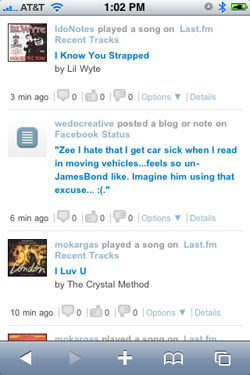
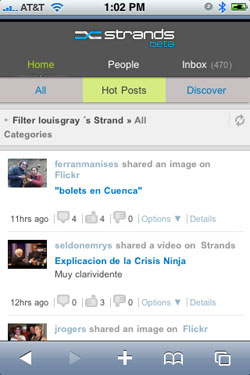
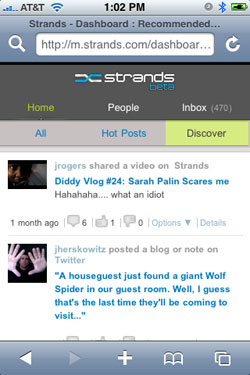
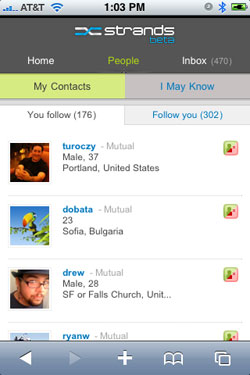
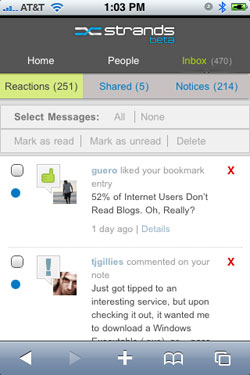
 There has been lots of rumbling lately about what the successor to web 2.0 will look like. Along with that, even more attention has been spent trying to determine what to name it. My post isn't to discuss semantics (pun intended) but more to provide some of my thoughts based on what I've been observing.
 So far, I've held off on doing the silly thing, signing up my 4-month old twins, Matthew and Sarah, with user names to popular Web services, even though others thought I would. I haven't purchased them domain names, dedicated servers, or purchased them their own digital devices - yet.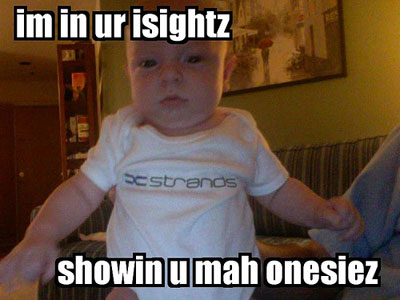
 Personal feed aggregators with social elements have been one of the more popular services to gain traction in 2008. With services like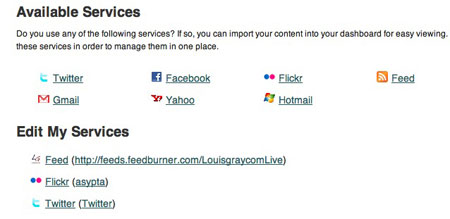
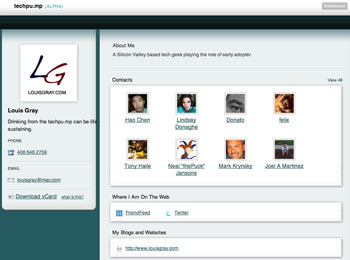 Looking at the chi.mp sites built
 By now, we've all likely grown used to the fact that RSS readers don't often see a blog's redesign. For those who choose not to click through and leave comments, there's little reason at all to visit a blog directly any more, considering it's possible to power through dozens or hundreds of feeds in a feed reader, be it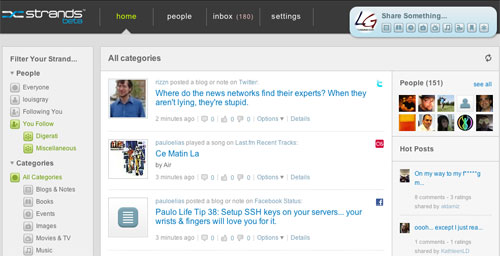
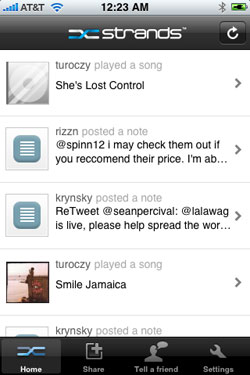
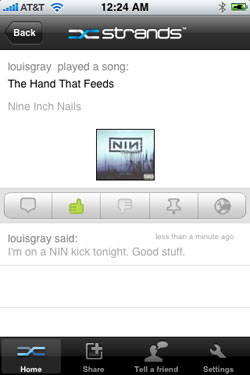
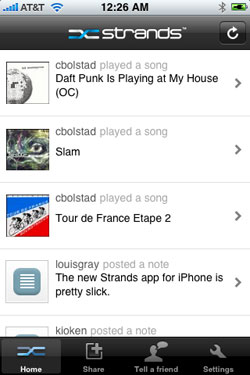
 Unlike the aforementioned Pulse and FriendFeed, Strands is much more music-centric than the other networks, thanks to its origins, which you can see on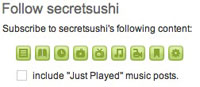
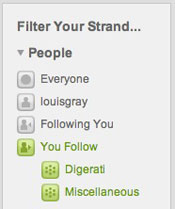
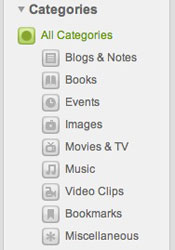 In contrast to FriendFeed's hide by service functionality, which works across the site, Strands handles the hiding of music updates on a user by user basis. You can click on any user's ID and uncheck the box that says "Include Just Played music posts." This is good, but means the task is repetitive if you've invested in following a good number of users. With this said, the service does offer the ability to browse a reduced feed, by a subset of who you follow, reduced categories, or by showing liked and commented items. Personally, I'd like the ability to click on "Events" and hide all Events or Books, for instance, so there is a little more work to be done.