
Silicon Valley Technology Commentary & Archives · Est. 2006 3,034 Posts · 2006–2026

May 11, 2008

May 11, 2008 · 2 MIN READ · BY LOUIS GRAY

Web Service Notifications Outnumber Live Bodies In My E-Mail

Web Service Notifications Outnumber Live Bodies In My E-Mail

E-mail used to be about connecting people, regardless of distance. With time, it developed new capabilities - sending attachments of ever greater size, acting as a marketing vehicle, both solicited and otherwise (see: Spam), displaying pictures and HTML, and of course, serving as a repository for status notifications for commerce, news, and social media. Now, there's no question for me that updates from online services greatly outnumber the amount of person to person communication I get each day in my personal e-mail. (Work e-mail, of course, is another story)

For me, e-mail is where I want to be updated for all things finance, be it bank statements, credit card invoices, stock trade transactions, or the electricity and cell phone bills. As I see it, every e-mail note there saves paper, and saves me digging through the mail to sign something off and send a check.

I also, despite getting them at an increasing rate over the last few months, still get notifications by e-mail when somebody chooses to follow me on FriendFeed, LinkRiver, Shyftr or Twitter, for starters. I also get notified if someone befriends me on other services, like Facebook and Digg. At times, especially when a particular topic is driving up conversation, I can hear the sounds of new e-mail hitting my computer every couple minutes, invariably drawing a sarcastic comment from my wife, who helpfully adds, "Well, aren't you popular?"
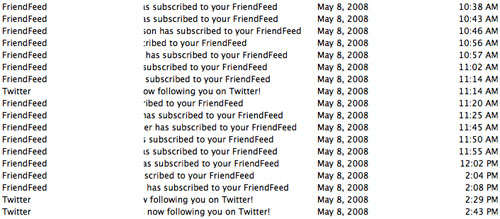

Twitter and FriendFeed follows come in pretty often these days...

While I could, of course, turn off these notifications, it helps to see if the person following is someone I'll be soon watching in turn, and it also alerts me to if I'm getting name-dropped somewhere. Usually, a quick visit to Summize or Google Blog Search can help with that.

Curious if others using Web services as I do were seeing a similar onslaught of Web notifications taking over their in box, I posted a question to Twitter, which also hit FriendFeed. So far, the response is certainly mixed.

Susan Beebe claimed 85% of her e-mail to be from "real people", but otherwise, the FriendFeed voting came out 16-2 in favor of services, while Twitter replies also came out with services ahead, 6 to 1. Bwana McCall wrote, "I get more Bacn than real email. It's sad.", while Hutch Carpenter said it simply, "Notifications by far."
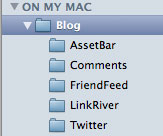
While many people are fighting with the e-mail data deluge, striving for the proverbial "In Box Zero", handling online notifications is like any other system. You just need some good hierarchy. I've set up a folder called "Blog" in my e-mail for all correspondence related to the blog, from people pitching stories, to working with entrepreneurs and other bloggers. I have subfolders for some of the services where I've had the most updates, and of course, for real-world work, I have a "Commerce" folder, which surprisingly, has all my stock trade notifications from eTrade going back to the year 2000, and every Amazon.com order ever. Thank goodness for e-mail search, something Apple's Mail program does extremely well.

While robots may have taken over the inbound side of my e-mail, I still own the outbound side, and take every effort I can to keep up. But the mix has definitely changed.

May 9, 2008

May 9, 2008 · 3 MIN READ · BY LOUIS GRAY

Mergelab Comes to an Early Close, Shutting Down in Beta

Mergelab Comes to an Early Close, Shutting Down in Beta

Not every social aggregator is on the path to riches or fame and fortune. Even the best designed, thoroughly coordinated sites can find the push to grow a user base and generate community difficult, especially as the number of similar sites spirals ever higher, driving a need for differentiation and specialization.
With this background comes the news that Mergelab, who I helped first cover back in March, is shutting down completely by June 30, having never reached an open beta period.

Unlike other sites which operate with you as the anchor, asking you to set up the many Web services you use and then share your profile with friends, Mergelab asked instead for you to put in your contacts, and then, it would scour the Web and grab their updates, giving you their updates all in one place, much like Spokeo. Also unlike other sites, Mergelab had opted to not integrate comments or rating systems for shared content.
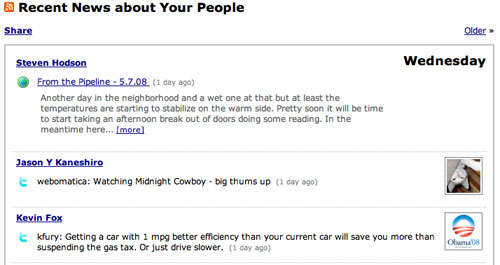
While the site's interface was clean and showed promise for some who would like a less-noisy area to keep updated on friends, Mergelab never got the chance to succeed on the public stage.

I talked with Alan Steele, one of Mergelab's three employees, by phone yesterday, and he helped paint a picture of how the team quickly learned that not only was the space crowded, but that venture capitalists were looking for more than a stand-alone site.


My Mergelab feed in action
As he put it, VCs and investment bankers, upon hearing Mergelab's position, would quickly ask about two things: their Facebook application strategy, and how they would approach Open Social. He said, "There is so much investment in the social networking side of things. All the investors are pouring their energy and money in the space. Intellectually, I should have figured this out six months ago, but I didn't understand this all viscerally until recently."

It was just two months ago when Mergelab first became comfortable opening up and being covered on my blog. In the ensuing weeks, while focused on building a product, external pressures to gain revenue and pay employees grew too overbearing, and more profitable opportunities came up for two of Mergelab's team, making them reevaluate along the way.

"At every stage of building something like this, you have to ask where are we, what are our prospects, and should we keep doing this instead of other things," Steele said. "(Shutting down) was a rational decision on where we were and what our needs were."

Mergelab's strategy to scour the Web and find data on friends turned out to be a contributing factor to the stress of growing as well. With about 100 invitation-only beta users, Mergelab had seen tens of thousands of contacts imported, meaning the company's servers were tracking thousands of feeds, aggregating data, slicing it per user and presenting it in a simple way. As Steele said, "A small number of users can create large amounts of data. To scale up to an open beta, we would have to had fired up a significant farm of servers."

Looking at significant new expenditures ahead, combined with negligible revenue, and the prospect of other alternatives, Steele and team figured the right thing to do was to close early, rather than getting the site so far out ahead that more users would be affected. And despite the crowding in the space, with alternatives like SocialThing, FriendFeed, Iminta, Plaxo, Spokeo and others, Steele said even thinking about competition was the wrong step for the company, so early in its process.

"It's too early to think about destroying a competitor or going ahead of them. Instead, you have to focus on your differentiators and your business model," he said. "Competition wasn't a huge factor, because when you're at this stage, you can't spend too much time worrying about competition."

The official announcement of Mergelab's shutting down comes at noon today, with final closure on June 30th. The company's technology assets are now up for grabs to interested buyers.
May 9, 2008 · 2 MIN READ · BY LOUIS GRAY

Content Filters Proving Evasive for RSS, Social Media Sites

Content Filters Proving Evasive for RSS, Social Media Sites

Whether it be RSS feeds, social networks, or one of the many social media aggregation sites, it's no surprise that even your closest peers are sharing data they care about that you just don't. But so far, despite many users calling for content-based filters, solutions to block keywords or topics are missing from the vast majority of information spigots. In fact, I can't think of a single one I use that's gotten the formula right.

Not to overly repeat myself, but one of the major hopes I had for Google Reader last year was that they would add what I called "Negative Keywords", which would let me block specific posts from people I had subscribed to, be they off-topic posts on politics, family and sports, arrays of links from del.icio.us, or their latest cause du jour.

As the 2008 election season is heating up, it's no surprise that even the most geeky of tech news sources are starting to give some coverage to Obama vs. Clinton or Obama vs. McCain, and it will only increase over time. If I so chose, why couldn't I ask Twitter or Google Reader or FriendFeed to preemptively hide updates that included keywords like "Clinton", "Obama" or "McCain"? Today, I can't do that in any of those services, so far as I know.

Taking things further, I've also at times been tantalized by the idea of a "nuclear option" for the Web, where if I so chose, I could eradicate the mentioning of a keyword of any kind from all activity.

On Wednesday, Robert Scoble said “I wish when you blocked someone on Twitter they disappeared from Google Talk too.” Makes sense. But what if you had a button that not only blocked the person, but also, any mention of the person, from all social media services, by using their own name as the negative keyword? What if they were even automatically filtered out of Google searches, blocked just like profanity and pornography are from decency filters?

Google Reader hasn't yet debuted negative keywords. So Mahalo fans still get updates on Jason Calacanis' bulldogs and "fatblogging" and followers of this blog will still get summaries of Oakland A's games I attend. While I can always unsubscribe from somebody, there's got to be a safer middle ground in the social media and RSS space that lets me get the content I'm looking for, and not the content I'm not. Do you know of a service that's got negative keywords nailed?

May 6, 2008

May 6, 2008 · 2 MIN READ · BY LOUIS GRAY

Think Apple Would Dare To Take On the Movie Theaters?

Think Apple Would Dare To Take On the Movie Theaters?

With the addition of movie rentals on iTunes, Apple has given my wife and me a new entertainment outlet, letting us essentially have video on demand from a wide library, for only 3 or 5 dollars, at any time we wish. Just recently, Apple made more headlines by signing a pact where new DVD releases would simultaneously debut on iTunes. But this still doesn't solve the issue that iTunes doesn't have new releases that are currently playing in the box office, and I think Apple should be strongly considering working with the movie studios to deliver movie rentals of films currently in the theater, at a premium price, if they aren't already.

While new movies and blockbusters hit the theaters each weekend, it's been a long time since we made the effort of going to the theater, paying $11 and up per ticket, stomaching high prices for food and drink, and even then not having first dibs on seating, lacking the ability to pause or rewind the film (like on TiVo or Apple TV), and being forced to sit through an incredible amount of previews and pre-feature ads.

Our living room TV and laptop are the new theater.

But this still means we're missing out on the experience of seeing a new movie in its opening weekend, and being part of the conversation with others who have caught up on the latest Hollywood mega hit. By the time these one-time hits have reached iTunes, and therefore, the Apple TV, months have likely passed by, and often, the interest I once had in seeing the film has passed, leaving me more likely to do something else.

The movie theater industry has already lost me as a customer, for the most part. But they can get some of my revenue back if they strike a deal with Apple, and make new releases available on iTunes the day they debut in the theater.

I propose the following pricing for a 24-hour new movie rental:
  • $9.99 for viewing in the first two weeks.
  • $7.99 for viewing in weeks three through six.
  • $5.99 for viewing in weeks six through twelve.
  • Standard iTunes pricing for all weeks afterward.
There's no question that getting this deal completed won't be easy. Theater owners would be rightly concerned as to losing customers and entertainment moguls aren't known for being flexible. Movie studios might even be concerned you'll rent from iTunes, and show a new feature on your huge flat-screen TV to a busload of your friends. And maybe you would. But if we see Apple's work so far, both with music, and later TV shows and now, feature-length films, it only makes sense that this day will soon come. As a consumer, I can't wait, and I hope I don't have to wait too long. My credit card is ready, and until these new releases show up on iTunes, I can find better things to spend my money on.

Previous Discussion: