 I'm noticing a trend lately which started several months ago, and I couldn't quite pinpoint what was causing it. It seemed as though many of my friends and others that I esteemed as good bloggers were getting tired, and were posting much less frequently, or not at all. Many of these people were part of the reason I became an entrepreneur and it was disappointing to see them stop posting. It seems as though those blogging are getting tired, or just see it as a waste of time.
We see this with the recent fallout of Jason Calacanis - he just wasn't getting what he needed from blogging and decided to find another way to achieve what he wanted out of it. Louis Gray himself has mentioned on this blog about the change in traffic via links from A-list bloggers, and I have to say, I've seen it as well. The blogging landscape has changed significantly.
With the advent of Social Networking sites and tools providing outlets such as Facebook, Twitter, and FriendFeed, I think many bloggers are getting overwhelmed with all that is out there, and frankly, they have found other outlets to get what they were previously getting from their blog. I'd like to share some tips on when you should and shouldn't blog, in hopes that other bloggers don't feel overwhelmed or quit altogether:
Post only when it is something that educates, or brings original news to your readers
This is an important policy of mine, for the most part. Often, especially before I started seeing bloggers fall away in exhaustion, I noticed many people just blogging for the sake of blogging. There often was no real new content in their posts. I like to keep a little Mac Sticky Note on my Desktop with all the blog post ideas I come up with (this post was one of those), and I can then turn back to them when I hit a slump. The most breaking and original get first priority. I think you will find that the most original posts you can provide will be the ones most visited, and re-visited by your readers.
Avoid posting just to state an opinion about another person's post
I believe it is mostly no longer necessary to blog about the content of other bloggers. There is an occasion or two where you may want a little more exposure from other bloggers if you really want your opinion to be known, but for the most part you can comment on other posts in other ways. With the advent of sites like FriendFeed and Google Reader it is now very easy for you to gain an audience, or even port your blog audience to these sites, and write your opinion either as notes in Google Reader, or as comments in FriendFeed. Let's face it, especially for a beginning or mid-level blogger, FriendFeed and Google Reader get a lot more traffic than most blogs get, offering you the chance for much more exposure on your opinion. Hopefully you are encouraging your readers to utilize FriendFeed more and they too can comment on your opinion to these posts.
Disqus is another great way to state an opinion about a post. Any blogger that implements Disqus is empowering their users to eventually make their own posts about the content, and have others comment, in threaded fashion, to those posts. Bloggers that implement Disqus are giving their users power to own their own opinions.
You don't have to post multiple times a day, or even every day
It's actually okay to only post once or twice a week. What's important is that you try to stay at least semi-regular so your readers don't give up on you. Your readers will come back if they know you'll keep posting. Blogging is certainly not dead, and it can be a great way to build up a following for your personal, or professional brand - that has never gone away.
Don't blog if it's only for individual gain
If all you do is blog to try to gain attention for yourself or your business, maybe through some good SEO and Google juice you'll get some traffic, but you'll never gain the loyalty and trust that many of the largest bloggers on the internet have. The best bloggers gain traction because they are working to empower, help, and educate others, not build up their own identity. Your own identity will come from that as you try to help others - writing a blog is all about building community.
Have something quick to say? There are other options
Believe it or not, Twitter used to be called a "micro-blogging" site (yes, hard to believe that was just a few months ago!). Sites like Twitter, Plurk, Tumblr, even FriendFeed, and the dreaded, "Identi.ca" can all be great places to post your random thoughts, comments, and short posts. Twitter has since become much larger than that as a communications platform, but the capability to use it in such manner is still there, and I argue, a great way to start a discussion when used in conjunction with sites like FriendFeed. Look to find ways to integrate this with your blog and ensure your readers can find you and talk to you on these sites. There are even Wordpress plugins which will show all your Tweets in a single day (although you may want to think twice about this if you tweet more than 10 times a day like I do!).
Blogs are still good for SEO, and building brand, just not as much any more
The fact of the matter is that in order to get recognized by Google, you have to have content, and you have to have others link to you. To get recognized by Technorati, you have to have content, and you have to have others link to you. To get even recognized by Techmeme, you have to have good, original content, and have a few larger bloggers link to you. While Google and Technorati may not be the traffic drivers they used to (although I have a friend blogger that still gets 1,000 visitors a day just for a single post he did on a theme he wrote, all from Google), they are still too important to ignore. The fact is Techmeme will still give you thousands of potential new readers to your blog, as will Digg, and others. If you hit this jackpot of sorts, it can help you way more than any of the Social Networks ever will.
However, to get to this point is often a slow process, and can be achieved in other ways now, and that is getting more and more so as these Social Networking tools take root. The fact is I still get more traffic from social networking sites than I do Google on my own blog, so balance is key.
Lastly, settle for "good enough"!
I know several bloggers that spend hours on a single blog post. I heard of one blogger that takes an entire day to post. While sometimes an hour or so may be necessary to do research and gather data, for the most part it shouldn't take that long. Louis Gray often writes his posts in under 20 minutes. My average post is under 30. The key is, you can't be perfect - "good enough" is all you have to be.
As you can see, while the many options can seem overwhelming, they are actually there to help reduce some of the burden and fluff previously seen by bloggers and readers of blogs just a year or two ago. I hope, if you're one of those overwhelmed these tips can guide you to figure out how much you should blog, and where your content should go. It's okay not to blog some times! Just figure out what your motives were when you did (or do) blog, and see if there are other places that could be better satisfied.
 In the mid to late 1990s, perception had it there was no more exciting a career title than
  After 18 months of progressing beyond the rookie stages of product development,
 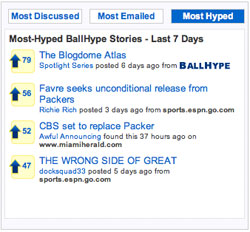 When my wife and I met with Jason and Erin during a viewing of the NBA All-Star Game festivities at their home this last year, they told me despite its later start, ShowHype's traffic eventually eclipsed that of BallHype, soon becoming the primary driver of engagement, page views, and advertising. But the pair didn't want to reinvent the wheel again and again, making customized sites for the more mundane topics of technology, politics, or religion, choosing instead to keep focused on those things they themselves liked.
 When Apple's iTunes application store opened up last week, I, at first, skipped over the