 The one problem I had been having with SocialMedian was the need to manually "clip" stories that I find interesting on the internet. Many social news sites, i.e. Digg, Mixx, etc., use this model with great results. SocialMedian has been trying to focus on getting relevant information in front of their users, while maintaining the voting and commenting mainstays of social news. By allowing users to create news networks, and making the follower/submitter model a little more influential, they tried to create automated content filters. With the early addition of user-configurable "volume for noise levels", they also tried to avoid the spamming of stories to several networks.
These were fantastic additions, but as anyone who has used social news sites, adding stories manually to a site is a lot of work. In this past week, SocialMedian dropped more barriers to using their service. They had a big week implementing blog and Google Reader automated integration into a user's clipped stories. This makes the service significantly easier for many people to use. The Google Reader integration will also take your shared notes and include them as a comment on a clipped story.
See Also:To give you an idea of what this means for user adoption, I will give you an example. I used to visit the site every few days and browse around. When the announcements were made this past week, I again browsed around but my activity had not been imported yet. On the second day, I visited a few times to reply to comments and review new subscribers. The third day, I again visited a few times for comments and I started looking at the stories that other people had clipped in my news networks. I am now trying to work the site into my daily routine because the Google Reader shares and the blog importing has added to the quality and timeliness of the stories clipped on the site. These fairly simple ideas could be a major boon to SocialMedian.
This also got me thinking. SocialMedian allows you to link several services to your profile, like Twitter and FriendFeed. I believe more is coming as well in the form of FriendFeed and Digg integration. By doing this type of integration, they are not really just a social news site. It is a combination of social news and aggregation or lifestreaming. So, is SocialMedian trying to compete with FriendFeed? I do not think so as they are mostly complementary services at this point. However, by dabbling in lifestreaming and aggregation, the number of their competitors easily doubles.
This brings me to another point. John McCrea of Plaxo had a really interesting point on the lifestreaming and aggregation applications:
"Can the pure-play Social Web Aggregators grow fast and long enough to achieve escape velocity before the big former walled garden services, like Facebook and MySpace, re-invent themselves into true Social Web Aggregators?"Facebook has their news feeds, but they seem minimally useful right now. FriendFeed has a very good lead on Facebook, but they are still an aggregration service. They really need to start adding functionality to stay ahead. The beta is excellent so far, but is it enough to keep Facebook far behind?
With SocialMedian adding various activity streams, they become a very interesting property. Social news sites do not import activity streams in any way. FriendFeed does not have the voting that social news sites use. SocialMedian has both and they have interesting filtering. I do not see Facebook overtaking FriendFeed any time soon, but there is that possibility. There is no chance that Facebook can move fast enough to catch SocialMedian within the next year.
In the past week, SocialMedian has changed the core of what they are and it is a good thing. Are they a prime target for a buyout, or will they be the next Web darling? I think they would be an interesting purchase for someone looking to get into the news and aggregation space, Google perhaps? I have no power to make them a Web darling, but they are making it hard for people to not notice them.
Read more by Rob Diana at RegularGeek.com.
 When
When 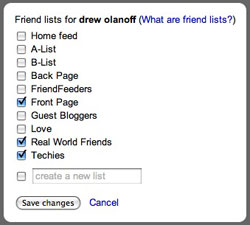 Since I started using the service almost a year ago, I've been one of the more visible proponents of absorbing the noise, and giving every other user equal footing. But as I took on more people I found interesting, I was losing touch with the original users I followed, missing key conversations, and a lot of the most-active subject matter was trending away from what I typically like to discuss.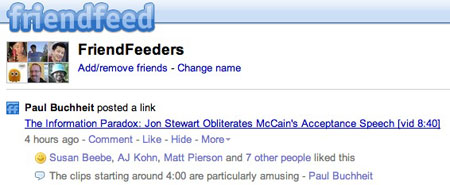
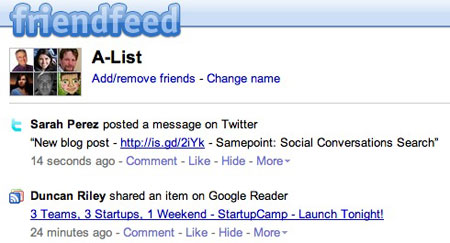
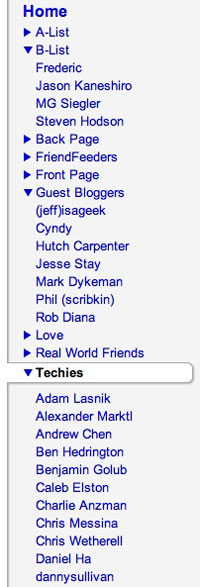 The idea is that once I put 95% of those I follow on the "Back Page", I can selectively walk through that list, which has replaced my home feed, and pull people to a new list called "Front Page", which will include must-follow people I've met on the service over the last year.
 With only a few exceptions, it's been universally accepted that
 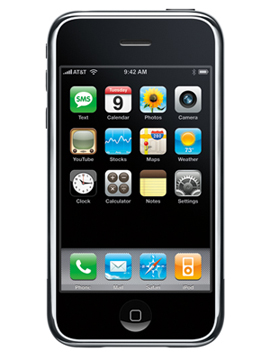 But so far, Apple's iPhone App Store only offers two options - free, and paid. And if you've paid for a premium application, and it turns out you don't like it, tough luck.
 Earlier this week,