Multiple Factors Go Into A Solid Personalization Service
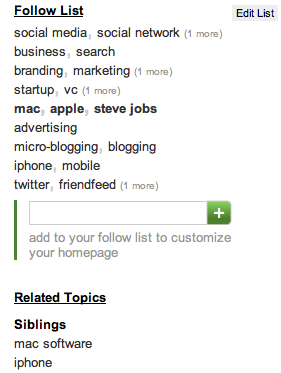
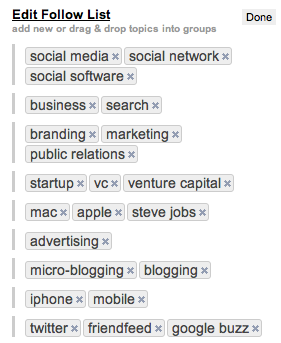
(from my6sense's internal slide decks)
Eli Pariser, former Executive Director of MoveOn.org, is a smart guy who knows the Web very well. His most recent work takes on the movement toward services that adopt algorithm-driven personalization to provide you individualized content - which he calls "The Filter Bubble", matching a book he recently wrote by the same name. His summary, as eloquently stated during a TED talk in March, is that we as Web consumers are going to miss being exposed to information that challenges our views, that we will self-select our sources and content we wish to consume, and the services will comply. The result? A dangerous world, he argues, that is bad for democracy, and no doubt bad for knowledge as well.
Spending considerable amount of time thinking about the impact of machine-driven personalization as VP of Marketing at my6sense, as well as being an early adopter of many other tools that adopt various factors of personalization, from The Cadmus to Zite, Flipboard, Hunch, Cascaad and others, it is important to think about the impact of our efforts to bring personal relevance to the fast-moving Web and if we are indeed pushing people instead to a house of mirrors where most things look the same and the comfortable world agrees with our world view.
First, the argument that people prefer to associate with like-minded individuals and listen, read and watch news and commentary that agrees with their worldview is pretty well accepted. In politics, conservatives may prefer Fox News for their media, while liberals prefer CNN and MSNBC. This is exacerbated dramatically further on the Web with niche discussions becoming even easier to find. Way back in February 2006, when this blog was pretty new, I talked about how people don't usually want to mingle with people of opposing views, but instead that views become polarized as communities flock to the edge, where they are comfortable.
Quoting my 28 year-old self:
"To measure credibility on the Web, visitors are looking for people who already agree with their opinions. They're not so much looking to be changed or to gain information from other viewpoints, but to instead become more hardened in their positions."No matter the media, be it online or offline, we self-select what we consume based on a vast number of criteria.
(See: Blogging Bifurcation - A Web Divided from February 23, 2006)
We first self-select the source of our content - for example (in a world of dead tree papers) the New York Times, instead of the Washington Post or USA Today. Then, we choose how we are going to consume the content, be it to skim the front page first, or to dive into the business section. Perhaps we always read Sports first and then go back to the front page, and finally settle on the Features section. What we don't do is read every single story from beginning to end starting at the top left and moving to the back. Similarly, on television, we have our favorite shows, and again, we have preferences. We don't tun the TV on to channel one and hit the "up" button on our remote control until we find something we like. Instead, we choose our watching behavior based on our interests, and in a world of DVRs, we watch our favorite shows and limit our options to even be exposed to commercials highlighting other fare on the same network.

Personalization Puts You At the Center of Content
What new tools like my6sense and others are doing is recognizing that this capability of accurately divining the order of your preferences is largely missing in a new world of real-time streams. No man, not even the cyborg tech bloggers among us, can read every single tweet, Facebook update, Techmeme headline or news story that crests The Drudge Report. What my6sense and others like it are trying to do is eliminate the noise which you will never be interested in, while at the same time, surfacing the content which is deemed important to you based on your interests. No two people consume content in the same way, so presenting the content in the same way to each person (as has been done for centuries) doesn't make too much sense any more. It makes more sense, both for the user and for the content producer, to bring the best and most relevant content to the right people who want to see it and engage with it.
The concerns raised by Pariser are absolutely valid if the services being personalized don't offer any way for content that has not previously shown interest to come into your sphere. If the only signals that you've given to a service are that you like Apple computers and NBA playoff scores, and that's all you'll get, you'll have a poor understanding of the 2012 presidential election race and probably might not have noticed the fluctuations in the price of gas.
In my6sense, there are two critical ways that make sure you don't stay in your bubble forever:
1) There is always the option to view your streams sorted "by Time". Always.
Every single application that we have provided, from our iPhone and Android applications, to the NOOKColor application with Barnes and Noble, and even the Twitter extension on Chrome, offers a "relevance" tab based on your interests right next to the traditional chronologically-ordered view. There's no winner take all algorithm that erases the time view, because we know you should always have the option to see what your connections and feeds are saying "right now".
What's being discussed in the "Time" column could be anything. It could directly fall into your interests, or it could be something completely random, and that never will go away.
2) Collaborative filtering, while not the dominant signal, is still a signal.
If I have trained my application to know that I have a strong liking for technology news and consume this most of the day, it's unlikely that I will have previously given information that signals any interest in Osama Bin Laden's death or the earthquake in Japan. That said, if an event occurs that gets the attention of many of my social connections who begin to discuss it or share items on that topic, the system should interpret that as a strong social signal and surface this content in the application, so that alongside my regular Android ecosystem updates, I retain the option for breaking news.
In November, I wrote that "The Third Wave of the Web Will Be Uniquely Personal", as services adapt to my preferences and history to bring me a unique experience. We see this happening with Gmail's Priority Inbox, Google News personalization, the Facebook news feed and many other tweaks to our Web consumption experience. This doesn't mean that we are going to opt ourselves into a bubble by which we are never exposed to opposing viewpoints. Instead, it dramatically hones our signal to find us the best of what we want to see and leaves the door open for the real world to impact us.
As a member of the management team on a service that offers aggregation and multiple sources of a content, we often talk about how it's not a great user experience to deliver many articles in a row from a single source, or many articles in a row talking about the same event, even if it happens to be the event that is most critical for you to know. It is also not a great user experience if you feel that you are isolated, in a place where no other ideas enter and no other viewpoints get a chance to cross your screen.
The trend of personalization is a great thing - not bad at all. Every day you are self-selecting your news based on who you follow on Twitter and Facebook. Every day you are self-selecting your news based on the RSS feeds you read and the social networks you visit. This is something you are already doing. What apps like my6sense and others help to do is get you the best of what you want and free up the time you'd usually spend looking for that great stuff to go off and do something else - maybe start your own product... or even read other viewpoints where arguments are welcome.
For more on Eli's thoughts, see his interview with Time.com here: 5 Questions with Eli Pariser, Author of 'The Filter Bubble'. He is on Twitter at @elipariser, where he has personalized his news feed with 460 hand-picked people to follow.
Disclosures: I am vice president of marketing at my6sense, who delivers personalization of streams. my6sense can be assumed to be competing with multiple services in this piece, including Cadmus, Flipboard, Zite, etc.
 After a semi-private 10 week incubation period