Silicon Valley Technology Commentary & Archives · Est. 2006 3,045 Posts · 2006–2026
Showing posts with label Stats (152 posts). Show all posts

July 28, 2014

July 28, 2014 · 5 MIN READ · BY LOUIS GRAY

Life By Numbers and Notifications

Life By Numbers and Notifications


From morning until night, I'm led by numbers and notifications. These numbers prompt me what to do next, what actions to take, and often, can be used to inform whether my decision was the right one. And throughout the day, all my devices, working in concert, alert me to what they believe is the information I need to know right now. As we've seen a graduation of our primary content consumption from longform text to microtext, we're moving again to the notification being the central medium by which our get our updates.

Like most of you, my day starts with an alarm clock - mine being on my Nexus 7. When the time hits a certain number, the familiar tone blares. I pick up the device and am confronted with two things: Notifications, which catch me up on the emails I received, responses on Twitter, and any texts or instant messages that came overnight. The next scan goes to the numbers. How are the stocks I watch doing? Up, down or unchanged? How many emails do I need to respond to, and do the social networks (Google+, Twitter and Facebook) need responses?

With the essential bits out of the way, I move on to the next numbers - which usually means opening up my laptop and using Feedly. Feedly, like Google Reader before it, catches all my RSS feeds and lets me know how many items are new, I hit J and K to get caught up, share the very best to Pocket (which then flows to LG Stream on Twitter), and bring that number down to zero.

Only with my email box empty, social networks made whole, and Feedly brought down to even can I move on to the next steps. No pun intended, that means getting ready for the day and making sure I have my Fitbit on - and have weighed in on the Fitbit Aria scale to track progress. If I'm completely wired, I might be sporting an Android Wear watch (I have the Samsung Gear Live), my Nexus 5, and the Fitbit. All three devices are counting my steps, and the Nexus 5 (thanks to the Moves App) actually tracks exactly where I've been and how long I stayed there - my every movement being tabulated.

   
Moves Tracks My Every Step in Parallel with Fitbit

The drive to work gets counted. Automatic scores me on a scale of 1 to 100 on whether I've driven too fast or wasted gas on the way. My GPS tells me how many more miles it is to reach my destination, and how many minutes it expects I'll sit in traffic and peek at my colleagues who are looking at their notifications on their devices while driving.

While I'm at the office, my Nest thermostat works in the numbers to keep the home temperature feeling just right. My Sunrun solar panels are taking in heat from the sun and converting it into Kilowatt hours of energy. If the numbers produced are higher than the numbers consumed, and they almost always are, then we saved money that day. The Rachio sprinkler system checks to see if expected rainfall is above a specific numeric value, and if it is, they simply won't run.

If I've updated my content channels, at home or at work, the numbers tell me what's happening - through Google Analytics, Twitter and Google+ Insights. Who's watching and engaging and sharing the content? I can be alerted if one of my posts has reached the top of Hacker News, or is shared by Marc Andreesen on Twitter. The numbers always tell the story.

The Hacker News bump begins.

While most of those numbers are a holdover from the PC and even mobile-centric world, the new age of devices is driven almost entirely by notifications. Google Glass, in addition to being a first-person perspective camera, is a notification machine, getting you the updates you need directly, and giving you the option to engage. Android Wear goes beyond the clock and brings the notification (and engagement) to the wrist.

Android Wear is here. You can get yours on Google Play.

Application developers are getting smarter about how they can make their app less passive and more active. If it can justify notifying you to an update - be it ESPN's SportsCenter alerting me to trades or Google Now telling me it's time to drive home, then the app stays on my radar. Abuse the privilege, and the app (often games) will get uninstalled.

The day's efforts becomes a balance of managing the numbers and the notifications. Answer the emails. Read the updates in Feedly. Respond to Twitter and Google+. Answer the instant messages.

There are three checkpoints to tell you how you're doing. The first comes at 1 p.m. Pacific (4 p.m. Eastern) when you find out how your stocks did on the market. Did you make money or lose it? Mint.com and the Check app can give you updates on your daily progress. The second comes at the end of the workday when you get home. Did you whittle down your work to inbox zero or have more to do when you left than when you started? And the third comes at the end of the calendar day. Did you walk enough to get your step goal? Did you drive well enough to keep your score at 100? Did your favorite team win? What was the score?

Then you get ready for the next day by setting the alarm and seeing, in clear numbers, how many more hours you have left before starting the numbers and notification race again. There's an app for that. Now if you'll excuse me, I have some notifications and updates to clear.

Disclosures (per usual): I work at Google, which owns Nest, and is behind Android Wear, Google Glass and the Nexus 5 and 7. Our friends at Facebook now own Moves, and we occasionally partner or compete with Twitter and others on various bits.

October 24, 2012

October 24, 2012 · 5 MIN READ · BY LOUIS GRAY

Built Like a Blogger? Lose Weight on the Fitbit Diet.

Built Like a Blogger? Lose Weight on the Fitbit Diet.

My dresser drawers are overflowing with extra large shirts with logos from tech companies - most of them Google at this point, after more than a year at Mountain View headquarters.
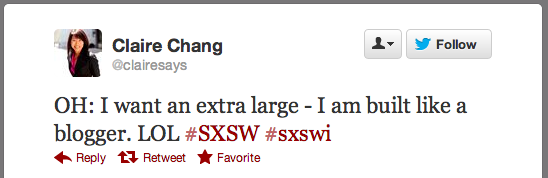
That someone with my otherwise slight frame would require extra large shirts on a regular basis was the unsurprising result of the activity usually surrounding a desk jockey - typing, interrupted by occasional bouts of eating, and a combination of the two for true dexterity. I called the condition being "Built Like a Blogger", accurately captured by Claire Chang at SXSW in 2011 and immortalized on Twitter.


Now it's possible I need to discard a ton of these shirts, not because I need dresser real estate back, although I do, or because some of the logos are for companies that no longer exist, although that's true too, but because, largely in part to my adapting of the Fitbit fitness tracker this last Spring, I've managed to increase how much I walk each day by as much as 75%, and I've dropped twenty pounds. I know few people find that intriguing on a tech blog, but as I had mentioned in my first post on Fitbit way back at the end of March, "Virtual badges influence real world behavior", and that change in real world behavior has hit me with real results.

What's a bit off in that initial post from March was my promising I had no real interest in changing my behavior -- I just liked the stats. That may have been true, but I let my competitive nature overrule me.

Each month, my average steps per day increased.

When I first was measuring my steps per day on Fitbit, without any changes, I was well under 10,000 steps in a usual 24 hour period. I considered 8,000 good, 10,000 a stretch, and 15,000 ridiculous. For the normal human who thinks in distance, 2,000 steps is about a mile's walk, or 3,000 steps can be about 2 kilometers. But after friending more active colleagues at Google, such as Matt Cutts, Travis Wise and Adam Lasnik, I found my own step counts to be slovenly, as they, and others, routinely averaged well above 10,000, hitting 12,000, 15,000 or even higher with ease. So I got competitive.

Beyond taking the stairs instead of elevators, and walking further away for lunch, or pacing in my office at night, I picked up the Fitbit Aria scale when it was announced, which let me watch my weight online, starting in May.

Fitbit has tracked my decreasing weight daily since May.

Again, this started out as a curiosity, but it's well known that if you watch your behavior, you're more likely to behave with better patterns. I found I could very easily track my calories burned on the Fitbit, guess on the amount of calories coming in, and see the results the next morning. Soon, with heightened awareness of the combination of walking more and taking less in, I burned through 5 and 10 pounds, and crested through 15.

At that point, my jeans barely fit, and I was on the last hole on my belt. I even had to go to Target to get new jeans, dropping a full 5 inches on my waist. This was certainly unexpected when I first got the Tracker and scale. And this morning, for the first time, Fitbit reported I lost a full 20 pounds, and I'm easily less than the lies my driver's license had been telling the state for the last five years plus.

Achievement Unlocked: From my email this morning

The competitive nature I originally had, battling colleagues and friends for steps and badges, had evolved into a battle against myself. One major reason I haven't been posting as regularly, aside from interruptions by work or the usual family needs, has been because I've been walking a lot late at night, when I used to crank out posts like these. I now know practically all the routes in my neighborhood by heart, and know the best ways to crank out 3,000, 5,000, or 7,000 steps, if necessary. I find excuses to take my own kids out for walks, or I'll call up a friend and talk on the phone as I navigate the dark corners of the suburban Peninsula until I bore them to death or hit my steps goal - whichever comes first.

October 6's 38,000+ step day, with many spikes

On the consumption side, I haven't really done much dramatic. Being more aware of day to day weight makes some fast food less appealing, and having healthy snacks at work so readily available makes choosing correctly easy. I see it as the reverse of the famed Slim Fast diet (a shake for breakfast and lunch, with a healthy dinner), instead having a lighter breakfast and dinner, and scoring a high quality and full lunch on campus. It's also good on my pocketbook, by the way, of course.

Now I've somehow picked up this reputation for wanting to walk everywhere, simply for Fitbit steps. A  one mile building to building trek that you could bike only provides 300 steps, while going on foot gives about 2,000, so you know my choice. I now park furthest away from my destination, instead of as close as possible. I convince friends who want lunch to go the extra blocks to get something specific, and can get home above 10,000 steps before even tackling my evening efforts. It's been a fun challenge.

Now that I've lost 20 pounds, I have to consider if the new weight is a low point, which will see me rebound to a higher mark, if it's a stepping stone to an even lower number, or the new mark I should get used to. Truth is, what this experience displays to me is that I am in control, and if I can watch the numbers, I can honestly choose what I want to be. It's part of the quantified self that Mark Krynsky, Larry Smarr and many others are pushing for. All Fitbit did was sell me some gear to count it and compare, but the rest I did on my own. As for tonight, it's almost 10, so I'll share this with you and then go on another walk. I've got a few thousand more steps to do.

Find me on Fitbit here: http://www.fitbit.com/user/22HTMK. All the graphs are real. And don't miss my follow-on post: "Fifteen Signs You're a Fitbit Fanatic".

January 24, 2012

January 24, 2012 · 1 MIN READ · BY LOUIS GRAY

Blogger Adds +1 Data to Dashboard to Track Popular Posts

Blogger Adds +1 Data to Dashboard to Track Popular Posts

This afternoon, Blogger introduced a small update to user dashboards, letting blog owners see how many +1's their content has achieved across the web, including +1's from Google Reader and search results, from your personal dashboard. Now, in addition to traditional statistics familiar to blog authors, like those found in Google Analytics, you can now see a quick + count next to the number of comments and page views - helping show the impact your most popular posts have received.

As I haven't been very active of late on the blog, I haven't done much to deserve +1's from every corner - something I'm looking to get back to doing shortly. But it's fun to see my August announcement of joining the Google+ team got 105 +1's and the Ten Step Guide to Giving Good Social from July also cracked the 100 +1's mark. And working on the Google+ team, I know that as we don't automate +1 activity, every +1 was done by a human being who took the time to show endorsement of my content.


The Addition of +1 data is displayed in the Blogger dashboard.
Watching how many +1s your content gets, and seeing who your most passionate readers are could play a big role in just what you decide to write about in the future - as page views, retweets and likes have. It's a lightweight way to gauge user satisfaction and get a view into your growing community.

Disclosure: I joined Google in August to work on the Google+ team. Blogger is a Google product.

August 5, 2011

August 5, 2011 · 3 MIN READ · BY LOUIS GRAY

Worshiping False Business Gods, Finding the Right Metrics

Worshiping False Business Gods, Finding the Right Metrics

Web Statistics Can be Addictive. But Are They Really Your Business?

Many employees at businesses are focusing on the wrong metrics and keeping themselves busy on tasks that don't help the bottom line - often for reasons like inertia, or because of bad instruction from a superior. In my role as an advisor for multiple small startups, as well as being a third party consultant through the work I do with Paladin Advisors Group, I often find myself talking with people who are frustrated with the bottom line, who know what they're doing isn't having direct impact to success, but continue to do it anyway.

For example:

Search Engine Optimization (SEO) and Web statistics

Search Engine Optimization can be a false god of metrics. Web traffic and user visits can be addicting. Once a company experiences a level of traffic, or a rate of visitor growth, it can be something they don't want to let go. A slowdown in Web traffic or even a reversal can make them react by taking less advisable measures, such as spawning dozens or thousands of algorithmically-created Web pages with low value in an attempt to game the search engines. And if they get caught, as some did with Google Panda this year, the blame goes to the engines, not the people implementing bad behavior.

In discussions with one firm, they acknowledged the quality of the visitors through these non-human pages was pretty bad. Bounce rates were high, signups were low, and they really were not their target customer anyway. But the company struggled with the idea that seeing Web traffic decline, with a better focus on high quality content and visitor conversions was more important. They didn't want to let go of their numbers!

So we talked about what they really should be measuring. Was it revenue? Was it new customers? What about application downloads or signups? What was the right thing to be incentivized on?

User Counts

If SEO is not the catch, user registrations can also be another number that gets out of control. As most of you know, once you get a user, you can always list them as having been a user. So this number always goes up. But how many are active users? And how do you define active? Is this number increasing or decreasing?

Social Media

And don't get me started on counting Twitter followers and Facebook likes... given that social media is so new to some people, they really don't know how to measure success, but I would say it always comes back to the company's bottom line and finding real revenue users.

Busy Work vs Real Value

In my career, I've prayed to false gods of Web traffic and rote activity that occurs "because we've always done it this way". I've run Web campaigns that had little success, but could show that I ran the campaign as a deliverable I achieved. I've sent newsletters that few people opened, yet sent another one the following month. But where I felt the best was getting real new leads into our CRM tool (Salesforce.com) that led to real meetings, opportunities and revenue. Being able to track real revenue back to activity I had initiated or assisted on meant I, and my group, had delivered real value to the company.

So think about what metrics you are measuring. Are you responsible for raising Web traffic? Tracking Twitter followers and Facebook likes? Downloads? Users? Find out what you really need to show business momentum and success, and push on that. For praying to the false god won't work forever.

July 25, 2011

July 25, 2011 · 1 MIN READ · BY LOUIS GRAY

Google+ Follower Counts Jump, Due to Simple Circles

Google+ Follower Counts Jump, Due to Simple Circles

A lot of people here, from +Brett Crosby to +Erica Joy, +Loic Le Meur and more have noticed the number of people adding to them in circles has caught up to or exceeded their followers on Twitter, despite Google+ being out for just under a month, while Twitter just celebrated its 5th anniversary. Many of us joined Twitter 3-4 years ago. +Liz Gannes of AllThingsD has an analytical post today on just why she and her connections think the counts are the way they are.

My two cents: Adding people to Circles is fun and simple, and you know you can organize people who you might view less often, while with Twitter you put everybody in the same bucket, so you pay a tax for connecting. Also, the engagement here is such that we early users are enthusiastic about following the path forged by other social networks, and finally getting the equation right.


(See: Google+ Really Has the Hang of the Follower Count Game)


/via My Google+ Profile.

July 20, 2011

July 20, 2011 · 1 MIN READ · BY LOUIS GRAY

Google+ Reaches Twitter Followers 50x Faster

Google+ Reaches Twitter Followers 50x Faster

It took me three years of activity on Twitter to reach 19,000 connections. On Google+, it has only taken three weeks. While follower counts are not the most important thing to focus on, it is a definite indicator of momentum. Just wait until these doors fly open to the world and they find this place without limits.

/via My Google+ Profile.

July 12, 2011

July 12, 2011 · 1 MIN READ · BY LOUIS GRAY

Google+ Drives Downstream Traffic

Google+ Drives Downstream Traffic

Google Plus can and does drive downstream traffic. In the last few days, depending on when I checked, Google Plus was driving anywhere from 90% to 200% the traffic of www.google.com, which as you know, is typically the world's largest driver of consistent traffic. Blogging more often helps, but people do more than +1 here, they click too.

/via my Google+ Profile.

July 3, 2011

July 3, 2011 · 1 MIN READ · BY LOUIS GRAY

Google+ Referral Traffic Possible to Track, Unlike Buzz

Google+ Referral Traffic Possible to Track, Unlike Buzz

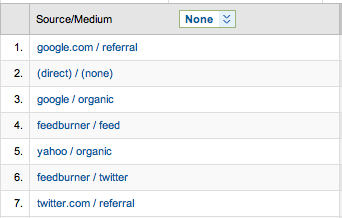
What is this string? And what could it mean?

Last year's launch of Google Buzz was followed by some blogger navel gazing around how referral traffic from the social network within Gmail was sending negligible traffic. The rub, of course, was that Gmail is served under SSL, and would not be sending back session headers to downstream sites, regardless of click-through volume. So guessing whether Buzz was driving a high or low percentage of traffic relative to other sites was pretty much a guess. In contrast, it is possible to divine traffic from Google+, launched last week, but it's not directly designated, falling under the general Google.com domain.

For Google Analytics users, Google+ is not called out as a dedicated site, making its use practically invisible, adding onto the "Google/Referral" statistic, as opposed to "Google/Organic", separating the company's Web apps from native search.

For those viewing raw logs, or using third party tools (like Sitemeter, which I use in addition to Google Analytics, Quantcast and Icerocket, just to overload myself with data), you can see Google+ referrals having the following string:

http://www.google.com/url?sa=z

If you can track how many times visitors come your way with that particular string in their referral, then you can know just how much an impact Google+ is giving you downstream. For me, despite reports from others, I've never gotten much traffic at all from Facebook, and Twitter tends to like a specific type of story, inconsistently. FriendFeed, once my 2nd highest referrer, is practically gone. You get what you give in the social networking space, so no doubt if you participate in G+ (as the cool kids are calling it these days) or you make it part of your flow, you can see it bringing visitors your way.

So watch for that string if you care about this stuff. There's no Gmail excuse this time to obscure transparency.

June 10, 2011

June 10, 2011 · 2 MIN READ · BY LOUIS GRAY

OneTrueFan Unveils Fan Engagement Analytics for Blogs

OneTrueFan Unveils Fan Engagement Analytics for Blogs

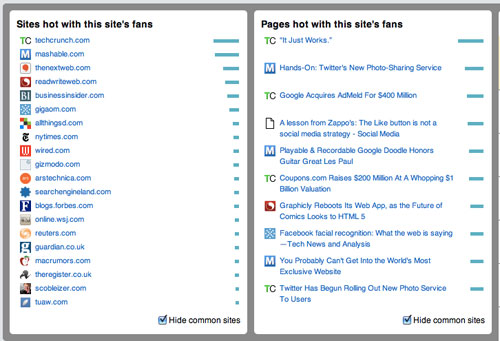
Even if you run the most sophisticated visitor analytics software, connecting impersonal IP address data and browsing history to real people can be a challenge. Only through external activity on social networks, or through blog comments can you get a real picture of the people who take in your content. OneTrueFan, which I've happily sported on this blog practically since the product's launch, continues to try and eliminate the mystery, helping content providers connect with their community, and for the visitors, find others with similar interests across the Web. In that vein, OneTrueFan has introduced detailed fan engagement analytics that go a step beyond traditional visit statistics, helping you get an idea of which of your regular readers' took in a specific story, or shared it downstream. In time, you can get a great picture of what stories resonate with which readers, making the impersonal personal.

OneTrueFan Fan Analytics for ReadWriteWeb

On launch of the new fan engagement analytics, OneTrueFan has also unveiled a list of the top 25 tech sites as measured by fan engagement - giving you a look into these site's live statistics, day over day changes, and a live scrolling of all the content being shared downstream.

Top Pages Visited by LouisGray.com Fans In the Last Day

The stats, which you can preview for these top 25 properties, highlight the most popular pages in the last 24 hours, along with avatars of these top fans who engaged with the content, and shows which sites are popular with that site's fans. Unsurprisingly, especially in the world of tech, you can see many people are fans of multiple sources. For those running the OneTrueFan bar, you can dive deeper into the data, seeing impressions, fan reach, new users, shares and even data on how the bar is being used or hidden.

Sites Popular With LouisGray.com Readers and Top Pages

OneTrueFan is a lot more than a simple bar that shows you the top ten fans of the site. I make the bar a must install on all my browsers on all my computers to help me share content downstream and track my browsing history. There's value to the viewer, and now, increasing value to the content provider who gets a real live look in to what their most engaged fans are doing with site content.

For months, I've gotten questions about why I've given OneTrueFan such prominent space on this site, all free of charge. I've done it not just because I like the team, who brought MyBlogLog to the world seemingly ages ago, but because I like seeing real faces and encouraging sharing of my content. The world may be built on ones and zeros, but it doesn't have to look like it.

If you have a blog, I would encourage you to add their bar and start getting real fan analytics. If you browse the Web, check out the browser extension, and find out what people like you have been sharing. It's a thinly spread social network for the entire Internet. OneTrueFan, as always, is here: http://www.onetruefan.com/

February 18, 2011

February 18, 2011 · 3 MIN READ · BY LOUIS GRAY

Like With PCs, Mobile Market Share Stats Fire Blanks

Like With PCs, Mobile Market Share Stats Fire Blanks


What is Android's market share against iPhone? In August of 2010, Nielsen claimed shipments of Android beat iOS for the first time, representing 27 percent of the market against 23 for Apple. By the end of January 2011, a second firm reported news that Android was number one overall, topping Symbian, while practically doubling that of iPhone (32 percent to 16 percent). On the same day, a third firm, NPD, said Android outsells all other competitors combined, with a US market share of 53 percent.

Which one is right and who cares? How many firms get to announce that Android is number one overall or that it has whatever percentage lead over iPhone for installed users or for the most recent quarter before they all agree? I think I've seen this story before (repeated 100 times).

Do consumers select a product based on market share statistics alone? I hope not. Of course, in contrast to the calculator rattling at all these firms, in addition to IDC, Gartner and the box counters of old who are taking turns counting newer and smaller boxes, you've got the Apple faithful who are going to do a great job arguing that Apple isn't in the market share race after all, that more people pay more dollars per iPhone than other platforms, and that developers make more money on their platform. Take a look at the latest report from Mac faithful site AppleInsider for their take, saying today that Apple's rivals battle for iOS scraps.

Can we all, instead of repeating every little survey that ekes one side up a percentage point here, or down another there, simply agree that the iOS is a great operating system, that Android is increasingly high quality with similar features and some solid innovation, and that the total population of Android users is increasing at a faster rate, thanks to broader priceband support and business relationships with handsets and carriers? I don't know which firm is right on which number, and frankly don't care. Like I've said many times over the last year, one's choice in mobile is a personal choice based on preference now. Nokia has fallen in love with the Microsoft Borg, and that leaves iOS and Android to have the dual battle many have been begging for, with the numbers playing out as we expect them to.

Developers who are launching iOS only are a rarity these days. Instagram, Path and Flipboard are all notable for having great interfaces but also because they are the exception and not the rule. I'm glad we've moved on somewhat from counting apps on each marketplace, but I think it's also time to move on from counting total units. Just recognize that smart developers are going to develop for both places, and consumers who make a move - to one platform or another - are going to find the apps they know and prefer available.

Even if Android grows to take 80 percent market share, which maybe it will, Apple knows how to live in its world of a smart minority. So let's cut out the garbage market share reports that flail in accuracy or in detailing anything we don't already know and instead, watch the results of two very different approaches to business models and customer focus take place in front of our eyes. It's the most interesting battle since the IE vs Netscape wars of the mid-90s, but this time, nobody's going to get crushed.

January 24, 2011

January 24, 2011 · 2 MIN READ · BY LOUIS GRAY

QuoraTop Ranks the Most Followed Quora Accounts

QuoraTop Ranks the Most Followed Quora Accounts

The second-most popular activity on the Internet (ego stroking) just got yet another site. Silicon Valley's latest flame, Quora, the increasingly popular question and answer site founded by a team of former Facebookers, deliciously displays every user's follower counts, as well as the number of times they are mentioned, on each profile. With such numbers flowing freely on the site, it was only a matter of time before a smart coder found a way to rank the top users and post a leaderboard. First to the game is QuoraTop, authored by Gri.pe's Matt Mastracci, which polls Quora daily for users' following counts and shows who's garnered the greatest following.

Spawned from the popular Quora thread "Which Quora users have the most followers?", which to date has been tweaked manually, often by the same people being included in the list, eager to climb the Q&A social ladder, QuoraTop shows few surprises among the top followed people - which often correlates more closely to their visibility from other networks and previous job history than their supposed activity within the network itself.

The Top 3 Non-Banned Quora Accounts

Top users, as shown by QuoraTop, have names well-known to the Silicon Valley digerati, from Robert Scoble, Ev Williams, Kevin Rose, Tim O'Reilly and Jason Calacanis to Mike Arrington, Leo Laporte, Loic LeMeur, Biz Stone, and Daring Fireball's John Gruber to round out the top ten, with just under 7,000 followers. Scoble tops the list tonight with 16,686 followers, about a 10% conversion rate from his follower count on Twitter. Quora cofounder Adam D'Angelo enters at position #20 with 4,433 users, just ahead of the first woman on the list, Laura Fitton, who hits the #21 position. Tara Hunt is #26 overall and Gina Trapani is #37, three women outnumbered by men more than 10 to 1.

Quora's top followed users include popular founder CEOs including Ev Williams, Loic Le Meur, and Dave Morin, fomer CEOs like Steve Case and Craig Newmark, and of course, VCs like Marc Andreessen and Dave McClure.

If you look closely, you can see the aftereffects of Twitter's suggested user list bringing many followers to less-active users of the site. It's widely assumed that once celebrities with their millions of fans on Twitter start to also use Quora, the digerati could be swamped by Hollywood, but it's early days.

Dare to stare at the numbers and see if you're on the Quora leaderboard, or if you've missed anyone? Check it out at http://www.quoratop.com/.

December 31, 2010

December 31, 2010 · 7 MIN READ · BY LOUIS GRAY

The Top 15 Stories on LouisGray.com in 2010

The Top 15 Stories on LouisGray.com in 2010


With almost 400 stories in 2010 posted on the blog, some definitely rose higher than others in prominence, due to breaking news, interesting insight or simply sharing my personal experience, as my view on the technology landscape changed, as did my preferences. While total posts on the site were down almost 30 percent year over year, thanks to the addition of baby #3, a new job that sees phone calls as likely at midnight as any other time, and greater filters on my side, to avoid feeding the echo chamber of repetitive tech bloggers, there are a number which gained more traction than any other. From a quick visit to Google Analytics, it seems my move from iPhone to Android gained the most attention, by far, as did discussion of Apple, Google, Facebook and social media strategies.

To see last year's results, catch: The Top 15 Stories on LouisGray.com in 2009

The Top 15 stories authored in 2010, in order of highest traffic to least:

1. Why I Turned In My iPhone and Went Android
July 10, 2010

Despite this being far and away the biggest story on the site in 2010, I didn't expect that to be the case, nor did I do anything useful to hype it. Having made the choice to go Android, turning in my iPhone earlier in the week, I felt it made sense to explain my choice. About 20 minutes to midnight on a Saturday, when nobody should be reading tech blogs, I summarized my thoughts. Robert Scoble, an hour or so later, said he couldn't kick the Apple iPhone habit. Bizarrely the post hit Techmeme and for much of Sunday, was the 2nd biggest story on the Tech Web. I was inundated with comments from Apple fans telling me I was a fool.

But that wasn't the end of it. John Gruber of Daring Fireball linked to the story on Monday, and said the piece was "thoughtful" but assumed Android would eventually be better than iOS, not that it is now. That kept traffic flowing, and I honestly couldn't read every comment as it hit my e-mail. I moved them all to archives, and later caught up.

2. While Apple Slept On Their Hobby, Google Executed
May 20, 2010

Second in the Apple vs Google discussion was a recap I made of the Google TV unveiling at Google IO. Since the post, Apple TV reloaded with a new stream-oriented box, and Google TV has had a slow start, but at the time, Google seemed to be making a lot more headway and noise about its product while Apple had been remarkably silent.

3. iPhone 4 Is Nice, But It's Not Enough to Slow Android
June 7, 2010

A clear tilt in my thinking of iPhone vs Android before I made the full switch, I looked closely at the iPhone 4 unveiling, with some glimmer of hope that Steve Jobs and team would do such a grand invention that I'd be a fool to switch sides. Unfortunately, the iPhone 4 looked very nice - the best Apple had ever done - but it was hardly revolutionary. Combined with the market forces behind Android, it seemed clear to me where momentum was headed.

4. 50 Startups Worth Watching
June 9, 2010

Showcasing Symbaloo, a Paladin client, I organized my thoughts on 50 top startups mid-way through the year that I was watching. Foursquare and Spotify topped the list, with others, like Blippy and Quora also featuring prominently. Interestingly, I had posted my6sense at #14 overall, more than two months before taking a fulltime role with the company in late August.

5. How to Bring Your Google Buzz Entries to Twitter
February 11, 2010

With Google Buzz just having launched under much visibility, many folks wanted to make their Buzz posts synchronize with other services. The addition of Google2Twitter made it simple.

6. Unfriending, Unfollowing, Unsubscribing... Less Is More
November 29, 2010

The multitude of connections we all have in our many social networks can at times become overwhelming. In the interest of getting more signal and less noise, I dramatically reduced the number of connections I had on both Facebook and Twitter, and even started trimming Google Reader feeds.

7. iPhone Armageddon: A Week With Android & EVO
June 1, 2010

Having gained the HTC Evo from Google IO, I opted to give the device a fair shake, rather than be dismissive of it, as I had anticipated I would. What I found was surprisingly good, and led to my eventual switch to Android, helped by the minor upgrades of iPhone 4.

8. Why I am Using Google Buzz as An Alternative to Facebook
May 8, 2010

While Google Buzz has been slammed by a number of tech sites for the gulf of what it delivered against their overhyped expectations, I found the site very useful, bringing the aggregation I always liked of FriendFeed to a new place. I outlined how I could use Buzz as an alternative to Facebook.

9. Should Social Profiles Live On When People Die?
July 3, 2010

One of the creepier things about Facebook was my often seeing the site request I reconnect with people who had passed on. Clearly, they hadn't updated their profile in some time, but the catch was they couldn't. Michael McKean, my example, had died due to leukemia and would never post a status update again. But Facebook suggested we talk more. Algorithm fail.

10. Facebook Starts Mandatory Profile Linkage to Public Pages
April 29, 2010

Facebook underwent many different updates to one's profile during the year. In April, those things you liked couldn't just sit as text on your profile, but were automatically connected to public fan pages of those items, be they bands, brands or products. It seemed a little pushy to me, and something that benefited the network moreso than its users.

11. Author: Zuckerberg has "Total Control" over Facebook
June 23, 2010

Speaking of Facebook (3 in a row!), after I attended a presentation from The Facebook Effect's author, David Kirkpatrick, I highlighted his comments, which said Mark Zuckerberg had "total control" over the site. This key quote was enough to gain the interest of Huffington Post's Technology section, who linked it up and drew a good amount of traffic.

12. Friendly: The Best Facebook Experience for iPad
July 24, 2010

One of the biggest successes on the iTunes store for iPad apps was Friendly. Friendly replicated the Facebook experience on the big screen, and in the absence of Facebook having an official iPad application, the company's developers had a gold mine on their hands. I knew it was a big deal and was first to write about it. It's leading the pack more than five months later.

13. The Third Wave of the Web Will Be Uniquely Personal
November 7, 2010

Working at my6sense, I think a lot about personalization and prioritization of content, so the best things come to you as an individual, not as a demographic. The more I thought about it, the more it seemed we were on the cusp of a big wave - one toward personalization, following on the founding of the Web to share information and the ongoing movement toward social. Shortly after my post, stories written by founders at Gravity and Trapit, both posted on TechCrunch, echoed my views.

14. New Apple TV Extends Fragmentation, Cupertino Style
October 1, 2010

Once the new Apple TV came into our home, I was excited to see what it could deliver, but soon found myself wanting, as the channel lineup on the device was dramatically reduced from its predecessor. With a focus on streaming, Apple was unable to sign enough deals that made the entertainment options on the product similar to what one could expect. This kind of fragmentation was annoying, and reminded me of the many similar complaints that critics would through at Android and its array of devices.

15. We Apple Fans Are In Mac Tablet Rumors Reruns
January 2, 2010

If 2010 was all about tablets, and specifically the iPad, we were already buzzing about it by January. For this longtime Mac fan, it seemed like deja vu all over again. Unlike year after year of previous rumors, however, this one came true.

I would like to say that 2010 was the fifth year in a row with more than 500 posts, but it wasn't. Every day I go without posting I feel guilty, but it is just as important for me to drive quality through the site and share with you what I'm thinking, sitting in an interesting intersection of the Web, from the big tech giants and the smallest startups. Already curious what the top 15 stories of 2011 will be.