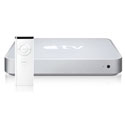
 For all the noise around fragmentation in the world of Android, one would think the state of affairs on the other side of the technology aisle would be perfectly unified - with one operating system, one user environment, and one experience where all things play nice. But while it's not as often discussed, my plethora of Apple devices is increasingly fragmented. The newest culprit? The brand new Apple TV, which has an incredible form factor, and some surprises in terms of what's simply not there - making me have to remember what media plays on what devices, and what devices are capable of doing what.
Despite my switch to Android on the phone, I still have plenty of Apple products in my house - from my wife and my laptops, our iPads (shared with the twins), a first generation Apple TV and second generation Apple TV and the newest iPod Touch.
After getting the new Apple TV, and attaching an entirely too expensive HDMI cable (not included) from Radio Shack, I set up the device and browsed to available TV shows to rent or buy.
The first search I made was for "Dexter", the Showtime drama I've become addicted to in the last month or so. Having already pulled down seasons one through three on my Mac, I wanted to pull down season four on the Apple TV. No dice. No results found.
Browsing the available TV networks quickly displayed why this was the case. Apple TV only offers selections from Fox, ABC, BBC and Disney. With Fox being the lowest in the alphabet, I thought it was a bug, but it wasn't that I missed Showtime outright, it just flat-out doesn't exist. CNET highlights how only 3 of the top 25 shows are available, but there's just something odd about knowing content is in the iTunes store (like Dexter) but my new Apple TV can't get to it, while the old first gen one (downstairs) can.
The capability gap between different devices from Apple is already clearly felt within iTunes. The iPad has started a cottage industry of high quality application development for the larger screened devices, which is great, but the backwards compatibility is practically invisible. In fact, if you have iPhone and iPad, you might find yourself buying an application twice, on the same account, for each device, with no discount. With the promise of applications being developed for the new Apple TV, you can see the potential for yet another purchase looming on the horizon.
While Android is clearly struggling with the challenge of bringing 2.2 support to all the latest handsets (and making progress), we see Apple TV running a variant of iOS (mixed with the traditional Apple TV OS), different than that of the iPhone/iPod Touch, with iPads still not having iOS 4, and yes, Macs still being Macs. I don't think it's too crazy, for a company focused on the Open Web (courtesy Daring Fireball) to find a way to tap into the Internet in a very real way and unify access to media and applications.
For now, until this is solved, it seems we need to expect the new Apple TV to have a different set of titles from iTunes than its older cousin, and the iPod Touch or iPhone to have a different set of applications than the iPad or Mac OS. This is real fragmentation, and it's a drag.
75 Comments
you undermined your argument in the third paragraph
http://www.amazon.com/HDMI-...
They ARE expensive at Radio Shack, it's most likely that he just went with what was close and convenient rather than the cheapest but requiring a wait.
You win! It was closest and I've got three kids under 2 1/4, so I'm not going across town to save a few bucks when I just have to turn back around. :)
Malcolm is right. In theory, I should have had spare HDMI cables around, but I didn't. I drove toward Best Buy and stopped at Radio Shack on the way. No biggee. I think that doesn't distract from the core issue.
I once was in the same situation (when I bought the 1st gen AppleTV), and it turned out the Apple store actually had the best price on an HDMI cable ($10, vs. nearly $100 at Best Buy).
"For now, until this is solved, it seems we need to expect the new Apple TV to have a different set of titles from iTunes than its older cousin, and the iPod Touch or iPhone to have a different set of applications than the iPad or Mac OS. This is real fragmentation, and it's a drag."
More anti-Apple-TV bullshit.
I wonder if you can use Airplay to get around that?
I am certainly not anti Apple TV. I had the first gen device. I have the latest device. Ordered it right away! But there are issues worth discussing - just like they are worth discussing on any other platform.
Clever put-downs: damnation with faint praise. Only problem is it is premature; your subtle vituperations are too early in the day, and your bullet points will doubtless in the fullness of pretty short time be whittled away into irrelevance by the gradual refinement process that even you know is Apple's trademark modus operandi.
Your hope is that by the time this happens your musings will be forgotten by all. Not so: this page is bookmarked, and commenters will return to your "issues worth discussing" in due course.
What's the "bullshit"? Does it not have a different selection of titles? Do the iPod and iPad and Mac OS not have different selections of apps?
He actually missed one: different countries. There are free apps in the App Store that I can't download simply because I don't have a mailing address in the country where it was written.
Kenji: What's the "bullshit"?
The bullshit is that the term "fragmentation" is re-defined to make the argument work.
Me. Gray is working a little too hard to make iOS "wrong", to paint iOS with the same negative brush as Android. Fragmentation means different versions of the same OS WITHIN a device category, like "cellphone". Extending the term to include devices made for different purposes is bullshit, as is including localization. Bullshit from 2-digit hater assholes trying to make Apple "wrong" so that their chosen God is "right". The street term for these people is "asshole" AKA egoist.
2-digit? Explain.
The cost of legitimate support from old media is often variety and features for the early adopters. The hope is that enough people buy the device and content to make it appealing for more broadcast partners to come on board, if anyone can, Apple can but I don't think I like the sacrifices they have to make to get old media buyin. I'll stick to XBMC.
A temporary problem it would seem - Not at all like Android fragmentation, 72 android devices (phones) by 22 different manufacturers and a multitude of carriers all with their own ideas/agendas. So Louis, I think you're making a mountain out of a mole hill :-)
I disagree, content fragmentation inside one's own home that's persists across only one OS is no small deal. THe whole point of the Apple ecosystem is 'it just works', when confusion reigns instead of the marketed simplicity the entire thing might as well be tossed in the toilet.
Correct. The fact I have two generations of devices that connect to a single media source (the iTunes Store) would indicate they would have access to the same content. That the newer one actually has less is a surprise.
I love Apple when it is simple. When it is not, it's worth discussing.
Small mountains. :)
I am not dismissing the Android fragmentation issue. The stories applauding 2.2 at 30% of phones (or 50% or whatever) are silly in my opinion. But I am seeing that the OS fragmentation from my good friends at Apple is impacting how I can work with my content, and each device has its own point release of iOS. To ignore it on this side would be just as dumb.
Can't you buy it In iTunes and stream it with Home Sharing?
Ben, I have enabled home sharing on the Mac. Apple TV doesn't see it yet. Will try more later.
I have had no problems streaming shows such as Dexter available on iTunes but not for "rent" through the Apple TV by using Home Sharing. I bet you will get this working!
No question that's a next step. Home sharing is enabled on the device and iTunes.
Without running the discussion into the ground, even if I didn't have the Dexter experience, which shows content fragmentation, Apple TV, iPad and iPhone/iPad are all on different variations of the same OS. Many folks it appears missed that.
Already announced that they will unify the OS releases next month with 4.2. I have all these devices and it is not a big deal.
Also the fact that no one is talking about it probably suggests that it is not an issue for people - and it isn't.
Also, some show are available for rent or purchase and are thus available on the AppleTV new or old. It's not an issue of OS release, it's just a question of the terms the content provider would agree to. Would it be better if this inconsistency was not an issue for consumers? Yes, but it has nothing to do with OS versions on different devices.
That's what AirPlay will be for.
Do your research.
AirPlay is/will be great. Even if it is amazing/fantastic, the issue of fragmentation and split functionality is there.
Apple may allow any iOS content to be transmitted to the Apple TV but we don’t know yet which app developers (ABC, Hulu Plus, MLB etc) will allow their content to use Air Play once the 4.2 gets its official release. Its a nice idea but the thorny reality of licensing rights always gets in the way of these fantasies. They very well may deactivate it on their apps.
Not to mention, the Apple TV is supposed to be all about simplicity and elagance. Having to go to another device (that you may or may not own) to search for and download content so you can then stream it to your Apple TV is not an elegant solution. It reminds me of how janky it used be when Netflix devices could only play items from your queue and you had to do all your browsing and queue management on a computer.
I can rent TV shows from iTunes on my computer, but cannot transfer them to my iPod, unlike TV shows I buy, or movies I rent.
What's the difference?
There isn't necessarily a difference. That's why I titled it "extends" fragmentation and not "starts" fragmentation. We've got Apple TV, iPad and iPhone/iPod on different flavors of OS, and each one does different things with the content. It's not as consistent as it once was or could be.
I know what you mean.
It seems like Apple or the entertainment industry are setting up artificial walls where none should exist.
Louis - Apple TV doesn't run iOS 4. It probably won't for another generation of hardware either. It's just a device (for now)...
You are no doubt closer than me.
All the articles I see flowing through Google Reader keep talking about variants of iOS 4.
For example: http://www.wired.com/gadget...
Sounds like the current version is a mashup of iOS and the Apple TV OS (which still is fragmentation), but the diehards don't want to understand the issue.
Isn't that what diehards are for? ;)
Correct! I understand their view and am surrounded by Apple gear. I don't dare argue with "my people". But I've yet to see anybody dispute the facts about each device running a different flavor of the OS, which is the crux of the issue.
Great Louis, now you made me go blog something! :) Counterpoint: http://www.livedigitally.co...
Great! Now you made me bookmark and tweet it. More blogging from you in the future, please, sir.
I've been better recently! Lot of it sitting at the stagetwo.com blog now though... i guess you could say i have a fragmentation problem...
No. Just disparate products. I'll tell you all about it sometime.
Part of the fragmentation issue - show selection - is unquestionably the studio's fault; not Apple's. No device, not Hulu, Netflix, or Amazon has all the shows anybody would want. Boxee tries to pull in content from everywhere; Hulu blocks their app. The studios don't want "one box to rule them all" unless they get their fair share and then some.
As for apps - wait until the Apple TV really does support apps. Right now, it doesn't, so I don't think you have much of a point here. Fragmentation across iPhones and iPads is two devices. That's less devices than the number of browsers for websites - and since that's the case, how about writing a post about fragmentation across web browsers? IE, Firefox, Chrome, Safari...
Anyhow, I hope to get this new Apple TV this weekend; "fragmentation" be darned.
Blame the studios all you want (they deserve it), but the decision to go streaming-only without streaming rights in place was all Apple.
Consumers don't care whose fault it is. They care that they buy a device to watch TV and then realize only a fraction of the shows they thought would be available are actually there.
In the end Apple made the decision to bring this product to market with hardly any studio support when their main competitor (Roku) has already solved the rental v. ownership question via Amazon.
You TV most probably has two HDMI inputs. Use one for the old Apple TV and the other for the new Apple TV and switch between them!!!
So I should put both Apple TV units on the one TV? :)
The plan is to have the older model on the TV downstairs and the new on the TV upstairs.
Has nothing to do with the OS. Has to do with what the TV execs are willing to do.
Louis: Seriously? You're seriously gonna call it "a drag" and an example of "fragmentation" that the copy of Starcraft I buy for the Mac won't run on my iPhone?
And seriously? You're gonna complain that you might (emphasis on "might", given how common universal apps are in the store) be forced to buy an app a second time when it has been redesigned for a very different form-factor? Despite the fact that, prior to iOS, the standard expectation for commercial software was that you would re-buy identical, unchanged apps for every individual user or machine in your home?
Oh, you aren't serious? You're just throwing some bait out there to stoke the traffic fires? Well played, Gray... well played. :D
If only I were driven by traffic - I could write lots of fun blog posts. I think my lessened pace here of late and lack of SHOCKING HEADLINES (for the most part) shows that's not my goal.
As I do have Android + iPad + iPod Touch, I have purchased apps (like MLB At Bat) multiple times. It's something worth considering, contrasted to a user name login model. But that digresses much from the crux of the post, which is needing to remember capabilities of each device for each need. I can still love the products but be annoyed at edge cases.
I'm hitting the hay here, but I just wanted to quickly note that I was teasing about the traffic thing.
No problem sir. I don't think everyone would get the joke. Touchy crowd this weekend. :)
I strongly disagree that "prior to iOS, the standard expectation for commercial software was that you would re-buy identical, unchanged apps for every individual user or machine in your home". That was something I saw first on Windows.
20 years ago, when I bought a software program, it would very frequently ship with many completely different platforms in the same box, sometimes on two sides of the same disk. I've got a ton of software on floppy disks at home with C=64, Apple II, MS-DOS, and Amiga binaries. These platforms were arguably even more different than the iPhone is from the Mac, and there were often 4 or 5 platforms included! It was nice upgrading from a C=64 to an Apple IIgs and already having software that could run on it, even if it wasn't IIgs-optimized.
After the C=64 and Amiga died, I still frequently saw Apple II and Mac disks in the same box.
And today, when I sign up for a commercial website, the expectation is that this website will run on all of my different browser platforms. I've never seen a website where the IE6 version was a different product than the Netscape one, or something like that. Often there will be platform-specific apps, which again, you typically don't have to buy again (though I've seen enterprise software where you did). Though, admittedly, the web is a little bit different.
Buying commercial apps that ran on many platforms for one price seemed like it was practically the standard, back before there was one or two dominant platforms. Once Windows got 90% market share, the development community split into "writes for Windows and ignores everybody else", and "writes specifically for the Mac" (and other small platforms). I guess this is another argument in favor of the web: you only have to buy it once. :-)
There's a Reverse EPG service opportunity here:
Start with the programme, and tell viewers where it's available
To find a programme,
- wannabe TV viewer check-boxes the services they have available - cable, satellite, consoles, tv boxes, web tv services
- & then searches for their programme
The Reverse EPG Service shows where the programme is available , at what cost... signup options, yada yada..
Does this exist anywhere?
While I can definitely appreciate, and even agree with some of the aggravation, the one thing people are not acknowledging is the content owner's part in this whole mess. People vote with dollars. iPhone apps will run on the iPad. If people choose allow content owners to charge $10 for an iPad enhanced version of a piece of content with no discount, content owners will continue to extort all the money they can.
Same goes with the rent vs. buy model for TV. Only recently did Apple allow rental of TV shows. Users can still 'buy' the content on their computers to stream to the new AppleTV, but I bet content owners are fighting back on the rental price point by only allowing users to purchase this content.
Lucky for me, I don’t care about buying or renting content from iTunes all that much (I’m mostly Netflix streaming and discs) and I love the ability to stream music to my main stereo so the Apple TV is still a decent buy. But the majority of people who buy the Apple TV probably are interested in first run content that Netflix streaming doesn’t have. And they will be sadly disappointed when they see the offering of TV shows on this device.
This could be a major problem for Apple. Without mass adoption they won’t be able to get the other studios on board for their rental only scheme. And without an extensive content offering they won’t get mass adoption. It didn’t have to be this way either. Apple could have at least made it possible to buy and stream shows a la Amazon for the studios who weren’t comfortable with the new lower rental pricing. But by remaining hardline about the rental-only model, these shows are all but invisible on the new Apple TV which just makes the selection look artificially pathetic. Jobs said they wanted to simplify the experience of the device but in this respect they have greatly complicated it.
Maybe owning and renting are part of Apple’s plans for their big new data center and its just not ready yet or they haven’t got the appropriate contracts in place yet.. Maybe Apple has a major coup planned with Airplay or when they open the device up to apps (why else would there be 8GB of RAM on a device meant only for streaming?) But in the meantime the Apple TV looks a bit half baked. It’s a good buy for people in the Apple ecosystem, but I’m recommending the Roku player to most of my friends and family who want easy access to the most TV shows.
roku has more tv content than the apple tv?
Unlike with Apple TV, all Amazon's content is available when browsing on via a Roku box. It doesn't matter whether they rent or sell it. It all streams from the cloud with Amazon.
If you have to go to another device to search for and download TV shows that aren't available for rent on the Apple TV that is as good as the content not being available at all in my mind. You have just added in several steps and a whole lot of hassle.
Many many many applications are universal apps for both iPhone and iPad. Backwards compatibility between those two devices is far from "practically invisible."
I also expect the rental situation to improve over time on the Apple TV. Remember how sparse the selection was when iTunes first offered TV and movies?
FYI. Seasons 1 -4 of Dexter are on Netflix Instant Streaming.
EDIT: Opps. Only Seasons 1 and 2 are there. Sorry
Nice!
Tease. I was going to feel like a sucker. :)
Just added 1 and 2 to the Netflix instant queue so I can trick my wife into watching them sometime. I'm still pounding through iTunes. 3 seasons down and 1+ to go!
Buy your movie via iTunes, stream it anytime you want. Hopefully there will be better answers as this cool new "hobby" evolves, but right now I wouldn't consider everything here a major show stopper. I have no doubt Apple has more in store that we don't even know about.
I don't know why this well written, reasonably stated article is generating so much vitriol. Thank you Louis for bearing it with such class.
That said, I don't think that AppleTV can be considered an iOS device in any practical sense. The fact that it's running iOS under the hood is an implementation detail, akin to saying Twitter (well the first versions) and Basecamp are the same application because they're both written in Ruby on Rails. From the user's perspective AppleTV is a closed system.
An uneven response is typical when discussing Apple's products and finding anything less than perfection. Discouraged fans don't bug me. They're my people! :)
This is so true. It's one thing to like a company's products, but when it gets to the point that you can't see anything wrong with them at all, you've got a problem.
you should take a look at a new TV service, Sezmi
I think you answer your own implied question in the second paragraph!
This article is obviously a partisan volley in the Android-iOS debate intended to paint Apple with the same "fragmentation" brush that Google has been painted with. It's fine to take a side and/or point out a problem, but to imply that it's even analogous or anywhere near the scale of Android's fragmentation is disingenuous. The only mildly fragmented, official iOS device, the iPad, will be unified next month - reviews of the dev beta have been unusually hyperbolic for a point update.
In a way, it's incorrect to even call the iPad fragmented when there are "cross platform" iPad/iPhone apps that work seamlessly on, say, an iOS 4 toting iPhone 4 and an iOS 3.2 iPad.
This explains why people are disagreeing. This does not explain why people are being assholes about it.
I rather hate the stereotype of the fanatical Apple zealot, but this thread is only empowering that stereotype.
[duplicate comment]
But Louis, another word for "fragmentation" (such an ugly word, don't you think?) is "diversity".
Yes, Android is "diversified". Is it a bad thing? No doubt, when initially getting a critical mass and trying to get things right - fragm..err... excessive diversification is bad.
But look at the long run: as a product matures, as people get to know how to do things right - I think it turns from "weakness" to "real strength". Because android developers had to deal with hardware diversity - in a few years (not many, 1-2 I'd assume) you'll have android running beautifully on 7'' devices, on 10'' devices, on 4'' devices, on 16/9 and 4/3 devices, on white devices (not only black and silver devices :P ) etc.It may actually become possible to put the same OS and the same apps on your 30'' living room TV and on your 3'' mobile phone. Can you really see this being true for iDevices? You complain about iDevice "fragmentation" (various iOSes on iPad, iPhone, AppleTV) - but I think this is an inherent problem of diversification... Apple wrongfully (IMO) attempted to protect the developers from diverse hardware; they benefited in the short run, but will be paying the price in the long run.
[Note: I'm not talking here about "content fragmentation" - that's an issue that I'm not sure is Apple's fault, although it no doubt hurts them; but you must appreciate how hard are the politics around getting digital content in user homes.... content producers aren't comfortable with change]
My 2 cents isn't worth as much as your fancy-pants US Dollar but I would think:
AppleTV - Static, presumed to be always connected to the internet
This way, renting makes sense. No need for massive hard drives and it encourages the consumer to purchase content on demand, not bank it up for latter. Having too much on a DVR is a problem. The consumer is much more likely to sit and consume the program in one sitting.
iTunes - It's primarily designed to feed iPod and iPhones which are not always connected and used as quick media consumption devices during travel and spare minutes. Renting makes less sense as time constraints don't fit the use patterns and their feeder computers have larger hard drives able to keep a back catalog.
Apple TV is network TV... iTunes/iPod/iPhone is your DVD collection.
Plus, I would assume, the removal of a large storage media not only brought the size of the device down but the cost of manufacture and the final cost of the finished product.
Digital hoarding is an expensive hobby, and this is a cheap man's game.
iPad has a different selection of apps than iPod Touch and iPhone but this is entirely up to developers. A developer can make one app that runs on iPad and iPhone, with a UI specific to each, but shipped in one app.
"Backwards compatibility", I would call it cross-compatibility, is not invisible. Apps that work for both iPad and iPhone/iPod are indicated for anyone that cares. The user can pay once for support for both of these devices.
The issues that you are talking about is not a platform issue, it's up to developers to decide what they want to offer. In this case, Apple is giving developers the freedom to set the terms of how they offer apps for iPad, an allowing them to have a different offering for iPad if they like. That is a good thing and it has meant that developers are producing really nice apps for iPad and making more from them. Good for them and good for the iOS platform.
In terms of Dexter, you said that you have downloaded the first three seasons on to your Mac. I have the new AppleTV and shows on my Mac are playable on the new device. What would keep you from downloading Dexter season four, in the same way you did the other three and watching it on the new AppleTV? Am I missing something? Seems to me like an consistent experience from what you did before. Is it that you expected the new AppleTV to handle this differently?
Before we were able to browse, buy and download Dexter (and True Blood, and Mad Men, and most of the other premium shows that people really care about) directly on the Apple TV. Now they are absent.
Telling people to go to their desktop or laptop to browse for shows offered by the exact same store their Apple TV is already connected to is a step in the wrong direction. Its cumbersome and unnecessarily adds a roadblock to content sales.
It's not ideal, I will agree with you there but then again it never was. The AppleTV always had limited storage capacity and, I think I am remember this correctly, was not able to share shows purchased with other devices - so there was good reason, at least in terms of Apple's universe, to buy with ITMS on a Mac or PC and then share them locally from PC to ATV. But setting that aside, the writer here admits that this is in fact what he was doing, he was downloading onto his Mac and then watching it on his AppleTV and presumably on other devices - so even in his personal case - nothing has changed. He can still do it the way he was doing it before. I just think that it's a little bit much to go make this public case for why things with the AppleTV are fractured or broken when in reality all he needs to do is download season four, as he did with the others and watch it, just like he did with the others. As far as I can see, that is totally consistent and I don't understand the nature of his complaint. Is it that a feature that he did not use before has been removed? Ok. Where again is the fire? And we know why they removed the feature of downloading purchases directly to AppleTV too, right? They wanted to offer a less expensive device that was more accessible - and to get there they killed storage. Good for them. I for one never bought the first generation because I could not justify spending so much for it. $99 is another story, happily bought that one.
I am not saying there is no point here. Really, what should be happening is that Apple should redefine what it means to purchase a show. Let's say CBS does not want to offer Dexter for rent, then AppleTV should show it at the purchase price and the user can pay the $2.99 or season pass and then stream it to ATV just like you would a rental. Leave the file in the cloud. If the user wants to download the file to another device later, fine, let them do that.
Honestly, buying and storing all these huge files is not so great either. My friend went crazy buying movies on iTMS and filled her harddrive. Had to help her archive them. Rather do the whole thing with streaming, if that works well. No reason why Apple could not show a "purchase" via streaming and keep track of my purchases in the cloud...
On the old Apple TV, you could buy a show (or subscribe to a season pass) as well as make rentals without using the computer at all. They would download to the device and either synch across your home network to another computer or that other computer would just download them as in the background if you told it to do so. It's not ideal like you said (because few people really want to deal with having to store and manage and backup all those downloaded shows). But at least the shows were all there. Apple actually took all that and 90% of their iTunes selection away this time and has left us with a really unimpressive collection of TV shows that most of their competition can run circles around. It's all about the content. If you don't have it (or don;t appear to have it) people will just shrug their shoulders and move on.
"Redefining what it means to purchase a show" is exactly what Amazon (and Roku by extension) is already doing. Whether you buy it or rent it it stays in the cloud to be streamed anywhere you desire. If you really want to take it somewhere there is no internet connection you can download it and load it on a device but the default is for it to live in the cloud. Hopefully this is part of Apple's master plan but unlike iPods they don;t have a tremendous lead here. They really should have come out of the gate here with all cylinders firing.
Wouldn't this type of "fragmentation" also apply to Netflix? There is some content I can stream on my Wii and some stuff I have to add to my DVD queue. I've only recently gotten Netflix, but I love the quality and stability of their streaming, commercial free and a better experience than Hulu for me. I do find it annoying when I sit down on my couch, and there are things I can't just watch, but that doesn't seem to be really hurting Netflix's bottom line.
It does apply to Netflix too. But Netflix is an cheap all-you-can-eat-service so people are willing to cut them some slack. iTunes is a premium a la carte service. Expectations about a good experience get raised when you are being asked to spend a lot more money.
And Netflix is taking steps to close the discrepancies between the streaming interfaces on various devices and their web portal. When these Netflix-enabled boxers first appeared, almost none of them allowed you to search for content or manage your queue. They were indeed a fractured mess as far as the experience went. Now most of the interfaces have implemented at least some of these abilities (ironically the new Apple TV is one of the best implementations I've yet seen). Yet Apple just took a giant step backwards with their hopes of getting people to use the iTunes store on the new Apple TV. The old device, despite its flaws, at least allowed you see ALL the iTunes store content. The new ones see a tiny fraction of it. Meanwhile the competing Roku's streaming boxes have full access to Amazon whether its streaming or purchasing and are soon getting Hulu Plus. In my opinion, Apple really can't afford to have these big holes in their offerings right now.
My suspicion is that were trying to affect this sort of change by switching to the rental model but did not realize the push-back they would get on the pricing structure. Hopefully they will work this out - either by signing up the missing networks or by handling purchases like Amazon does. Lately Apple has seemed a bit more flexible, so there is hope.
At least you have some choices for tv streaming. In australia, we dont even get the TV Shows menu option! And no Netflix. And none of this was disclosed by Apple in any of their country-specific advertising. ( screen shots on their au web site clearly show the tv shows menu option). At least i can view my flickr stream in my lounge room... No wait ... Its not MY stream -its any users PUBLIC stream. Doh. Ripped off again...
Sent from my iPad, iPod, Macbook PRO, iPhone