Silicon Valley Technology Commentary & Archives · Est. 2006 3,045 Posts · 2006–2026

December 31, 2010

December 31, 2010 · 3 MIN READ · BY LOUIS GRAY

In a Year of Tablets, I'm Hooked on the Samsung Galaxy Tab

In a Year of Tablets, I'm Hooked on the Samsung Galaxy Tab


This morning, I looked around the room and see three tablets in three corners. My wife's iPad was charging on one side of the room, while her Barnes and Noble NOOKColor was on the nightstand. By me was the Samsung Galaxy Tab. Three tablets, three manufacturers, all with different uses.

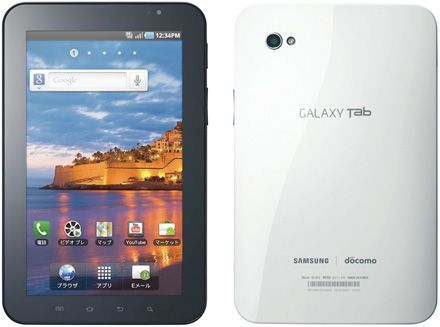
It struck me very clearly how 2010 was the year that tablets finally came to be useful household items, accelerated by Apple of course (after years of rumors), but in the end, the one I've been using the most has been the Samsung Galaxy Tab. I have found the 7 inch form factor extremely inviting, and it's going with me practically everywhere, thanks to built in 3G support.

Tablets? The iPod Touch, Samsung Epic, NOOKColor, Galaxy Tab and iPad.

At risk of falling into "most recent gadget acquired" syndrome, the Galaxy Tab is absolutely my favorite and most-enjoyed electronic gizmo of the moment. It takes what I've already enjoyed about Android, including significant customization, flexibility and integration with all my Google Services, and brought it to a bigger, high quality screen, and a very fast processor that runs every app I throw at it.

The Galaxy Tab vs the iPad In Size

Sitting in between my Samsung Epic phone and the MacBook Air, in terms of size, the Galaxy Tab is big enough to present full-colored demos to potential business partners, while also being small enough to put in an inside jacket pocket or jeans back pocket. The device is lightweight and easy to maneuver one handed, which has come increasingly handy when reading books, RSS feeds, Twitter or anything else when balancing a 4 month old baby. In contrast, the iPad's weight and bulk, not to mention heavy metal exterior, fails in this regard. The Galaxy Tab has a smooth plastic exterior that easily grips to your hand, but isn't so harsh as to be uncomfortable if rested on the chest or lap (real-world use case, people!).

My Galaxy Tab Home Screen

Many people have remarked that the Galaxy Tab is essentially a larger Android phone. That is true. In fact, to my surprise, when purchasing the Tab, Sprint assigned a phone number to the device, even though it is not configured to make phone calls. It seems the exact same hardware went into the device, plus a bigger screen, battery and CPU. So if you're already an Android user, you'll be pleased to find it running Android 2.2 and doing just as you would expect. This is very similar to Apple's unified OS strategy between their tablet and iPhone.

The Galaxy Tab's screen is the best I've tried. It is extremely clear and has high quality icons for apps and all services. The larger screen also allows for 5 icons to be stacked horizontally, unlike the standard 4 for most Android phones, which doesn't sound like a big deal until Android widgets built for the "four icons across" size show room remaining.

Like the iPad and the Barnes and Noble NOOKColor, the Galaxy Tab's battery is very good. While practically every smartphone I have used has been fragile to venture far from a power source, all the tablets have had significant lifespan and can go days without a charge. I've taken the Tab with me on car trips and used the 3G network (from the passenger seat mind you), to use Google Talk and answer e-mail, or catch up on the various social networks. I've even used the Galaxy Tab to take Christmas photos and video tape the twins running at the park - although holding the Tab in front of me to record them no doubt looks very silly compared to today's compact cameras.

With CES looming around the corner, and Motorola promising to launch a new tablet with a new version of Android, it's possible the Galaxy Tab's position at the top of Android tablets could be short lived. But it's clearly a real contender to the crown. It's fast, it's flexible, and the 7 inch form factor is extremely compelling. If you are looking for something smaller than the iPad or simply prefer Android, you'd do yourself a service to try out the Tab and add it to your arsenal.

December 31, 2010 · 4 MIN READ · BY LOUIS GRAY

The Quora Phenomenon - Peaking on Value & Authenticity

The Quora Phenomenon - Peaking on Value & Authenticity

Unless you've been completely logged out of all social networks, taking the post-Christmas week off as part of a tech detox, you have no doubt bumped into discussion of Quora, the red-hot question and answer site that has taken Silicon Valley by storm. Already an intriguing site that has seen well-respected people who do not typically participate on Q&A sites answer probing and provocative questions about their current or former businesses, the site has seen an explosion of new users, spawning an ever-growing array of discussions on practically any topic. And unlike the more mainstream Q&A sites, which have decayed into primary sources for jokes exposing the vacuousness of the below-average American, quality so far has remained strong on Quora, spawning hopes that this time, the formula is done right.

The mission of Quora is a simple one, theoretically, stated as a continually improving collection of questions and answers created, edited and organized by its users. This makes it share some commonalities with Wikipedia, with the community self-policing what answers are correct or incorrect, through voting them up or down, be it due to the users' identity or the value of the answer itself. The more accurate and transparent the answer, the more likely to be accepted by the community, of course.

Some of the Answers I Voted up on Quora

The site has been especially interesting for Silicon Valley insiders, who have used it as a forum to ask advice on fundraising, how to operate in a startup, or ask investigative questions about companies' origins. The seeming exclusivity of the site, where top bloggers, entrepreneurs, VCs and business people are interacting with the same people who enjoy their products has been extremely attractive - especially when they truthfully answer burning questions we've all had.

More than a year ago, I said that any successful social site needed to nail three points, namely: Technology, Community and Relevancy. Quora has delivered on all three, rapidly tying people to relevant topics, connecting them with people from other networks or just within the site, and providing an intelligent platform that helps surface quality.

One of my Answers on Quora

The attention to quality is especially critical for Quora. The community's ability to edit questions or answers manages to keep discussion accurate, while logs are kept for each edit, so one can see if responses are being redirected. Answers can be voted up by the community, and it's clear who is doing the voting, providing another layer of authenticity to the service.

Another big value for Quora is the return to long-form discussions. In a world of Twitter and Facebook, where discussions are measured in character counts, Quora's rich question and answers, complete with nested replies, seem much more fulfilling. Robert Scoble called this an ingredient of major blogging innovation, which helped kick off the spike in users, but even if it's not revolutionary, it's great to see more in depth discussion than abbreviations, hashtags and @replies.

Where I have heard people express concern about Quora is what could happen if it breaks into the mainstream and becomes diluted as sites like Yahoo! Answers have, suffering from the chatroom phenomenon that doomed other sites targeted toward casual discussions. Safeguarding Quora from this is the use of one's real identity, connected through Facebook or Twitter, and the community's ability to downvote or mark as "Not Helpful" responses that don't pass muster.

(See also: Skeptic Geek: Is Quora Becoming What Google Buzz Should Have Been?)

What I think is more risky than more people jumping into the fray is people simply declining to participate. The site is gaining huge value today from people candidly and transparently providing good answers to sometimes tough questions. If they choose to stop, putting a rein on the openness, the value can be lost, meandering into a world where users simply discuss products or trends. It may also simply be at the peak of its Hype Cycle, before falling into Gartner's famed Trough of Disillusionment. But this feels a lot more sticky than a fly-by-night idea. The site is becoming a valuable repository for insight into people and services, and each discussion smartly leads you to new people and new related topics, helping keep your interest level high.

Without falling into the real-time sieve that can drown casual users of sites like Twitter and FriendFeed, Quora does maintain the feeling of newness. The site's front page shows notifications for activity on your network or previous history, and shows trending people and topics. If there's something going on in the site relevant to you, it has a good shot at finding your attention - without seeing items fall from the top in a never-ending waterfall.

The Quora Front Page, With Recent Activity

I've recently used Quora to discuss the popularity of Google Reader, why people still use FriendFeed, and why my6sense utilized implicit behavior to rank content. Many others are dropping interesting questions and receiving interesting answers.

I am hoping the site does not become yet another place to count followers and connections, but the numbers are going up. You can find me on the site here: http://www.quora.com/Louis-Gray.

December 29, 2010

December 29, 2010 · 2 MIN READ · BY LOUIS GRAY

Hey LinkedIn, YooHav a Site Scraper Called YooHav.com

Hey LinkedIn, YooHav a Site Scraper Called YooHav.com


Editor's Note: Nicholas James reports YooHav is using the "LinkedIn" template by SocialEngine.

Mass e-mail spam to introduce a social network isn't usually the most advisable way to get press. But after multiple e-mails dripped into my in box today talking of YooHav.com, a new social network to connect with friends, I opted to give the newbie entrepreneur the benefit of the doubt and at least give them a look.

But the first page, asking me to sign up, tells me all I need to know about the service - which obviously and blatantly ripped off LinkedIn's look and feel, including colors, page layout and even the cheap looking clip art you see if you are not logged in. And it gets worse once you start to check out other pages on the site, including dead-end invitations and single-sourced "blog" entries. A total mess.

LinkedIn's Home Page (Logged Out)

YooHav.com's Sign Up Page (Look Familiar?)

Not interested in signing up to another site and providing yet another place to have my contact details misused, YooHav is going to get a big skip from me.

Just as Reeder claimed iPad RSS app copycat MobileRSS had mimicked practically every design attribute last week, LinkedIn will no doubt see the similarities between its own site and that of YooHav.

YooHav features a black text logo with its last few letters encapsulated in a blue box with rounded corners. So does LinkedIn. YooHav features soft blue text to explain its service. So does Linkedin. Yoohav features three bullets explaining its goals next to three pieces of clip art. So does LinkedIn. In fact it's the same three... YooHav's sign up form is in a rectangular box with a rounded blue top. So is LinkedIn's. YooHav then prompts for you to Search for someone by name. So does LinkedIn.

It's pretty obvious what's going on here. At the very least, YooHav has very clearly ripped off LinkedIn's look and feel in a shortcut to make what they bill as "an all-purpose tool for finding friends". I have no clue what they intend to do with your data if you register, or even if there's something legitimate going on underneath the illegitimate makeup.

I invited myself to sign up. Nice e-mail address and title, YooHav.

On Twitter, Shel Israel asked if new social networks like Yoohav get people to join by sending e-mail spam. Hopefully not, but this one is so obviously dirty, you'd have to be twelve degrees of naive to fall for it.
December 29, 2010 · 2 MIN READ · BY LOUIS GRAY

Bubbalon: Fun Ratings, Reviews and Sentiment Sharing

Bubbalon: Fun Ratings, Reviews and Sentiment Sharing

On the Internet, it seems there's little more we enjoy doing than telling people what we like and what we don't. Facebook's Like button is becoming ubiquitous, and there are many sites that let you review movies you've seen, give star ratings to products you've purchased and restaurants you've visited. Yelp, Amazon and Rotten Tomatoes have built successful businesses with reviews at the core. Reviews are also a major reason I became so hooked on Blippy - not just getting to share my purchase habits, but to tell you why and learn from your own experience. A new-ish startup called Bubbalon recently caught my eye, and they've managed to make community ratings and reviews of products, people and events fun - delivering a sentiment rating that you can dive into, not just globally, but across your friends, or even across demographics you choose.

The objective of Bubbalon is to surface how people feel about products, brands or people. Of course, to encourage participation, users are provided ratings derived from their activity on site, from rating sites to leaving comments, adding objects and acting as a moderator.

Rating McDonald's On Bubbalon

Unlike some niche sites that focus on a specific topic, Bubbalon's treasure trove of objects is open-ended, from big brands like McDonald's and Samsung Electronics, to products like the iPhone 4 and Samsung Epic 4G, people, like Glenn Beck, or even blogs. It turns out louisgray.com has racked up 10 reviews - most positive.

A Discussion on Diet Coke Where I am Outnumbered

But beyond the total rating scores, reviews and comments, Bubbalon has more than a simple slider for each object. The site remembers your own rating for each object, of course, but also shows the world's average score, an average score from your friends on the site (which you can synch with Facebook), and if you're aggressive, you can even tell it to show you a rating based on gender, location and age criteria. This way, if you want to really find out what 18-40 year old guys in California think about McDonald's, you can get that score.

Reviewing Samsung and Adding a Comment

Incredibly, one of the more interesting popular items on Bubbalon has been the East Coast Blizzard 2010 page. While some folks are calling it "Bad", many more are saying the storm is "Excellent", saying they love the snow. This current event is one of many News items that have hit Bubbalon, from the BP Oil Spill to the Ground Zero Mosque, and the Rescue of Chilean Miners.

While I am newer to the site, and many other folks have a great deal more history, you can find my profile here. It'd be a great way to quickly drop in and add sentiment to any of the products or people you like or dislike. Bubbalon demoed at the TechCrunch Disrupt event this fall and was written up by Down the Avenue, including aspects of their location sync with Foursquare. There's an option, should you dare, to pull your Foursquare checkins to Bubbalon and rate them there.

You can follow Bubbalon on Twittter at @bubbalon. I am on Bubbalon at http://bubbalon.com/user/1011.