 While we may be patting ourselves on the back for the small percentage of consumers who have gone out of their way to adopt hybrid vehicles like the Toyota Prius or the Honda Civic Hybrid, the stark truth is that we could be much further along in the process to reduce air pollution and reliance on fossil fuels, were it not for reluctance on the part of the automakers, government and big oil to promote alternatives, like the electric vehicle.
This week, Kristine and I saw a documentary, "Who Killed the Electric Car?", which highlighted the creation, introduction and eventual erasure of GM's EV-1 from the marketplace. Almost single-handedly, the viewing of this film made me realize how much of a step backwards we have taken, just in the last decade. While I had once been vaguely aware of California's mandate to require a certain percentage of cars be electric, I didn't know how that mandate was voided, and how while more and more Americans were being guided toward massive SUVs through tax credits (See: The Hummer), a well-oiled political and PR machine was under way to stop the electric car in its tracks.
Now, having seen the massive potential for electric cars, I am almost unwilling to "settle" for a partial solution like a hybrid, which would only lessen my draw at the pump, not eliminate it. Watching the film, I was furious at how the potential was squandered, and how some early adopters of the EV-1, ecstatic about their cars in the same way Apple fans or Linux loyalists are, were told to go pound sand, and saw their beloved vehicles impounded and crushed in a forgotten desert well away from California's roads.
It's been a long time since a good documentary came around without Michael Moore's name on it that reshaped the way I think about everyday activities like driving. If you are looking to buy a new car, or looking to see what you can do to better the environment, if you are curious about the cold realities of business, or just want to know why we're not surrounded by electric or solar vehicles, be sure to put the video on your Netflix queue. I'm glad we did.
 Tonight should have been a fun night at the ballpark. The A's were in the 4th game of a six-game homestand, coming off a 6-0 shutout win, followed by a day off, and the weather couldn't have been much better. But instead of the glee felt following a victory, we were once again let down by the team's completely inept offense, which had some in the stands murmuring over the possibility of a no-hitter. While history was not made, another nail in the coffin for the 2007 season was solidly hammered in place.
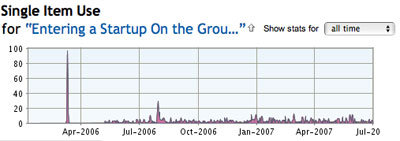
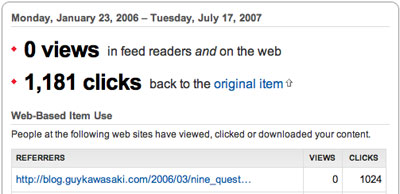
 In early 2006, I was fairly keen on this shiny new toy called the trackback. Rather than simply add a comment to a story I found interesting, I could send a trackback via my blog to the original source, and in most cases, the trackback, with my story's data, would be placed on top of the comment thread. On other occasions, the trackback would be treated on equal with comments, and made part of the thread itself. Regardless, it was a sneaky way to push my links onto more popular sites. But now, I can't remember the last time I sent out a trackback, and I haven't seen them used all that much. Maybe it's time to roll out the gravestone and write up their epitaph.
 There's all sorts of hubbub on the blogosphere in the last few days, over