Silicon Valley Technology Commentary & Archives · Est. 2006 3,033 Posts · 2006–2026

September 2, 2008

September 2, 2008 · 2 MIN READ · BY LOUIS GRAY

Ben Golub of FFToGo and RSSMeme Joins FriendFeed Full-Time

Ben Golub of FFToGo and RSSMeme Joins FriendFeed Full-Time


In the world of online companies and overnight Web sites, things can move pretty quickly. What might take years in the world of the enterprise can happen in weeks or months - as successes are claimed and lost, friends are made and disposed of, and new relationships are forged.

Over the last seven months, I've been witness to seeing Ben Golub launch a number of interesting sites, including RSSmeme (post), a Google Reader shared items tracker, DearLazyWeb (post), a service to get answers via Twitter, Tweet2Tweet (post), a way to see Twitter conversations, and finally, FFToGo (post), a mobile version of FriendFeed.

Now, today, it can be finally said he's chosen to settle down, as FriendFeed has hired him on full time, following more than a month's worth of part-time consulting for the company, where he helped chase down bug fixes and provide support to the service's growing user and developer bases. As FriendFeed co-founder Bret Taylor wrote in an introductory blog post, Ben's efforts on FFToGo, RSSmeme and in the developer forum all combined to make him the team's latest hire, one of a rare breed who hadn't previously worked at Google, where much of the team hails from.

I first learned of Golub's direct work with the FriendFeed team when I gave him the courtesy call on August 13th to let him know I'd be helping to advise ReadBurner, an assumed competitor to RSSmeme. At the time, he'd asked me to keep it quiet, saying it was only in a contributory role.

But a week later, when FriendFeed published two months of changes in their ChangeLog blog, chronicling updates to the service, Ben's efforts could be seen, going back to July 16th. This of course led to questions, but when I sent him a note asking if it was time to announce his role, his quick e-mail back, said, "Nothing to see here. I'm just consulting, and sometimes that does mean committing code. As you can tell from the logs most of it has been fixing things up here and there."

It looks like that "nothing" soon became something of real value. Now, Ben is joining one of the more exciting companies in Silicon Valley, and FriendFeed has essentially roped in one of their most dedicated users, much like they did with Gary Burd, the author of Mail2FF. Marshall Kirkpatrick of ReadWriteWeb lauds the combination of Golub and FriendFeed, although I believe he incorrectly speculates that FriendFeed has acquired RSSmeme, as this was not mentioned in the announcement.

As I told Ben on the phone this evening, I'm glad to have helped bring visibility to some of his projects over the last few months, but my efforts were a small thing compared to the dedicated code-authoring Golub has put into each of his sites. FriendFeed has grown even stronger with this hire.
DISCLOSURE: I am an advisor to ReadBurner, an assumed competitor to RSSmeme and hold a small equity position.
September 2, 2008 · 3 MIN READ · BY LOUIS GRAY

I Spent the Day On Windows, Just to Use Chrome

I Spent the Day On Windows, Just to Use Chrome

Some people might think the typical Mac user has a superiority complex, and you could be excused for thinking so, if the Mac vs. PC commercials were any indication. But every once in a while, a cool "must try out" app comes along that leaves us a little envious ourselves - making us feel like we're being considered lesser beings. Today, Google's debut of Chrome, their next generation Web browser, was for Windows only, not for Macs. But putting my better judgement aside, I was willing to fire up VMware Fusion and stay in Google Chrome for the day to give it a fair shake. While it wasn't light-years ahead of anything I've ever tried, I'm glad I spent the time to check it out, and it's going to be fun seeing it get developed and ready for my preferred platform.

I believe the world is moving away from an operating system-based model to that of the Web browser. More essential applications are moving to the browser, and with the exception of Microsoft Office apps and Adobe PhotoShop, I could spend virtually my entire day just in the browser or on e-mail. This does two contradictory things: #1, it makes it easier for people to switch between operating systems, like from PC to Mac, and #2, it makes the differentiation between Macs and PCs less important to begin with, making the tie-ins with Web properties and creative applications like iLife and MobileMe just that much more critical.

When Google finally opened up Chrome to the masses around mid-day today, I wasn't going to sit on the sidelines, so I fired up VMware Fusion, with a Windows XP environment, opened Internet Explorer, and downloaded Chrome. A few minutes later, I had one of the fastest, most minimal browsers out there. While I didn't import any bookmarks or my own user history, it wasn't long before I was using corporate e-mail, and opening new tabs to check all my usual sites, without any issues. Pages loaded quickly, and with the exception of needing to install a Flash plug-in, all the content worked.

Curious if Chrome would be allowed to visit more secure sites, I logged onto Wells Fargo Bank and eTrade and didn't get any issues of the bank not supporting the browser. Interestingly enough, my own SiteMeter account recognized the Chrome visit instead as a variant of Safari (thanks to the underlying WebKit foundation), which likely explained why it was so smooth.


Awwwww.... Snap!

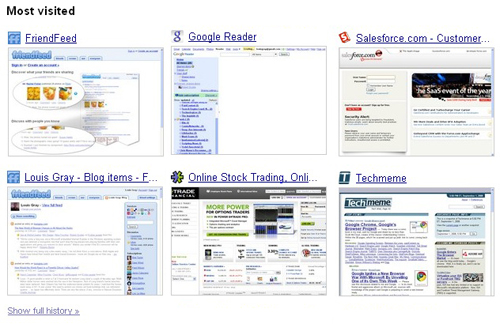
I only encountered one failed tab, which responded with an "Aw, Snap!" with an accompanying unhappy face. But other than that small failure, browsing was quick, and not much different than any other browser. The main differences on the surface had to be seeing my most frequently-visited sites in grid form as I opened new tabs, and seeing the tabs themselves along the top of the browser.


My popular visits (scrubbed for work), seen in Chrome

Pretty much the only complaint I have so far is I don't know how to customize my most "favorite" pages, so I can remove some from the grid, like corporate Web mail or the Intranet. If there's a way, I haven't seen it yet, but it's not a showstopper.

Typically, using an application under Windows emulation on VMware is remarkably slower than its native equivalent. But I didn't feel bogged down by Chrome, as I mentioned on Twitter. It just worked. I even enabled the "Unity" setting so the Chrome browser window floated above all my other Mac apps, and it seemed just right.

Will it be enough to make users turn off Internet Explorer? So far, I'd say not yet. Nothing about the browser made it amazingly better for the unwashed masses who have grown used to accepting Microsoft's half-hearted attempts at software. But I can't see any good reason I'd ever use Firefox or Opera or Flock again. Chrome is going to be my alternative to Safari on Windows and I'm interested to see if they can sway me on the Mac side, hooks and all.

September 1, 2008

September 1, 2008 · 4 MIN READ · BY LOUIS GRAY

The New World of Browser Choices is All About the Hooks

The New World of Browser Choices is All About the Hooks

In a perfect technology world, every Web site and every Web application would perform the same way across all Web browsers, operating systems and mobile devices. But we're not in a perfect world, and Web surfers' experiences are being increasingly determined by browser-specific plug-ins, third party applications and tie-ins with the host operating system. The result makes it less likely that one Web browser user can make a switch, after having invested in one specific application to get a tailored user experience.

Today's big news/rumor is that Google is preparing their own Web browser, called Chrome, which is based on WebKit, the same foundation underlying Apple's Safari browser. While the news hasn't been confirmed by Google outright, all indications make it appear to be true.

(Update: Google has now made it official)

There Are A Lot of Questions About Chrome

With news of Chrome, Web enthusiasts are already asking questions - will it support the GreaseMonkey scripts designed for FireFox? Will it be released for Mac OS X on the same day it's released for Linux and Windows? And, as it's so early, at least the latter question can't be answered. But assuming they are using WebKit, it's unlikely GreaseMonkey scripts could be used out of the box.

Today's Web Browsing Experience Comes Down To:
  1. Speed
  2. Reliability
  3. Compatibility
  4. Data Portability
  5. Extensibility
It is no longer enough to load the fastest. The time when you could put Internet Explorer and Netscape or Safari and Firefox side by side and show me how quickly they loaded HTML pages or performed JavaScript renders is gone. People just expect the browsers to work. And if they crash even once a day, users are unhappy. So Speed and Reliability are assumed.

Compatibility, for the most part, is a small issue at this point. It's a rare site that says "Please Use Internet Explorer" or "Your Operating System is Not Yet Supported", although that does happen. That's why initial response to Internet Explorer 8, beta 2, was so tepid, as it really did fail the basic expectations. (See Steven Hodson's critique)

That leaves what I see as the most important points going forward: Data portability and extensibility, and the biggest trojan horse I see going forward to impact the browser marketplace is the iPhone.

If Google Announces Chrome, Does Apple Put it In the iTunes App Store?
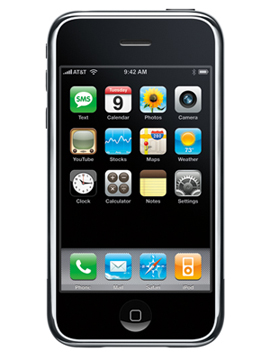
Apple made a custom, light-weight, version of Safari for the iPhone, which makes their Web browser the default browsing experience for what's the world's most talked-about cell phone. Using Safari on the iPhone makes it more likely that you will use Safari on your Mac or your PC because it can synchronize your bookmarks, and unify your browsing experience. Changing bookmarks on your desktop means they are changed on the iPhone.

Today, there are no alternative Web browsers for the iPhone. No Firefox, no Opera, and definitely, no Internet Explorer. While Google and Apple appear to be friends, and Google makes applications for the iTunes Application Store, and therefore, the iPhone, can you see Apple opening up the option for users to browse in Chrome instead? And even if they did, the likelihood of Chrome's behavior being mirrored to the desktop, via iTunes, is slim.

Apple playing the role of gatekeeper to the iTunes Store will be a bigger deal as the iPhone increases in market share.

Could Mozilla/Firefox Apps Be Re-written for WebKit?

There are scads of great GreaseMonkey scripts designed for some of the social networks I use, including FriendFeed. In addition, the Google Reader overlay, Feedly, only works in Firefox, so as long as I stay in Safari, I don't use the product at all. To date, Safari has badly trailed Firefox and IE in terms of getting add-ons, like browser toolbars and plug-ins, but if Google were to enter the market with another WebKit-based browser, that could shake things up.

So What About the Hooks?

As a Mac user and a MobileMe customer, my e-mail, Web browser bookmarks, and address book are synchronized across my devices, both laptop and iPhone, and the data is available online from any computer, in the cloud. Because of these hooks, I'm not a good candidate to move away from Safari any time soon, and I'm more tied into Apple's infrastructure of E-mail, Address Book, and iCal than ever before.

For others, it's Google who has the hooks. From their Google Calendar to GMail and Picasa, they've trusted Google with their personal data. For these folks, Google will undoubtedly tailor Chrome to their interests, and it would be hard for competitors like Apple and Microsoft to make the interoperability any better. But this, of course, leaves out the iPhone scenario, which leads us to Android, Google's approach to make a next-generation phone operating system, distributed through multiple handset partners.

Now, instead of seeing that a browser is faster, or more pretty, or has more features, it's more important that we can move our data around between devices and that the applications don't hiccup. We may not have seen it at first, but as the major browser vendors start to tie in to the applications you use every day, they're getting more of a hook into you as a customer, and reducing your potential to use an alternative product. Even before we see Google's Chrome in action, I know it will take being lighter, faster, and as reliable, to start, plus featuring the type of hooks that Safari does today, on the iPhone, to make me consider it anything more than a hobby and as a primary browser alternative.

We've come a long way since Microsoft embedded Internet Explorer in the Windows operating system and was deemed a monopolist, but that won't stop the big players from playing favorites with their own applications and giving you reasons to stick around.

September 1, 2008 · 3 MIN READ · BY LOUIS GRAY

How Would the World React to a Powerful Silicon Valley Quake?

How Would the World React to a Powerful Silicon Valley Quake?

Today, the nation's attention is on the New Orleans and the surrounding Gulf Coast area, as residents there ready themselves for what could be a major disaster in Hurricane Gustav, just three short years after the horrors of Hurricane Katrina. The Gulf Coast, behind only the Southern tip of Florida and North Carolina, is the third-most likely spot in the United States to be hit by hurricane, and this inevitability has some wondering why residents would stay in such a disaster-prone area. This thinking had me wondering about how the world would react if Silicon Valley, its companies, and its sometimes well-to-do residents were impacted by a disaster they too are prone to - be it earthquake or fire.
Regardless where you live, it's likely you're at risk to some form of disaster. In Kansas, it's tornadoes. In Hawaii and parts of Washington or Alaska, it could be a volcanic eruption. In Minnesota, a blizzard, or an ice storm. In varying areas of California, it could be mudslides, forest fires, drought or earthquake.

And despite this knowledge, people continue to build, all while recognizing that each new home or bridge or highway overpass built near a fault line will, at some point, be stressed by an earthquake. While we have been lucky over the last two decades to not have faced a destructive quake, and significant efforts have been made to earthquake-proof structures throughout the region, there's no doubt potential is there for serious calamity. Meanwhile, over the twenty years following the Loma Prieta quake, Silicon Valley's impact on the world's commerce has only increased, as technology, and the Internet itself, have become essential.

While it's a rare person who will brazenly say that Gulf Coast victims should have known better than to return to New Orleans and the surrounding area, these internal monologues do occasionally bubble to the top. One FriendFeed user, Anthony Citrano, said on Sunday, “Is it terrible that I have a very hard time feeling sorry for people who have rebuilt in New Orleans, ten feet below sea level?”, kicking off a vibrant discussion.

Nearly every respondent in the thread sounded alarm at his question, but there were those who said, it "just seems like you are asking for trouble" to rebuild in the area that had been hit before. Others brought up the issue of the victims' income, and made it clear that while they might be sympathetic to poorer people who were impacted, that they would not be sympathetic to "millionaires" who built homes on the edges of cliffs, or on beachfront property, in time of disaster. And it's this latter part that has me thinking a bit on how Silicon Valley is perceived.

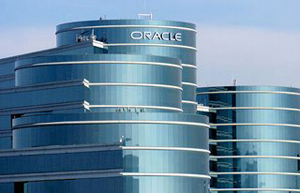
Thanks to the romanticism of the booming stock market in the last nineties and early 2000s, and the high visibility of Silicon Valley successes like Google, Yahoo!, Intel and others, as well as a preponderance of very real successful businesspeople with their BMWs, Audis, and million-dollar-plus homes, it's not likely that the same kind of sympathy could be expected for a $200k-salaried MBA as for a poverty-stricken family of five. It's unlikely that cracks in one of Oracle's famous blue towers or blown out windows and roofs at a warehouse-like building on Cisco or Google's sprawling campuses would elicit the same kind of gut reaction we saw from the tattered Louisiana Superdome in Katrina.

That the Bay Area saw tragic earthquakes in 1906 and 1989 didn't slow down the area's population growth, and it's unlikely the next big one, regardless of its size, will make people change their minds about living here. While many of the Valley's biggest and most visible tech companies have outsourced some aspects of their business, including production of their goods, internationally, and Web sites often have multiple, secure, hosting centers in disparate locations, there would undoubtedly be significant impact if the Valley were to be slowed for any period of time. But would people feel sorry for these Californians who "should have known better" than to build such a foundation on shaky ground, or would we hear the same kind of discussions posted by Mr. Citrano, that question our living in a land fraught with risk?