Silicon Valley Technology Commentary & Archives · Est. 2006 3,032 Posts · 2006–2026

March 26, 2009

March 26, 2009 · 3 MIN READ · BY LOUIS GRAY

Location, Location... Mobile

Location, Location... Mobile

By Corvida Raven of SheGeeks.net (FriendFeed/Twitter)

Two years ago the mobile web was not a huge deal to me. I hated the way Pocket Internet Explorer (PIE) displayed web pages. Add that to the fact that I was deeply committed to graphic design at the time, and you'll understand why I ignored this market. It was frustrating to look at, and even harder to interact with. At the time, no one could reach me there. It was...(gasp!) a dead zone! (Dun, dun, duuuuuun!)

Today in Mobile

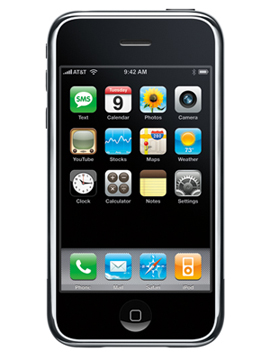
Fast forward to today when I'm checking my e-mails and RSS feeds from my iPhone. I'm getting directions from the Google Maps app on both my iPhone and Nokia E-75. I prefer Live Search Mobile on Motorola Q9c running Windows Mobile. Now that the mobile landscape is changing I've been changing with it. You almost have to have a mobile app or optimized site in order to pitch me.

I have three cell phones utilizing two of the best mobile web browsers available: Skyfire (Nokia, Windows Mobile) and Mobile Safari (iPhone). I'm also a lot more mobile than I was two years ago. Mobile optimized sites are simply becoming a must in this day and age. I'm here to let you know that you'd better hop on the bandwagon. However, don't just hop on the iPhone's bandwagon, Instead, make your services available to every mobile platform.

Mainstream Web Compatibility

With three devices running three different Mobile OS' and browsers, it should come as no surprise as to why mobile web cross-platform support is important to me. However, this isn't just personal. Mainstream users are dying to catch on to the mobile web too. The problem: the junk doesn't work on their phones. You can blame it on the handset all you want, but your users shouldn't be forced into buying a specific phone just to play with your service. In the same breath, they shouldn't be tied to their computer either.

Of course this doesn't apply to everyone. Limited functionality is a given with the mobile web, but you can't expect it to improve if you don't at least attempt to improve it. My friends are really trying to get into accessing information on the go while we're out and about. They see me do it all the time on my iPhone and think the iPhone is some sort of gadget god. They should be thinking that your app or service is great, not just the iPhone. They can't do that because if you take the iPhone out of the picture, they still wouldn't be able to use quite a few of the services I use.

Mobile Me & You

My location is ever-changing. I'm deeply invested in accessing information on the go. It's making my work more flexible and allowing me to make my day more productive. Now I can still go outside and socialize, with everything I need only a tap away on my phones, and I hate when I encounter something that can't be done until I'm back home with my laptop.

These days I'm waiting for Skype's iPhone App to be released. Can we say unlimited calling for cheap? I'm loving all the location awareness and Geo-tagging features that are being rolled out into mobile apps. However, the sites need the same love people. Not everyone owns an iPhone, you know.

Read more by Corvida Raven at SheGeeks.net.

March 26, 2009 · 5 MIN READ · BY LOUIS GRAY

The Downward Spiral - As Companies Slow, So Do Their People

The Downward Spiral - As Companies Slow, So Do Their People

Yesterday, IBM said they were laying off 5,000 people. Today, Google said they were laying off another 200. Unemployment in Silicon Valley is easily above 10 percent, and for the remaining job owners, many have seen salary cuts, forced furloughs and mandatory vacation. Companies have cut estimates and forecasts, or reduced spending. And even as the stock market has had some up days of late, the feeling out there is still not good - a lot more AIG than IPO, for example. But in many offices and cubicles around the Valley and beyond, workers are exercising their own slowdowns, their spirits dulled, as they gradually get less and less productive, waiting for more bad news, and being numb to it when it finally arrives.

For many, while the dire times should drive a newfound sense of urgency, it never comes. Instead of putting in extra hours, these desk zombies float through their business days, murmuring in the hallways about how they heard rumors even more cuts might come, and refreshing the company sales dashboard to see if anything has changed since when they last looked at it twenty minutes ago. It hasn't. They might come in just a bit later than they used to. They might take longer lunches - spending less, but they'll be out of the office. And by three o'clock, they're either thinking about shutting down for the day, or in some cases, finally getting up the energy to clear their to-do list, having killed more than half their time filing e-mail and browsing the Web.

The office, once a bustling energy-filled environment interrupted by phone calls, fast-paced strategic discussions and the occasional peal of laughter, instead resembles an unpopular library, with the most activity being the frequent visits to the printer or copy machine, and the creaks of the restroom doors opening and closing. If there are ringing phones, they are either from vendors demanding to be paid, or employees' personal cell phones, as they take the call and then rush out to the back, or to a conference room.

These companies are dying. Not necessarily IBM or Google, of course - but there are companies strewn throughout the Valley and beyond that were set up to capitalize on momentum that disappeared and then reversed over the last 18 months. Dreams were blasted away as the public markets closed, acquisition offers never appeared, and customers started to say no in a big way. And inside, many employees gave up. They're still coming to work. They even might put on a game face when in meetings or talking with their boss. But their will and drive to be a success and make things happen is all but gone.

I speak to this because I've seen it and I've heard it - not just in this recession, but in those before as well. One friend of mine confided to me by phone a few weeks ago that he probably works a solid 2-3 hours a day in his software engineering job, frittering the rest of the day away. He doesn't believe his company has a chance, and he doesn't care - citing their move to cut staff and move other jobs to India. But he isn't doing anything to change it, and the putrid job market has him just barely treading water, let alone seeking other options.

Yet another friend of mine talked to me yesterday about how his company is winding down, trying to convince two potential acquirers to find something of value in the little that's left.

In a previous company where I worked during the dotcom bust, I distinctly remember seeing one of the business development management team members spending more time playing video games and updating his resume than trying to close deals - as I gnashed my teeth, wondering why I was working so hard at something that meant so little to others.

If you read many of the tomes that were written about the Silicon Valley's successes, from the earliest days of semiconductors and the Internet, to Sarah Lacy's "Once You're Lucky, Twice You're Good", you can be regaled with stories of people who didn't give up, who didn't take no for an answer, and who put in twelve-plus hour shifts, putting the company ahead of themselves. But you're not hearing the stories of those who went the other way - as frequent as they no doubt are.

A recent satirical post blamed Twitter for the down economy, noting a correlation between Twitter's popularity and the Dow's plummet. And as silly as that is, many of these frustrated desk zombies are likely turning to social networking sites to kill time, to feel busy, and to chat with others around the world about their shared annoyances. Amidst calls for ways to deliver a social media ROI, the fatigued masses are sucking the ROI out of their companies, as their productivity drops down to almost nothing.

Now, don't get me wrong. Every company has its heroes, even those that aren't doing well. Even the biggest failures of companies that are roundly mocked starred impressive people with aggressive work ethics, and success amid despair. As I once asked a potential job candidate during an interview, "With your record showing a string of failed company after failed company, how can we be certain you won't bring that failure here as well?" Luckily for this gentleman, he had a good answer. But for some, the culture of failure around them becomes so internalized that they push it forward and it becomes self-fulfilling.

There's a reason that turn-around stories are so rare. Once momentum is going in a certain direction, a troubled company's best assets, the best employees, find a way out. And the ones that remain, those who couldn't attract another offer, are the ones who just might be plodding through and praying they get a severance package, or that the next round of cuts spares them as they muddle along. You know these people. They're the ones not making the headlines. But in reality, they are. They just don't know it - and maybe, their company doesn't know it either.
March 26, 2009 · 3 MIN READ · BY LOUIS GRAY

TwitPay.me - Twitter Payments in 140 Characters or Less

TwitPay.me - Twitter Payments in 140 Characters or Less

By Jesse Stay of Stay N' Alive (Twitter/FriendFeed)

I recently returned from a new event called "Launchup" here in Utah, where several startups were enabled to pitch their business in front of an audience, get critiqued, and share with the world an idea. After the presentations, the audience was given the opportunity to each pitch their own products, each with just 30 seconds to share their idea. I was amazed to find that with just 30 seconds one product in particular, TwitPay.me really stood out, with little to no explanation necessary.

TwitPay.me reads simplicity across the board. The product, which aims to allow you to easily send payments to your friends on Twitter, accomplishes that with no need to sign up, and doesn't even need your credit card to make that happen. The service uses Amazon Payment Services to send and receive payments, which means all you need is an Amazon account. So basically anyone who has ever purchased something on Amazon is already set up to use this.

I was reminded of the product when its co-founder, >Jeremy Raines (@jraines, from Park City, Utah), sent me $1.40 via a Tweet, "@jesse twitpay $1.40 to check out http://twitpay.me :-)". I do have to admit it's one of the coolest (and most simple) pitches I have ever received! I went to http://twitpay.me, gave them my Twitter username, they then sent me a pin number via DM which claimed my Twitter account - no login or authorization at all necessary! Inside my account, I just had to associate my Amazon Payments account (a total of 3 clicks) with TwitPay, and I had the money I was promised.

To send a payment to anyone, no account is necessary (until you want to actually pay the person). Simply send the words "@username twitpay $dollar_amount for reason", username being your Twitter screen name, $dollar_amount being the actual amount to send to the user, and reason being the reason for why you are sending the money. I tried this myself sending Louis Gray my 2 cents with "@louisgray twitpay $.02 for your love of bacon". He just needs to log into TwitPay and approve the payment through Amazon now to receive his $.02.

The Potential

About a year ago I worked with Phil Burns and several others to start a service such as this. The potential was screaming at us - with Social Networks and cell phones, we now had the potential to completely get rid of cash in peoples' pockets. The idea never really took off for us, but I'm glad to see others embracing it.

Up until now there has been nothing really to replace the cash, the small amounts of money, which we keep in our pockets for those moments we only need to pay small amounts of money. Imagine going to a vending machine and being able to Tweet a particular Twitter account listed on the vending machine with your payment. Imagine making a bet with a friend and being able to Tweet them their winnings. Or what if you could "Tweet" your waitress their Tip?

TwitPay may have just seriously challenged services such as Paypal's business models with this innovative new way to send payments. The service is plain, simple, 140 characters or less, Social, and requires no account to use. Social Payments have yet to be breached, but I believe TwitPay.me may have just breached it with the ideal Twitter payment environment. Are we at the beginning of the end for the need of actual cash in our pockets?

Read more by Jesse Stay at Stay N' Alive.

March 25, 2009

March 25, 2009 · 1 MIN READ · BY LOUIS GRAY

FeedBlitz Launches FeedBurner Alternative for RSS Automation

FeedBlitz Launches FeedBurner Alternative for RSS Automation

Since Google's acquisition of FeedBurner in mid-2007, the complaints have come hard and fast, as FeedBurner's integration saw frequent disconnects between the acquiring company and its new prize, slowness in updating feeds, and a complete lack of innovation, all amidst silence from Mountain View that had many wondering if the service would go the way of DodgeBall and other services into Google's black hole. At the end of 2008, I predicted an alternative would rise up to give bloggers an option to switch. Today, FeedBlitz, which has powered my e-mail distribution for nearly three years, has offered to do just that.

The new RSS management service, announced in a blog post, says it will offer publishers, marketers and bloggers improved branding, integrated search engine optimization, and some interesting additions, including social media marketing and metrics.

If you are already using the company's e-mail marketing services, the RSS addition is free. For all others, you can start using FeedBlitz to run your RSS feeds for as low as $1.49 a month.

Before moving my feed away from FeedBurner, which at times is tempting, I'll have to be sure existing subscribers wouldn't see any hiccups. FeedBlitz says they are eating their own dogfood, routing to the new self-hosted URL through FeedBurner itself. You can see how their "Blitzed" Feed looks here: http://feeds.feedblitz.com/feedblitz

With this long-awaited alternative, it will be interesting to see if the many complaintants are willing to make a move. It's often been said that the most-popular feature of FeedBurner has been the little chiclets that show up to date subscription counts, so FeedBlitz wil have to match this capability. Given they've displayed my e-mailed RSS count since 2006, I think they will be up to the task.

So Google, you've got some competition in town - and FeedBlitz says it's not done, promising it will "rapidly evolve". That's something FeedBurner is definitely not doing.