As has been widely reported by now, the popular social sharing site,
FriendFeed, revamped with a laser focus on realtime discussions and information discovery. As it, and the social Web in general, continues to evolve, there is always room for improvement, even when innovative companies like FriendFeed are pushing the envelope.
As I did in August of 2008 when FriendFeed first retooled their interface, I thought it would be a good time to offer ways I believe the service could expand to offer greater flexibility for its users.
Of note, from the August list of suggestions, FriendFeed has implemented five of the ten suggestions, including the introduction of small user profiles, aggregation of duplicate items, the addition of direct messages, expanded advanced search, and negative keywords in the search engine. This shows the company is listening - not necessarily to me, but the community, who had asked for the same.
1. Expand the Ability to Direct Message Anyone on the SiteJust because
Twitter only lets you send direct messages to those who follow you doesn't necessarily make it the one right way to go. While I understand people are concerned about the potential for spam, my contact info should be available to anyone, just like it is with e-mail addresses and phone numbers. Also, as you likely have found, sometimes you just need to reach somebody who isn't following you, and a direct message is simply a tool to get that done.
2. Provide Easier Ways to Manage Users and GroupsAs with Twitter,
Facebook,
LinkedIn and other sites, it can get pretty easy to follow hundreds or even thousands of fellow users on FriendFeed. I've done a lot of work to put the thousands I follow into different lists, based on the frequency I'll expect to interact with their updates, or how often they are posting relevant information to me. But what would be very interesting to me is determining if people are participating as well. What if I could set up a rule such that any friends who have not made a native FriendFeed comment in the last 60 days be moved out of my main feed and into a folder called "Archive" or "Ghosts"? For as much as folks complained on Twitter about some "ghost tweets", what's worse are accounts that were set up and abandoned by people who chose not to interact.
Rather than needing to select users' avatars one by one or page by page, I should be able to set up information about those people and have them automatically filtered. Talk about baseball more than 10 times a week, and I'll put you in my Sports folder, for instance.
3. There Should be a Simple or "Light" OptionThe new real-time focus of
FriendFeed beta means that updates are coming and going constantly. There should be a version (or a toggle) that hides all comments or likes, letting users get the new content quickly without being forced into discussions. My previous suggestions on a "lite" FriendFeed that only contains some very popular services and not others looks less likely to happen, but to quiet the noise would be a much-used feature.
4. Direct Messages Should Get Out of My Home FeedThe new interface enables you to send and receive direct messages, but they are always in your home feed, even if you've already seen them. On the right side is a direct messages indicator which shows how many new messages you have, but unlike Twitter and unlike your e-mail, it's not staying there. I would like my home feed to instead show updates from myself and friends, putting direct messages in their own position, where they belong.
5. You Should Be Able to Customize Realtime and FiltersIf you are following a lot of people, the realtime updates and rapid flow of information can be intimidating. Trying to read one article while five more come in can pretty much ensure that you see nothing. It makes sense to customize your lists and filters so that some lists are defaulted to the realtime function and others (usually those with more friends) are defaulted to be "paused" or have the realtime turned off.
6. Make "Best of Day" a real "Best Of"The "Best of Day" feature almost didn't make the cut in the beta version. As of Thursday it wasn't there, but by this morning, it was. Billed as showing "the most popular entries among your friends in the past day", the feature shows active entries, usually with many comments or likes. But it doesn't show absolute "bests", such as "most commented" items or "most liked" items in the last 24 hours. Instead, something that has 6 likes and 2 comments might rank higher than an item with 10 likes and 20 comments. It would also be very interesting if I could find the "best of day" from specific services, for instance showing the most popular YouTube videos or Delicious bookmarks of the day.
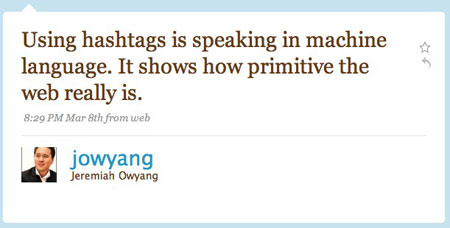
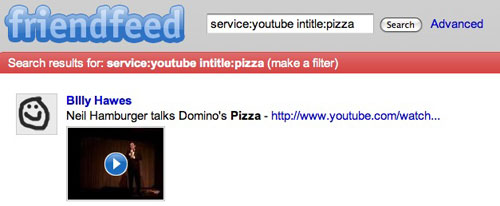
7. Make It Easier to View By ServiceThe new look de-emphasized services and increased focus on the individual, when compared with the current standard. While that may make it more friendly, that again pushes me to machine language instead of usual behavior. For example, if I want to see my previous SmugMug items, I need to enter
"service:smugmug from:louisgray" instead of just clicking on the SmugMug icon, as you would now.
Prior to the beta site, the common nomenclature was "?service=smugmug". For example, I would post
http://friendfeed.com/louisgray?service=smugmug and get the data. Now I need to store a query, or need to search on every one of my friends' feeds by service.
8. Bring Back Weekly StatisticsWhile it is true that some users will likely manipulate their usual behavior to achieve specific activity goals, seeing a person's weekly comment and like totals is a good indicator of their newness, business or velocity. On the current site, you can mouse over a user's ID and see how many comments and likes they have made in that week, but in the beta version, that data is no longer available - not on the mouse over or on the user's profile.
9. Introduce a Way to Send Direct Messages By E-mailConsidering FriendFeed's co-founder Paul Buchheit started
GMail, and employee Gary Burd wrote
a program called Mail2FF that sent e-mailed entries to FriendFeed, the team has significant experience in mastering e-mail clients and rules. Why not add the ability to send direct messages to FriendFeed users from your e-mail through a standard address? (For example:
[email protected])
Like with Mail2FF and standard entries, you could add photos and have them be part of the direct message. Add more than one user to the recipient list, and they too would be part of the direct message thread.
10. Bring Back the Ability to Share Links from the Main FeedHaving used the FriendFeed beta over the weekend, I was very surprised to see the option to share a link to the main feed had been eliminated. While in the old site, you are encouraged to post photos and links, on the new beta, only photos are an option. Back in August, I actually suggested FriendFeed go the other way, offering videos and documents in addition to photos or links, so this seems like a step backward.
 The AOL-owned blog network Weblogs, Inc. is running ads on their properties that are tailored to viewers with iPhones. Poke around on WoW Insider's iPhone portal at i.wowinsider.com and you'll likely be greeted with an ad pointed straight into the App Store. Look at Engadget's i.engadget.com and you might see an ad for Land Rovers or other luxury goods.
 This evening, while reading early feedback on the brand new baseball season over on
  The path from engineering to marketing is usually not a straight line. Often there can be many stops along the way, as a product goes from idea to a spec to prototype release build, through the quality assurance process, and eventually general availability to the marketplace. As the product develops, so does the way it gets named, branded and described - starting with what's typically a straight forward problem/solution issue from engineering, and morphing into a more refined, even if not always as accurate, pitch from marketing. But in the Valley, often we skip those steps, and it's our users who end up paying the price - by being taught to think and talk like machines.