
Silicon Valley Technology Commentary & Archives · Est. 2006 3,045 Posts · 2006–2026

May 14, 2010

May 14, 2010 · 4 MIN READ · BY LOUIS GRAY

It's Time to Stand for Something Better (Again)

It's Time to Stand for Something Better (Again)

If you're anything like me, then you take in a lot of information. You might be reading a ton of RSS feeds or watching the streams from Twitter, Google Buzz and other social networks. You might be creating a lot of content on your own - be it on your own blog, or through various social media outposts. You might consider yourself a podcaster or a photographer or a video blogger. But no matter your venue, or tool of choice, you're no doubt seeing a lot of duplication of content or low-quality content, as the metrics by which we are all measured are driving for quantity instead of quality.

In March of 2009, I said we should aim to stand for something and become someone. I believe we should not be sacrificing our own personal ideals and our own internal moral compasses in a never-ending battle for position, for status, for scoops, or for access. I believe we should treat those we interact with online with respect and an adherence to high standards in the way that we would like to be treated - and I don't think we are doing enough as content consumers and producers to do a great job.

What we are seeing as we see stories echoed and echoed ad infinitum without additional content or insight is a naive battle of blind ignorance, as many sites pretend the others don't exist. What we are seeing when sites are pushing the boundaries of the law to get access to a pre-release gadget is outside of acceptable norms. What we are seeing when reporters are copying the full text of press releases or recapping blog posts from tech companies is not what we were called to do.

One of the reasons you haven't seen as many posts per day here of late is because I am setting up fairly strict guidelines for what makes it on the site. I still cover some of my favorite services and companies here with regularity, plus the new challengers, on top of my own analysis of big news and my own personal experiences with technology and trends. But I am trying not to be the 20th site to re-report news someone else broke, or to beat your brains into mush with the 15th update about the same service in a limited time frame.

Being a blogger or a connected social media user means you have a voice, and it's up to you how you want to use it. You can build things up or you can tear things down. You can have a sense of trust of people and companies, or you can be a cynic. You can start rumors and hope companies scramble to verify or discredit your comments, or you can ask them in advance to see if your story is right.

Lately, I have had some concerns about the ways some of my favorite Web services are being managed by the companies that run them. I've heard people moved off projects that I thought needed more work, and I've seen tools I use every day get an assumed lower priority. But rather than go public with the rumors and put those companies in a defensive position, I instead gave them a call and asked them to provide guidance or a roadmap to let us know what they have planned. As a blogger, I may miss the sensational headline and some scoopage, but it makes more sense to get the answers and provide respect to the people and companies that create the tools we like.

The recent Facebook kerfuffle has been especially trying for a few reasons - first, we genuinely believe they misled users and violated their trust in the name of commerce, and second, we can see people maligning all the employees who work at Facebook for lacking morality - when I know a lot of good people there who want to stand for something better. Yesterday, I posited on Quora that if Facebook were really on the way to becoming "evil", that these sharp, morally sound, people would leave. That we haven't seen them leave, to me, is a good sign. As tempting as the almighty dollar is, people have a guidance for what is right and what is wrong, and there are those who would vote with their feet and head for the door if things got out of hand.

In that event, Facebook needed to do a much better job in communicating to its users, and they failed. Also, those screaming bloody murder about the changes failed.

I was called naive for my belief that people would choose right over wrong and quality over quantity. But I know enough good people to know it's possible. I know enough engineers who care about their code and their users to create solid products that bring benefits. Two years ago, I told you what my Web and Blogging expectations are and told you what I believe. That core has not changed - even as things get faster, and competition increases. There is more to life than pageviews - and as a known curator who shares the best of what I read online, I have actively unsubscribed from sources that rely on such behavior, regardless of their purpose.

So while I may stray now and again, pointing to official blogs on underreported company sites, and I may be tempted to wade into the big discussions of the day, you won't see the tried and true tricks you find elsewhere. You won't find syndicated pieces that started somewhere else. You won't find 10-page slideshows with ads everywhere. You won't find copy and pasted press releases in full, and you won't find arguments for controversy's sake. Keep me honest, and let's all work to keep each other honest. It's a lot more fun when we engage in a trusted way with our peers, readers and entrepreneurs.
May 12, 2010

May 12, 2010 · 4 MIN READ · BY LOUIS GRAY

Do You Really Care About the iPhone 4? I Don't.

Do You Really Care About the iPhone 4? I Don't.

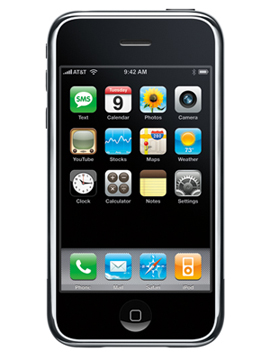
Amidst all the debate around Gizmodo's revelations around Apple's next generation iPhone and the methods by which they obtained access to the device, little was said about whether the device itself warranted the attention that was received. It seemed more people were excited in the idea of a scoop, and the fact that Apple probably didn't want us to be seeing the iPhone before it was ready to ship, than they were about the features themselves.

In addition, the debate around what is next for the iPhone is as much about the potential to gain new carrier relationships than anything that can be developed on the hardware side. What has happened, in a few short years since the phone's 2007 debut, is that the iPhone has become a mature device - one that isn't going to dramatically take our breath away and demand an instant upgrade with each iteration. Even as an iPhone owner who may consider upgrading when the time comes, there is no breathlessness around said scoopage, and I won't seriously be interested in the device unless it's available for sale.

One of the big benefits of Apple's resurgence is that the company's products are commonplace and pervasive. While it doesn't seem all that long ago that one had to go out of their way to buy a Macintosh or find fellow Mac users, the iPhone platform is seen as the market leader, and has gained its own fair share of challengers looking to chip away at its feature lead and customer share. Android, led by Google's focused efforts and those of its partners is gaining share, and the functionality differentiation between the two devices is decreasing.

While one should not assume that Apple is standing still, and they clearly demonstrated their intent to extend their lead with the April introductions of iPhone OS 4, the iPhone hardware and functionality itself has reached the maturity level once seen with the company's iPod line. With each iteration, we knew we could expect a smaller form factor, improved menu items, and more hard disk space. With the iPhone, we can again expect an improved form factor, potential speed improvements and more hard disk space. That brings the window of speculation to the origin of the CPU and the potential for a front-facing camera.

Hold me back.

For the most part, Apple has shaken off its position of challenger, and its product lines have become rather predictable. Just as we don't get too excited about incremental megahertz upgrades on the company's laptop and desktop lines, or wait in line overnight for monitors that have improved pixel counts or screen margins, the iPhone line has achieved a position where whatever is best now is great and whatever is better tomorrow will be just fine too.

At the end of 2009, I said you would have to be insane to buy a new iPhone now because of three things: 1) AT&T, 2) Android and 3) Apple. I still believe AT&T is a major roadblock in anybody getting excited about the current, or next generation, iPhones. I believe we have seen Android is a serious challenger and one to be considered, especially if you are not married to the iTunes store. And now, we have a better idea as to the schedule of the next device, which will probably arrive at the end of the summer.

In the five months since that post, the roadmap and phone family from Android has become a lot more clear. If you like the Nexus One, it is available, as are the latest updates to the Droid. If you are an Android fan, that platform is seeing more innovation today, updating more quickly and with more options. If you are an iPhone fan, you probably have seen enough from Android to make a good decision as to what's next for you. If you think AT&T is the devil, you haven't gotten enough data to say whether you will have an alternative from Apple and any amount of cameras, or lacking screws, or flash memory on the next iPhone isn't going to change your mind.

Last year, I told you I learned to stop chasing Apple rumors. Not only are most of them not true, but the ones that are true are typically mundane. You want a great rumor? Find out what the next iPads look like, as that platform will change pretty quickly. Discover a new product line that hasn't yet been introduced. Find out if Apple will ever get serious about the Apple TV. But the lure of the next generation iPhone isn't even enough to make us blink any more. We know they update on a pretty regular cycle and they'll just make it strong enough to make it appealing.
May 12, 2010 · 1 MIN READ · BY LOUIS GRAY

Echo's Reactions Platform Hits It Big With Old Media

Echo's Reactions Platform Hits It Big With Old Media

When JS-Kit first announced their Echo platform, declaring the death of comments, many thought it to be hyperbole. But as we have seen with a metamorphosis of the way people react to content around the Web, sharing it downstream with followers on Facebook, Twitter, Google Buzz and many other outposts, blog comments no longer hold the lofty role they once did, and it has become increasingly important to discover reactions - wherever they are. Since that announcement almost a year ago, JS-Kit rebranded as Echo, and has been promoting their premium reaction platform to more than just blogs - but old media titans. Today, the company announced a wide array of publishers who have chosen Echo to capture their real-time reaction stream.

Included in the morning's announcement were names such as The Washington Post, Newsweek, Time, Forbes, and Sports Illustrated. In a quick e-mail announcement the company said they were "extremely excited and gratified to be working with these high profile and influential brands, helping each of them create real-time conversations on their sites."

In parallel, the company also relaunched its Web site, now at http://aboutecho.com/.

Unlike its Web 2.0 cousin, Disqus, Echo is not focused on offering a free comment platform for bloggers, and has been creating a robust system that starts at $99 a year. For its part, Disqus announced the acquisition of Harvard Business Review as a customer today. Also, recently, Intense Debate, the quietest of the three offerings, was selected by TechCrunch as the tech blog's comments engine.

Echo's announcement can also be found on their Web site: Echo partners with Washington Post, Time, Forbes and others

May 11, 2010

May 11, 2010 · 2 MIN READ · BY LOUIS GRAY

Spokeo Yanks Street Address Searches Over Privacy

Spokeo Yanks Street Address Searches Over Privacy

As the debate over Facebook's recent moves around privacy (or lack thereof) continues to rage, one social search engine that has always lived on the edge of the rules is backing off a bit in one specific way that it lets people discover you based on your real world data. Spokeo, which I have been watching since 2007 and which has seen tremendous growth of late (which I highlighted last month), said today in a quick blog post that they are removing the ability to search within its database by street address.

One can easily see why the company's users found this particular feature a little unsettling, even if Spokeo is tapping into public records for all the data they have in store. Want to know more about your neighbor, or want to find the social network data of everyone on your street? Spokeo just made it a little harder.

With Spokeo's traffic continuing to boom, reaching more than a million unique visitors in March alone, according to Compete.com, awareness of the site is increasing. I even got a question about Spokeo today at the office - and as is typical, the question was one of unsettled concern, which won't be put at ease much with today's minor tweak.

Following last month's article, Harrison Tang, co-founder of Spokeo, sent me a note saying the company is "committed to build the best people search engine there is," adding, "We truly believe that the definition of a 'new technology' means breaking the norm. We understand that some people will love it, and others will not. All we can do is to try the best we can to accommodate everyone's needs, while remembering that we are on a mission to do something different."

Spokeo certainly is different. While Facebook is changing the way it approaches user data and is trending toward public, Spokeo has never been apologetic about its approach. If you are interested in removing your data from Spokeo, you can start on their privacy page - but as they state, "Spokeo does not originate data or publish user-generated content" and that data is already out there somewhere else.