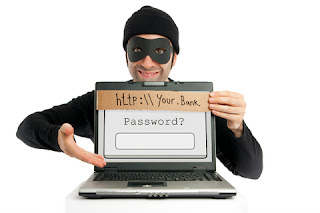
Prior to this weekend, most of your thoughts around the word Epsilon were probably about Greek fraternities or toga parties, but headlines in the tech and security world over the last few days have us instead associating Epsilon with a company most of us probably never heard of before - a massive email marketing company used by many top brands. A major security breach seems to have escorted customer email lists from respected companies many of us interact with every day, and with the names piling up, I have to wonder if we had any idea that this centralization of our relationships with companies was happening, or if we are all the unlucky beneficiaries of outsourcing gone wrong.
The fun started late Saturday when I first got an email from TiVo saying my email address and first name had been exposed due to unauthorized access to their email service provider.
Of course, if you know me, that's no big deal. Everybody and every spider in the world knows my main email addresses are [email protected] and [email protected]. Tough finding that out and combining it with my mysterious first name. You know I don't have too many issues around sharing my cell phone number either - this being a key focal point of a CNN.com article on the "death of privacy" back in December.

The String of Notification Emails
Modern anti-spam measures from both Apple and Google prevent most garbage from hitting my in box. For more insidious emails, that fraudulently pretend to be something they are not, which is made possible from this breach, I am wary enough not to do anything foolish.
But, as many others soon found, the first notification of a breach was followed by a second, a third, a fourth, maybe more. The next two days saw more apologetic emails following the breach, from Best Buy, Hilton Hotels and Chase Bank, to name a few. The issue reminds me a bit of the Gawker hack in December that forced people to change their passwords everywhere, myself included. So now what's exposed is not just my email address and first name, but that many companies passed the buck by putting their customer lists in the hands of a single third party who wasn't prepared for such a responsibility.
(Of course, this single third party shrugged it off as impacting a 2 percent subset of their clients)
In the 8+ years I managed our company newsletter and mailing list, from 2001 to 2009, we used a variety of partners, including Responsys and GotMarketing. Later, we put our data into Salesforce.com, and never once suffered such a breach. But in the last few years, companies have gained the ability to self-manage one's database and marketing tools, and do so independent of other companies. There's no great reason that a single third party's mistake should open up the vault to such a bonanza of brands. What this specific failure does is expose that the type of multiple verification systems and complexity expected from us as consumers isn't followed quite as well at the very companies whom we trust to watch over our personal data.
I don't have any problem with putting my email address out there. I don't mind sharing my data with TiVo and Best Buy. I shrug at Hilton and have to trust Chase, or we're toast. But I have to think we're lucky this time that the type of data accessed was so relatively harmless. People are worried that this will lead to phishing attacks and later successful breaches that get more impactful information, but for now, it seems we'll be more annoyed than ever. But think about whether you knew that all of these companies were putting your data in one basket to be raided by one intelligent hacker...
Does knowing that all these brands stuck your data in one place make you feel less safe or more safe? I think we've got to have an alternative, and self-hosting with self-managed security is looking a lot smarter these days.
10 Comments
It doesn't make sense for these companies to run their own e-mail marketing. Sending legitimate bulk mail is massively complicated, and requires a whole department of people to maintain personal relationships with individuals at all the major ISPs and webmail services (Gmail, Hotmail, etc). That's the only way to get reasonable deliverability of the mail, as every mailing they do results in tens of thousands of false spam reports. On a daily basis, the mailer needs to do cleanup, getting its mail servers removed from automated blacklists and adjusting for major recipients' throttling and other rules.
The only way to handle all that affordably is to outsource it to a company whose full-time job is to manage all that complexity. Everyone bringing it in-house would not be practical, not just because it's expensive but because there would be too many people trying to interact with the ISPs/webmail/blacklist people every day.
thanks.... it happens very rare when i can find interesting comment which is really suits the topic and explains something or, like here, adds something. so thank you for sharing your thoughts,
Yeah, I got emails from Tivo, Best Buy, and Hilton. I found it enlightening that they all used the same email marketing systems, but since I publish my email address openly anyway, it doesn't really affect me any.
I think we need to really stop thinking of email addresses as private information and start to address the spam problem from the perspective of beating the hell out of spammers instead. ;)
and how are you gonna do that akismet for emails?
I was thinking of using sticks, actually. Large wooden sticks. ;)
I was surprised to see the number of prominent companies impacted by this breach. I got emails from Hilton and Best Buy, too, but the more I read up on this - the more I realized how loose some of the ends may be. Email management is in a lull in terms of business priorities - but that needs to change.
There is certainly a time and place for self managed security/hosting but are you really advocating we switch off salesforce/gmail (or cloud hosted exchange services) and return to crm/email/etc systems hosted locally inside companies?
To further complicate this conversation: We had a client seek us out after discovering that Yahoo sends out all their customers emails from the same servers, irrespective if they are paid subscribers or using the free service. Our client found out when they were notified by a customer ( a Fortune 100 company) that our clients emails were being tagged as spam.
Oh God..........its really surprising.For business they can do any thing.This is the same thing as orkut or face book like sites.We are giving our a/c info there and they are easily getting our contact list.
Its really surprising for business man...