Showing posts with label Entertainment (110 posts). Show all posts

April 18, 2013

TV Tattle Goes Dark After 13 Years

TV Tattle Goes Dark After 13 Years


In the fall of 1998, a friend of mine at the Daily Californian student newspaper in Berkeley said he was in a real fix. With housing scarce at Cal, and both of us set to start our senior year, somehow he ended up "between places" and needed somewhere to crash. While I was already crammed into a one bedroom, one bathroom place with another roommate, I told the friend, Norman Weiss, he could crash on my couch. But I was no saint. I charged him $20 a night, figuring I'd make a $100 for the week while he looked for a place. After all, I needed money too. A month later, I was up $600, Norman found a place, and my real roommate, who wasn't in on the "cash for couch" deal, was ready to stop sharing the bathroom.

Norman by most standards was a pretty quirky guy. His social awkwardness was exceeded only by his intensity for finding a story. He was a good journalist, was voracious about hoovering up information, and was always up on the latest gossip at the university, and politics. Our evenings were spent talking about news, rumors and the Web. Shortly after he left my place, he showed me the early stages of his new idea - a website dedicated to links about TV. He was so excited about it and begged for my feedback on the name of the site and first graphics. I don't remember my exact words, but I seem to remember being pretty dismissive. After all, this was before real blogs had taken off, and I didn't care all that much about TV. But he did.

I first highlighted some of this story back in February of 2006, as Norman didn't take my being critical as a reason to stop working on what eventually became TV Tattle. Starting in 2000, and for nearly every weekday the last 13 years, casual television watchers and industry hobnobbers alike have turned to Norman's curated links to get the daily dish on the boob tube. Which is why when he put up a quick text note this week saying he was calling it quits, this move even hit The Hollywood Reporter, who seemingly is shocked by their outing of the quiet, but not truly anonymous, kingpin behind the site.

TV Tattle wasn't the most flashy site by any stretch of the imagination. It was largely text heavy, and images were small, if included at all. RSS was lacking, and social media integration was invisible. It remained a testament to a simpler time of the Web where one guy sitting at his computer, wherever that was, could keep people interested and entertained on a specific topic, due to being more diligent and consistent than anybody else.

Colleagues of mine from the Daily Californian went through a lot in the few years we all shared there. Some stayed in journalism and worked at places like the Washington Post, San Francisco Chronicle, Wired, and the Arizona Republic. Others of us found the magnet of Silicon Valley too much to ignore, and work hard on the tech side of things. But while Norman remained much of an enigma, my every visit to his site was a small link away from those formative days when we had no money, when three guys shared a one bedroom apartment, and gossip on Berkeley's always amusing City Council members was the topic du jour.

When looking to take some time off from the world of tech, I've never stopped being a regular reader of TV Tattle, but now it looks like that choice is being made for me. Good luck, Norman. I hope we haven't heard the last from you.

October 3, 2011

Web Video's Challenge of Inventory, Portability

Web Video's Challenge of Inventory, Portability


Last month, Netflix CEO Reed Hastings set off a tech media firestorm with the announcement of a split between the company's streaming business, which would bear the original Netflix name, and its DVD by mail business, now known as Qwikster. Much of the discussion centered around two parts - the first being Netflix's price increases announced this summer, and the second, focus on the name of the new business, which sounded way too much like Amway's sub-brand, Quixtar. But both flareups circumvented the real trajectory of Netflix making a choice to decrease its attention on the physical media world, one I publicly said I walked away from this Spring. With a smart combination of online video properties, including Netflix, YouTube, iTunes and Hulu, you can have your entertainment needs satiated practically any time. However, there remain gaps of content and availability from site to site, thanks to exclusivity deals with entertainment owners, copyright and who knows what else.

Apple's initial foray into renting movies (and later television shows) online, combined with the release of Apple TV units, made it easy for me and my family to select movies on demand, and watch them almost instantly. After some buffering, the selected title would be in our living room and could play that evening. Back in 2007, when Netflix was not streaming, the opportunity was available, in my opinion, for Apple to seize the market, through introducing a subscription service. (See: How Apple Could Crush Netflix Now) But it didn't happen. Apple didn't go the subscription route, Netflix evolved, and no doubt Hollywood studios were afraid of Steve Jobs having as much power over their titles' success as he did in the music business. In time, Netflix figured out streaming, kept the subscription model intact, and presented another choice for online video. Even better, Netflix did something that Apple chose not to do - embracing the Web by allowing for in-browser movie plays, and releasing mobile apps for practically every phone and tablet. (See: Netflix Edges Closer to Making the Perfect Web Video Site)

While Apple did a great job of bringing films and TV into my living room or laptop, Netflix did a better job of making them portable. In addition to box office wins, I've seen full seasons of shows like Dexter and Mad Men through Netflix, available on any laptop and through most connected TV devices, such as Google TV, TiVo and the Nintendo Wii. Netflix gets the Web, and is so simple to use that my 3 year old twins spend a lot of time running the Netflix app on our iPads. I'm often amused to see the recommendations that come my way from Netflix after Matthew or Sarah have spent an hour with Nickelodeon and Sprout shows for toddlers.

Similarly, YouTube's tie-in with the Android Market has also embraced the cloud for streaming video. As I wrote in June, you can rent films on the Android Market, and watch them on YouTube from any computer. That too is very convenient, and there's no entrance fee requiring subscription. Meanwhile, Hulu has access to some shows (like my personal favorite, Peep Show) that you can't get anywhere else - and there's the catch. Much like in the old days of instant messaging, where services were splintered without standards for interoperability, consumers are left to have multiple accounts from multiple places and remember which shows and titles are where. An evening's entertainment can come down to which device you have in which room, which services are supported and which titles are available for which place. It's easier to deal with for the cloud-backed properties, like Netflix and YouTube, but less great for the others. Nobody's yet got it 100% nailed.

Additionally, what all of these services miss is the opportunity to satisfy the home viewer who wants to see movies currently playing in theaters. I've been begging for this for more than three years now. (See: Think Apple Would Dare To Take On the Movie Theaters?) As a parent of three kids three and under, planning for a babysitter to cover the hours when my wife and I would attend a movie is a challenge, one that will no doubt cost much more than the face value of the tickets. So most of the time, the theater experience is unavailable. Meanwhile, most families' home theater systems are getting even better. I would have to bet the availability of in-theater titles to play at home would have real value and I know I would pay a premium for it. I would have seen Moneyball this weekend, if it was available, but being homebound means either we have to wait, or we have to seek out illegal downloading alternatives - which aren't ever a good option.

Spotify delivered the reality of a near-infinite music library on demand. Practically any title in the world (or so it seems) in high quality with no downloads or delays. The movie equivalent is still missing. No doubt this is a harder quest, but it's one worth conquering. Any time you see knowledgeable people debating Netflix's streaming movie inventory online, you hear concerns about its library. The company is closing deals to make that better, but they're quite expensive. Apple hasn't budged on a subscription model. YouTube remains best known for amateur videos, while that's expected to improve. And who knows what's happening with Hulu? Not me.

As broadband becomes more ubiquitous, and traditional entertainment leaders get innovative on their own about reaching customers, partnering with all services, I expect the portable cloud model to win, as it always does. Things are much better now than they were two or three years ago, but there's much more room to go. I hope in two or three more years in the future, we'll be laughing about how hard it was to get the titles we wanted anywhere.

Disclosures: I work at Google, of course, and you can decide if that impacts how I discuss Google TV, Android, YouTube or any of Google's perceived partners or competitors. :)

June 23, 2011

YouTube, Android Offer Alternative to iTunes Film Rentals

YouTube, Android Offer Alternative to iTunes Film Rentals

One of the new product announcements at Google IO in May was the introduction of movie rentals from the Android Market. Following the path beaten by Apple with its iTunes and Apple TV pairing, popular movie rentals can be picked up for the typical price of $2.99 or $3.99 each, are watchable in the next month and playable for 24 hours after you start. It's familiar, but new for Google, who added the option to their marketplace a month ago, making one less reason one has to be shackled to iTunes. The video rental service is powered by YouTube, who has clearly shown they know how to push Web video content to hundreds of millions of homes worldwide, and is ready to try longer-length content.

As mentioned frequently here, I've been a longtime iTunes user, and have slowly migrated away from the platform, thanks to increased use of Spotify and Google Music on one side, NOOK on the other, and now, movies, by way of Android Market, on top of Netflix Instant. The focus is not so much an anti-Apple vendetta, but just finding new ways to consume rich media on my changing array of devices. The more Android and Chrome I have in my house, the less iTunes is an option - until Apple changes its mind.

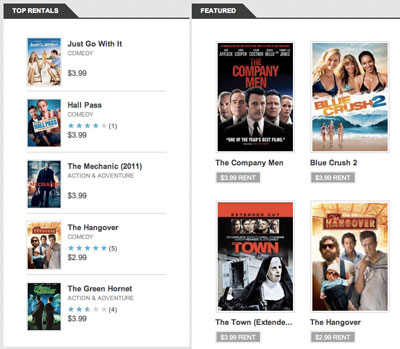
Some Top Titles On Android Market (Powered by YouTube)

The promise of the Android Market offering is to play these movies right in your Web browser, on any of your Google account-enabled devices. There's no need to download the movie (as iTunes does), but you instead start streaming after an extremely minimal amount of buffering, at either 320p or 480p. Purchases are sent to the account you have registered with Google Checkout, and the item shows in your Android Market purchase history. All straight forward.

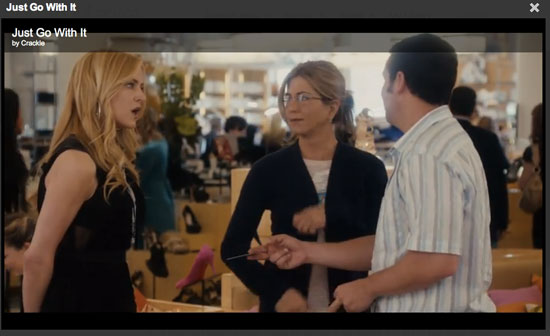
Streaming "Just Go With It" On Chrome Via Android Market

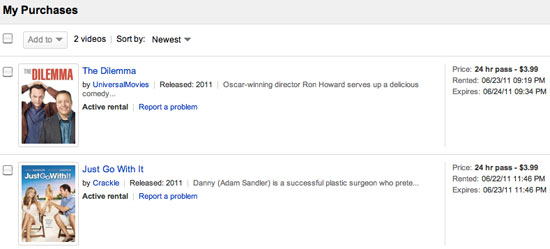
In the last two days, I pulled down Adam Sandler's romantic comedy "Just Go With It" and Vince Vaughn's "The Dilemma". Both $3.99, I can play these videos on the Web (and even Google TV's Chrome App) and expand to full screen. In our on demand world, the experience is on par with Apple TV or Netflix Instant, and your service preference depends on the device you're using or the title you want. Using the Android Market interface is actually just a front end for YouTube's full-length feature movie rentals (see all of them here), including films like The Hangover, Harry Potter and The Deathly Hallows, The King's Speech, Knocked Up and many others. It's yet another example of Google trying to push to the browser what traditionally has been handled with desktop client software.

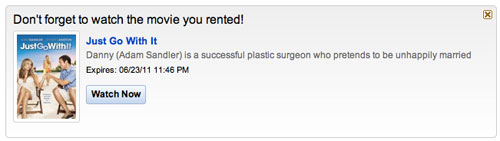
YouTube Reminds Me to Watch The Movie I Rented

My Rented Films Visible on YouTube

I tested the video rentals on my Mac, in both Chrome and Safari and on the CR-48, as well as on Google TV. Essentially, if the app can play YouTube videos and you can sign in with you're Google credentials, you're good to go.

My Receipt Delivered Via Email, Like Any Other Google Checkout Purchase

At Google I/O, it was promised that ChromeOS (and these rentals specifically) would bring more offline access for those outside of broadband streaming. I assume those will come soon, to solve for the poor souls stuck on airplanes who still want access, and might still be going to Apple to shell out three or four bucks at a time.

April 22, 2011

Flickchart Plans Suit Against Movieweb for Infringement

Flickchart Plans Suit Against Movieweb for Infringement

Flickchart, the movie comparison site that has film buffs ranking their all-time favorites, for any decade, genre and many other ways to debate cinema, is inches away from taking Movieweb to court for "a rather obvious duplication of the concept, functionality, user interface, and formatting" of their site. An 11-page legal brief from Flickchart's lawyers to Movieweb, submitted Thursday, alleges theft, infringement and "a complete lack of any attempt by Movieweb to conceal its wrongdoing".

The legal brawl was sparked following the introduction of a feature on Movieweb's site called "Face-Off" last Saturday, April 16th, which they called "the coolest movie ranking app yet". Similar to Flickchart, the Face-Off feature let users rank movies in terms of which they thought was best, have head to head "face-offs" between favorites, and the ability to compare tastes with other users. All of these are features highlighted by Flickchart since the site debuted in 2009.

One Thumbnail Example of Alleged Copying by Movieweb

(Side Note: The initial post on Flickchart was on this blog in May of 2009)

Flickchart's founders, Nathan Chase and Jeremy Thompson, are not taking kindly to the new competition. The next day, April 17th, Chase posted a link to Movieweb's new offering on Twitter, saying, "Well, I guess they say imitation is the sincerest form of flattery, right?" By Monday April 18th, Chase posted a series of thumbnails comparing Flickchart to MovieWeb's Face-off on FriendFeed, the social service aggregator owned by Facebook, and said "we've already contacted our lawyer."

The series of thumbnails in that post, and the blog post issued Friday, April 22, draw up a clear parallel in terms of features and display from Flickchart and the new Face-off, including feature set, wording, placement, graphics, social site integration, and more. While it's entirely possible to create a similar site either in parallel or inspired by competition, the direction seems like a clear duplication of the Flickchart service.

The legal missive spares little in its wording saying "Movieweb has stolen the fruit of years of work... in such a blatant manner that, quite frankly, shocks the conscience." The filing reports the copying is fed in no small manner by the direct copying by one of Movieweb's employees, as it states "a managing editor of Movieweb registered an account with Flickchart in December 2009, and has logged in as recently as April 6, 2011." This would have been 10 days prior to the launch of Face-off, making any argument that Movieweb was unaware of Flickchart's similar functionality appear dead on arrival.

The brief says Face-Off! "would not exist" had it not been for the reproduction, duplication and copying of Flickchart, which violates the site's terms of service. If Face-Off! is not immediately removed from the site, Flickchart anticipates filing suit "to seek statuatory damages, actual damages, punitive damages, disgorgement of Movieweb's profits, injunctive relief and an award of attorney's fees and costs." Deadline was given for Face-Off's removal by 5 PM Pacific time on Friday April 22nd, and that deadline has since passed, with Face-Off! remaining up and running.

The full brief, hosted by Google Docs, is below:

April 17, 2011

Apple TV, Google TV, TiVo: Crowded Theater, All Good

Apple TV, Google TV, TiVo: Crowded Theater, All Good


There is no one perfect home entertainment gadget. No single gadget manages to record all your favorite shows on demand, has access to the deepest online library for new and older titles, syncs perfectly with services like Netflix and finds all the Web's video at once. Devices ranging from set top boxes like Apple TV, TiVo, Google TV, Roku, and Boxxee, and game centers including the Nintendo Wii, XBox 360 and Sony Playstation, and single-purpose devices like the Slingbox have been working hard to make our entertainment consumption world ideal, but each has its strengths and holes. In our home, we've tried to fill all the holes, and this requires multiple devices, each one finding a perfect niche that can't be replaced by an alternative.

We moved beyond the traditional VCR/DVD world in 2003 with the arrival of our first TiVo DVR -a series one. Since then, we added two newer boxes, the TiVo HD device and the TiVo XL, the bigger brother of the HD, with a terabyte of storage. While the Premiere line of TiVos emerged last year, it wasn't compelling enough an upgrade to make the move, but we're very happy with the pair we have.

In 2007, with Apple's release of the first generation Apple TV, we snapped up a 40 gigabyte model, which is in use today. Last year, I also picked up the newest model Apple TV, which is stream centric. Meanwhile, last month, after some delay, I added Google TV to the mix with a Logitech Revue. Having seen it panned by much of the tech press, and the multiple demos I'd received falling short, it took some hands-on testing at a local Best Buy to push me to bring it home.

So with all these boxes and companion remotes, how do I choose what to use? Like I mentioned last May with mobile phones, you have to look to the core of each device to find their specialty.

Each Product Has Its Own Core Focus

For the Apple TV, the product's strength is its tie to the iTunes store, specifically, the vast video library which contains more new releases for rent or purchase than alternatives. Google and TiVo have close links to the Amazon video store, but the experience has never matched that of iTunes. When we want to rent a movie for an evening, or purchase a video for my kids to watch (like Toy Story or Cars), it's on the Apple TV.

For TiVo, the product's strength has always been around its ability to time shift videos and record my favorites. A companion benefit is its show guide and search, to find future shows and set them to record. The TiVos upstairs and downstairs run our scheduled programming, and having tried crappy DVRs from Comcast, Dish and others, there's simply no parallel to what TiVo offers.

For Google TV, the device is Web centric, much like Android, of course, and most things Google touches. There's something fun about browsing the Twitter app on the full screen, browsing Web sites, and enjoying YouTube on a screen much larger than a laptop. Tired of my kids running into videos on YouTube with the iPad that weren't exactly my favorite, browsing YouTube myself with them in the room puts me back in control and reduces their digital ADD.

Another much-overlooked feature of Google TV is the ability to browse what's on, automatically sorted by genre. Like most of you with kids, being stuck with baskets of laundry is made much easier when watching something entertaining. Yesterday, owning this task, I checked what movies were on, found Knocked Up just started and amused myself through three baskets of whites and colored laundry. It's similarly very good for finding out what sports are playing anywhere on the TV dial.

Is Google TV Any Good? I Say Absolutely.

As the Google TV is the newest gadget for us, and I've covered Apple TV and TiVo many times before, it's worth saying how good the experience has been. Reading scads of reviews that slammed its utility, or the keyboard remote, I was very surprised how easy it was to setup and how immediate its benefits were. I was most concerned that putting the Logitech box between the TiVo and TV would somehow impact the TiVo's ability to schedule recordings. This turned out not to be a problem at all. The keyboard remote was as simple as any other laptop keyboard, and the Home key always puts me to home base, the center of applications, what's on TV, and is the conduit to browsing the Web.

Even more futuristic is the ability to use any Android device as the remote control with the Google TV app. There's some fun to using the Galaxy Tab as the remote control, with part of the app's screen space devoted to playing the role of trackpad. If you haven't done it, surfing the Web from the tablet to the big screen is pretty cool.

Obviously, each experience could improve some. The Apple TV doesn't know anything about live TV and doesn't have Safari running on it like Chrome does for Google. Google TV makes no attempt to record shows, even though it knows they're on. Meanwhile, the TiVo doesn't really know the real Web exists, despite tie-ins on Premiere with Web widgets and third parties like Netflix, Amazon and Blockbuster. But in our home, if we have an entertainment need to fill, we have a box to do the job.

PR around the Google TV has been pretty light since its initial launch, and one could guess that maybe we'll hear more about the product at Google I/O in May, the one year anniversary of its introduction. Maybe new hardware and TVs will be announced, or new content partnerships, after months of hearing that sites (like Hulu) want to keep Google out of their kitchen. TiVo is due for a big upgrade that maybe makes me update the older boxes. And Apple TV only really gets talked about when you hear rumors that Apple could go the true television route and release an HDTV line. They've certainly got the relationships with suppliers, and the best UI team on the planet. But if you know what you want out of TV, Google TV, Apple TV and TiVo all have a fit and each one brings value. So don't get caught up the tech news grumpiness you find elsewhere. Considering how inexpensive each device is, you just might get all three.

March 27, 2011

WB Expands Facebook Film Lineup With Inception, 4 More

WB Expands Facebook Film Lineup With Inception, 4 More

Earlier this month, Warner Brothers Entertainment pioneered an interesting entertainment experiment by making "The Dark Night" available to watch on Facebook, simply for a handful of credits. While the move was not Facebook-sponsored, the idea had many people thinking big about the plan, with some claiming it threatened Netflix and a host of other video on demand companies. While that seems unlikely, WB is back at it again, tonight, adding five more titles to the mix, including “Inception,” “Harry Potter and the Sorcerer’s Stone,” “Harry Potter and the Chamber of Secrets,” “Life as We Know It” and “Yogi Bear.”

WB explains the move as an expansion of a test, and in this array, the titles are expected to "appeal to a broad audience, said Thomas Gewecke, President of Warner Bros. Digital Distribution, in this evening's press release, highlighting the popular fan pages for Harry Potter and Inception in particular.

As with "The Dark Night", Facebook viewers who do purchase the movie rentals with credits can see the film for up to 48 hours after purchasing, with standard Facebook stream activity, such as comments and status updates, being available.

So far, the tie-in has yet do offer a movie I want to see that I can't already get from Apple TV or Netflix, but assuming these tests continue, just maybe we'll have another alternative in an interesting place. If you're Facebook, you just might put a "Like" button on it.

April 16, 2010

It's Time for A Digital Used Book Store on the iPad

It's Time for A Digital Used Book Store on the iPad

While many of us may be wrestling with defining the role Apple's new iPad will play in our digital ecosystem, in a world of smartphones, fully-powered laptops, netbooks and single-use devices (like Kindles), there's no question it is a very good platform for reading, especially due to the availability of the iBooks application and the many titles available on Apple's iTunes Store.

On Thursday, April 8th, at the iPhone OS 4 event, Apple announced more than 600,000 iBook titles were purchased following the iPad's debut, and it's likely that number is now approaching or has just passed 1 million. But unlike music files, which are often listened to over and over again, books are rarely read more than once, and, at least in the offline world, there has always been a side business of selling and purchasing used books, or passing older titles to family members. In the digital world, however, this is not an option at all, and it's high time this changed.

My mother and I share an interest in Stephen King books. I can't say who was addicted to the world's best horror writer first, she or me, but it has practically become second nature to pass along our books when completed. But she has "early adopter syndrome" when it comes to his work, while I tend to wait until the paperback version arrives. If she doesn't wait, as was the case with King's recent Under the Dome, weighing in at more than 1,200 pages, the massive tome can find its way into my bookshelf, where it sits and taunts me with the width of two complete local Yellow Pages. Just imagine trying to cram that particular book as reading material on the plane, and even the price, $33, seems to be out of control. But Apple offers the same book, in digital edition, for half the price, $16, for the iPad.

The Four Books in My iBooks Library, to Start

But, as with all of Apple's digital purchases through iTunes, there is no option to share beyond just me. I can send the iBook or iTunes album as a gift for its full price, or I can send money or gift cards, but it's just not the same. If I am done with an iBook, I should be able to designate a recipient and send it to them, relinquishing my own rights to the iBook, and enabling Apple to charge the recipient a reduced price for their acquiring a "used" book. After all, I am just going to delete the iBook anyway, or let it continue to sit, unused, gathering digital dust on my hard drive, once I am done.

Apple's much-discussed Digital Rights Management (DRM) could be used to ensure that when I pass along the iBook, that it is erased from my machine, exactly as they do with rented iTunes movies that have crossed the imposed 30-day limit for viewing. And the receiver of said used iBook would always have the option to refuse the gift, declining without giving Apple another dime.

Is there risk to this proposal? Of course. There's always the potential that user groups could be made online for digital cheapskates to beg for used versions of iBooks instead of paying full price. But these are the same people who likely purchase used books from Amazon, or might be willing to pay a few dollars instead of getting the book free offline.

Apple has already had to do battle with countless record company executives, book and magazine publishers, and film studios to bring their content into the iTunes Store. After a slow start, the iTunes Store can be counted on to find practically any artist or title - with some exceptions, of course. The media industry's position, thus far, has been less innovative, and more in favor of preserving their old ways, hoping that Apple's iPad and iTunes ecosystem can help drive them premium prices. But premium prices don't work for all, and the way we have been consuming and sharing media for decades offline should be replicated here. I don't want to fill up my bookshelf with these monstrous books just to get the opportunity to hand them off down the road. I want to use what I think is the most versatile platform for reading books (and doing much more), but still have the option to share the content forward when I am done.

So, Apple... you just might have the best hardware device for books today. You have the most discussed and possibly most successful digital devices on the market today. You have an incredible number of titles available through iTunes. It's time to open up new opportunities for revenue for you and your partners, and give greater flexibility to your customers. I would absolutely be more than pleased to share with my friends some of the books I have been reading, once I am done. Find a way for me to do so.

Editor's Note: Jeremy Toeman of LIVEdigitally had a similar idea last year, related to the Kindle: Where’s the Kindle Used eBook Store?

March 12, 2010

Com2Us' 9 Innings Got Me Through Baseball's Offseason

Com2Us' 9 Innings Got Me Through Baseball's Offseason

Oakland Is Up 12-3 Over San Francisco In This 9 Innings Battle

Behind only technology, sports, specifically baseball, is my true obsession. I've dedicated a good amount of my idle time and brain power over the last 20 years absorbing statistics and remembering the sport's lore, and for several years, before we had our twins, my wife and I had season tickets to the Oakland A's. In the months when baseball isn't played, it can get very frustrating to not have the regularity of the sport, the speculation on players and trades, and the daily contests. This offseason, I cheated a bit, thanks to Com2Us' game 9 Innings, on the iPhone. Though the game doesn't deliver highest-quality graphics or have the official blessing of Major League Baseball and the Players Association, it features practically every wrinkle of the game and is challenging enough to play again and again.

Home Run! 9 Innings Gives 121 Points for This 2-Run Shot.

Like its sister game, Home Run Battle 3D, 9 Innings puts the bat in your hands and expects you to deliver results. But it's not just about hitting balls out of the yard in this game. Whether you choose an exhibition contest or start off a full 126-game season, you are expected to pitch, bat, steal bases, take a walk, and all those things that make the game of baseball a real pleasure.

You Win! Congratulations, Says The Manager.

Any sports games nut knows there are fine lines in the degree of difficulty for a game. You can make it too easy, practically guaranteeing a win every time out and rapidly becoming boring. Or, conversely, you can wrap a game in difficulty and odd combinations that eliminate the fun, as you rack up your losses. Whether on "Easy" mode or "Hard" mode, I have managed to be just good enough to feel competitive, and still growl in frustration as I popped up with the bases loaded, or saw my closer give up a 9th inning bomb to lose the game. And for every game I won by a margin of 5 or more, I have seen the 3-2 losses as well, that slipped away thanks to a misplaced pitch or mistimed swing.

A Peek At the 9 Innings Schedule With Results

Gameplay on the iPhone is relatively simple and intuitive. Instead of using a gamepad, like the Wii or Playstation, for example, 9 innings leverages a baseball diamond diagram for the up, down, left or right. You can move up or down to select pitches, and toggle left to right to determine pitch location. Hit OK to confirm and again to release the pitch. The better your timing, the better the location and chance for success. Similarly, when batting, you want to swing at pitches that get good wood on the ball and can pass by fielders.

Team Statistics Are Available for the Full Season

Just like in the real game, there are good hitters and bad, fast and slow, those prone to strike out or ground into double plays. Some pitchers have more stamina than others, and a sometimes annoying manager will urge you to put in a relief pitcher or tell you it's okay to give up one or two runs if you've gotten the bases loaded and nobody out. There are errors and stolen bases, wild pitches and hit batsmen. And practically every activity is being recorded for statistics, by player, team and league-wide. Meanwhile, the game is also tracking your team's record and standings, and there is a short postseason.

The Current Standings for Season 2 of 9 Innings

In addition to the gameplay, you gain points for specific activity. The more difficult the activity, such as a three run homer, instead of a double play or three consecutive strikes, the more points you get. You can exchange these points to improve your coaches' ability, and theoretically, your winning percentage. This can lead to intentional hit batsmen to strand the bases full and garner points, or pulling a double steal with runners on the corners to rack up a theft of home.

One 9 Innings Game's Achievements

Unlike a real baseball game, a 9 innings contest doesn't take 3 hours. It can take about 20 minutes for a full game, and as you can expect, it can take several weeks or a few months to wrap up a full 126 games, with dedicated playing. What it may lack in perfect management of defense, or cutting-edge graphics, it makes up for in sheer entertainment and bringing the most realistic flavor of the national pastime to the iPhone which I've seen. While I haven't turned my back on the real world of baseball in these cold winter months, it hasn't been that dramatic, thanks to having a methadone equivalent for my fix.

9 Innings costs $4.99 from Apple's iTunes Store. You can find it here, and it's worth the five bucks.

March 8, 2010

Step 1. Rip Off Doodle Jump. Step 2. ??? Step 3. Profit?

Step 1. Rip Off Doodle Jump. Step 2. ??? Step 3. Profit?

A year ago, I introduced you to a simple, but challenging, iPhone game called Doodle Jump. Produced by Lima Sky, the fun game, which took advantage of the iPhone's accelerometer and had you jumping from platform to platform in search of new high scores, has seen phenomenal success, passing one million downloads before the end of 2009. Thus, it's no surprise that its success has drawn what I perceived to be the highest form form of flattery - complete copying, possibly with the intention of making you think there is a new companion game to the app, called "Doodle Run".

This evening, I got a press release on the new Doodle Run, being told I could "Run, fly, and shoot your way through danger with Doodle Run for iPhone". The game's graphics even were reminiscent of the trendsetting Doodle Jump, leveraging graph paper in the background of what looked to be a hand-drawn figure and hand-drawn scenery.

From the Doodle Run Press Release...

I immediately thought Doodle Run was the companion game to Doodle Jump, and clicked through to the Web site for Doodle Run, only to find out it wasn't Lima Sky behind the application, but instead, a developer called eBattalion, whose other work includes games such as Nanoids, Love Link and FLIP, also on the iTunes store - all of which were updated on March 8th, for whatever reason. It seemed to me that the addition of the word "Doodle" to their new Run game was to seize on the popularity of Doodle Jump and trick casual visitors like me into downloading their latest 99 cents offer without thinking.

I e-mailed Igor Pusenjak, co-founder of Lima Sky, to ask if the game was theirs or if there was any affiliation. It is not, and my e-mail was the first they had heard of it. Igor responded:
"Your assumptions are correct. This is not our game nor do we have any agreement with the developers. Thanks for bringing this to my attention."
I sent an e-mail to the eBatallion team as well, and they said that "no copyrights or trademarks were violated in the development of Doodle Run and the title is very descriptive of the actual content in the product." Sam, the developer, also pointed me to other applications, such as Doodle Army and Doodle Bomb, that used the same language, going so far as to suggest Doodle Jump was "very similar" to another product, called Papi Jump.
"The word “Doodle” is intended to describe the graphic style of the game, not any association with any of the other numerous doodle-style games on the App Store."
On first blush, this seemed like bad intentions of the highest order, which could and does cause confusion in the marketplace. Even if this game is amazing, I am avoiding it on name alone. But eBatallion may have a point that Lima Sky doesn't have a monopoly on the word "Doodle".

March 2, 2010

TiVo Launches Premiere DVRs, Keyboard Remote, Web Ties

TiVo Launches Premiere DVRs, Keyboard Remote, Web Ties

After changing the way many people watch television, by pioneering time shifting, season passes and the ability to pause live TV, TiVo has become synonymous with scheduled television recording, even under intense competitive pressures from cable provider clones. In recent years, TiVo's standard-bearer hardware boxes have evolved to include ever-larger hard disks, integration with wireless networking, avoiding pokey phone line schedule updates, and more additions to the machines' playlist - adding on music, photos and on demand videos from partners. Today, the company introduced a new top of the line product family with its Premiere and Premiere XL boxes, aiming to make the DVR the central entertainment box for your living room - including not just cable TV, but movies, Web content and music as well. Alongside the announcement, the company also introduced a new take on their trademark remote - with an integrated keyboard, as well as new partnerships with Pandora and FrameChannel.

TiVo's aggressive marketing materials call the new Premiere and Premiere XL DVRs "the one box to rule them all". The reason for the new messaging? A focus on integrating all these entertainment sources into one package, with improved discovery. As important to TiVo as the new boxes' 320 gigabytes of space for Premiere or a full terabyte for the XL model is a revamped search functionality that lets viewers find content from many sources at once - be they on cable, the Web or from partners.

The New TiVo Premiere DVR

For the last few months, TiVo has been running a search beta for its customers, and it looks like they have been watching the activity, as the new search shows the highly graphical interface, previously only accessible through their beta trial, including poster-like images for related programs, and hooks to BlockBuster, Amazon and Netflix. Searching the new Premiere line becomes even faster when one has access to the new remote control, which, when turned sideways, slides out to reveal a QWERTY keyboard, greatly easing the ability to type onto the screen.

TiVo's New Remote With a Slide-Out QWERTY Keyboard

Beyond basic search, TiVo is talking up its directory of programming and artists - saying you can now view actors' entertainment resumes and show's cast lists, much like an on-demand IMDB. TiVo also promised you wouldn't need to be constantly changing screens from menu to menu, moving to a more simplified UI, with double and even triple columns, built for today's larger HD sets.

The New TiVo Browsing Experience

TiVo Central With Built-in Search With Partners

Also announced today was a tie-in with Pandora, the popular music streaming service, letting you listen to your personalized radio stations through your TV set. This news not only is available to the Premiere line, but also to existing Series 3 and HD line customers, which means our home could tap into our music on the HD and XL boxes we have. While announced today, Pandora doesn't go live for a few months.

Interestingly, also debuting today is a relationship with FrameChannel, which promises to "bring the best of the Web directly to the TV, offering users access to nearly 1,000 content widgets of personal and commercial content, ranging from Tweets, photos and status updates to news, weather, sports scores and stock quotes." The FrameChannel tie-in is highlighted as your own personalized channel, much like a browser start page or PointCast from the late 1990s, but on your TV.

The new Premiere line carries on the TiVo tradition of getting ever thinner and more sleek from generation to generation, despite increased hard drive capacities. Also new to Premiere is an on-screen disk space meter to show how many more shows you can record, and a built-in 30 second scan, which no doubt makes it even easier to skip commercials.

The new TiVo lineup is available in a month's time - debuting in early April. The standard Premiere model is $299 and the XL is $499.

June 26, 2009

Ignoring Rationality, I Subscribed to Sirius Radio Yesterday

Ignoring Rationality, I Subscribed to Sirius Radio Yesterday


Last week, I told you that the new iPhone application from Sirius Radio solved a problem I didn't have, namely gaining access to good music - which I can get from numerous sources, including my bulging iTunes library, Last.fm, Pandora, or even streaming radio sources built into iTunes itself, like those from Digitally Imported. But despite my protests, I gave in yesterday and paid up, making Sirius' foray into iPhone applications already responsible for at least one net new customer.

As I mentioned last week, I always had hoped to have streaming high quality satellite radio in my next car, but missed the boat when I bought a used 2006 model and didn't get the chance to configure it myself.

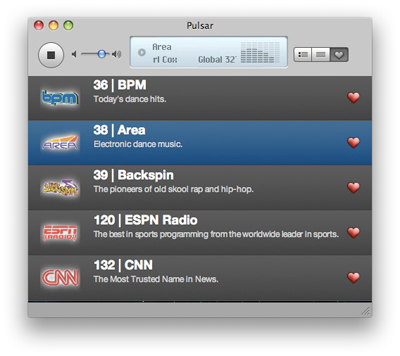
After initial struggles getting the app to work in the car, the application has worked beautifully for the remainder of the seven day free trial that came alongside the iPhone app. I have made turning on Sirius Radio (and primarily the station Area) part of the process of my turning the car on. And if you're a diehard electronic music and techno fan, I can tell you there is just no substitute for Sirius' set of stations on any network I have ever tried.


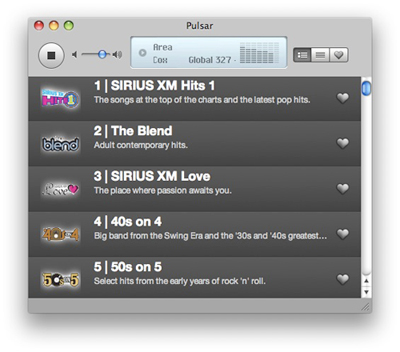
The Sirius Lineup on Pulsar

But if I were only using Sirius in the car, I still would have passed. Instead, I have also been playing my Sirius stations on my laptop, using an application called Pulsar, from Rogue Amoeba, that makes getting the music on my desktop very easy indeed. Now, I can listen to Area, and get shows from Robbie Rivera, Bennie Benasi, Paul Van Dyk, John Digweed, Carl Cox and Paul Oakenfold any time I am near the computer or the iPhone (which as you can assume is darn near all the time).


My Favorite Sirius Stations on Pulsar

And it's not just the unmatched content on the channel that had me convert. It's also the complete lack of commercials on Sirius, and of course, elimination of static. Pure satellite sound pumping through my BMW speakers on 280 is just amazing, as you can probably imagine.

Last week, when I was first talking about possibly buying Sirius Radio, Thomas Hawk repeatedly said "music wants to be free". But I will always pay for quality - and Sirius Radio has it. I cannot wait until the next long trip when I can charge up the iPhone, hook up to the dash and hit the gas, with perfect music flowing alongside. So don't tell me it was an irrational move, one that was a waste of money, or that I had better alternatives elsewhere. Music, like art, is emotional, and I have no qualms about reversing my position.

June 8, 2009

Facebook Connect on My iPhone Games Is a Huge Win

Facebook Connect on My iPhone Games Is a Huge Win

When I attended the SXSW conference this March, I was able to see the announcement, by Dave Morin, the company's senior platform manager, that Facebook Connect would be integrated with iPhone applications, essentially adding the glue between the world's most popular social network with the digerati's most treasured mobile phone (a debut that was much anticipated). In the ensuing months, as I have seen Facebook Connect be added to more and more applications on my iPhone, I have really come to enjoy its benefits.
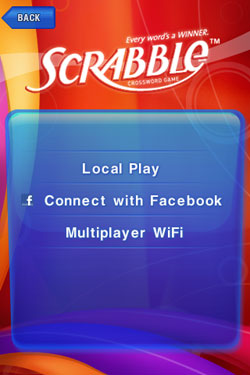
At the end of 2007, I said that the major benefit of having a Facebook account was for playing games with family, spread across the country.


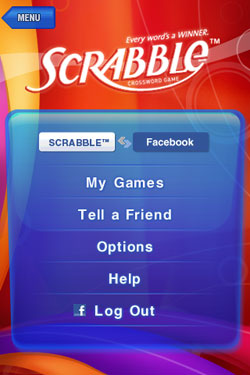
Connecting With Facebook from My iPhone Finds My Scrabble Games

I would guess that behind accepting new friend requests, the number one thing I use Facebook for is just that - playing games, such as Scrabble, with my family, or Scramble, a Boggle-like game I sometimes play versus Anna Billstrom, if for no other reason but to remember how much better she is at it than I am.


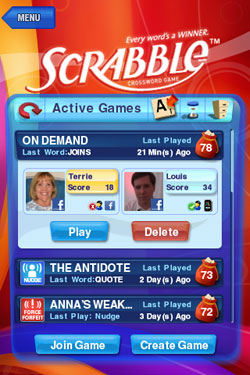
I Can See Both Active and Archived Scrabble Games from Facebook

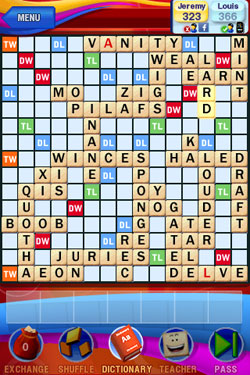
Now, thanks to the Facebook Connect and iPhone app integration, I can play the same Scrabble games from Facebook on my iPhone. Just by clicking the app and seeing My Games in Facebook, I can play my active boards, or review archived games with a few taps of my finger. The experience, with the exception of screen size, is virtually the same - and it has let me make a few moves when I'm not attached to my laptop. (which also reduces my tendency to use online resources for better moves)

I haven't always been a huge fan of Facebook. I can't sit on it all day and respond to status updates. But the network has a ton of data on me in my social profile. I've already asked them to be utilized and help block ads that are don't make sense for me, even if they are still doing a bad job at it themselves. But now that I am seeing how easily they can be leveraged for apps, I'd like to see even more iPhone apps to look this direction and connect with the Facebook Connect platform to know the real me and get my data. It really can enhance the experience.