
Silicon Valley Technology Commentary & Archives · Est. 2006 3,034 Posts · 2006–2026

March 7, 2007

March 7, 2007 · 2 MIN READ · BY LOUIS GRAY

Digg Hits 1 Million Users - World Domination Next

Digg Hits 1 Million Users - World Domination Next

There's rapid growth, and then there's exponential growth. If you're a growing Web-based business like Digg, where the massive number of users and page views can be monetized to accelerate revenue, the latter is clearly much more preferred, and today, Digg founder Kevin Rose was excited to announce the site had passed the 1 million user mark, in just over two years after the site's start. Crossing the milestone signals continued expansion for the site, which has eclipsed Slashdot in tech news relevance, if not yet in total users, and has become a go-to site to see the day's popular news and oddities.

While the achievement is fantastic, and as Rose mentioned, "a point I never dreamed of", Digg isn't the only Web 2.0 company to reach such an illustrious mark.

* StumbleUpon achieved 1 million users in July of 2006, four years after its inception, and, like Digg, enables users to submit stories and rate them. (Source: Mashable)

* Del.icio.us reported 1 million users in September 2006, just under three years since its start, and saw its growth accelerate following acquisition by Yahoo! earlier that year. In fact, at the time, reporters lauded the service for being much larger than Digg. (Source: TechCrunch)

* In January, Second Life said they were set to exceed 3 million users, and that 1 million of those accounts had logged in during the previous two months. (Source: Second Life Insider)

* LinkedIn says they have more than 9 million subscribers, with 1,070,300 or so being 3 degrees away or less in my network alone.

Meanwhile, Slashdot, the original Digg-like story submission engine, has well more than 1,000,000 users, even if they don't have all the buzz. I clocked in as user 104,197 some time back in 1999, though I haven't been all that active, constantly reading, occasionally submitting stories, but mostly just watching.

What does this mean? Simply that the Web has a lot of active users interested in sharing news and information, and that the most popular brands will quickly gather millions of users if they offer differentiated services. That Digg has gotten there as fast as it has is quite laudable, if not a surprise. Good luck on your race to 10 million, Digg.
March 7, 2007 · 2 MIN READ · BY LOUIS GRAY

A More Healthy Way to Stay Addicted?

A More Healthy Way to Stay Addicted?

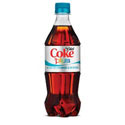
An interesting New York Times article from this morning focuses on how soft drink leaders Coca Cola and Pepsi Cola are adapting their major diet soda brands to promote, of all things, health. Both companies have planned to adapt their flagship diet cola lines with a full set of vitamins, to break away from the "liquid candy" image, which many have used to link soda drinking to obesity.

The piece says specifically that Coca Cola will debut a brand extension called Diet Coke Plus, "which will contain niacin, vitamins B6 and B12, magnesium and zinc."

I made the switch from Pepsi Cola to Coke in my teens, and switched again from Coke to Diet Coke when in college. Now I probably down a six pack, conservatively, every single day. Unless the taste is completely indistinguishable from what I already drink, I don't have a huge incentive to switch again, and am quite dubious that the new Diet Coke Plus is going to strengthen my bones, fill me with physical energy and make me more attractive to the opposite sex. Instead, it's a lot like those old saturday morning commercials during cartoons where you would see Lucky Charms or Cookie Crisp, alongside toast, orange juice and a piece of fruit, saying it was "all part of a nutritious breakfast" and contained "9 vitamins and minerals", none of which broke the 20% RDA barrier.

What marketers sometimes fail to remember is that not all of their customers are stupid. We don't drink Diet Coke because it's healthy. We drink it because it has caffiene, tastes good, and stops from being thirsty. Maybe in that order. Sure, I can't even drink regular soda now without feelings of nausea, but I didn't switch to lose weight and reduce dental costs. And I won't switch to start looking like Popeye off a sprinkling of vitamins. Beyond this, brand extensions sometimes are not the answer. Read any book from Al Ries and Jack Trout, and they can teach you how to avoid the pitfalls of brand extensions. You simply can't take something unhealthy and relabel it as healthy. Nobody will believe you and it won't sell.

March 6, 2007

March 6, 2007 · 3 MIN READ · BY LOUIS GRAY

Maintaining Integrity of Web Archives Is Essential

Maintaining Integrity of Web Archives Is Essential

On Monday, IDC announced an estimated 161 exabytes of digital information was created in 2006, by far a record. Expectations are that the data growth will continue, through a zettabyte, six times higher than last year's number, by the year 2010. Increasingly, the world's information is digital, and a great deal of it is online.

As more information related to news, commerce and personal histories goes online, it becomes increasingly essential to ensure the long-term integrity of that data, not just for today, but for future years, to accurately record a history of our time, and to complete the massive linkage needed for the Internet to act as a true conduit of a culture.

Even in the last decade or so, we can see how data has been presented for the short term, without much care as to future access. It's not uncommon to see links to news articles of months or years ago hit 404 messages, as sites change directory structures, or delete old data, in a wholly misguided effort to save space. In other cases, domain names go unrenewed, losing data, or hackers maliciously change, corrupt or delete sites, which cannot be recovered. Even some of the most popular sites, like Yahoo! News' carrying articles from the Associated Press, have a limited shelf life, as articles rise to prominence and fall away quickly, to be forgotten forever, as URLs expire.

I strongly believe that every webmaster, blogger, and news medium needs to pay as much attention to archival data as they do to present-day data and future plans. The very Web-like nature of the World Wide Web demands that one link lead to another and to another, with multiple hyperlinks reaching out like strands from the center of the Web to the edge, and each having a multiple, optional, paths from one location to another. If Webmasters and site owners opt to make wholesale changes to directory structures, domain names, or server names, it should be done in a way that does not impact historical data. External hyperlinks should remain unbroken. Search engine archives should return true data, and access to those archives should remain clear. This line of thought falls in line with the thinking of Web pioneer Dave Winer, author of Scripting.com.

If you run a wholly Web-based blog, make backups to your local computer or offline, to CDs, DVDs or even an iPod. I back up to my laptop, iPod, and using Apple's .Mac Backup service.

From 1996 to 1998, I worked for the student newspaper at UC Berkeley, and had set up a search engine to index all articles on the newspaper's online site for the previous 3 to 4 years. Later, due to a series of site overhauls, and the occasional webmaster error, all was lost. Now, the Daily Cal's Web site offers a search engine option for "Before 1999", and it returns nothing. The 200+ stories I wrote for the paper can only be found sporadically in Google's archives, or where they were reposted on other sites.

Others, like Robert Scoble, note their own history was erased, when blog hosts made widescale changes. That is something that should never happen if the Web is to continue forward for years to come.

Now, at the office, I find media coverage on our company I once linked to in 2001 or later is gone, due to media mergers and acquisitions, site changes, or other reasons. In other areas, early personal home pages I once wrote, both in college, and after, are only preserved in patchwork fashion on The Internet Archive, one gallant attempt at bridging the gap between publishers' holes and the true nature of the Web.

There are countless examples of one day's treasures becoming tomorrow's trash. But if the Web is ever to be considered a historical record, we must treat it as such. Backup the data - there's tons of storage space. Preserve URL structures. Preserve domain names, and constantly look both forward and backward, or that next 404 you find could be your own.

March 5, 2007

March 5, 2007 · 1 MIN READ · BY LOUIS GRAY

Artest's World: They're All Out to Get Me

Artest's World: They're All Out to Get Me

Cross-Posted at Sactown Royalty...

Following on to today's news that Kings forward Ron Artest had been jailed on charges of domestic violence, just weeks after being fined for animal neglect...

Ever wonder just what is going on in the head of Ron-Ron? With today's news piling on to issues with coaches, teammates, opponents and man's best friend, we thought we'd give Artest the floor for a bit to tell his side of the story, satirically speaking...


Click for Larger Comic


Take the Poll: Who Is the Real Artest?