Silicon Valley Technology Commentary & Archives · Est. 2006 3,034 Posts · 2006–2026

January 28, 2008

January 28, 2008 · 2 MIN READ · BY LOUIS GRAY

Forget the A-List? Not Quite Yet.

Forget the A-List? Not Quite Yet.

Well known A-list blogger and technology evangelist Guy Kawasaki says the time has come where prominent bloggers with brand names aren't any more likely to determine a product's success or failure. As he says it, referencing a recent article in Fast Company, "Lousy reviews by them cannot tank your product. Great reviews cannot make it successful."

But to summarily dismiss the most well-known bloggers as ineffective means to get word out around a new product or Web service is flawed. In my belief, there is no binary "right or wrong" answer here. You shouldn't make outreach to the A-list bloggers OR hope to reach users who can virally make your product a success. A good campaign should be more broad, and include elements of both reaching out to the most widely read, and to early adopters.

We can see Web services every day try to get launched through TechCrunch, GigaOM and Mashable, in hopes that the massive traffic spike will carry them through their next venture capital round and long-term success. People often refer to the ensuing deluge of visitors as "The TechCrunch Effect", as they once did about the "Slashdot Effect". And while we know that eventually traffic goes back down, being profiled by such well-read sites leads to smaller bloggers following on with their own take, trying out the product and writing reviews. In effect, rather than starting at the bottom to get a few links and working their way up, going after the big dogs means getting coverage both at the top and the bottom.

As I told Emanuel Rosen, author of "Anatomy of Buzz", following my first comments on his book, there are new ways to gain buzz and interest across the Web these days, from limited invites and private betas to working Twitter and the B-List. There's no question that each of these elements can deliver users. But to ignore a significant portion of a potential campaign on its face and declare it one to "Forget" is silly.

Some of us may wish the A-List concept were dead and gone, but it's not yet, and it won't be for some time, and if one name were to go down, there's no doubt another would rise to take its place. In every marketplace there are leaders who wield an inordinate share of power. Simply wishing them away won't make it so.

January 27, 2008

January 27, 2008 · 1 MIN READ · BY LOUIS GRAY

Google Honors Building Blocks of the Non-Web Kind

Google Honors Building Blocks of the Non-Web Kind


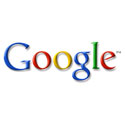
Google is well-known for modifying their logo to celebrate anniversaries or mark holidays. Today, with the 50th anniversary of the first Lego bricks, Google has edited their logo to be built out of Lego bricks, featuring a Lego figure atop the second "g". With so many engineers and techies on site in Mountain View, there's no question that many of them began their tinkering without computers, and many a youthful hour was spent in front of the popular children's toys.

Fifty years ago, few could have foreseen the way technology and the Web have transformed business, commerce and communication. And just five years ago, few would have guessed how critical a building block Google has become to just about every facet of our online lives - from finding information, posting information, sharing information, and saving information.

And five years from now, what we know of Google today might be a mere shadow of what the company is set to become. Today's Google might just be a building block, like the first lego in a structure, of something monumental.

After all, you can't spell Google without the L, E, G and O.

Also see:
Google's Earth Day Logo Makes a Splash
Google: Holiday logos
January 27, 2008 · 2 MIN READ · BY LOUIS GRAY

How Soon Until People Demand Link Blog Portability?

How Soon Until People Demand Link Blog Portability?

The issues of data portability and ownership reached a fever pitch when Robert Scoble famously got kicked off Facebook for 24 painful hours. Users debated forwards and backwards over whether he had wrongly tried to export data from his friends that he believed belonged to him, while the social network believed they had ownership. In the ensuing months, many of the largest Web firms have joined DataPortability.org, essentially promising you can import and export your data from one service or another, without being locked into a data silo.
Yet, while this is happening, some services are becoming increasingly important, and are completely immovable. Take Google Reader's shared link blogs for instance. Despite the great utility of the link blog, combining all your best-liked posts from the blogosphere in one place, the link blog lacks customization in look and feel, in URL, or in the ability, so far, to both input data from sources outside of Google Reader, or to export the data to a new format.

Recently, in part due to the Google Reader team's lack of attention, services dedicated to tabulating the popularity of shared link items have risen up, most notably the debut of ReadBurner and Shared Reader.

Additionally, there has been recent interest in adding individual posts to Google Reader link blogs, without requiring subscription. I touched on the idea last Wednesday, ReadBurner implemented it that afternoon, and Google Operating System debuted a work-around this Sunday.

What this tells me is that the value of the link blog is only going to increase over time. Yet, it only can be modified if you utilize Google Reader, and it can only be presented at a Google-selected URL. This is in contrast to the wide variety of options seen if you use the company's Blogger service, where you can either use their blogspot.com address, publish via FTP to a site you already own with your own domain name, or thirdly, buy your own domain name through Blogger.

I believe that as alternatives to Google Reader arise, and bloggers start to see the value in their own link blogs, there will be a desire to:
1. Use other blog services to publish RSS items to their link blog.
2. Add updates from other non-blog services (like Del.icio.us, Twitter, Digg) to their link blog, a la FriendFeed.
3. Move their link blogs to a custom domain.
4. Customize the link blogs to look like their own Web sites.
Today, Google's shared item link blogs offer non-intuitive URLs, a bare minimum of design, on a white background, with your Google profile, and are limited to RSS feeds via Google Reader.

While Google was one of the first to offer this service, and has the highest following, as attested by ReadBurner, I believe people will recognize the need to open up and offer flexibility between both competing and complementary services. As Google offered to be part of the data portability movement near the beginning of January, I sure hope this concept is on top of their list. If it's not, I wonder how long it will take until their users ask for it to be.
January 27, 2008 · 1 MIN READ · BY LOUIS GRAY

Mormon Leader Gordon B. Hinckley Passes Away

Mormon Leader Gordon B. Hinckley Passes Away

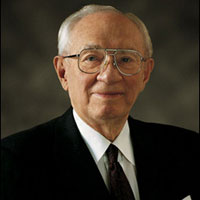
Breaking away a bit from our usual technology coverage, we heard the sad news tonight that LDS church prophet Gordon B. Hinckley passed away at age 97, after leading the church for more than twelve years. Hinckley presided over the church in a time of significant growth, missionary outreach, and temple building world-wide. He also was easily the most visible Mormon prophet to date, showing incredible media poise, appearing on CNN's Larry King Live several times during his presidency.

(See transcripts from: 1998 and 2001 or the 2004 video from YouTube)

For those unfamiliar with the Mormon faith in general, Hinckley held the highest position in the church, behind only the Godhead, of course, and could be considered the equivalent of the pope for the Catholic church. Hinckley was a member of the First Presidency, with both a first and second counselor, heading the Quorum of the Twelve Apostles, paralleling the organization of the New Testament times.

In my time as a member of the church, since birth in 1977, I've seen four prophets, starting with Spencer W. Kimball, Ezra Taft Benson, Howard W. Hunter, and Hinckley. While Hinckley was the oldest president in church history, he was well-known for his optimistic spirit and upbeat attitude, even as he was in his mid-90s. We will certainly miss him, even though we know the church remains in good hands.

For more information on Gordon B. Hinckley, see LDS.org or Wikipedia.