Silicon Valley Technology Commentary & Archives · Est. 2006 3,045 Posts · 2006–2026

May 20, 2010

May 20, 2010 · 3 MIN READ · BY LOUIS GRAY

Do iPhone Users Face a Draconian Future?

Do iPhone Users Face a Draconian Future?


At the end of 2009, fed up with AT&T's ridiculous lack of quality, and knowing the iPhone's current platform was long in the tooth, rumors of Google's new uber-phone were making the rounds, leading me to say you would have to be insane to get a new iPhone now. Even as rumors of the new iPhone 4 are making their way around the Web, through early exposures and leaks, I continue to think something dramatic and amazing has to come out of Apple HQ to change that opinion - and after sucking down the Google Kool-Aid all morning at Google I/O today, I really wonder if they can do it. Part of me says they can't and that it's time to stop investing in this platform - even if I know it's going to take some time for my wallet to catch up.

Any resistance I may have had to the Android mobile platform, which has always been more of curiosity than lust (See: It Just Might Be the Droid You Are Looking For from November 2009), was pretty much eroded today as Google landed body blow after body blow against Apple in terms of displaying speed, support for more platforms and media, portability of applications, and ease of synching between devices and libraries.

The noise around who has the most apps or the most users has really become background now, and we need to look at what device can help us get our work and entertainment done in the best way for the best price. Google was bound to have the lead in terms of the numbers of devices available, and the carriers supported, but today's extremely convincing demos showed how the speed of innovation at Apple seems to really be lagging - and the decisions at Cupertino, tying to AT&T's ridiculous mediocrity, and sparring over Flash, are distracting from the ultimate goal.
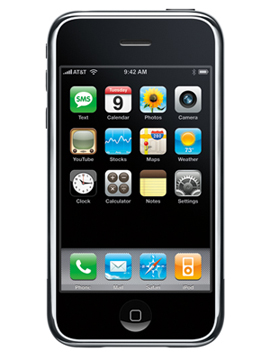
Vic Gundotra, vice president of engineering at Google, said it was "critically important" to create a free open source mobile OS with innovation at every layer of the stack. "Otherwise, we would face a draconian future controlled by one man and one device - a future we don't want," he added.

That one man? Steve Jobs. The one device? The iPhone. Duh.

Gundotra's demonstrations of the raw numbers of applications and user growth were less important to me than they were for the target developers community. Suffice it to say it was "enough" and "a lot". But Google's massive array of engineering talent looks like they are doing two things - eliminating the holes Android may have had in comparison to the iPhone platform (such as app updating and music library portability) and leaping forward with tethering, portable hotspot functionality, and superior deployment of JavaScript, Flash and HTML 5.

"We're not only committed to having the world's fastest browser, but the world's most comprehensive browser," Gundotra said. "It turns out that on the Internet, people use Flash. Open means you are inclusive, not exclusive and open means innovation."

Open means a lot of things to a lot of people, so I won't get into that. For many, Flash is a perfect example of what's not open. But what keeps going through my head is that unless Flash really has a hugely negative impact on my experience, stop getting in my way and give me my content - period. Google isn't playing games of censorship in determining what media types I can get on my device. They just want it to work better, and faster.

Gundotra demoed how you can now browse the Android marketplace on your PC or Mac and can download applications and music directly to your phone, over the air, without iTunes getting in the way. "We discovered something really cool. It's called the Internet," he joked.

Similarly, the ability to map your non-DRM music, via iTunes, for example, to the Android device and make it available, is a huge step forward for a potential iPhone switcher - powered by Google's acquisition of Simplify Media. It seems everywhere Apple used to have a lead, with the exception of UI and integration with its other devices, Google has wiped those out and is moving beyond conventional thinking. Barring something dramatic out of the WorldWide Developer's Conference next month from Apple, I think we just might be done buying iPhones.**

** I reserve the right to give all my money to Steve directly whenever I want and may change my mind later.
May 20, 2010 · 4 MIN READ · BY LOUIS GRAY

While Apple Slept On Their Hobby, Google Executed

While Apple Slept On Their Hobby, Google Executed


After noting Apple practically being a zero in terms of mentions in yesterday's keynote at Google I/O, today saw the gloves come off as Google came out swinging against its competitor - and it had to be noted, even from this longtime Mac customer - that many of the punches landed, again and again. Most damning? Google actually took TV seriously - instead of teasing customers with a streamlined device, like the Apple TV, which looked great, and functioned well, but was often dismissed as not being a central focus. The result, despite the occasional bumps in the morning's demo, is the latest and most credible offering yet that could unify the worlds of Web and television in one place - on the biggest screen in the house. (See the official Google TV site)

Back in 2007, I had high hopes for the Apple TV. I openly questioned those naysayers on the device, celebrated its small feature updates, such as adding YouTube support, and postulated how it could compete and defeat other businesses, such as Netflix. But it seemed Apple had other ideas for the device - pretty much ignoring it, even as the company saw tremendous focus in other places - first with the iPhone, and now with the iPad.

Yes, the Apple TV still works. Yes, it can still show photos and YouTube and my music and pull down films from iTunes. But it's a siloed dinosaur.

Google made its antiquity especially clear today, as instead of using Apple's divide and conquer mentality, with Apple TV being completely separate from your TV, the company promises to bring the Web to the TV, complete with a search box that finds content, no matter where the source. The reason this has a much better chance to succeed than Apple TV ever could? Commitment. Commitment from the company's leadership, from partners, and to the word they keep smacking us with - openness.


Rishi Chandra, product manager for Google TV, says the company's new offering is about "taking the best of what TV has to offer today and what the Web has to offer today and give a seamless experience", which should result in the ability to find playable content - no matter where it is and bring it to the big screen.

Built following a history of unsuccessful challengers, such as Web TV, Google's massive potential comes from several points - including the immediate leverage of the Android platform, including the application marketplace and command from any Android mobile device, the full-fledged Google Chrome browser, the obvious support of YouTube, and alliances with Adobe for Flash and teaming with leading industry partners like Sony, Logitech, Best Buy and Intel to make the entire ecosystem do its thing.

As an Apple user, and as a TiVo customer, I have grown used to those two companies playing a significant role in my TV entertainment experience. Those two companies are exceptional when it comes to getting user experience right and making things feel smooth. Google hasn't managed to replicate that feeling of seamless integration yet, but their ability to display bookmarks on TV, to download apps from a PC and have them hit the TV, and manage the TV from multiple devices at once all look like they are getting so many features into this thing that there is really no way somebody like Apple can compete, even if they were to buckle down and try for real this time.

Google and its partners promised that the first television sets, set top boxes and input devices will all start hitting shelves by Fall of this year - in time for the holiday shopping season. It will remain to be seen how customers take to a new platform with devices coming from different sources, but it looks like it is Google that is "Thinking Different" about the TV and trying to open it up as a platform for its many developers to leverage - all while Cupertino pretends its Apple TV doesn't exist. As an Apple TV owner, I am disappointed in the lack of attention paid to this product, and think often my loyalty may have been taken for granted. But Google is executing so well in so many areas, it is obvious we have an alternative, one that, if the UI is excellent, could change the game.

Best Buy CEO Bryan Dunn, speaking with Google CEO Eric Schmidt, referred to the new Google TV platform as "not just a new aisle but a new category". Rishi Chandra echoed his comments saying, "Our goal is to have the same impact on the TV experience as the smart phone did with the mobile experience."

The TV looks like it finally may get smart. I just want to know why Cupertino played dumb for so long.

May 19, 2010

May 19, 2010 · 3 MIN READ · BY LOUIS GRAY

Google Buzz API Debuts, Fueling Potential Network Growth

Google Buzz API Debuts, Fueling Potential Network Growth

Google Buzz celebrated its 100th day of public existence at Google I/O Wednesday with the introduction of its much-awaited API, and the immediate adoption of that API from some interesting showcase partners, including Seesmic, TweetDeck and SocialWok. In the last three months of Buzz's availability, I've discussed how Google had aimed to avoid offering proprietary standards for developers to point their applications to, choosing instead to work with open tools including OAuth, AtomPub, Activity Streams, Pubsubhubbub, RSS and WebFinger. On Google I/O's first day, the company showed the first fruits of that labor, giving the fledgling network the opportunity to tap into the same developer community that other services, including Twitter, Facebook and LinkedIn, have enjoyed.

Chris Chabot (@chabotc), a developer advocate for Google, explained the role of Buzz at Google Wednesday, saying that "The Web is better when it is social," chronicling the rise of social activity to the point where having a social profile online is as common as having a mobile phone. "The Web is becoming a social place. It is moving from a static place to one about people sharing experiences, playing, working and talking together," he said.

Initial Partners Using the Google Buzz API

But as Google's social team has chronicled several times, including Chris Messina's talk on Activity Streams at SXSW this Spring, many of the different destinations on the social Web speak different languages. Rather than inventing a new language, Google wanted to utilize existing standards to avoid such headaches, and make Buzz part of the Web's infrastructure, "not a special destination."

In April, after one particularly nutty report was issued on Buzz's aggregation statistics, we proved the majority of Buzz's active content originates on that network. The new Buzz API makes it easier for third party clients, such as Seesmic and TweetDeck to push comments, likes, rich media and other updates to the network, but also to consume content from Buzz in users' favorite application. This seemingly minor move - one already seen by Facebook and LinkedIn, puts Buzz on par with those historically larger networks, and ahead of scrappy startups like FriendFeed, which never gained such prominence.

Google Buzz Displayed In Seesmic (Next to Foursquare)

Marco Kaiser (@marco) of Seesmic, who demonstrated his company's application pulling and pushing data from Buzz, said Seesmic wants "to support as many services as possible to as many products as possible", and as of today, all of their products, including the Web version, Desktop and Android clients, let you add Buzz as an account and see Buzz content alongside Twitter and other updates. This caps a busy week for Seesmic, following their Monday addition of Foursquare and other updates.

While Twitter has had an off and on relationship with its own development community, the ease of developers creating applications and Web services has led to much of the service's growth. Buzz, assuming expanded adoption of their API by other partners, could receive the same kind of boost that so far has been lacking in the service - seemingly siloed despite so many promises to connect with the outside world.


In addition to the announcements by Seesmic and other partners, Google introduced a testbed for developers to try out the API, which you can find at http://www.buzz-demos.com/. The test site lets you display your stream, add, edit and delete content, follow and unfollow others. It surely won't be all that long until many of the automation tools that have existed in Twitter's ecosystem make their way to Buzz.

As someone who long begged for services like FriendFeed to be supported by major clients like TweetDeck and Seesmic, but didn't see it happen, the rapid adoption and seeming ease of the Buzz API is a huge endorsement for the future of the network. It could have something to do with Google's name being attached, or the ease of the standards, but the potential is there nonetheless.

Google's official post on the new Buzz API is here: Introducing the Google Buzz API. You can find me on Buzz here: http://www.google.com/profiles/louisgray.
May 19, 2010 · 1 MIN READ · BY LOUIS GRAY

Former FriendFeeder Kevin Fox Exits Facebook Henhouse

Former FriendFeeder Kevin Fox Exits Facebook Henhouse

Only a little over two years ago, I covered well-respected Web user interface designer Kevin Fox's leaving Google for the then-startup FriendFeed. That's practically ancient in the world of the real-time Web, as since then, the company essentially rose and fell, before being absorbed into Facebook last summer. For the most part, the site was left on but ignored, as the team, now at Facebook, spread out and took on new challenges. Now comes word that Fox has determined nine months at Facebook was enough, so he is bidding "farewell".

Kevin's leaving Facebook marks three known defections from the social networking giant since the talent buy was announced, including Gary Burd's October 2009 exit and Ben Darnell, who joined Brizzly a month following.

Kevin did not indicate any specific incident as a contribution to his leaving, calling his work with Facebook's "world-class designers, PMs and engineers" a privilege. He says instead that it's "time for the next adventure", hinting he will take vacation and go into private practice.

He said as much to me earlier this week, saying, "I'm really excited to do my own thing after a summer vacation. No jumping from one ship to another."

Previous to Facebook and FriendFeed, Kevin led the design of GMail 1.0, Google Calendar 1.0 and Google Reader 2.0, after he had also spent time at Yahoo! at the end of the Web 1.0 era.