Silicon Valley Technology Commentary & Archives · Est. 2006 3,045 Posts · 2006–2026

June 9, 2010

June 9, 2010 · 3 MIN READ · BY LOUIS GRAY

Symbaloo Hits US Market With Start Page, Curation Engine

Symbaloo Hits US Market With Start Page, Curation Engine

Before there was social networking as we know it today, and before blogs, there were flat home pages. Among the first things most of us would do with these flat personal home pages would be to compile a list of links - essentially an extension of our browser bookmarks - so that our friends and other Web visitors would find out what we like, or possibly, so we could demonstrate an expertise. Now, as we have moved to a real-time Web built as much on streams as on pages, our sharing has sped up and many people are talking about the discovery and highlighting of key content as curation. New word... same idea.

Good curation tools are hard to find, though I have seen a number of attempts to get the formula right - and much of the fault lies with gaps in today's search engines, who are increasingly favoring most recent content over most exact content. Into the void comes Symbaloo, a company that is taking a new spin on personalized link pages, or start pages, and creating what are called "Web Mixes", with core components being tiles (much like bookmarks), RSS feeds and rich media, which can be used to capture the day's news - but more importantly serve to be a page of record for a topic or a time.

Symbaloo, a Dutch company, which has already enjoyed strong success in some areas of Europe, is today opening up to US customers in an early beta. With roots deep in the Continent, they are unapologetic about taking baby steps to serve us on the mainland, but they are eager to make a dent here as well.

A Default Symbaloo Start Page With Dedicated Tiles and Resources

Symbaloo's main design features 52 tiles, laid out in a 6 x 10 rectangular grid, with the center area reserved to display selected RSS feeds or to search the Web with any of the pre-loaded search engines. Whatever you choose to do with those 52 available tiles is up to you - and you can share any custom Webmix you build with your friends downstream, highlighting the curation you have done.

50 Hand-Selected Top Startups In a Symbaloo Webmix

For example, given my interest in Web services and early adoption, I put together a list of 50 top startups, excluding the "wise beyond their years" examples of Facebook, Twitter and other large private companies, and then ordered these 50 from 1-50 in terms of potential impact and visibility, starting with Foursquare and ending with Fabulis. As you can see, the "50 Top Startups" Webmix displays high quality graphics for each tile and is visually appealing.

http://www.symbaloo.com/mix/50-top-startups

Similarly, I also chose to take a few minutes and display 50 core Web sites you probably visit often, all in one place:

http://www.symbaloo.com/mix/50-core-web-sites

50 Core Web Sites To Get News, Networking and Finance

Creating your own Webmixes is very easy. After logging in, hit the + sign to create a new Webmix, and then click a tile where you want to add a link. If the link you are looking to add already exists, just click to add it to your Webmix. If it doesn't, then you can create it using an image from your computer, or one of the many standard icons provided by Symbaloo.

If you have a field of expertise, and want to share your findings, or your sources of data, with the world, Symbaloo's Webmix approach packs a lot of links into a single graphically pleasing page. I would expect you could rapidly see topical pages built for everything from Sports to Business to History. I could see Webmixes being created not just by technology curators like me, but also by teachers and journalists working stories.

For many, Symbaloo's approach may be compelling enough for them to use as their new browser start page, but for most of us, we have already edited our portals and are pretty set with what we want to see the first time we open up the Web. Instead, I think the opportunity to curate the Web and share with friends what we know is going to be the biggest opportunity. I expect to leverage Symbaloo as a one-stop personal portal, which I can get to from my desktop, iPad or any other mobile device. You can start making your Webmixes at http://www.symbaloo.com.

Disclosure: Symbaloo is a client of Paladin Advisors Group, where I am Managing Editor of New Media.
June 7, 2010

June 7, 2010 · 3 MIN READ · BY LOUIS GRAY

iPhone 4 Is Nice, But It's Not Enough to Slow Android

iPhone 4 Is Nice, But It's Not Enough to Slow Android

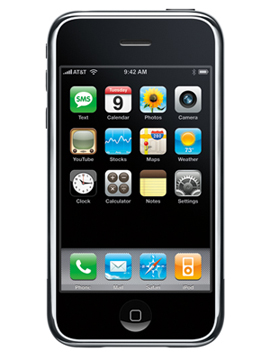
I am running in danger of sounding as much an Android fanboy as I ever was an iPhone fanboy, so let it be known even if the subject is changed, the internal debate continues to rage, and the enthusiasm to make the right choice, fairly, is still the same. Like most of you, I wondered how Apple and Steve Jobs could wow us with the latest iteration of iPhone, and whether it would be enough to attract those of us considering Android as an alternative - most specifically the new HTC EVO or similar devices - to come back to the Apple fold.
With Jobs' keynote complete, it looks like Apple is making some good moves with high quality imagery, cameras, and smart integrated apps like iMovie and FaceTime, but I didn't see anything that made me feel I have made the wrong choice. I stand by the belief that Android has achieved parity with Apple in many respects, is superior to the platform in a few ways, and has the momentum behind it with an ecosystem set up for continued growth - not held down by the still-stunning ineptitude of a major partner like AT&T.

The iPhone 4 update focused on improved screen quality with more pixels, the long-awaited introduction of multi-tasking, HD video recording at 720 pixels, a fast Apple A4 processor, the introduction of a front camera, and two pieces of software - iMovie for editing of film clips on the iPhone, and FaceTime for video calling, assuming both parties have iPhone 4 models.

The introduction of multi-tasking and a front-facing camera both are catch up features to the latest Android models, including the aforementioned EVO. The iPhone is no doubt thinner than the EVO, and speed and battery life measures are subjective. But Apple's complete silence on wireless hotspotting, tethering, and finding an alternative to the boat anchor of AT&T were a big miss. While the company can trot out market share statistics showing installed market share for iPhone devices ahead of Android, it certainly seems like the onslaught of capable devices running Android are eating into Apple's share - and that's something which fancy iAds aren't going to fix.

If I were an Apple developer today, I would be very happy with the company's revenue sharing policies and attempts to further improve monetization with iAds. I might even take them at face value when Jobs said they were approving the overwhelming majority of applications submitted to the iTunes store. But I would absolutely make sure I was also coding my applications for Android. I believe that if I were starting a business built on mobile applications today, I would start by coding for the Android platform, as there is a greater chance to gain first mover advantage in that marketplace, and to become a revenue leader as the tide rises. Code for Android first, and iPhone/iPad second.

What I was looking for today was not a device that offered feature parity or similarity to what I have now somewhere else - on a platform that isn't limiting me to the manufacturer or to the carrier. I wanted more flexibility and more functionality. An iPhone 4-only parlor trick of video calling much like that on AIM or Skype or Yahoo! Messenger from the last decade isn't what is going to make my phone buying decisions made up, but instead, a promise to create a high quality experience for all aspects of my using the device.

AT&T has failed that litmus test of quality and has done so consistently for years. Today, Apple had the opportunity to look customers in the eye, and either apologize for the poor service we have come to accept from AT&T and Apple, and the missed promises, or better yet, offer an alternative. They didn't. That tells me either they do not fully understand the magnitude of the problem, or they think they can get away with continuing to ignore it.

Apple, I didn't want a thinner iPhone that's slightly faster and better looking. I wanted a promise that the new one would make phone calls, act as a fantastic Web device, and provide 3G access to other devices. Today, you didn't do that, and it's disappointing. A smartphone can't be smart if it's married to a company as dumb as AT&T.
June 7, 2010 · 4 MIN READ · BY LOUIS GRAY

Steve Jobs' Opportunity: Apple Products are for Humans

Steve Jobs' Opportunity: Apple Products are for Humans

At 10 a.m., Apple CEO Steve Jobs will take the stage once again at WWDC, no doubt introducing the next generation iPhone, along with its already previewed iPhone OS 4 software, as part of what will hopefully be many announcements in the day, which point to the future of the company and its application ecosystem. His remarks will come at a time when Apple as a company is tremendously strong, firing on all cylinders, with the launch of the iPad looking like a tremendous success. Yet, in the background, the company's iPhone juggernaut seemingly looks like it is vulnerable, thanks to continued momentum from Google, Android, and Sprint's record-setting sales of the newest device, the HTC EVO (which I've discussed at length the last few weeks).

Steve Jobs is a master visionary for foretelling the future of tech, and also a master salesman, convincing you to think he was the leader, in the occasions when Apple is actually late the game. He and Apple have been among the best in convincing customers that features or products are not needed, or markets are not interesting, right up until the minute they introduce their own version. At this WWDC, Jobs will need to convince those watching and listening not only that the company's present is strong, but that their future is as well, that they can remain atop the charts in the smartphone race, in the face of the onslaught from Mountain View. One way he can turn this tide is to turn Android's marketing around against them - taking on the harsh, metallic, robotic, messaging directly, and say that in contrast, Apple's products are designed with soul, by humans, for humans - connecting with one's emotional side in a way that Google hasn't traditionally been able to do.

As far as robots go, the Android robot is cute - friendly and appealing even. So too are the code names for the Android releases themselves, each sounding like a calorie-rich dessert one would lust for. But, at the end of the day, it's still a robot, and Google, so far, hasn't been known for a soft, creative, approach. The stories about the company being data-driven and letting the numbers tell the story have reigned supreme, often being pointed to as one contributing reason behind the company's false starts in social, and, amusingly, the lack of a Google Sports to go alongside Google News. In contrast, Apple is all about emotion, and creativity, and how one feels about an experience - be it on the desktop, on a tablet or from a mobile phone.

Apple once said its operating system was so divine that "you would want to lick it". Licking and loving? Human emotions, not something robots desire to do. I don't see Google wanting you to lick your Nexus One or your Droid Incredible any time soon. They just "do". And even though I am enjoying my Android experience still, I am working around some of the lameness when it comes to non-humane error messages, non-intuitive software design and things that take more steps than they should, which Apple already tackled in the simplicity department long ago.

Do you know the primary use for the pair of iPads we got the first day they hit stores? Playing YouTube. Now, before you say that's a Google product (which it is)... what I left out is that the primary users are my nearly two-year-old kids. The two of them are constantly on the iPad, browsing videos or playing simple arcade games. That we have two iPads for the two kids is a must, for when one is in the room, they are fighting over it. The simplicity and human approach Apple took to the iPad is so well executed that the twins don't hesitate in learning how to approach new apps and to swipe between screens. But when they look at my EVO, they're pretty much lost.

Jobs may not try and present iPhone as the alternative to Android at WWDC, in the same way Google presented itself as the alternative to iPhone at Google I/O. Maybe he doesn't want to give them that much credit. It's just as likely that he will tell us how much better iAds are to AdMob, or tell us how many more cool apps there are for iPhone and iPad than there are for Android. Maybe talking about one's human nature and personality is too much of a throwback to Jobs' hippy days, but it's certainly an opportunity, one that would resonate with many people considering their computing choices going forward. We're not robots, and Apple is a touchy-feely company who understands touch and feel better than anybody else in tech. Therein lies the opportunity to remind customers.

June 6, 2010

June 6, 2010 · 2 MIN READ · BY LOUIS GRAY

Spotify Social Is Close to a Music Utopia (If You Can Get It)

Spotify Social Is Close to a Music Utopia (If You Can Get It)

Every day I spend using my cloud-centric MacBook Air and my HTC EVO brings me further and further away from an iTunes-centric digital media life. A once-diehard iTunes user who has no doubt purchased thousands of tracks from the music store since its debut, I find myself interacting with the application less and less over time - as my music is now coming from far-flung Web-based places like Last.fm and Pandora, satellite from Sirius/XM Radio, and, as often as I can, from Spotify. A near-immediate Spotify convert back in August when I first got my hands on the application, I have also enjoyed its iPhone app, and can now leverage the preferences and playlists from friends who I am connected to on Facebook, to see what songs they recommend.

Spotify already seemingly has the lion's share of music available with instant streaming, but now, it makes enjoying tunes a social experience. Despite the fact the service still hasn't publicly announced a launch date here in the US, it looks like a lot of my peers have gained access, one by one, so my social sidebar in the app is populated by several dozen audiophiles, each listening to their favorite music, and favoriting tunes for me to discover.

David Recordon Loves the F8 Playlist on Spotify

As with Last.fm and MusicMobs before it, the social elements of Spotify are great for finding shared musical preferences between friends you may not have known existed. For example, I was surprised to find Marshall Kirkpatrick of ReadWriteWeb is high on Blonde Redhead, and that I could relive high school with Pearl Jam's Spin the Black Circle off Chris Messina's "Rock Out" playlist.

Marshall Kirkpatrick Rocks to Blonde Redhead

The future of software is to be connected, instant and social. Spotify starts up tunes faster than any product I've seen (no buffering noted) and, of course, lets you share tracks to Facebook and Twitter. It's all about enabling improved song discovery and expanding social connections.

At LeWeb 2009 last December, Spotify said their plans were to open in the US in Early 2010. We're practically reaching the midpoint, so it seems things are going slower than anticipated. With WWDC upon us, it will remain to be seen what plans Steve Jobs and crew have for LaLa's integration into iTunes, and whether their offering will be strong enough to make Spotify's eventual launch too little too late. Hopefully not, for what they're making is extremely good... I just worry about the ticking clock.