Silicon Valley Technology Commentary & Archives · Est. 2006 3,045 Posts · 2006–2026

June 23, 2010

June 23, 2010 · 4 MIN READ · BY LOUIS GRAY

Author: Zuckerberg has "Total Control" over Facebook

Author: Zuckerberg has "Total Control" over Facebook

This morning at the Churchill Club in Mountain View, David Kirkpatrick, author of the Facebook Effect, which chronicles the ascension of the world's largest social network, based on significant access to the company's youthful, and often controversial, CEO, spoke with All Things Digital's Kara Swisher about the book, and his thoughts on the company. Kirkpatrick, who did not wear a hoodie, and did not break out in a sweat despite focused questioning from Swisher, said Facebook, despite its rapid growth, was focused on maintaining its company culture, and he hypothesized they might even look to delay going public to avoid "big company syndrome." Meanwhile, he said Zuckerberg doesn't "have to ask permission for anything", giving him "total control."

At times, Kirkpatrick seemed in deep awe of Zuckerberg and Facebook's mission, vigorously defending the company's march to create a platform based on genuine identity. He argued that most Facebook users "didn't care" about the network's privacy stumbles, and called for companies to integrate Facebook functionality in their own Web sites - even as he admitted that for his own account, he locks down his profile as much as possible, and even railed that others can tag photos of you without your initial approval, saying he was "offended" it could be distributed to friends without his go-ahead.

His infatuation with Zuckerberg began when he was a writer for Fortune, and reached a full-time obsession in fall of 2008 when he left the magazine to write the book. He now speaks of being immersed in the world of Facebook.

"From the very first lunch I had with him, I had a sense, it was a very different phenomenon," Kirkpatrick said of Zuckerberg. "Meeting him and seeing the way he talked about this thing like a lifetime project about changing the world struck me rather strongly."

Kirkpatrick sees Facebook as having succeeded through being a blank slate for its members, not limited to specific niches, and through being nimble, constantly making moves to stay ahead of competition, and often making strategic redirections that run contrary to the wishes of its own members. For this, unsurprisingly, he again credits Zuckerberg, and his ability to attract and almost cult-like acceptance of his message.

"It's still an aggressive, entrepreneurial, young, excited, committed culture," he said of Facebook. "Mark is a person of substantial vision, and for one way or another, he has succeeded in indoctrinating a very large number of people to feel the same way about the mission Facebook is on. Vexingly, it's not about the same things that most businesses are about."

If this line of being dissimilar to traditional businesses and being measured in a new light sounds familiar, it is because it should. It's not too dissimilar to that echoed by Google in the run-up to their IPO in 2004, and their messaging subsequently. But Kirkpatrick said the move to go public changed Google a lot, and he believes if Zuckerberg had his way, Facebook would never enter the public markets, despite the fact the company respects Google a great deal and has hired many people from Mountain View to join their team of more than 1,400. Strategic moves such as stopping the issue of stock options to new employees, in exchange for Restricted Stock Units (RSUs) and the sale of hundreds of millions of Facebook stock to Russia-based DST, have kept the number of primary stockholders low, and delayed what many think is the inevitable.

All this work to remain private, and to remain a tight culture, is yes, about control, Kirkpatrick made clear. He criticized those who would try and question Zuckerberg's methods and motives for starting Facebook, including whether or not he may have famously stolen ideas from the Winkelvoss Brothers in his time at Harvard.

"In the United States, we have a hubristic desire to bring down the powerful, and Mark is the biggest target," Kirkpatrick said. "There is a rabid culture of gotcha journalism and blogging and punditry, particularly in tech. The bigger Facebook got, the more people wanted to think he stole the idea. I don't think it's entirely unjustified, but far more has been made of it than necessary."

Without setting himself up as a pundit, given his "poking" of the general tech press, Kirkpatrick did slam Facebook's handling of the privacy crisis and other changes, calling the communications "egregiously abysmal". But he said Facebook would be wrong to listen to its users, as it would have been bullied into rolling back core functionality, including some of its most popular features. He said, instead, that Facebook knows best, that it is both people-centric and data centric, and that the data is continuously studied. He predicted Zuckerberg plans to lead the company for the next decade, and that it will hit a billion users by the end of 2011 - an incredible number, with Mark in control.

June 22, 2010

June 22, 2010 · 3 MIN READ · BY LOUIS GRAY

Tungle Is An Irreplaceable Web Scheduling App

Tungle Is An Irreplaceable Web Scheduling App

Padding on to my comments about mobile WiFi being a must-have for mobile consultants, another indispensable product I have turned to in recent months is Tungle, or more specifically, Tungle.me, which lets me open up my calendar enough so third parties can book time with me on my schedule, without having to worry about who is using different systems, or giving away private information, such as just who I am meeting with when. Now, instead of having unproductive e-mail sessions where people try and find out what times I am open, I just point them to my Tungle, and more often than not, assuming the time is open, a meeting can easily get booked.

The fragmentation of one's calendar can become ever more possible as one starts to work with different companies and their own internal calendaring systems. As you can guess, even if I meticulously watch over my Google Calendar (or iCal, if you prefer), meeting invites come in on corporate e-mail via Exchange, or through client e-mails. As far as their Exchange servers are concerned, almost all my time is free, even if that is far from the case. This is due to Google Calendar and iCal not having write access to their servers.

Syncing from Google Calendar to Tungle

Displaying Availability on My Calendar On Tungle

By making Tungle the master, I can synchronize with Google Calendar, and report free/busy to the world, but I can also ask people to schedule meetings through their service, and can browse their free/busy schedule, with their permission.

I have set up my Tungle such that when people propose new meetings, they need to select more than one time that works. This gives me a chance to reference my Tungle to actual locations of meetings (known from Google Calendar), and to pick the best time or date. Upon acceptance, Tungle sends an e-mail to both the contact and myself to provide an update, and Tungle writes back to my Google Calendar to correctly show the meeting is reserved. I don't have to post it in more than one place, and Tungle goes so far as to set an alarm to remind me when the meeting approaches.

A Typical Tungle Invite for a Meeting

The Confirmation of the Meeting, Via Tungle

How one manages their calendar differs for each person of course. As you might not want somebody to assume you are really "Available" when you had planned to get work done, you can still use Tungle (or whatever calendar you use to feed it) to block out hours for tasks, or you can leave the time open for net new meetings and simply move your tasks around. Regardless of your choice, Tungle also helpfully provides a feed of all changes to your schedule, chronologically, to show updates you have made, and those others have made to you.

A Request to Share Details With One Contact

Tungle Confirms the Sharing of Calendars

The leading words in today's Web are about flexibility, choice, openness and mobile. Tungle doesn't force me to choose one calendaring system over another, and it displays the content I choose to whomever I like. It also offers a mobile app for iPhones and Blackberries, though Android support, thus far, is lacking. You can find my Tungle at http://tungle.me/louisgray.

I also included Tungle in my recent 50 Top Startups Worth Watching at position #38.

June 21, 2010

June 21, 2010 · 2 MIN READ · BY LOUIS GRAY

Mobile Employees, Consultants Need Mobile WiFi Hotspots

Mobile Employees, Consultants Need Mobile WiFi Hotspots

One of the quirks of being a full-time consultant is scheduling one's day with multiple clients in multiple locations, with multiple technology environments. Just as one might consider who they are meeting with when selecting a morning's outfit, one also has to think about which offices have which capabilities, and just which devices or cables should be carried. Oftentimes, thanks to security reasons, or simply imperfect setups, a company's wireless network (or an alternative network) is not available to third parties. While in the past, that would mean working "without a net", one can now bring WiFi with them, through MiFi cards, portable wireless hubs, or mobile WiFi capabilities on leading smartphones. For me, the new capability has greatly increased my productivity at client sites where previously I've felt like a second class citizen.

The opportunity to use my HTC EVO device, powered by Sprint, as a mobile hotspot, has, for me, further widened the mental gulf between it and its comparable cousin in the iPhone family, even as the newest offering doesn't allow for wireless hotspotting unless you jailbreak the device. Even for those who find Apple's offering superior, the iPhone cannot deliver for me while the EVO does.

While speeds over the EVO's 3G (or 4G) network are not as fast as standard 802.11 based connections, the mere opportunity to get on the Web, rather than sitting dumbly or asking for the client to look at a Web site on their computer, is a lifesaver - and no doubt is worth the $30 a month it takes to enable the functionality in addition to standard Sprint service.

As more people are turning to consulting roles, or hoping to bring value to partners, one should not always expect free unencumbered WiFi available. While yes, it's fun to turn the phone into a Hotspot and enable Wireless access to the whole family while riding in the car, it's actually bringing the Web to clients that makes the feature a requirement. So Apple, if you want to be considered as a real corporate solution, you have to bring this functionality soon, or you're not even an option.

June 18, 2010

June 18, 2010 · 4 MIN READ · BY LOUIS GRAY

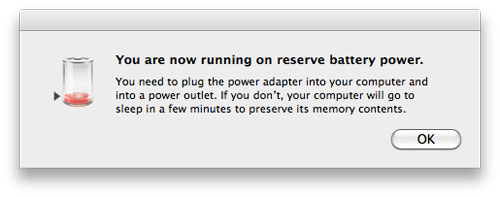
Charge Me Up: No Batteries Are Good Enough

Charge Me Up: No Batteries Are Good Enough

My Laptop Loves Being Connected. Batteries Don't Measure Up.

Just over a decade ago, Apple ushered in the wireless networking phenomenon with their new iBook consumer laptop, and accompanying Airport base station. Prior to that, Web access always required a hard-wired connection, be it through Ethernet cables or modems. Today, WiFi has practically become ubiquitous, a must-have for any new computer purchase, and one assumes it available in many homes and commercial buildings. Yet we continue to lug along with us a wide array of cords and connectors for all our devices, be they tablets, laptops or mobile phones - not for networking, but for power. The more powerful our devices have become, and the more capable they are, they seem to be just as hungry as ever in terms of sucking down electricity, no matter the manufacturer, no matter the OS and no matter the model.

Back in early 2007, when this blog was in its infancy, I said it was time to make power wireless and battery-free. While PowerMat has some solutions for mobile handhelds, the tipping point has not yet occurred where we can trust our batteries to run for days, and continue working after hours of peak load. And despite the occasional talk of new solutions that harness kinetic energy, solar energy or something else entirely, there have been no notable revolutions in this area that change the game.


One Would Have You Think the EVO Eats Batteries For Lunch
(Note 45 minutes elapsed between 1st warning and 5% warning)


Last week, Michael Arrington of TechCrunch aggressively said the HTC EVO was "seriously flawed" and said not to buy the phone - the same I've been using since Google I/O. One major reason cited was the battery life. It's the major knock against the device I hear in most reviews. My experience hasn't been so brutal, but it, like the iPhone before it, and my laptops, and every digital device I've used, has required me to bring power along, for fear of going dark. In fact, practically the only mainstream computing device I've used that has a battery to be celebrated is the iPad. Whatever Steve Jobs and team did to get that bad boy up and running for a few days is fantastic - but it is the exception, not the rule.

When using the EVO or iPhone or laptop, I plug in whenever possible. It's become as old hat as hitting Save every few minutes any time I use a Microsoft application. Old habits die hard. Today, I chose to use the EVO as I have been, but to keep it unplugged and let it run down to zero. Turns out, despite warnings out there that it's toast after about three hours, it was unplugged for more than 9 hours before spouting warnings, and I can't even guarantee it was full when I started. Interestingly enough, the EVO (and other Android phones, I assume) features the option to find out just what it is that is driving the battery downward.

What's Consuming My Battery Anyway?

According to the device, the hours of phone calls I made sapped 29% of the battery. Cell standby took another 17%, Bluetooth 17%, 15% for idling, and 13% for the Android OS itself. Good to know. But even though I had made hours of calls, and other activity on the device, it rivaled my experience with the last generation iPhone, which similarly was notorious for draining the battery, whether I used it or not. And while many people have pointed to needing to use a Task Killer to reduce drain on the EVO, Apple's helpful guide on preserving iPhone battery life isn't all that different - saying to fetch data less frequently, avoid Push notifications, or even to go into Airplane mode whenever possible!

Needless to say, companies like Apple wouldn't have to go into such details about preserving battery life if the phones were designed for always-on behavior. Meanwhile, laptop batteries are about the same they were more than a decade ago. In 1998, Apple introduced the PowerBook G3, claiming five hours of battery life, ostensibly enough to watch a DVD through fully, twice. The newest Apple MacBook Pros say they can last from eight to ten hours, though I don't know of many people who can claim having reached that threshold. So in 12 years, assuming truth in marketing, battery life has improved about 60-80 percent, while Internet speeds have improved much more dramatically, and CPUs have morphed from hundreds of megahertz to a few gigahertz. Batteries continue to lag the market, relative to most other measures.

It seems the best way to preserve battery life on laptops or mobile phones is to simply not use the devices or reduce activity on those devices. But today's machines are being built for multi-tasking, and for ever-increasing demands via Web browsers and high octane Office or rich media editing apps. I'm happy we're now seeing the first real products that leverage wireless power, but they are so limited as to not even be intriguing to this early adopter. I want real wireless power, just like 802.11, or I want an alternative that lets me charge up on the go, without cords. In this case, it's not about jousting between phone models, it's about making the same leap we did in networking. Fewer wires. More functionality. How can we get there?