Montenegro, a small country tucked into Southeast Europe, bordered by Bosnia and Hezergovina, Serbia, Croatia and Abania, has just over 600,000 residents. Among its most valuable exports of late has been its attractive .me domain, the country code TLD behind fast-growing personal page service About.me, who was snapped up by AOL almost immediately after public unveiling, and now says they are nearing 1 million unique accounts - well beyond the population of Montenegro itself, after being open for about 4 1/2 months. Company founder Tony Conrad, also known for selling Sphere into AOL back in 2008, recounted the story behind getting the brand name at a Media Roundtable day at AOL West Coast headquarters yesterday in Palo Alto, and says adoption has been phenomenal.
About.me was initially referred to as "Pumpkinhead", but was never intended to go by that name even from the service's inception. Conrad said the plan all along was to acquire the about.me domain, and it took considerable cajoling and back and forth calls with Montenegro government representatives between 11 at night Pacific time and 4 am to push for the service's getting the attractive name. All told, he said there were thirteen phone calls, each one going higher up the food chain and having a larger audience. Eventually, he gained the domain name, telling the Montenegro officials that the exposure of the new TLD would be more enough payback for giving up the lucrative URL.
"If you call them, they will say it was the best thing they have ever done," Conrad gushed yesterday. "About.me was the perfect marriage with the product we were about to offer, and it was going to get them incredible exposure."
The idea behind About.me came from the far-flung URLs many of us are using to define ourselves, be it our blogs, our Twitter accounts, Facebook profiles, LinkedIn resumes, and more. Conrad wanted to offer something controlled by the individual that could aggregate content from disparate sites, present a clean visual appeal, and avoid the step of going to Google to "dumpster dive" and find the right person in a sea of names.
"The opportunity was to create a page that was truly about myself," he said, "something simple that you could put in your email signature that makes sense."
The appeal of a simple "About Me" page has struck a chord with initial users, who are reportedly adopting the service faster even than well-known sites like Twitter, Facebook, LinkedIn and Foursquare, something Conrad gave credit to Twitter for, as the service has been leveraged to increase virality and visibility of the service. Now, he sees many people using the platform in creative ways beyond a simple dynamic business card, including "tons of baby announcements", and job searches.
Wanting to avoid the common aggregator problem of enabling scads of far-flung third party services (see FriendFeed or others), About.me will be introducing an API in Q3 that lets external sites integrate with the platform directly - beyond those that were "obvious and strategic for us to do", Conrad said.
For those of us initially skeptical on About.me's mission in a world crammed full of start pages and abandoned aggregators, the approach seems to be working - letting people creatively describe themselves with simple onboarding. This has been a key focus for the company even after becoming part of AOL - Tony's second stint there, and one he swore up and down is more fun than the last.
"That regime (following the sale of Sphere) was a bummer," Conrad said. "Under the old regime, I would not have come today (to the media briefing.) I would have been sick. But when I left, Tim Armstrong asked me to be a special advisor and I stayed around the table in a very abstract way. "
Continuing his proximity to AOL, upon About.me's founding, the company was funded by AOL Ventures to the tune of $25,000. During a regular check-in call, Conrad says Armstrong said, 'I want to own more', which came as a surprise as the product was barely off the ground and was considered a project.
"To his credit, he understood the vision we were working towards," Conrad said. "He made a very generous offer that impacted my team in a positive way."
About.me is rapidly approaching a million unique accounts. You can find my About me page here: http://www.about.me/louisgray. Tony Conrad's is here: http://about.me/tonyconrad. The company is hoping to further kickstart registrations and use with a partnership with MOO cards, so if About.me represents you, the URL should look great on your business card.
May 13, 2011
May 11, 2011
Samsung, Acer to Debut Chrome OS Notebooks In June
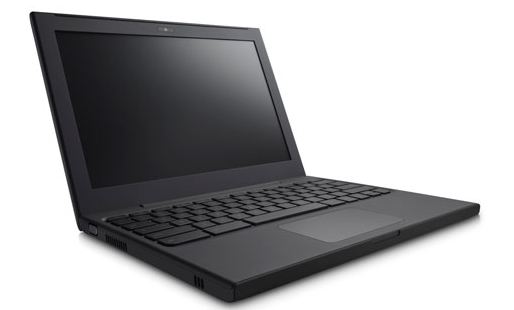
After one million people, myself included, begged to get access to Google's CR-48 Chrome OS notebook pilot program and thousands of devices were shipped, Google is taking what it's learned from the months of feedback and bringing a full-on assault to the established OS players (Apple and Microsoft) with delivery at scale of Chrome OS powered notebooks, starting with Samsung and Acer, scheduled to debut in the United States and six other countries on June 15th. Keeping with the company's Web-centric, speed addicted browser focus, Google promised at Google I/O today what they see as the first computers which speed up and improve the longer you use them, rather than the well-known reverse.
The devices, starting at just under $350 for the 11 inch Acer model and rising to nearly $500 for the 3G-capable Samsung offering, are to be sold on BestBuy.com and Amazon.com initially, while also being sold directly to businesses, educational systems and government for $28 a month for the former and $20 a month for the latter.
Google's promise, delivered convincingly by Chrome's Senior Vice President, Sundar Pichai, is that by making the notebooks as "nothing but the Web", this will dramatically reduce complexity, management, and keep apps up to date. Combined with integrated 3G connectivity, initially with Verizon in the US, and battery life between 6.5 hours on the Acer and 8 hours on the Samsung, the devices, like the CR-48 I've been using at the conference and elsewhere, look to deliver inexpensive anytime connectivity and the elimination of constantly searching for power plugs.
Google arrived at these announcements after rethinking the Web browser and the operating system itself, doing away with legacies of the past, Pichai explained.
"To deal with the Web on a browser, you have to deal with the legacy decisions of the last 30 years. Once you're inside, you have to make sure you manage your apps. Every single app has to be up to date," he said. "The experience is really complicated. We wanted to rethink the entire experience down to nothing but the Web. That's what Chrome OS is - an end to end experience."
Pichai's comments were echoed by Google cofounder Sergey Brin in a follow-on press briefing, where when asked if this was a direct attack on Windows, that there was nothing inherently wrong with Microsoft's offering but that "The complexity of managing your computers is torturing users, and it's a flawed model." This flawed model still is running XP at more than 50 percent of businesses today, it was reported, so this means there's not only a lot of opportunity for growth, but also significant challenge to make inroads at places that have often been reticent to change and conservative.
Consumers, besides the initial few of us who got our hands on the CR-48, will get their hands on Chromebooks (as they're now called) in just over a month. For the Web addicted, it could be a very compelling offering, one that both Apple and Microsoft have to watch closely and take very seriously.
The devices, starting at just under $350 for the 11 inch Acer model and rising to nearly $500 for the 3G-capable Samsung offering, are to be sold on BestBuy.com and Amazon.com initially, while also being sold directly to businesses, educational systems and government for $28 a month for the former and $20 a month for the latter.
Google's promise, delivered convincingly by Chrome's Senior Vice President, Sundar Pichai, is that by making the notebooks as "nothing but the Web", this will dramatically reduce complexity, management, and keep apps up to date. Combined with integrated 3G connectivity, initially with Verizon in the US, and battery life between 6.5 hours on the Acer and 8 hours on the Samsung, the devices, like the CR-48 I've been using at the conference and elsewhere, look to deliver inexpensive anytime connectivity and the elimination of constantly searching for power plugs.
Google arrived at these announcements after rethinking the Web browser and the operating system itself, doing away with legacies of the past, Pichai explained.
"To deal with the Web on a browser, you have to deal with the legacy decisions of the last 30 years. Once you're inside, you have to make sure you manage your apps. Every single app has to be up to date," he said. "The experience is really complicated. We wanted to rethink the entire experience down to nothing but the Web. That's what Chrome OS is - an end to end experience."
Pichai's comments were echoed by Google cofounder Sergey Brin in a follow-on press briefing, where when asked if this was a direct attack on Windows, that there was nothing inherently wrong with Microsoft's offering but that "The complexity of managing your computers is torturing users, and it's a flawed model." This flawed model still is running XP at more than 50 percent of businesses today, it was reported, so this means there's not only a lot of opportunity for growth, but also significant challenge to make inroads at places that have often been reticent to change and conservative.
Consumers, besides the initial few of us who got our hands on the CR-48, will get their hands on Chromebooks (as they're now called) in just over a month. For the Web addicted, it could be a very compelling offering, one that both Apple and Microsoft have to watch closely and take very seriously.
Google Displays Big Numbers at GoogleIO. Is It Better?
The first day of Google I/O 2011 was focused on Android. For Google, focusing on Android and the mobile OS' growth is a real point of strength, with incredible numbers and increased velocity. But there are still open questions as to demonstrable quality leadership that would have people on the other side of the aisle drooling with jealousy.
Hugo Barra, director of product management for Android at Google, highlighted growth of Android from the first T-Mobile G-1, shipped 2 1/2 years ago to 100 million Android activations through 2011. Other statistics similarly portray a story of wide reach and penetration in practically every regard: 36 OEMs, 215 carriers, more than 450 thousand Android Developers, feeding 310 Android devices in 112 different countries. The 100 thousand activations per day highlighted in last year's session was doubled three months later, and doubled a second time, to more than 400 thousand daily now. Total software application installations have accelerated with the first billion installs taking two years, and most recently, only 60 days, with 4.5 billion installs to date.
With Google being a data driven company, there's no question they love their numbers, and these are good ones. But there's no doubt a sizable market who perceives the OS and the companion apps and hardware as being of lower quality versus competitors like Apple, or even HP and Microsoft. Barra stated, "The quality of apps is amazing," adding "The world's most engaging, useful and entertaining applications are running on Android."
Accompanying his comments was a laundry list of brand name apps that have come to be featured in Android Market, many of whom who started on iOS first, and have moved to Android, from Major League Baseball to Pulse and many top game titles. With that kind of intro, no doubt many of us were excited to hear what was to come next in Android, especially as we were caught up on improvements to Honeycomb 3.1 and the new Ice Cream Sandwich. But for the most part, the updates seemed very simple, leading off with enhanced widgets, and enabling devices to act as USB hosts. Ice Cream Sandwich was promised as bringing the best of Honeycomb to phones and tablets, but the response to Honeycomb so far, especially in its limited release so far on the Motorola Xoom has been lukewarm.
As was mentioned to me in a discussion with a small group of Google geeks, in a conference focused on developers, one shouldn't always anticipate the delivery of retail-capable products for end users. So while all the 5,500+ attendees (myself included) were no doubt excited to test and receive the new 10 inch Samsung Galaxy Tab ahead of its availability on the open market, much of the highlights were focused on technologies that looked futuristic in nature, with midlevel applicability to today's array of products.
The much-anticipated arrival of Google Music and movie rentals on the Android Market are definitely improvements for all Google-centric users looking to wean themselves off iTunes, but they do seem like they are playing the role of catch-up to both Apple and Netflix, who have significant headstarts and market visibility. It's obvious the music labels are so full of themselves as to be causing headaches for Google, Apple, Amazon and Spotify, but it'd be great to see Google leading the way on some of these spaces instead of filling holes in their lineup against Apple.
Don't get me too wrong. Google's software sounds very good, with fun demos of smart machine-learning driven mixes (comparable to that of iTunes), and wireless synching, where Apple lags behind. But if you're going to take on the established player in the market in the place where they are strong, it isn't just enough to play feature matching, you must catapult way beyond their offering, as Spotify did for me to iTunes, getting me out of that model entirely.
What I've seen happen in the last two years or so is that lines are being drawn between those who prefer one platform and those another. It's a rare person who gets the chance to try both platforms and come away with a full understanding of one's weakness and another's strengths. Instead, most are digging in with both feet and becoming defensive if their point of view is questioned. If Android wants to truly be perceived as the market leader, not just in quantity, but quality, it's got some more room to grow, to demonstrate highest quality tablet experience, app experience, universal application across devices, and feature leadership - because the other team has the branding and personal experience nailed, great numbers or not.
Hugo Barra, director of product management for Android at Google, highlighted growth of Android from the first T-Mobile G-1, shipped 2 1/2 years ago to 100 million Android activations through 2011. Other statistics similarly portray a story of wide reach and penetration in practically every regard: 36 OEMs, 215 carriers, more than 450 thousand Android Developers, feeding 310 Android devices in 112 different countries. The 100 thousand activations per day highlighted in last year's session was doubled three months later, and doubled a second time, to more than 400 thousand daily now. Total software application installations have accelerated with the first billion installs taking two years, and most recently, only 60 days, with 4.5 billion installs to date.
With Google being a data driven company, there's no question they love their numbers, and these are good ones. But there's no doubt a sizable market who perceives the OS and the companion apps and hardware as being of lower quality versus competitors like Apple, or even HP and Microsoft. Barra stated, "The quality of apps is amazing," adding "The world's most engaging, useful and entertaining applications are running on Android."
Accompanying his comments was a laundry list of brand name apps that have come to be featured in Android Market, many of whom who started on iOS first, and have moved to Android, from Major League Baseball to Pulse and many top game titles. With that kind of intro, no doubt many of us were excited to hear what was to come next in Android, especially as we were caught up on improvements to Honeycomb 3.1 and the new Ice Cream Sandwich. But for the most part, the updates seemed very simple, leading off with enhanced widgets, and enabling devices to act as USB hosts. Ice Cream Sandwich was promised as bringing the best of Honeycomb to phones and tablets, but the response to Honeycomb so far, especially in its limited release so far on the Motorola Xoom has been lukewarm.
As was mentioned to me in a discussion with a small group of Google geeks, in a conference focused on developers, one shouldn't always anticipate the delivery of retail-capable products for end users. So while all the 5,500+ attendees (myself included) were no doubt excited to test and receive the new 10 inch Samsung Galaxy Tab ahead of its availability on the open market, much of the highlights were focused on technologies that looked futuristic in nature, with midlevel applicability to today's array of products.
The much-anticipated arrival of Google Music and movie rentals on the Android Market are definitely improvements for all Google-centric users looking to wean themselves off iTunes, but they do seem like they are playing the role of catch-up to both Apple and Netflix, who have significant headstarts and market visibility. It's obvious the music labels are so full of themselves as to be causing headaches for Google, Apple, Amazon and Spotify, but it'd be great to see Google leading the way on some of these spaces instead of filling holes in their lineup against Apple.
Don't get me too wrong. Google's software sounds very good, with fun demos of smart machine-learning driven mixes (comparable to that of iTunes), and wireless synching, where Apple lags behind. But if you're going to take on the established player in the market in the place where they are strong, it isn't just enough to play feature matching, you must catapult way beyond their offering, as Spotify did for me to iTunes, getting me out of that model entirely.
What I've seen happen in the last two years or so is that lines are being drawn between those who prefer one platform and those another. It's a rare person who gets the chance to try both platforms and come away with a full understanding of one's weakness and another's strengths. Instead, most are digging in with both feet and becoming defensive if their point of view is questioned. If Android wants to truly be perceived as the market leader, not just in quantity, but quality, it's got some more room to grow, to demonstrate highest quality tablet experience, app experience, universal application across devices, and feature leadership - because the other team has the branding and personal experience nailed, great numbers or not.
May 10, 2011
Reaching 1 Billion Monthly Users, Clearspring Adds On $20M
Alongside the boom in social media consumption, the world of social sharing, delivering content from a siloed source to a social destination has exploded in the last few years, as casual and professional media alike are scrapping for ways to bring their content to the fast-flowing streams of Twitter, Facebook, LinkedIn and more. A chief benefactor of this trend has been Clearspring, the company behind the practically ubiquitous AddThis buttons, which you see adorning Web sites of all types. The company, recognizing more than a billion unique users across the nine million sites where its buttons are installed, announced this morning the raise of $20 million to help harness the data being gathered and providing the next generation of analytics.
A few months ago, during the company's semi-regular swings to Silicon Valley, I met with Hooman Radfar, co-founder and CEO of Clearspring for dinner here in Sunnyvale, and was struck by the reach of Clearspring's properties, which has to be one of the few Internet names to touch ten digits worth of people. With Facebook counting user numbers well into the 600 million and beyond, for Clearspring to talk up a _billion_ users is quite an accomplishment. Of course, a widget on a Web site is not the same as a fully immersive experience, but in a world focused on data, and the extraction of meaning from that data, he with the biggest numbers wins.
Unsurprisingly, this morning's announcement focuses on how the gathered data will "accelerate Clearspring’s next-generation publisher products and continued growth of its advertising offerings, as well as to help fuel strategic acquisitions." There's no telling if $20 million will be enough to drive a big acquisition of any kind, but in a phone conversation yesterday, Radfar told me the company already had a good amount of money in the bank prior to the raise, while the new round brought "additional powder" for engaging in M&A, giving the company more flexibility for future expansion.
The AddThis platform, thanks to its universal visibility, has already become an interesting stopping point for statistics on which of the many social networks out there are gaining traction month by month, as I had highlighted back in late 2009 with the launch of their service directory. Interestingly, as captured in that post from 18 months or so ago, Facebook at the time accounted for 28 percent of all social sharing. Today, that number has increased 50 percent to 43 percent of all sharing throughout the AddThis network. In the same period, Twitter expanded from 8 percent to nearly 10 percent, and Myspace fell from having just over 8 percent to just over 2 percent, a 75 percent decrease.
AddThis' big numbers make it one of the top ten largest audiences online today, according to their press release, claiming also that revenue is on pace to triple from the previous year, and staffing is expanding at the rate of one new hire per week, on pace to double staff. Math suggests the doubling brings the team from just over 50 to more than 100 to exit 2011, and for AddThis, the future looks to be all about numbers.
“We’ve always held the view that big data would be one of the most valuable assets to come out of the social web,” said Ted Leonsis, Clearspring’s Chairman in today's release. “It is no surprise to anyone close to the company that we have parlayed our expertise in social sharing to achieve a reach surpassing Yahoo!."
AddThis supports more than 300 disparate social networks, so if you're like me and want to bring attention to the edge cases, you can find their orange squared buttons with the white plus symbol and share anywhere you like. Having $20 million more available makes it more likely you'll find these buttons in more places.
A few months ago, during the company's semi-regular swings to Silicon Valley, I met with Hooman Radfar, co-founder and CEO of Clearspring for dinner here in Sunnyvale, and was struck by the reach of Clearspring's properties, which has to be one of the few Internet names to touch ten digits worth of people. With Facebook counting user numbers well into the 600 million and beyond, for Clearspring to talk up a _billion_ users is quite an accomplishment. Of course, a widget on a Web site is not the same as a fully immersive experience, but in a world focused on data, and the extraction of meaning from that data, he with the biggest numbers wins.
Unsurprisingly, this morning's announcement focuses on how the gathered data will "accelerate Clearspring’s next-generation publisher products and continued growth of its advertising offerings, as well as to help fuel strategic acquisitions." There's no telling if $20 million will be enough to drive a big acquisition of any kind, but in a phone conversation yesterday, Radfar told me the company already had a good amount of money in the bank prior to the raise, while the new round brought "additional powder" for engaging in M&A, giving the company more flexibility for future expansion.
The AddThis platform, thanks to its universal visibility, has already become an interesting stopping point for statistics on which of the many social networks out there are gaining traction month by month, as I had highlighted back in late 2009 with the launch of their service directory. Interestingly, as captured in that post from 18 months or so ago, Facebook at the time accounted for 28 percent of all social sharing. Today, that number has increased 50 percent to 43 percent of all sharing throughout the AddThis network. In the same period, Twitter expanded from 8 percent to nearly 10 percent, and Myspace fell from having just over 8 percent to just over 2 percent, a 75 percent decrease.
AddThis' big numbers make it one of the top ten largest audiences online today, according to their press release, claiming also that revenue is on pace to triple from the previous year, and staffing is expanding at the rate of one new hire per week, on pace to double staff. Math suggests the doubling brings the team from just over 50 to more than 100 to exit 2011, and for AddThis, the future looks to be all about numbers.
“We’ve always held the view that big data would be one of the most valuable assets to come out of the social web,” said Ted Leonsis, Clearspring’s Chairman in today's release. “It is no surprise to anyone close to the company that we have parlayed our expertise in social sharing to achieve a reach surpassing Yahoo!."
AddThis supports more than 300 disparate social networks, so if you're like me and want to bring attention to the edge cases, you can find their orange squared buttons with the white plus symbol and share anywhere you like. Having $20 million more available makes it more likely you'll find these buttons in more places.