
Silicon Valley Technology Commentary & Archives · Est. 2006 3,045 Posts · 2006–2026

November 29, 2012

November 29, 2012 · 5 MIN READ · BY LOUIS GRAY

The Best Mistake I Ever Made

The Best Mistake I Ever Made

Editor's Note: In response to my good friend Kevin Fox, who shared on his blog today how the college selection process, aided by a youthful blunder on his part, helped launch his career. Unsurprisingly, I've got a similar story, and that makes it time to share.

In 1994, I was applying to colleges. The oldest in my family, I was the first to move on from high school, and beyond the occasional lecture from guidance counselors at school, I was pretty much finding my own way. My best friends and I essentially banded together, comparing SAT and ACT scores, and scoured the college ranking and comparison books, even mocking the terms "Selective" and "Highly Selective", used to separate the good schools from the great.

Money constraints and a non-perfect high school record wouldn't have led me too far out of state. My best friend and I eventually settled on UCLA as our dream school. He was going to major in Film Studies, and I had picked Communication Studies, as close as I could get to Journalism. I applied to UC Berkeley, UCLA and UC Davis, as well as Brigham Young University (BYU) in Utah, which would have pleased some of my friends at church, while keeping me intellectually bored, and, in the event of complete disaster, I even filled out a form for Chico State, playing the role of obvious safety school.

Between my friends and me, we thought we had the process nailed. I wrote the essay over and over and had it reviewed by my teachers, knowing I might be on the bubble. I packaged up the essay with all my materials and sent it in the mail on the first day possible to UCLA, Berkeley and Davis, along with $120, $40 for each of the three schools' admissions fee. For UCLA, I listed Communication Studies as my major, with Political Science as the alternate. Berkeley placed me with Mass Communications as my major and Political Science as the alternate. If I remember correctly, Davis was English.

Three weeks later, I got a thin envelope back from the UC Regents. Expecting some kind of confirmation, instead the letter included a $40 refund from UCLA - stating that Communication Studies was open only to junior transfers, making me as a freshman ineligible. As I had selected other UC campuses, and the Regents assumed each school of equal valor, they just sent me my $40 back, instead of what I thought was the more obvious move - moving my application forward with Political Science.

Needless to say, I was panicked, and nobody had any real good advice. I essentially reapplied to UCLA and sent back the same $40 admissions fee, with Political Science as my intended major this go around, but this time seeing the envelope leave my house near the end of the 30 day period, not the beginning. I'm pretty sure this didn't help, as open slots for the impacted schools became more scarce.

In the ensuing months of my senior year in high school, we all played the waiting game. BYU was the first to respond, and I got in. I didn't see that as a big deal, although many friends of mine from church had received rejection letters. Chico State let me in, to no surprise. But the big wins were to come in March, from the UCs, especially UCLA, as my best friend and I shared these aspirations of being roommates and challenging one another for four more years and as we started our careers.


Come early March, Davis led off with a big fat acceptance envelope. I remember marking off an X in the Yes column on an index card at home, with UCLA and Berkeley yet to respond. I was 3 for 3, with 2 to go. But the next day brought a big shock. Instead of the big envelope, a small one from UCLA came with the well known refrain, "We regret to inform you... blah blah blah... lots of applicants... don't let the door hit you on the way out... blah blah." I was stunned and felt hollow - faced with the concept of not being with my best friend, and facing a reality of having to pick between the nearby but non-thrilling UC Davis and the complete life change that would be shipping off to Provo to be a Cougar.

This being at the very beginning of the era of constant communication, I had my mom's cell phone, playing chauffeur for my younger siblings, so I couldn't call her, and when I called my best friend, I just started to tell him before the reception was so bad that hung up on me. I was devastated, and it's all I wanted the world to know - that my dream had been dashed. In the days afterward, as I saw other friends get their welcome notes into the Bruins fold, the school counselors would pause their congratulations, turn toward me with concerned faces, and ask, "Now, how are you doing..."

After the promised deadline for acceptance letters, I finally heard back from Cal. A big, fat, glorious acceptance envelope filled my mailbox in late March that changed everything. My mom, lacking irony, exclaimed, "That's like getting into Stanford!" when I proudly announced I had the opportunity to become a Golden Bear, ruling out the Aggies of Davis and putting BYU way back in second place. The acceptance letter from Cal put UCLA as less critical, and started me feeling like I had accomplished something. I wasn't going to be palled up with my best buddy, chasing our dreams, but instead got the opportunity to stake out my future on my own at an incredible school.

Attending Berkeley ended up being a godsend, placed remarkably close to Silicon Valley as the tech revolution expanded through the first dotcom boom, and placing me with startups before I even claimed my double major degree in Mass Communications and Political Science.

Had I attended UCLA, I could have transferred into Communications Studies my junior year. It's probable my best friend and I would have even more great stories to share beyond those we still dredge up from high school. But it's just as likely we'd have met fewer people because we were too comfortable and cliquey. It's especially likely that I'd have ended up well outside of tech, and the unique experience that is the Silicon Valley. Maybe I'd have ended up writing for the LA Times or joined MySpace or Mahalo - spending my unfair share of time on the Web in Southern California and not the Bay Area. But my mistake of entering a major unavailable to freshman entrants changed my life - pushing me in a direction I'm happy with and continue to be fulfilled by.

As Kevin writes in his own parallel story, the mistake in the short term may have been awkward and disappointing, but the long term benefits of this choice ended up probably being the best mistake I ever made. By the way, if you're not reading Kevin on his blog or on his Twitter stream, you should.

November 27, 2012

November 27, 2012 · 5 MIN READ · BY LOUIS GRAY

Real Valley Stories: Rejecting the Closed Envelope

Real Valley Stories: Rejecting the Closed Envelope

Editor's Note: Part 8 in an irregular series of stories from my 13 years in Silicon Valley. Part 7 talked about the leveraging your assets to get your way. This time, a real example of knowing when you're undervalued, and how to get what you deserve.

Not every Silicon Valley company has a smooth trajectory, and neither does the average career. Startups fail and career paths stall. You can run into bosses that don't get you, miss promotions, or find yourself excelling as a rare star at a company that simply isn't going anywhere. Fairy tale stories are often just that - fairy tales. In the real world, you need to be executing on what you've been asked, but constantly assessing your place, if you are rightly fit, or on a path to what you want to achieve.

Being a long-time employee for most of the last decade at a startup that went through many funding rounds and saw a practical carousel door in the VPs and CEO office, it probably comes as no surprise that I accrued a solid amount of company history and irreplaceable knowledge, but had to continuously reprove myself to new people who had just joined. Sometimes, the convincing was easy, through consistent work, but other times, it seemed nearly impossible, as if we were two people speaking a completely different language.

If explaining one's work product or role in a shifting company was hard, it was equally challenging to assess if an employee was compensated appropriately relative to their peers, if promotions had regularly taken place, and if one's stock options were valuable or worthless, depending when they came into the company, what round of funding we were aiming for at the time, or how well they had negotiated coming in the door.

After one recapitalization round, which had essentially wiped out our existing shareholders and started over, I found myself in a meeting with our VP of Marketing, talking about my job performance and how the company planned to reissue options to employees so we weren't completely underwater, having watched our existing stock reverse split to hell. As he tried to put me at ease that I was being taken care of, he reached forward, past his computer monitor, to a stack of white envelopes, the top of which had my name on it.


Inside the envelope, presumably, was the latest stock option grant - a new gift of shares in the company, which, once again, would maybe be worth something if we went public or were purchased, but were just as likely to expire worthless, as all the others had. As he lifted my envelope up and tried to give it to me, I interrupted and said, in a rare point of clarity, that I didn't want it, and no matter what it said, it wasn't what I deserved.

This startled him a bit, and I explained that I was familiar with how stock options were allocated, with the CEO and board of directors taking their share after the VCs had their stake, followed by the senior management team, the VPs, the Directors, and eventually, the working stiffs like me. I knew that my previous humility and hard work had set me up to get screwed, again, because I hadn't fought harder for a bigger title and all the rewards that came with it, from salary to stock.

Following on, I addressed the issue directly, saying I'd never been one to fight for promotions and titles, that I just wanted to do a good job, but that I had seen the only way one could get promoted or get a raise at the company was to solicit an offer from a competitor, only to rescind it later. I looked my boss straight in the eye, and coldly said, "Let's skip that step."

The move was a gutsy one, but one I felt I had every right taking, having committed untold hours and several years of my career already into the company, without being promoted, and getting the stock options others with higher job titles were no doubt getting. My boss and I spoke further, and he heard me loud and clear. The envelope went back on his desk, and we wrapped the meeting, my heart beating quickly, but my mind feeling steady. As I headed back to my desk, he did exactly what I had hoped he would, taking a two door trip down to the VP of HR's office to discuss the situation.

A few weeks went by, but shortly afterward, I was invited back into his office, this time with a plan that included a new envelope, with new numbers on it. In addition to the new stock options offer, I was given a promotion, and a plan to work my way into a second promotion the following year, that would see a commensurate salary increase and stock option bump. As time went on, true to his word, and due to my own efforts, of course, that too took place - as the company, with my VP, recognized the value I had brought for years, and continued to bring, and helped me take on more responsibility and finally be compensated the way I thought I should.

As I wrote in July about leveraging one's assets to get one's way, the risk I took was one where I was arguing from a position of strength. I was confident that I was delivering good work that I could be proud of, which could be measured. I had seen other great colleagues get stuck in their careers, and have to get alternative offers from competitors before seeing a career bump with our firm. I knew nobody wanted that headache, and that I could get other jobs if my brazen act went sideways. But it didn't. I knew the sealed envelope didn't have what I wanted, and I knew I was in the position to call them on it.

There are times to be humble, to keep your head down and do your work. There are sometimes economic realities at companies and industries which might prevent you from getting what you think you deserve. But if there's a mismatch between what you're delivering, and you see an opportunity, assess where you are and take the opportunity to make it right. Good people and good companies never want to see the strong talent go out the door, and happy employees usually end up working even harder and being more loyal. I'm glad I finally found a VP who got it and was willing to listen. And that's a real Valley story.

October 24, 2012

October 24, 2012 · 5 MIN READ · BY LOUIS GRAY

Built Like a Blogger? Lose Weight on the Fitbit Diet.

Built Like a Blogger? Lose Weight on the Fitbit Diet.

My dresser drawers are overflowing with extra large shirts with logos from tech companies - most of them Google at this point, after more than a year at Mountain View headquarters.
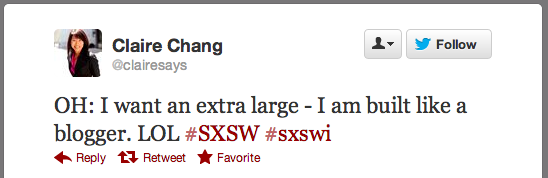
That someone with my otherwise slight frame would require extra large shirts on a regular basis was the unsurprising result of the activity usually surrounding a desk jockey - typing, interrupted by occasional bouts of eating, and a combination of the two for true dexterity. I called the condition being "Built Like a Blogger", accurately captured by Claire Chang at SXSW in 2011 and immortalized on Twitter.


Now it's possible I need to discard a ton of these shirts, not because I need dresser real estate back, although I do, or because some of the logos are for companies that no longer exist, although that's true too, but because, largely in part to my adapting of the Fitbit fitness tracker this last Spring, I've managed to increase how much I walk each day by as much as 75%, and I've dropped twenty pounds. I know few people find that intriguing on a tech blog, but as I had mentioned in my first post on Fitbit way back at the end of March, "Virtual badges influence real world behavior", and that change in real world behavior has hit me with real results.

What's a bit off in that initial post from March was my promising I had no real interest in changing my behavior -- I just liked the stats. That may have been true, but I let my competitive nature overrule me.

Each month, my average steps per day increased.

When I first was measuring my steps per day on Fitbit, without any changes, I was well under 10,000 steps in a usual 24 hour period. I considered 8,000 good, 10,000 a stretch, and 15,000 ridiculous. For the normal human who thinks in distance, 2,000 steps is about a mile's walk, or 3,000 steps can be about 2 kilometers. But after friending more active colleagues at Google, such as Matt Cutts, Travis Wise and Adam Lasnik, I found my own step counts to be slovenly, as they, and others, routinely averaged well above 10,000, hitting 12,000, 15,000 or even higher with ease. So I got competitive.

Beyond taking the stairs instead of elevators, and walking further away for lunch, or pacing in my office at night, I picked up the Fitbit Aria scale when it was announced, which let me watch my weight online, starting in May.

Fitbit has tracked my decreasing weight daily since May.

Again, this started out as a curiosity, but it's well known that if you watch your behavior, you're more likely to behave with better patterns. I found I could very easily track my calories burned on the Fitbit, guess on the amount of calories coming in, and see the results the next morning. Soon, with heightened awareness of the combination of walking more and taking less in, I burned through 5 and 10 pounds, and crested through 15.

At that point, my jeans barely fit, and I was on the last hole on my belt. I even had to go to Target to get new jeans, dropping a full 5 inches on my waist. This was certainly unexpected when I first got the Tracker and scale. And this morning, for the first time, Fitbit reported I lost a full 20 pounds, and I'm easily less than the lies my driver's license had been telling the state for the last five years plus.

Achievement Unlocked: From my email this morning

The competitive nature I originally had, battling colleagues and friends for steps and badges, had evolved into a battle against myself. One major reason I haven't been posting as regularly, aside from interruptions by work or the usual family needs, has been because I've been walking a lot late at night, when I used to crank out posts like these. I now know practically all the routes in my neighborhood by heart, and know the best ways to crank out 3,000, 5,000, or 7,000 steps, if necessary. I find excuses to take my own kids out for walks, or I'll call up a friend and talk on the phone as I navigate the dark corners of the suburban Peninsula until I bore them to death or hit my steps goal - whichever comes first.

October 6's 38,000+ step day, with many spikes

On the consumption side, I haven't really done much dramatic. Being more aware of day to day weight makes some fast food less appealing, and having healthy snacks at work so readily available makes choosing correctly easy. I see it as the reverse of the famed Slim Fast diet (a shake for breakfast and lunch, with a healthy dinner), instead having a lighter breakfast and dinner, and scoring a high quality and full lunch on campus. It's also good on my pocketbook, by the way, of course.

Now I've somehow picked up this reputation for wanting to walk everywhere, simply for Fitbit steps. A  one mile building to building trek that you could bike only provides 300 steps, while going on foot gives about 2,000, so you know my choice. I now park furthest away from my destination, instead of as close as possible. I convince friends who want lunch to go the extra blocks to get something specific, and can get home above 10,000 steps before even tackling my evening efforts. It's been a fun challenge.

Now that I've lost 20 pounds, I have to consider if the new weight is a low point, which will see me rebound to a higher mark, if it's a stepping stone to an even lower number, or the new mark I should get used to. Truth is, what this experience displays to me is that I am in control, and if I can watch the numbers, I can honestly choose what I want to be. It's part of the quantified self that Mark Krynsky, Larry Smarr and many others are pushing for. All Fitbit did was sell me some gear to count it and compare, but the rest I did on my own. As for tonight, it's almost 10, so I'll share this with you and then go on another walk. I've got a few thousand more steps to do.

Find me on Fitbit here: http://www.fitbit.com/user/22HTMK. All the graphs are real. And don't miss my follow-on post: "Fifteen Signs You're a Fitbit Fanatic".

October 1, 2012

October 1, 2012 · 8 MIN READ · BY LOUIS GRAY

FriendFeed Turns 5. The One-Time Pioneer Is Still Here.

FriendFeed Turns 5. The One-Time Pioneer Is Still Here.

Five years ago today, a small aggregation startup called FriendFeed opened its doors, in beta, to intrigued early adopters who wanted to bring all the updates from different services they used into one place and follow friends. As was evident from initial coverage of the site from outlets such as the New York Times and TechCrunch, what grabbed attention as much as the product itself was its founders - a group of four former Googlers who had made their name on products like Gmail and Google Maps.

After an admitted slow start, the product gained incredible attention from the Silicon Valley digerati through 2008 as the team expanded and features rolled out with regularity, including the launch of the "Like" button, which became the hallmark action at Facebook, the company's eventual acquirer, a pioneering approach to real-time, and many other aspects which have shown challenging for other startups, including photo display, topical rooms, participation by email and more. By August 2009, less than two years after its initial launch, FriendFeed was gobbled up by Facebook, and work on the site essentially stopped. Now in 2012, two thirds of FriendFeed's initial 12 employees have left Facebook, and yet somehow, the site is still up - despite the occasional outage.

Now that we have the benefit of looking backward, with FriendFeed being part of Facebook much longer than its lifespan as an independent company, it is worth reviewing why the company was significant, relative to many other startups at the time, and why people would keep using the service, even as alternatives to take one's time on the web sprout constantly. Also -- keep in mind I am speaking as an individual, not as a Googler, and this is no reflection on any of Google's products...


Good old FriendFeed, with Lists, Rooms, Likes, Comments, Photos and Search

FriendFeed Took On Challenging Problems -- Here are 10.

1. Rapid Aggregation

The first challenge for FriendFeed to approach was the retrieval of near real-time aggregation from the Web's many services, constantly looking for updates on sites like Flickr for photos, blogs for posts, Twitter for Tweets, and YouTube for your shared videos. The assumption was that when you made an activity elsewhere, it would appear on your feed practically instantaneously. Initiatives that helped this included their own Simple Update Protocol (SUP) and Pubsubhubbub.

2. Interaction - Presenting the Like

The second challenge was converting from a site that highlighted activity elsewhere to a thriving community of its own. A feed of all your friend's activities could be hollow without your ability to interact. That was solved with three steps - the first being a bookmarklet that let you share content from other sites directly to FriendFeed, the second being the introduction of commenting and liking articles shared by your friends, and the third, the ability to add a status update directly to the site - which converted from just a catch-all for content started elsewhere to a starting point for new conversations.

Nowadays, the like button is so closely associated with Facebook that it's assumed to have been born there. Yet, it was FriendFeed, in a trend that took place regularly, who initiated it only to be mimicked quickly.

3. Search With Brains

The third challenge was delivering intelligent search. With backgrounds at Google, it was assumed when FriendFeed would deliver search, it would be done well, and they didn't disappoint. Their advanced search lets users find comments and posts from specific people, all friends, or from everyone. It lets you search on the type of content or any combination. With Twitter remaining unable to produce a search engine with any history, FriendFeed's search archive remains valuable for anything published on the social sphere beyond the last month.

4. Organizing Your Friends

The fourth challenge was helping users organize friends into lists. As is seen with Google+ circles and Facebook lists, sorting people into smaller groups is important and challenging. FriendFeed introduced lists in August of 2008, which let people not only put people in the right buckets, but take especially noisy people off their main stream -- extremely helpful. This also delivered what TechCrunch called a "fake follow".

5. Real time at the Core

The fifth challenge? Moving away from a load and refresh model to one of real time. The concept of new content flowing in from the top of the page, and conversations bumping comments back to the top of the page made FriendFeed have real time at its core. Combine that with advanced search, and realt-time search on FriendFeed became the place to gather for breaking news events, like Apple keynotes.

6. Topical Rooms

Challenge number six... delivering topical rooms that let people with shared interests participate, with granular sharing models, so rooms could be public, private, or moderated. This could be as simple as a room for intranet-like discussions, organizing the week's poker tournament, or to debate politics endlessly with friends and foes.

7. Smart Display of Photos, Video and Audio

Text is easy. Getting photos and other rich media is hard. Twitter took years to graduate from a text-only site (with links) to one with embedded images. Even then, they are a click away. FriendFeed made it easy to share multiple photos, or even embed Mp3s so your friends could listen on the site. Shares from YouTube and other services, like Vimeo, could be easily viewed and detected by the service.

8. Selective Viewing of Shares

Not every post from everyone is gold. This is not a surprise. FriendFeed made it so you could hide all updates from specific services, or people, or any combination. If your buddy who writes a great blog tweets too much, FriendFeed had a solution for you. This remains a challenge in most places.

9. Posting from Email or Mobile

Thanks in part to outside developer Gary Burd, later hired, users could post to FriendFeed by sending updates to an email address. Attached photos were attached to the post itself. Very clean. The site also had an iOS-friendly version at http://www.friendfeed.com/iphone which worked very well on a sub 4 inch screen.

10. Embedding On Other Sites

Though not used a ton, you could embed FriendFeed conversations and feeds on external blogs or websites. Have the conversation in one place and want to showcase it elsewhere? FriendFeed let you do that. Most social services have widgets, but can be as limited as links back to the original source. FriendFeed was much more portable.

These innovations, in addition to a growing loyal community, had us hoping FriendFeed could cross the chasm and reach a wide audience beyond those of us who were tech-centric. Interestingly, many of the conversations evolved as users of the platform talked less about startups and platforms, and made the site a place for pictures of kids, silly memes, and glorious food pics.

And it Stayed Up When Others Didn't

At a time when Twitter was as known for its fail whale as anything else, FriendFeed refused to crash. The team had learned how to scale the product so that even under periods of peak load, sluggish behavior was practically absent. Only in the seemingly annual event of datacenter failures, and eventual site rot due to abandonment for practically three years, has seen the product unavailable. In fact, as the legend tells it, one of the caveats for signing off on the 2009 acquisition was one of the cofounder's wives making the request that FriendFeed stay alive as an independent service indefinitely - which has happened.

So Now What?

The initial gut-wrenching response to the acquisition by those of us participating FriendFeed regulars was one of distrust and pessimism, that the pace of innovation and open behavior the small startup had was going to become opaque post-acquisition. It was assumed the relationships built in the community would disappear. Not too long after the purchase did you start to see news that one engineer after another would turn away from Facebook to start something else or simply take time off.

There is no question the acquisition of FriendFeed by Facebook was a lucrative one for its employees, and particular its cofounders and earliest hires. While the initial price didn't set records, the acceleration of Facebook's value, recent events notwithstanding, made the purchase an impressive one. Split among a dozen employees and a minor investment from Benchmark, and you can see they did well. Features initially in FriendFeed later made their way to Facebook, for the most part, and the team dispersed to various corners of the social monolith.

Of the 12 employees at time of acquisition, 4 are still employed at Facebook, including Ben Golub, Casey Mueller, Sanjeev Singh and Tudor Bosman. Ana Yang Mueller left last week, following the arrival of her first child. Former Facebook CTO and FriendFeed cofounder Bret Taylor recently left to launch another startup. Jim Norris, another cofounder, is at AeroFS. Dan Hsaio left. Ben Darnell, at Facebook for about half a second, is at DropBox, following Thing Labs and later AOL. Kevin Fox is at Electric Imp. Paul Buchheit is at Y Combinator. Gary Burd left 2 months after the acquisition, preferring not to telecommute from Seattle.

Given the array of places these folks have gone after Facebook, it's obvious top talent finds top roles. The FriendFeed team was ahead of its time in a number of ways in developing what it did at the pace it did - even offering up a changelog to show checkins to the site, which updated rapidly. The site turned out a community which I've watched stay fairly solid, despite the neglect, and one that's moved from network to network. At the end of 2009, I even said I would find value from FriendFeed if I were the only one left on the site. Keep in mind Google+ debuted two years later, and that's where many similar interactions take place today, but at the time, it was true.

In the thousands of blog posts I've added to this site, I've covered hundreds and hundreds of unique services. There are the rare ones which are so clearly innovative and inspire real community that demand loyalty as FriendFeed did. For those who opted out of the FriendFeed experience, you missed out. For those still hanging on, it's maybe time for a group hug. The small team accomplished incredible stuff, and surprisingly... it's still here. I wonder if it will stay on another five years.

Full Disclosures: I work at Google and work with the Google+ team through Developer Relations. I am good friends with multiple former FriendFeed employees on the list. We're buds, essentially.